
Your dog's kennel is more than just a shelter — it's their personal retreat, their safe space, and their home within your home. That means designing one deserves real thought and careful planning. Whether you're building a brand-new outdoor kennel run from scratch or upgrading an older setup, the right approach makes all the difference.
The advice in this guide comes from decades of collective wisdom shared by seasoned dog owners, breeders, and trainers who have invested time, money, and plenty of trial and error into creating the ideal outdoor living space for their canines. Mistakes were made along the way, but the best ideas rose to the top — and those are the ones we're sharing here.
Choosing the Right Location for Your Dog Kennel
Selecting the right spot is your very first decision and arguably the most impactful one. The location you choose will shape the kennel's overall design, influence which materials you'll need, and dictate the construction methods that make the most sense. Every location carries its own set of trade-offs, so understanding these before you start building is essential.
Remote Placement — Away from the House
Positioning a kennel far from your home has clear benefits: it separates you from barking, odor, and the fly problems that come with canine waste. It also keeps the kennel out of sight, which can be an aesthetic advantage for some homeowners. However, distance creates real challenges — controlling nuisance barking becomes harder, cleaning takes more effort, and you may need to install a dedicated water source. In some cases, running electrical service lines for lighting, heating, or cooling adds considerable expense.
Close Placement — Near the House or Garage
Placing the kennel closer to your home has major practical advantages. Voice commands to quiet a barking dog are easier to deliver and enforce when you're nearby. A garden hose is usually within easy reach for cleaning, and odor or insect issues can be resolved quickly. Most importantly, the safety and security of your dog is better maintained when you can see the kennel from your window at a glance.
Proper Materials and Dimensions
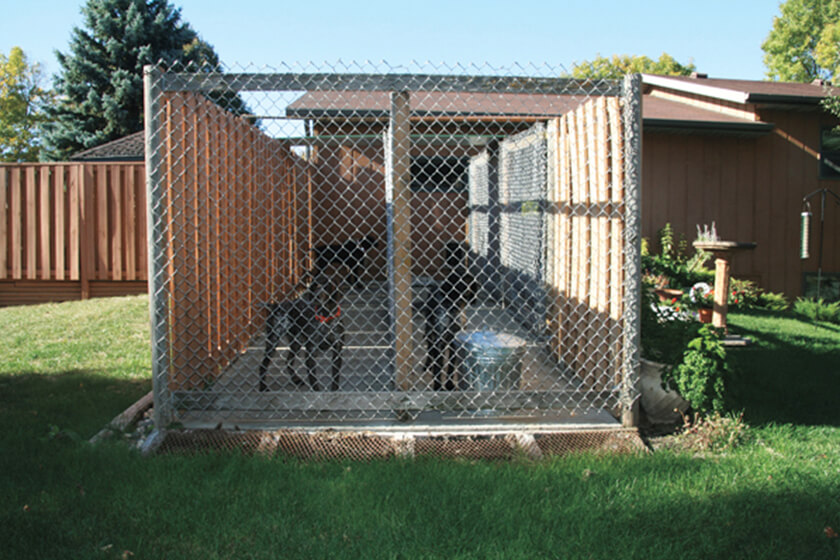
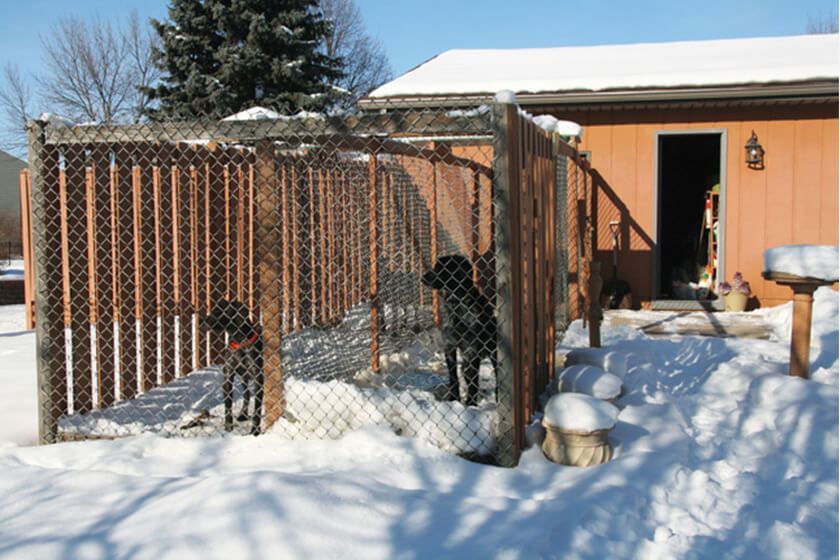
Experienced kennel builders recommend a standard run width of about 48 inches, with a length of 12 feet or more. This narrow-and-long layout isn't arbitrary — it encourages dogs to relieve themselves at the far end of the run, away from the entrance and their doghouse. The 48-inch width also gives you just enough space to step in with a short-handled, flat-bottomed shovel, scoop waste, and turn around to dump it into a container.
Kennel floors should always be designed with adequate slope for proper drainage, preventing standing water from collecting. One effective technique is to tilt the floor toward a hand-dug dry well — typically 48 inches wide by 3 feet deep — filled with 3- to 4-inch stone aggregate at the far end of the run. This dry well allows wash water to collect and drain beneath loose rocks, minimizing odor and keeping insects at bay.
Door placement also matters. Position entry doors on the side of the kennel run closest to the doghouse opening and farthest from the end of the run. Placing doors at the far end forces dogs to walk through waste when entering and exiting, creating an unnecessary mess. Side-mounted doors solve this problem entirely.
Don't forget overhead coverage. All outdoor kennels benefit from some form of roof or cover to provide shade during the heat and shelter from rain or snow. Wire mesh covers also serve as a security feature, preventing agile dogs from climbing out and keeping unwanted animals from getting in.
Featured Product
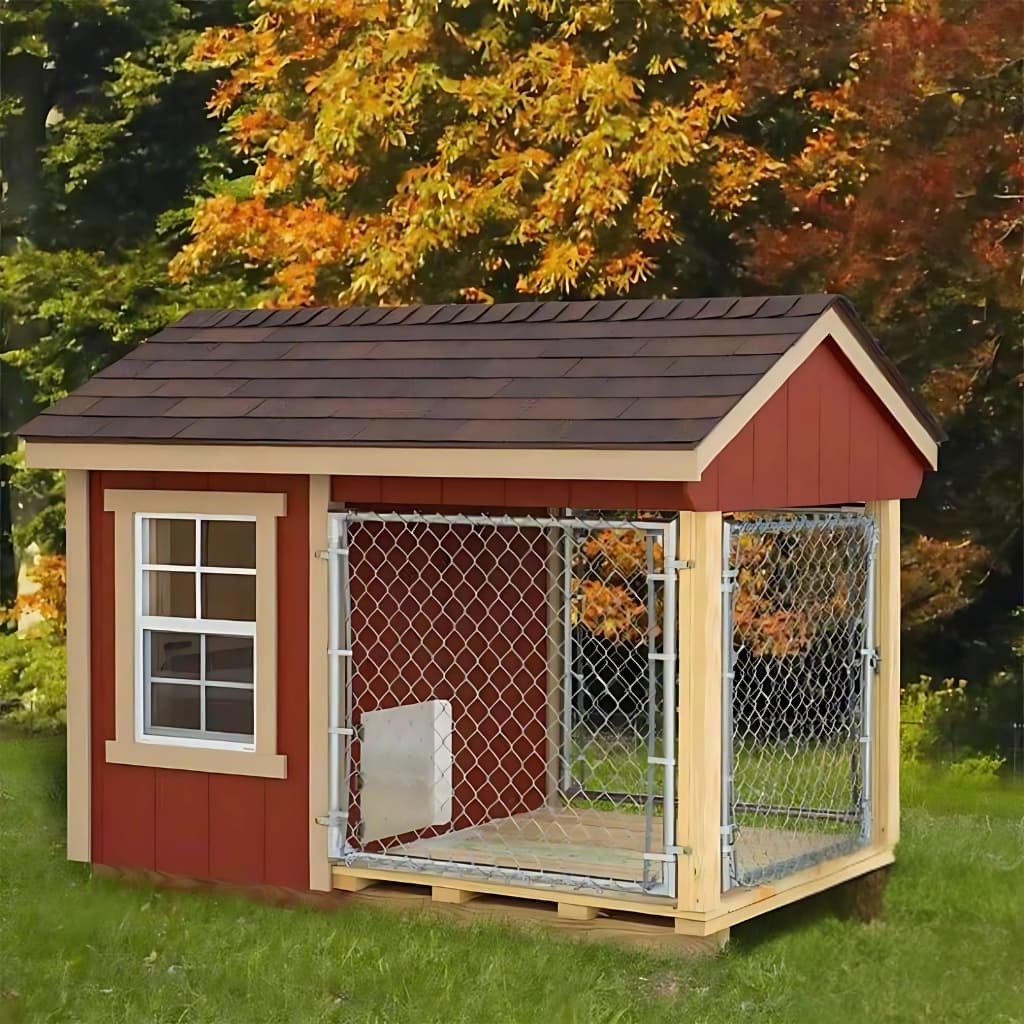
EZ-Fit 4x7 Dog Kennel Shed Kit with Run
A ready-to-assemble kennel shed kit designed for pet owners who want quality, convenience, and durability — all in one package.
Dog Kennel Floors and Walls
Concrete remains the most widely used flooring option for dog kennels, and for good reason. Alternatives like gravel are less expensive upfront, but they make cleaning up waste extremely difficult — and sometimes nearly impossible. Steel and wood decking are available too, but concrete's toughness and longevity make it the clear winner for most builds.
That said, concrete isn't perfect. It will eventually crack — that's unavoidable. Temperature extremes cause the ground to shift, which leads to buckling, splitting, and separation over time. You can minimize this by using high-quality cement reinforced with rebar and wire mesh. Preparing a well-compacted dirt surface with a gravel underlayer beneath the concrete also goes a long way toward preventing premature cracking.
Dog Kennel Fencing Options
Chain-link fencing has long been the go-to choice for kennel runs, and it's easy to see why. It's simple to install, efficient to work with, durable over the long term, and relatively affordable. Many experienced dog owners report that their chain-link kennels still function perfectly after 20 or more years of use, even if they don't look as shiny as the day they went up.
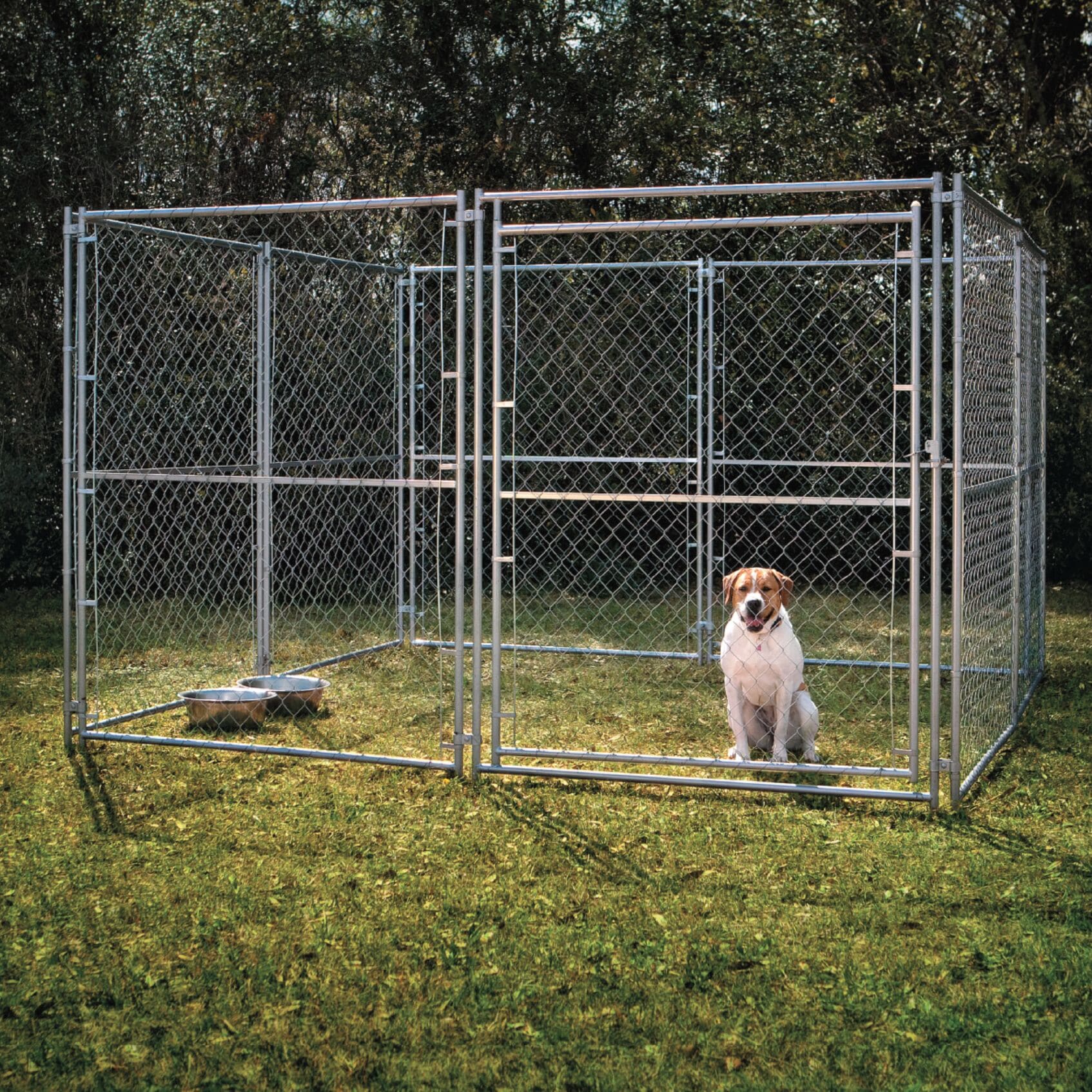
Welded wire with a powder coating is another excellent choice, especially for owners concerned about corrosion from dog urine. While the initial investment is higher compared to standard chain-link, the overall resistance to wear makes it a cost-effective solution over time. Even persistent chewers tend to give up on powder-coated welded wire without making any progress.
For windbreaks and added privacy, treated lumber, metal siding, and fiberboard panels are all viable options. Treated pine boards, spaced about an inch apart, block wind effectively while still allowing airflow and providing a measure of visual privacy. However, wood won't stand up to determined chewers. If wind protection and chew resistance are both priorities, metal sheeting or fiberboard siding are the stronger choices.
Give Your Dog a Home Worth Having
Most outdoor dogs spend the vast majority of their time in their kennel run — waiting between exercise sessions, training outings, and adventures in the field. That's a lot of hours spent in one place, which means their living quarters should be as comfortable, clean, and well-designed as possible.
By following the guidelines laid out here — choosing the right location, using quality materials, paying attention to drainage and dimensions, and selecting appropriate fencing — you'll be able to create a kennel that truly serves your dog's needs. The result? A happy, healthy dog with a space they're proud to call home.