
Whether you are preparing food for a large catered event, hosting a holiday dinner, or simply want to keep meals warm until serving, understanding how to hold food at safe temperatures is essential. Many home cooks and foodservice professionals face the challenge of maintaining proper food temperatures without drying out dishes or sacrificing safety.
When you are juggling multiple dishes or waiting for guests to arrive, keeping food at the correct temperature is not just about preserving flavor and texture — it is also about preventing dangerous bacterial growth that could lead to foodborne illness. In this guide, we will break down the science of hot holding temperature, the risks of the "danger zone," and the best methods for keeping your food safe and appetizing.
What Is Hot Holding Temperature?
Hot holding temperature refers to the minimum safe temperature at which cooked or heated food must be maintained to prevent the growth of harmful bacteria. Both the USDA and the FDA recommend that the hot holding temperature remain at 140°F or higher. This prevents bacteria from multiplying, ensuring food stays safe to eat over extended periods.
Hot Holding vs. Cooking Temperature
Hot holding keeps food warm after it has already been cooked. Cooking temperature is the minimum internal temperature required to fully cook food, such as poultry reaching 165°F internally before serving. Holding food at a cooking temperature for too long can dry it out or overcook it, so maintaining a balanced holding temperature is key.
The Science Behind Hot Holding Temperature
The science behind hot holding temperature is rooted in microbiology and food safety principles. Bacteria — particularly pathogens that cause foodborne illness — thrive in a temperature range known as the "danger zone," which spans from 40°F to 140°F. Within this range, organisms like Salmonella, Escherichia coli, Clostridium perfringens, and Listeria monocytogenes can multiply rapidly, doubling in number within 20 minutes. This significantly increases the risk of foodborne illness, making it essential to keep cooked foods at safe temperatures.
Holding food at 140°F or above prevents bacterial growth because most foodborne pathogens cannot multiply effectively at such high temperatures. As temperatures fall closer to 130°F or below, bacterial activity rises significantly or resumes altogether. Some bacteria, like Clostridium perfringens, can form spores that survive extreme temperatures but do not germinate or multiply when food is held at the proper hot holding temperature. This is especially important for ground meats, poultry, and seafood, which tend to spoil rapidly and retain moisture — an ideal environment for bacterial growth if left at unsafe temperatures.

How Long Can Food Be Held at Hot Temperatures?
Food can be held at hot temperatures for a maximum of four hours before it should be discarded, according to the FDA Food Code and USDA food safety guidelines. However, if the food stays at or above 140°F, it can technically be held indefinitely as long as it does not drop into the danger zone of 40°F–135°F or dry out. Always check your hot dishes regularly with a food thermometer to confirm they are holding at the right temperature.
Indefinite Holding
As long as food stays at or above 140°F, bacterial growth is inhibited and the food remains safe to eat. However, prolonged holding can dry out or overcook your food and make it unappealing after a certain amount of time.
Four-Hour Rule
If food falls below 140°F but remains above 40°F, it should be eaten or discarded within four hours to prevent bacterial growth. After four hours in the danger zone, food must be thrown away as bacterial levels may have reached unsafe levels.
Two-Hour Rule
If food drops below 140°F but is caught within two hours, it can be reheated to 165°F for at least 15 seconds to kill vegetative bacteria. After reheating, it can be returned to hot holding at 140°F or higher.
How to Safely Serve and Hold Hot Foods
To safely serve and hold your dishes at the proper hot holding temperature, you will need to use the right equipment and techniques. Below are some of the most effective methods and best practices for keeping food at a safe temperature.
Serve Immediately When Possible
Serving food immediately after cooking is the best way to keep food at a safe temperature while preserving its quality and flavor. The longer food sits, even in hot holding equipment, the more it risks temperature fluctuation and deterioration in texture, flavor, and appearance.
Best Practices for Immediate Serving
Coordinate timing: Cook food as close to serving time as possible to ensure your food stays both fresh and safe.
Pre-warm plates: Warming your plates prevents hot food from losing its temperature on cold plates. Place ceramic or stone plates in a low-temperature oven, or run your dishes under hot water and dry well before plating.
Use heat-retaining cookware: Cast iron or ceramic dishes help retain heat for short periods if food must sit for a few minutes before serving.
Use Warming Equipment
Warming equipment is a game-changer for keeping food hot and fresh for extended periods of time.
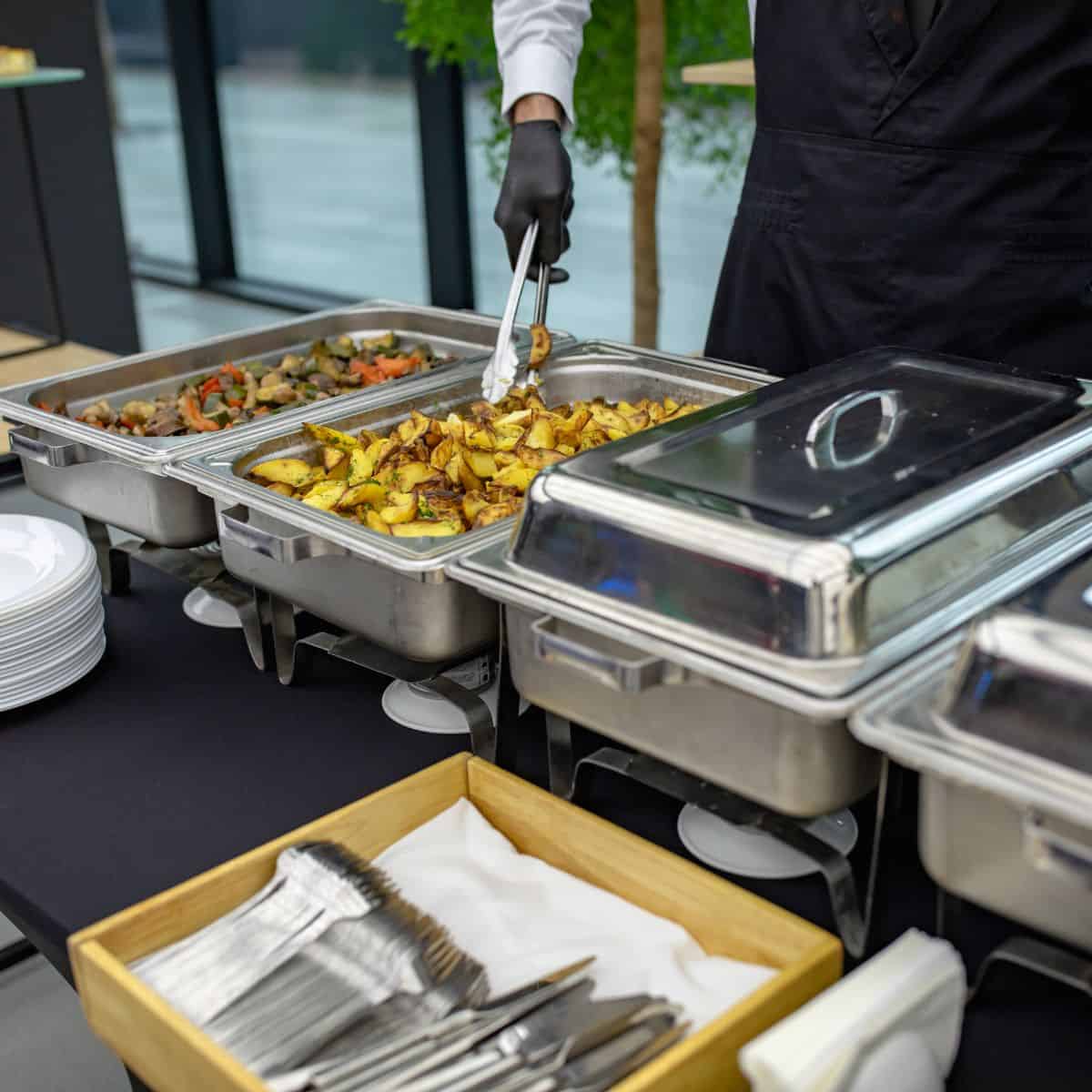
Warming trays and buffet servers: Ideal for catered events, buffets, and serving lines. These are usually wired to provide consistent heat for an extended period of time. For best results, food should be kept covered to retain heat and moisture.
Chafing dishes: Great for keeping food warm at buffets or large gatherings. These use water baths heated by Sterno fuel canisters to provide even, indirect heat to food.
Slow cookers and crockpots: Ideal for dishes like soups, stews, sauces, and shredded meats. These appliances typically have pre-programmed settings that keep food at 140°F for an extended period. They also feature auto-shutoffs for peace of mind.
Warming drawers: Under most ovens can be used to hold food at a steady temperature before serving. These not only keep food at a safe temperature, but they also maintain moisture levels with humidity controls often located on the oven's control panel or the drawer itself. They are especially useful for keeping cooked meats, breads, and fried foods warm.
Oven and Stovetop Options
If you have access to a kitchen, using an oven or stovetop is a great way to maintain the right temperature without drying out or overcooking your dish.
Oven Holding
Set the oven to 200°F–250°F to keep food hot without cooking it further.
Keep food covered with foil or a lid to retain moisture and prevent drying.
Place a pan of water in the oven for extra humidity if needed.
Use probes for baked dishes, roasted meats, and casseroles.
Stovetop Holding
Use low heat settings to maintain the warmth of soups, stews, and sauces.
Stir food occasionally to prevent burning or uneven heating.
For delicate foods like sauces or gravies, use a double boiler or a simmering water bath to keep them warm without scorching.
Use Insulated Serveware
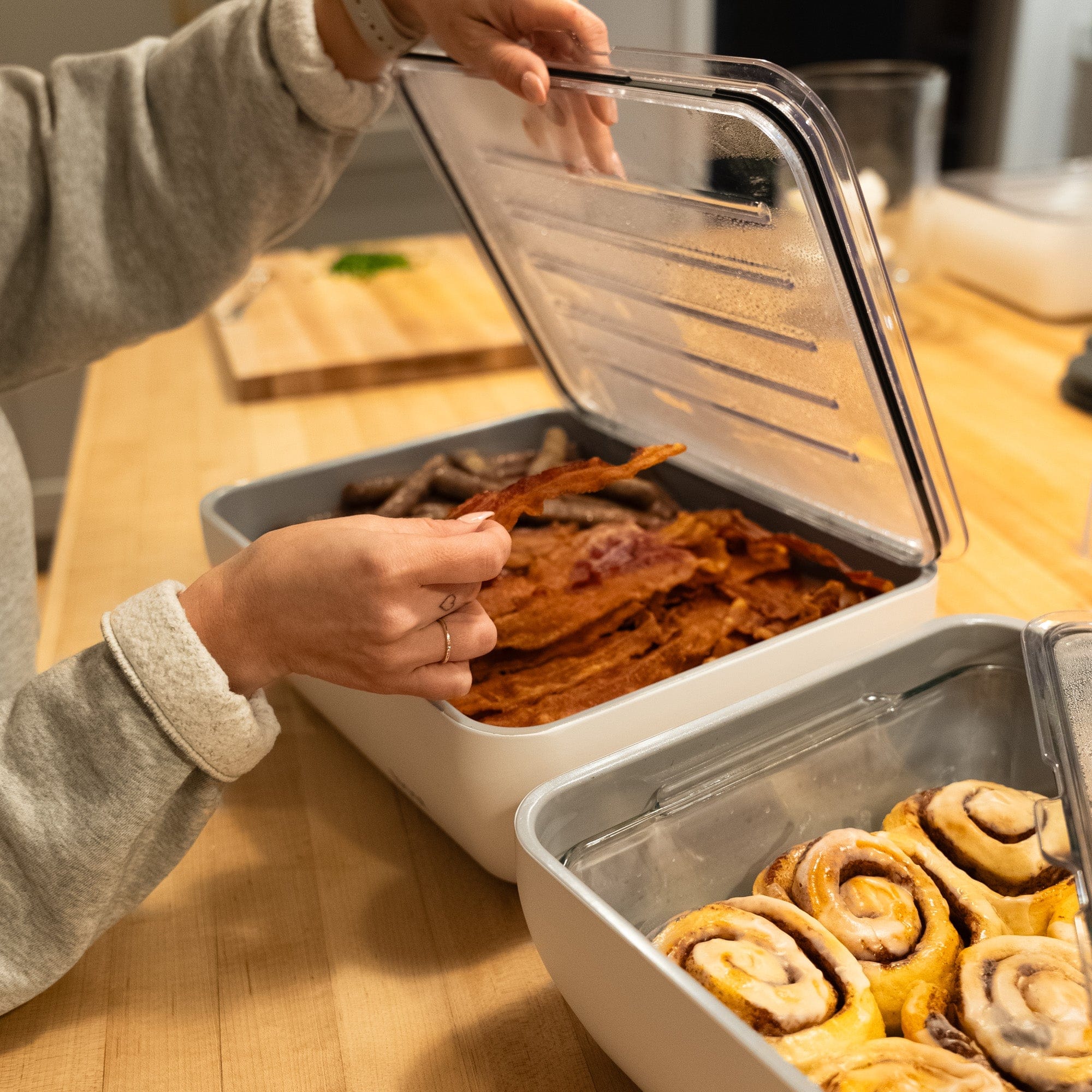
Using insulated serveware is one of the most effective ways to keep food hot while transporting and plating. Thermal food carriers help maintain temperatures well above the danger zone for extended periods without needing electricity or a fuel source. They help retain moisture and freshness as well, keeping food appetizing as well as safe for guests.
Thermal carriers from food trucks or designed to keep hot food hot during the last mile of delivery are the most convenient option for keeping your food hot on the go. With a non-slip base, secure and stackable lids, and an insulated carrier, your serveware is the most convenient option for keeping food hot on the go.
Featured Product
Keep Your Food Warm with Professional-Grade Equipment
Discover the Forza 30-Inch Professional Warming Drawer — designed to maintain the perfect holding temperature for all your dishes.
Forza 30" Warming DrawerKeep Your Guests Safe and Your Food Delicious
Keeping food at the right temperature does not have to be complicated. By using your oven, slow cooker, warming trays, or an insulated serving dish from trusted brands, you can easily maintain safe and enjoyable meals for your family and guests. A little planning and the right techniques will help ensure that every dish is served hot, flavorful, and safe to eat.
For effective food safety, insulated serveware keeps your dishes at the perfect serving temperature so you can focus on enjoying your meal with confidence.

Published by Backyard Provider — Your trusted source for outdoor living and home essentials.