
Baseball Pitching Machines: Our Top 3 Selections
Whether you're building a professional training facility in your backyard or outfitting a recreational area, baseball pitching machines are essential equipment for player development. These mechanical training tools deliver consistent pitches hour after hour, helping athletes refine their swing mechanics, develop timing precision, and build the muscle memory needed for game-day success.

Installing a quality pitching machine in your outdoor training space transforms ordinary practice sessions into focused skill-building opportunities. From youth league players taking their first swings to seasoned athletes fine-tuning their approach, these machines provide the reliable repetition that creates championship-caliber hitters.
Why Invest in Baseball Pitching Machines for Your Training Facility?
Setting up a proper training environment requires the right equipment. Baseball pitching machines aren't just convenient—they're game-changers for anyone serious about developing batting skills. Here's why these machines have become must-have equipment for backyard training facilities and outdoor practice areas.
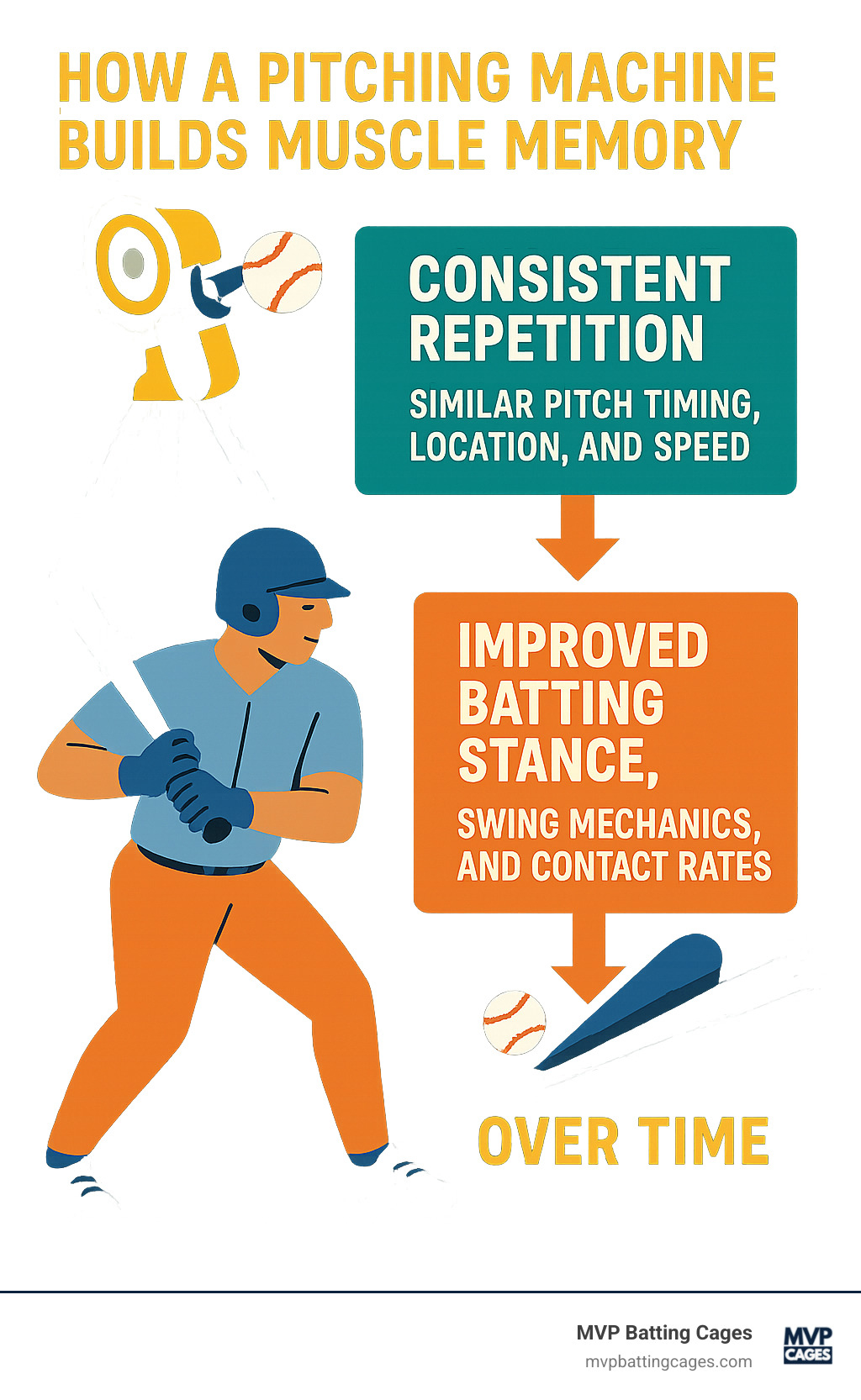
How Training Machines Build Champion Hitters
Consistent Repetition
Every pitch delivered with machine precision helps build reliable swing patterns and timing
Muscle Memory Development
Regular practice sessions create the neural pathways needed for automatic, powerful swings
Improved Performance
Targeted training over time produces measurable improvements in contact rate and power
Adjustable Speed
Customize pitch velocity to match skill level and progressively increase difficulty
The beauty of modern pitching machines lies in their versatility. Whether you're working on timing against fastballs, learning to recognize breaking pitches, or simply getting quality reps when live pitching isn't available, these machines deliver. They're particularly valuable for backyard training setups where consistent practice partners might not always be available.
Professional Insight: Coaches and training specialists emphasize that the controlled environment provided by pitching machines allows hitters to isolate specific aspects of their swing. This focused approach accelerates skill development more effectively than random batting practice alone.
Understanding the Mechanics: How Baseball Pitching Machines Operate
Internal mechanism of a professional-grade pitching machine
Before investing in equipment for your training facility, it's helpful to understand the engineering behind these precision machines. Most baseball pitching machines utilize one of two primary mechanical systems, each with distinct advantages for different training applications.
Wheel-Based Delivery Systems
The most common design employs spinning wheels—either one, two, or three—that grip and propel the ball toward the hitting zone. Single-wheel machines offer simplicity and reliability, making them ideal for straightforward fastball practice. Two-wheel systems provide enhanced control and can generate spin for curve balls and sliders. Three-wheel configurations represent the premium tier, capable of simulating virtually any pitch type with remarkable accuracy.
The speed is controlled by adjusting wheel rotation—higher RPMs produce faster pitches, while the angle of the wheels determines trajectory. Advanced models allow independent wheel speed adjustment, creating the differential spin needed for realistic breaking pitches.
Pneumatic Propulsion Technology
Air-powered machines use compressed air to launch balls through a barrel, similar to how a cannon operates. These systems excel at producing extremely high velocities and are often chosen for professional training facilities. The air pressure determines pitch speed, while the machine's angle controls the ball's path.
While pneumatic systems typically can't replicate breaking pitches as effectively as wheel-based machines, they're unmatched for raw velocity training and durability in heavy-use environments. They're particularly popular for outdoor batting cage installations where weather resistance matters.
Equipment Selection Tip: For backyard training facilities, wheel-based machines often provide the best balance of versatility, pitch variety, and ease of use. They're excellent for working with multiple players of varying skill levels.
Essential Features of Premium Baseball Pitching Machines
When evaluating pitching machines for your training setup, certain features separate professional-grade equipment from basic models. Here's what to look for when making your investment:
Velocity Range and Adjustment
Quality machines should offer a broad speed spectrum, typically from 20 mph for young beginners up to 90+ mph for advanced players. Look for equipment with smooth, precise adjustment mechanisms—not just "low, medium, high" settings but true variable control. Digital displays showing exact velocity help track progression and ensure consistent training sessions.
Pitch Variety Capabilities
The ability to throw different pitch types exponentially increases training value. Premium machines can simulate fastballs, curveballs, sliders, and changeups. Three-wheel designs offer the most versatility here, allowing you to replicate the full arsenal a hitter might face in competition. Consider whether you need this feature based on the skill level of your primary users.
Automatic Ball Feeding Systems
Manual ball feeding interrupts training flow and requires an assistant. Automatic feeders maintain consistent pitch intervals, allowing solo practice sessions and maximizing repetitions. Look for feeders with adequate capacity—at least 12-18 balls—to minimize reload frequency during intensive training blocks.
Durability and Weather Resistance
For outdoor installations, construction quality is paramount. Commercial-grade materials, powder-coated finishes, and sealed electronic components protect your investment from the elements. Heavy-duty wheels and robust framework ensure the machine withstands years of high-impact use without degradation in performance.
Portability and Storage
Unless you're building a permanent batting cage structure, consider weight and transport features. Built-in wheels, foldable legs, and compact dimensions make it easier to set up your training area and store equipment when not in use. Some models break down for transport to different practice locations.
Ideal Speed Range
20-95 MPH
Feeder Capacity
12-18 Balls
Power Source
110V AC Standard
Pitch Types
4-6 Variations
Different Categories of Pitching Machines Explained
The market offers several distinct types of pitching machines, each engineered for specific training applications and skill levels. Understanding these categories helps you select equipment perfectly matched to your facility's needs.
Entry-Level Training Machines
Designed for youth players and recreational use, these machines typically feature single-wheel designs with speed ranges from 20-50 mph. They're lightweight, affordable, and simple to operate—perfect for introducing young athletes to machine-fed batting practice. While they may lack advanced features like pitch variety, they excel at providing consistent fastballs for fundamental skill development.
Intermediate Two-Wheel Systems
These machines represent the sweet spot for serious amateur players and well-equipped backyard facilities. With speeds reaching 70-80 mph and the ability to throw basic breaking pitches, two-wheel machines provide substantial training value. They're robust enough for daily use yet remain reasonably priced compared to professional-tier equipment.
Professional Three-Wheel Machines
The pinnacle of pitching machine technology, three-wheel systems can replicate any pitch in baseball with uncanny accuracy. Independent wheel control allows for precise spin manipulation, creating movement identical to elite pitchers. These machines excel in college training facilities, professional organizations, and serious private training centers where top-tier performance justifies the premium investment.
Specialty Machines for Specific Applications
Beyond standard categories, specialized machines serve niche training purposes. Softball-specific models account for the larger ball size and underhand delivery. Fielding machines throw ground balls and pop flies for defensive practice. Some innovative designs even simulate specific pitcher deliveries or game situations for advanced preparation.
Three Outstanding Pitching Machines: Different Performance Tiers
After extensive evaluation of available equipment, we've identified three exceptional machines representing different investment levels and capability ranges. Each excels in its category, providing outstanding value for specific training applications.
Budget-Conscious Option: Maximum Value for Developing Players
For families and facilities prioritizing affordability without sacrificing quality, entry-level machines from established manufacturers deliver impressive performance. These models typically feature single-wheel designs with manual feeding, offering speeds up to 60 mph—plenty for youth through early high school players. The straightforward construction means fewer components to maintain and exceptional reliability.
While lacking advanced pitch variety, these machines excel at their primary mission: delivering consistent fastballs for hundreds of repetitions. They're ideal for backyard batting cages where the focus is fundamental swing development rather than replicating game conditions. The lightweight design makes setup and breakdown manageable for one person, and the modest power requirements work with standard electrical outlets.
Best For: Youth players, recreational training, families on a budget, situations where portability matters, and facilities focused on basic skill development.
Mid-Range Champion: Balanced Performance and Features
The middle tier offers the best overall value for serious training facilities. Two-wheel machines in this category reach velocities around 85 mph and can throw breaking pitches with realistic movement. Automatic ball feeders come standard, maintaining training intensity without interruption. These machines represent the equipment choice for competitive players who practice regularly and need varied pitch types to advance their skills.
Construction quality takes a significant step up from entry models. Heavy-duty frames provide stability even at maximum velocity, while commercial-grade wheels withstand intensive use without degradation. Many include digital displays, remote controls, and adjustable legs for precise pitch location. The investment pays dividends in training quality and equipment longevity.
Best For: High school and college players, competitive club teams, private training facilities, coaches working with multiple skill levels, and anyone seeking professional-quality training without the premium price tag.
Premium Selection: Elite Performance Without Compromise
At the top tier, three-wheel machines deliver capabilities matching professional training centers. Every pitch type becomes possible with precise control over speed, movement, and trajectory. Velocities exceeding 90 mph challenge even elite hitters, while programmable sequences can simulate specific pitcher tendencies or game situations. These machines transform practice into a sophisticated training laboratory.
The engineering behind premium equipment is evident in every detail. Sophisticated electronics provide fingertip control over every variable. Hardened alloy components ensure decade-long service life even with daily use. Advanced safety features protect operators and players. For training facilities where excellence isn't negotiable, these machines justify their cost through unmatched performance and reliability.
Best For: Professional organizations, elite training facilities, college programs, serious private academies, and dedicated athletes pursuing the highest levels of competition where training quality directly impacts career advancement.
Key Considerations: Selecting the Right Equipment for Your Training Space
Choosing among the many available pitching machines requires careful consideration of several factors beyond just specifications and price. Here's a framework for making the optimal decision for your specific situation.
Match Equipment to Skill Level and Goals
Honestly assess the current abilities and future aspirations of your primary users. A youth player developing fundamental mechanics doesn't need a machine capable of throwing 95 mph cutters. Conversely, a college-bound athlete requires equipment that can challenge them as they improve. Consider whether you'll have users across multiple skill levels, which might justify a more versatile machine even if some features go unused initially.
Evaluate Your Available Space and Setup
The physical dimensions of your training area influence machine selection. Measure your space carefully, accounting for safe distances behind the machine for operation and in front for hitting zones. Consider whether you need portable equipment that moves between locations or a permanent installation. Think about storage—where will the machine live when not in use, and can you move it there easily?
Calculate True Ownership Costs
The purchase price represents just one component of total investment. Factor in balls (you'll need quality practice balls), potential accessories like protective screens and ball returns, and ongoing maintenance requirements. Electric machines need accessible power, while pneumatic systems require air compressor infrastructure. Higher-quality equipment often costs more initially but requires less frequent service and lasts dramatically longer.
Plan for Growth and Expansion
Players improve, sometimes rapidly. Equipment that challenges a 12-year-old may become inadequate for the same player at 15. If budget allows, choosing a machine with capabilities beyond current needs provides room for growth. Alternatively, recognize that entry-level equipment serves its purpose for a season or two before players outgrow it—that's okay if it fits your budget and timeline.
Equip Your Training Facility with Professional-Grade Technology
Transform your backyard or training space into a serious development facility with equipment that delivers results. Whether you're coaching a young player through their first seasons or working with advanced athletes refining elite skills, the right pitching machine accelerates progress and maximizes every practice session.
Our featured selection combines proven performance with exceptional durability—exactly what you need for a backyard provider setup built to last. Don't let inconsistent practice partners limit development. Invest in equipment that's ready whenever you are.
Heater Baseball Machine