
Clean, Safe, and Remarkably Efficient Heating Solutions

Throughout the colder months of the year, a gas fireplace becomes an essential addition to any home. When a wood-burning unit becomes too labor-intensive, and you're searching for a more convenient heating option, you may want to explore gas alternatives. Contemporary gas fireplaces are exceptionally effective heating solutions designed for enhanced energy performance. In reality, they can achieve efficiency ratings reaching 86% or higher.
Several key advantages make gas fireplaces an outstanding choice:
- ✓ Reliable, flexible, and enduring heat output
- ✓ Straightforward installation process
- ✓ Efficient space utilization
- ✓ Customizable temperature management with central heating integration
- ✓ Reduced heat loss for enhanced safety
- ✓ No chimney infrastructure needed
- ✓ Minimized concern of leakage or harmful emissions
- ✓ Minimal maintenance requirements and easy cleaning
- ✓ Strong potential for increased property value
Whether your interest lies in conserving energy or finances, gas fireplaces deliver both, creating a gas fireplace in the most suitable location of your living space. A gas unit provides remarkable heating efficiency without sacrificing the ambiance and convenience of traditional fireplaces. The contemporary design seamlessly integrates modern comfort with classic aesthetic appeal.
Understanding Gas Fireplace Operation
Fundamentally, a gas fireplace generates sustained warmth using three essential mechanisms including an intake, combustion chamber, and exhaust system.
There are also two distinct types of gas fireplaces available, each one naturally different in construction and functionality. We'll explore the primary one, as vented gas fireplaces are commonly preferred to deliver warmth while maintaining superior air quality and occupant safety considerations.
The fundamental distinction between a direct vent unit and a naturally-vented gas fireplace lies in their circulation and exhaust mechanisms.
A direct vent fireplace features two separate air ducts connecting between the fireplace and the exterior. It extracts fresh air outside through a single duct for combustion purposes, while the alternative duct channels exhaust from the fireplace to the exterior environment. Meanwhile, a naturally-vented fireplace operates differently in that it draws air from inside the room to facilitate combustion and then directs the emissions upward through a traditional flue. The exhaust is redirected through a standard chimney or pipe route to transfer combustion byproducts from the fireplace to the outside environment.
Exploring Direct Vent Gas Fireplaces
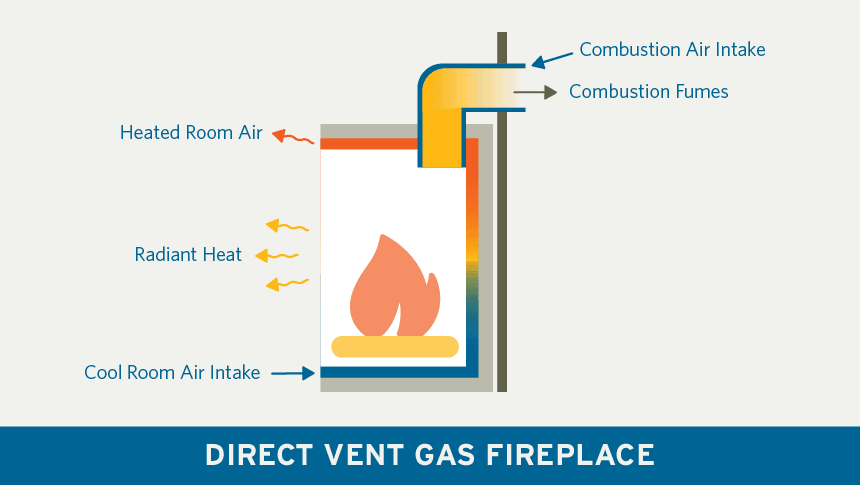
DIRECT VENT GAS FIREPLACE
Among the most significant advantages of gas fireplaces over traditional wood-burning fireplaces is their exceptional efficiency. Contemporary traditional fireplaces, which rely on natural draft from the chimney, often allow a substantial portion of generated heat to dissipate outside rather than warming your living space.
The reality of a direct vent system means that the unit will operate more efficiently and more effectively, and because its tight seal prevents cold air infiltration when you're not utilizing your fireplace.
Direct vent units also require minimal installation complexity. Your home doesn't need pre-existing chimney infrastructure, and the direct vent system used for intake air and exhaust can route horizontally through the side of your home or wall, or vertically through the roof. That flexibility means you can safely install a gas fireplace nearly anywhere, whether that's a kitchen, bedroom, or even a bathroom.
Exploring Natural Vent B-Vent Gas Fireplaces
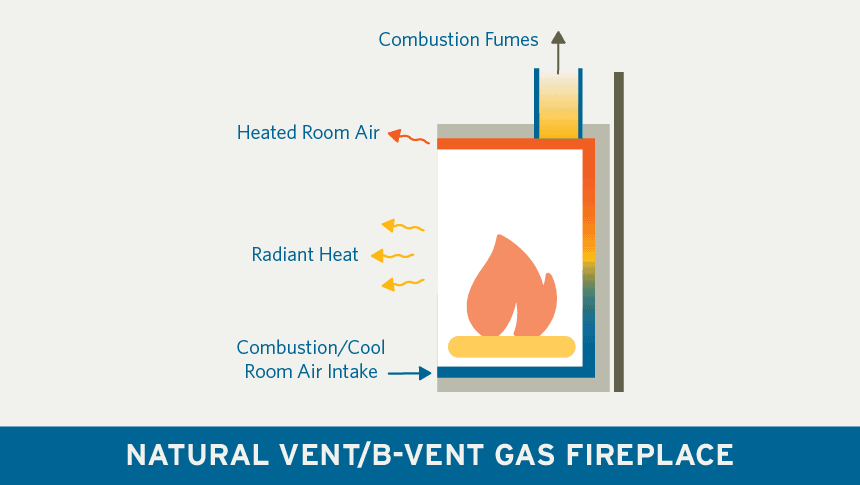
NATURAL VENT/B-VENT GAS FIREPLACE
While naturally-vent fireplaces don't deliver quite as efficiently as direct vents do, they are still substantially superior to traditional wood-burning fireplaces.
If yours is a popular selection for remodels, or if they don't require as much clearance to install, and can use an existing masonry chimney or a metal chimney. They simply also be a good choice if you're looking for a flame that's aesthetically closer to traditional wood-burning fire. Since B-vent fireplaces introduce airflow lifelines.
One disadvantage of B-vents involves hotter combustion gases expelled more directly, and potentially an increased opportunity for cold air to leak into your home.
Additional Important Considerations
Gas Fireplace Conversion
If you currently have anything requiring fireplace heat that would like to convert to gas, installing a fireplace insert could be an excellent option for your home. Natural gas or propane inserts are designed to fit precisely into your existing fireplace cavity. Inserts are available in either natural vent or direct vent systems.
Gas Fireplace Styles
Whether you prefer traditional ceramic logs or a more modern look of flames dancing among glass or stone rocks, there are numerous aesthetic options to choose from. A fireplace can complement any decor, from rustic to contemporary to transitional wood-burning styles.
Ignition Systems
A beneficial feature to consider if you're in the market for a gas fireplace is the type of ignition. A fireplace with electric ignition utilizes a battery backup or electronic spark ignition, requiring less energy than a standing pilot option. A standing pilot ignites virtually immediately as you adjust the thermostat or control panel. However, they consume more energy and can be a good option during power outages, as they function independently without electricity.
On the other hand, an electronic intermittent pilot system, which uses an electric option to ignite the flame every time as needed, plus a battery backup for power outage situations.
Professional Installation and Upgrades
If you're ready to make the upgrade to an energy-efficient gas fireplace, professional installation is essential. When you add or replace a fireplace installation, carefully select a licensed contractor who has specialized experience with gas installations. Be sure to inquire about available rebates or incentives that may be offered in your area. Also consider a battery backup for your fireplace ignition system.
Gas fireplaces represent a perfect combination of efficiency, convenience, and aesthetic appeal for modern homes. Whether you choose a direct vent or natural vent system, you're investing in a heating solution that provides reliable warmth, minimal maintenance, and exceptional energy performance for years to come.