
An under-counter wine and beer cooler represents a sophisticated appliance engineered to integrate seamlessly into your kitchen or bar cabinetry. This comprehensive guide explores the essential characteristics that distinguish these units and provides a strategic framework for selecting the ideal model to safeguard your investment in beverages while elevating your entertaining capabilities.
The Essential Features of an Integrated Cooler
Not every cooling appliance is manufactured equal, and comprehending the core features proves crucial. The most significant distinction resides in the cooling technology. For a collection that encompasses both red and white wines, a dual-zone cooling system is indispensable. This capability allows you to maintain two distinct temperature environments simultaneously—for instance, 55°F for reds and 45°F for whites—within a single unit. This is vital because, as established by a comprehensive 1999 study from the University of California, Davis, consistent and precise temperature is the single most critical factor in preserving a wine's aroma and flavor profile over time.
Beyond temperature, consider these key elements:
UV-Protected Glass Door: Harmful ultraviolet light can degrade and prematurely age both wine and beer. A door with UV protection is a necessary safeguard against light damage that compromises quality and taste.
Vibration Control: Compressor vibrations can disturb the sediment in wine, potentially altering its character and disrupting the aging process. Look for models with low-vibration compressors or advanced insulation that minimizes this effect.
Adjustable Shelving: Versatility is key. Shelves that can be reconfigured to accommodate large champagne bottles, craft beer growlers, or standard wine bottles offer maximum utility and flexibility for diverse collections.
Exploring a specialized retailer can provide a clear view of which models incorporate these advanced features and deliver the performance you need.
Selecting the Right Model for Your Space and Collection
Once you understand the features, the next step involves matching a cooler to your specific needs. This decision hinges on two primary factors: your available space and the composition of your beverage collection. Start by measuring the exact width, height, and depth of your under-counter cabinet cut-out, remembering to account for necessary ventilation gaps as specified by the manufacturer.
The nature of your collection should guide the cooler's capacity and configuration. A beer enthusiast or someone with a predominantly white wine collection might find a spacious, single-zone unit perfectly adequate. In contrast, a serious oenophile with a diverse collection will find the investment in a dual-zone under-counter wine cooler non-negotiable. For those seeking a premium solution that combines precise climate control with a seamless aesthetic, reviewing the selection of under-counter wine coolers is an excellent starting point. Ultimately, the goal is to choose a unit that not only fits physically but also aligns with your long-term consumption and collecting habits.
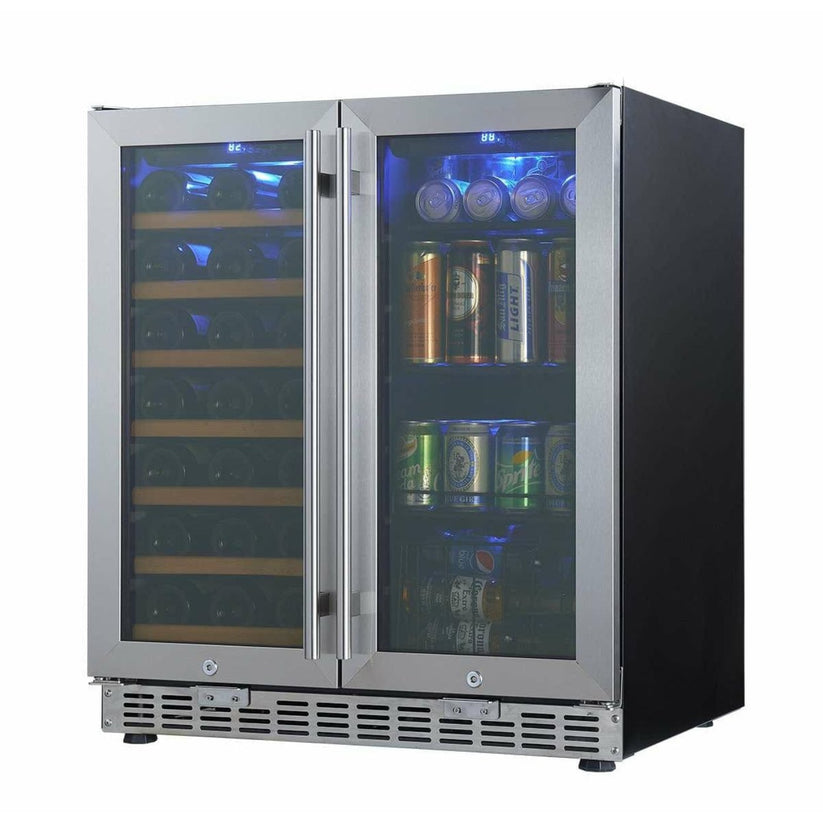
Premium 30" Under-Counter Wine & Beer Cooler Combo
Experience professional-grade beverage storage with advanced dual-zone temperature control, Low-E glass UV protection, and seamless under-counter integration designed to preserve your wine and beer collection at optimal conditions.
In summary, choosing an under-counter wine and beer cooler requires careful consideration of both technical features and personal needs. Prioritizing factors like dual-zone temperature control, UV protection, and low vibration will ensure your beverages are stored in an optimal environment. By accurately assessing your space and the scope of your collection, you can select a model from a reputable source that offers both perfect preservation and seamless integration, ultimately elevating your home entertaining experience.
Understanding Temperature Zones and Climate Control
Temperature management stands as the cornerstone of proper beverage storage, directly impacting flavor development, aging potential, and overall quality. Different beverages require distinct temperature ranges to reach their full potential, making zone configuration a critical consideration when selecting your under-counter cooler.
Red wines typically perform best when stored between 55°F and 65°F, with 55°F representing the ideal for long-term aging. This temperature range allows the wine to develop complexity while maintaining structural integrity. White wines and rosés prefer cooler temperatures ranging from 45°F to 55°F, which preserves their delicate aromatics and crisp acidity. Sparkling wines and champagnes benefit from even cooler storage at 40°F to 50°F, ensuring optimal effervescence and freshness.
Beer storage requirements vary by style but generally fall into narrower ranges than wine. Craft beers, ales, and IPAs maintain optimal quality between 45°F and 55°F, while lagers and pilsners prefer slightly cooler temperatures from 38°F to 45°F. The ability to maintain these precise temperature ranges consistently, without significant fluctuation, determines whether your beverages age gracefully or deteriorate prematurely.
Dual-zone coolers provide the flexibility to accommodate these varying requirements within a single appliance. The independent temperature controls allow you to dedicate one zone to reds while maintaining another for whites and beers, eliminating the compromise inherent in single-zone units. This versatility proves particularly valuable for collectors with diverse tastes or those who entertain frequently and want to serve different beverages at their optimal temperatures.
Capacity Considerations and Bottle Configuration
Determining the appropriate capacity for your under-counter cooler requires honest assessment of your current collection size and future growth expectations. Manufacturers typically rate capacity based on standard 750ml Bordeaux-style wine bottles, but actual storage capacity varies depending on your specific bottle types and storage preferences.
Standard under-counter models range from compact 18-bottle units suitable for casual collectors to expansive 60+ bottle configurations for serious enthusiasts. However, these ratings assume uniform bottle sizes and specific shelving configurations. If your collection includes larger format bottles like magnums, Burgundy-style bottles with wider diameters, or champagne bottles, actual capacity will be lower than advertised specifications.
Consider your storage approach when evaluating capacity. Display-oriented storage with single-depth shelving allows you to see every bottle but reduces overall capacity compared to multi-depth storage where bottles stack front-to-back. Some collectors prefer the visibility and accessibility of single-depth arrangements despite the capacity trade-off, while others prioritize maximum storage density.
For combination wine and beer coolers, factor in the space requirements for different container types. Beer bottles and cans require different shelf configurations than wine bottles, and craft beer bombers or growlers demand significantly more vertical clearance. Adjustable or removable shelving provides the flexibility to accommodate mixed collections, though this adaptability may reduce maximum rated capacity when configured for diverse bottle sizes.
Installation Requirements and Ventilation
Proper installation ensures your under-counter cooler operates efficiently and maintains consistent temperatures throughout its lifespan. Unlike freestanding units that can be placed anywhere, built-in coolers have specific ventilation requirements that must be met to prevent overheating and premature compressor failure.
Front-venting designs direct heat exhaust through the toe kick or front grille, making them suitable for true built-in installation with cabinetry on both sides and above. This ventilation approach allows heat to escape without requiring side or rear clearance, maximizing space efficiency. Verify that your chosen model features front ventilation if you plan fully integrated installation within existing cabinetry.
Measure your cabinet opening carefully, accounting for the unit's exact dimensions plus any additional clearance specified by the manufacturer. Standard under-counter heights range from 32 to 35 inches, designed to fit beneath countertops with standard 36-inch heights. Width options typically include 15, 18, 24, and 30-inch models, corresponding to standard cabinet widths. Depth specifications vary but generally range from 22 to 24 inches to align with standard counter depth.
Electrical requirements for under-counter coolers typically involve standard 115V household circuits, though some larger or feature-rich models may require dedicated circuits. Ensure electrical outlets are positioned accessibly for connection without requiring you to pull the unit out for service. Some installations benefit from electrical outlets located in adjacent cabinets with access holes drilled through cabinet walls, providing cleaner aesthetics while maintaining serviceability.
Consider door swing direction during installation planning. Most under-counter coolers offer reversible doors or allow you to specify hinge location during ordering. The door should swing open without blocking access to adjacent cabinets or appliances, and it should open fully to allow easy bottle removal from rear shelf positions. Some locations may benefit from left-hinged doors while others work better with right-hinged configurations.
Energy Efficiency and Operating Costs
Energy consumption represents an ongoing operational cost that varies significantly among different cooler models and technologies. Understanding these differences helps you evaluate true ownership costs beyond initial purchase price, potentially saving hundreds of dollars over the unit's lifespan.
Compressor-based cooling systems, the most common technology in under-counter wine coolers, offer excellent temperature stability and powerful cooling capacity but consume more energy than alternative technologies. However, modern compressor designs have improved dramatically in efficiency, and many quality units now feature energy-saving modes that reduce consumption during periods of stable temperature maintenance.
Thermoelectric cooling represents an alternative technology that uses solid-state heat pumps rather than traditional compressors. These systems operate more quietly and consume less energy, making them attractive for smaller installations or noise-sensitive locations. However, thermoelectric coolers generally offer less cooling power and struggle to maintain temperature in warm ambient environments, limiting their effectiveness in some installation scenarios.
Insulation quality dramatically affects energy efficiency regardless of cooling technology. Multi-layer insulation with minimal thermal bridging maintains stable internal temperatures with less compressor run time, reducing energy consumption. Double or triple-pane glass doors with Low-E coatings provide superior insulation compared to single-pane glass, though they increase initial cost. This investment typically pays for itself through reduced energy consumption over several years of operation.
LED lighting systems have become standard in quality wine coolers, offering multiple advantages over traditional incandescent bulbs. LEDs consume significantly less energy, generate minimal heat that won't affect internal temperatures, and last far longer, reducing maintenance requirements. Some advanced models include motion-activated lighting that illuminates only when needed, further reducing unnecessary energy consumption.
Design Aesthetics and Finish Options
While functionality takes precedence in cooler selection, aesthetic considerations ensure your investment enhances rather than detracts from your kitchen or bar design. Under-counter coolers serve as visible design elements that should complement your existing décor and cabinetry finishes.
Stainless steel finishes remain the most popular choice for contemporary kitchens, offering clean, professional aesthetics that coordinate with modern appliances. Different stainless grades and finishes create varied appearances—from brushed textures that hide fingerprints to polished mirrors that make bold statements. Verify that stainless finishes match or complement your other appliances, as variations in tone and texture become noticeable when appliances sit adjacent to each other.
Black stainless steel has gained popularity as a sophisticated alternative to traditional stainless, offering similar durability with a more dramatic appearance. This finish works particularly well in modern or transitional designs and shows fewer fingerprints than traditional stainless. However, achieving consistent black stainless finishes across different appliance brands can prove challenging, so prioritize visual coordination when mixing manufacturers.
Glass door designs range from fully transparent to tinted or frosted options. Clear glass maximizes visibility, allowing you to admire your collection and locate specific bottles without opening the door. However, transparent glass provides minimal UV protection unless specifically treated with Low-E coatings. Tinted glass offers a good compromise, providing UV protection while maintaining visibility. Frosted or mirrored glass creates more contemporary aesthetics but eliminates the display aspect that many collectors value.
Interior design elements affect both aesthetics and functionality. Wood shelving creates warm, traditional appearances that showcase bottles beautifully, though it may absorb odors over time. Metal shelving offers a more contemporary look with excellent durability and easier cleaning. Some premium models feature slide-out shelving that provides easier access to rear bottles, combining functionality with upscale aesthetics.
Maintenance Requirements and Long-Term Care
Proper maintenance ensures your under-counter cooler continues operating efficiently and reliably throughout its expected lifespan. Understanding routine care requirements and potential maintenance needs helps you budget time and resources for ongoing ownership responsibilities.
Regular cleaning maintains hygiene and prevents odor development that could affect your stored beverages. Interior surfaces should be wiped down several times yearly using mild, non-abrasive cleaners that won't damage finishes or leave chemical residues. Remove all bottles before cleaning to access shelves thoroughly and check for any spills or debris that might have accumulated in corners or tracks.
Glass doors require periodic cleaning to maintain clarity and aesthetic appeal. Use appropriate glass cleaners and microfiber cloths to prevent streaking and scratching. For units with stainless steel exteriors, specialized stainless cleaners help maintain finish appearance while providing protective coatings that resist fingerprints and smudges. Always clean in the direction of the steel grain to avoid visible scratches.
Condensation management varies by model but generally requires periodic attention. Some units feature automatic defrost cycles that eliminate ice buildup, while others require manual defrosting when frost accumulation becomes noticeable. Check and clean condensation drains regularly to prevent clogs that could cause water accumulation inside the unit or leakage onto floors.
Air filter maintenance, where applicable, helps maintain optimal performance and energy efficiency. Some models include replaceable charcoal filters that remove odors and keep internal air fresh. Replace these filters according to manufacturer recommendations—typically annually—to maintain their effectiveness. Additionally, ensure that external ventilation grilles remain unobstructed by dust or debris that could impede airflow and reduce cooling efficiency.
Warranty Coverage and Customer Support
Warranty terms provide valuable insight into manufacturer confidence in their products while offering financial protection against defects and premature failures. Understanding warranty coverage before purchasing helps you evaluate long-term value and identify potential red flags that might indicate quality concerns.
Standard warranty coverage for under-counter coolers typically includes one to two years for parts and labor on the entire unit, with extended coverage—often five years or more—for critical components like compressors and sealed refrigeration systems. Premium manufacturers often provide longer warranty periods, reflecting their confidence in build quality and reliability. Compare warranty terms among competing models at similar price points to identify manufacturers standing behind their products most strongly.
Read warranty fine print carefully to understand what's covered and what conditions might void coverage. Many warranties require professional installation and may be voided by unauthorized repairs or modifications. Some manufacturers exclude certain components or limit coverage based on usage patterns, such as commercial versus residential use. Understanding these limitations prevents unpleasant surprises if you need warranty service.
Customer support quality varies dramatically among manufacturers and can significantly impact ownership satisfaction. Research company reputations for service responsiveness, parts availability, and willingness to address customer concerns. Online reviews and user forums provide valuable insights into real-world service experiences. Companies with established service networks and readily available replacement parts offer better long-term support than those with limited infrastructure or poor customer service reputations.
Extended warranty options may be available through manufacturers or third-party providers. Evaluate these carefully, considering both cost and coverage terms. Extended warranties make most sense for high-value units or if you're particularly risk-averse, though many consumers find that quality products rarely require repair within extended warranty periods. Compare extended warranty costs against typical repair expenses to determine if the additional coverage offers genuine value for your situation.
Making Your Final Selection
Armed with comprehensive understanding of under-counter cooler features, requirements, and considerations, you're well-positioned to make an informed purchase decision that satisfies your beverage storage needs for years to come. The ideal cooler balances technical capabilities with practical considerations, fitting seamlessly into your space while protecting your collection.
Prioritize features based on your specific collection and usage patterns. Serious wine collectors with diverse bottles spanning red, white, and sparkling varieties will find dual-zone temperature control essential, while casual enthusiasts with simpler collections may find single-zone units perfectly adequate. Similarly, UV protection and vibration dampening matter most for those planning long-term bottle aging, whereas short-term storage for frequent consumption requires less concern about these factors.
Budget realistically for both initial purchase and ongoing operational costs. While premium models command higher upfront prices, their superior insulation, efficient operation, and longer lifespans often deliver better value over extended ownership periods. Conversely, budget models may suffice if your needs are modest or you're uncertain about long-term commitment to wine collecting. Balance aspirational features against practical needs to avoid overspending on capabilities you'll rarely use.
Visit showrooms when possible to see units in person and assess build quality, door operation, and aesthetic appeal firsthand. Online specifications provide valuable information, but physically examining units reveals quality details that specifications cannot convey. Pay attention to door seal quality, shelf construction, and overall fit and finish—these details indicate manufacturing standards and predict long-term satisfaction.
Finally, purchase from reputable retailers who stand behind their products and offer reliable delivery and installation services. The best under-counter cooler becomes a poor investment if delivery damages it or installation problems compromise operation. Established retailers with positive customer service reputations provide peace of mind and resources for addressing any issues that arise. Your investment in quality beverage storage deserves the protection of reliable retail partners committed to customer satisfaction.