
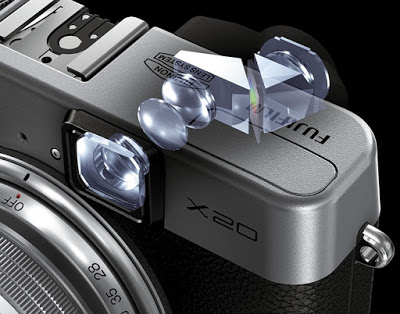
Every photographer eventually reaches that familiar crossroads: what should the next camera be? If you have ever found yourself torn between the elegant discretion of a rangefinder-style body and the commanding presence of a DSLR, you already understand the depth of this debate. It is a decision shaped equally by practical need and personal attachment, and neither answer is truly wrong.
Many photographers have spent years alternating between the two formats. Rangefinder film bodies from brands like Leica offered a quiet, intimate shooting experience, while digital cameras with off-center viewfinders such as the Fujifilm X-E series continued that legacy. Yet when the action picks up and fast-moving subjects demand quick tracking, there has always been a pull toward the centered viewfinder of SLR and DSLR designs. The choice depends on what kind of photography you pursue and which tools best match your creative instincts. It is deeply personal, often emotional, and ultimately a love affair with your craft.
From a purely technical standpoint, both categories of digital cameras can deliver nearly identical performance. Exposure accuracy, image quality, autofocus speed, interface design, and even electronic viewfinder resolution have reached a point where neither system holds a decisive technical edge. The differences that remain are rooted in design philosophy, in ergonomic choices that subtly shape how you interact with your subject and your environment.
The Rangefinder Love Affair

The rangefinder represents the original school of camera design. It was introduced to photography as a way to solve the focusing challenge, eventually coupling the distance-measuring mechanism directly with the taking lens. The off-center viewfinder was a necessary engineering response: two separate optical paths were needed, one for measuring distance and one for composing the frame. That architecture became iconic and defined the look and feel of cameras for generations.
Of course, the historical constraints of that design also introduced real limitations. For decades, rangefinder cameras shaped how photographers composed their images, and not always for the better. Photographers who favored 35mm film appreciated the compact form factor, but the framing experience was far from precise. The frame preview was only an approximation and shifted unpredictably as subject distance changed, particularly at close range where parallax error became most pronounced. Swapping between focal lengths was severely restricted by the optical viewfinder, and there was no way to visually confirm depth of field based on your chosen aperture. The focal-plane shutter curtain imposed a low flash sync speed. These were real trade-offs that came with the territory.
The good news is that nearly every one of those historical limitations has been resolved by modern digital technology. Today, shooting with a rangefinder-style digital camera is simply a pleasure. The compact body is less intimidating to your subject, which matters greatly in street photography and candid social settings where a large DSLR can feel confrontational. The viewfinder framing issue is gone thanks to electronic viewfinder technology, which delivers an exact preview of the final image regardless of focal length. Flash sync speeds now match those of DSLR bodies, and depth of field can be evaluated in real time through the EVF.
Put simply, there is no longer a legitimate technical reason to avoid a rangefinder-style digital camera. Numerous professionals have embraced models like the Leica M series for serious daily work, and the appeal extends well beyond nostalgia. The rangefinder aesthetic continues to attract photographers across every discipline who value discretion, elegance, and a more connected shooting experience.
The DSLR Dominance
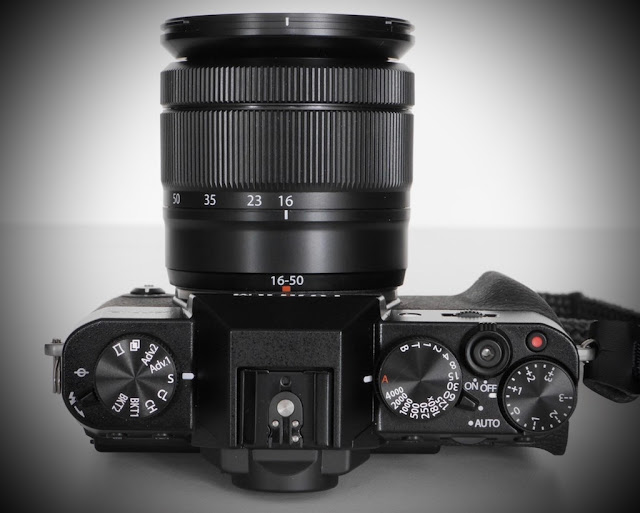
With electronic viewfinders now performing at extraordinary levels, you might wonder why anyone would still choose a DSLR-style body. The answer lies in history and in ergonomics that were perfected over decades. The SLR revolution, led by legendary models like the Nikon F, fundamentally transformed professional photography. It was a breakthrough that addressed nearly every weakness of the rangefinder design in one decisive stroke.
The SLR delivered precise through-the-lens framing, seamless lens interchangeability, real-time depth of field preview, faster flash sync speeds, and a centered viewfinder that made tracking moving subjects dramatically easier. The larger, more sculpted body accommodated motorized film advance and provided superior hand-feel during long shooting sessions. For action, sports, and news photography, the SLR was simply unmatched, and rangefinder systems could not compete.
The term “Reflex” itself describes the core mechanism: a mirror reflects the image upward through a prism, allowing the photographer to see exactly what the lens sees without the reversed image that plagued earlier designs. This reflex system dominated professional photography for over four decades. SLR bodies became synonymous with serious work, appearing in the hands of everyone from weekend hobbyists to elite photojournalists. Manufacturers continually refined the concept with enormous success, introducing improvements that kept the design relevant generation after generation.
Even now, in the digital era, the DSLR form factor retains its strong following despite the rise of high-quality electronic viewfinders. The reason is straightforward: a centered viewfinder remains the most natural and stable way to track a moving subject, especially when paired with a long telephoto lens. For action photography, having the viewing axis aligned directly with the lens axis is simply unbeatable. It allows confident panning on a tripod or monopod with precision and stability. There is no parallax displacement between your eye and the optical path, which is something that even the best off-center rangefinder designs cannot fully eliminate in practice.
The Verdict: Why Not Both?
Ultimately, each viewfinder philosophy will continue to have its devoted followers, and the decision rests entirely in your hands. Both designs have matured to a point where technical capability is no longer the deciding factor. What matters now is how the camera feels in your grip, how it complements the type of photography you love, and which design philosophy speaks to the way you see the world.
Perhaps the wisest approach is to keep both options available. Dedicate some days to the quiet intimacy of a rangefinder, and reserve others for the commanding presence of a DSLR when the action demands it. The best camera is always the one that disappears in your hands and lets you focus entirely on the moment in front of you.