
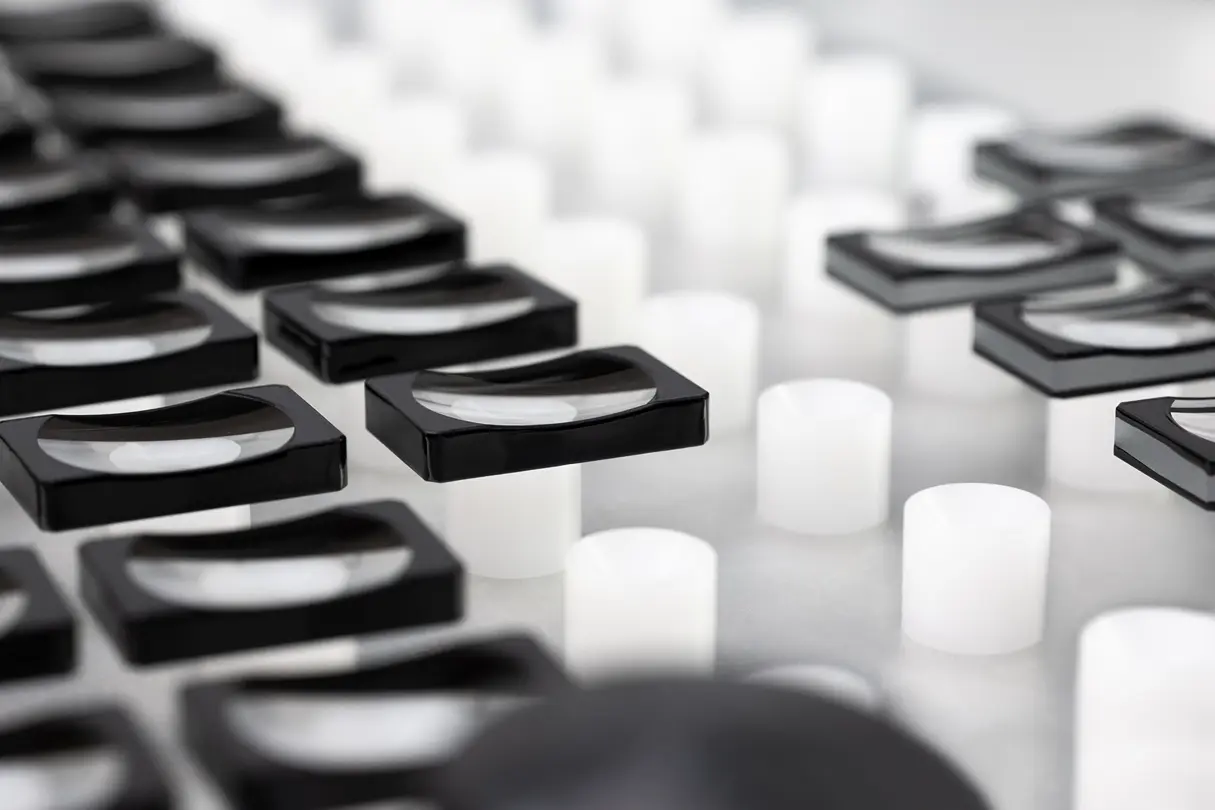
The rangefinder on the Leica M is far more than a triumph of precision engineering — it remains a powerful tool for composing images with exceptional clarity and control.
In the modern era of photography, many enthusiasts and even seasoned professionals are unfamiliar with rangefinder cameras. What exactly is a rangefinder? How does one work? And why does the Leica M system continue to rely on this technology rather than abandoning it for newer alternatives? To fully appreciate the rangefinder's value, a brief look at its historical context is necessary. It is worth remembering that photographers could only realistically do without an optical viewfinder once digital cameras introduced the option of a live preview on screen. Although the combined rangefinder and single viewfinder concept dates back to the Leica M3 of 1954, this approach to focusing and composing images carries a unique set of advantages that continues to make the Leica M a captivating photographic tool.

Advantages of the Rangefinder
Image Composition
The rangefinder holds several notable advantages over other viewfinder types, most of which only display what the lens itself sees. One of the most significant benefits is that the rangefinder always reveals more of the scene than what will actually be captured in the final photograph. Designed to accommodate focal lengths ranging from 28mm to 135mm, the rangefinder allows the photographer to see beyond the bright-line frame at all times. This wider perspective is immensely helpful when selecting the ideal crop, positioning your subject, or choosing the optimal focal length. Because the rangefinder consistently presents a broader view than any given lens, composing images on a Leica M becomes more instinctive and fluid — an experience that truly sets these cameras apart.
Accuracy
There are further advantages worth noting. The precision of the rangefinder does not depend on which focal length is being used. When shooting with standard and wide-angle lenses, rangefinder focusing is considerably more precise than most other focusing systems. This edge only diminishes somewhat with telephoto lenses. The rangefinder also performs reliably in dim lighting conditions, allowing the photographer to maintain confident control over focus in scenarios where contrast-based autofocus and other modern focusing methods can struggle or fail entirely. This dependability in challenging environments is one of the rangefinder's most valued characteristics.

How the Rangefinder Works
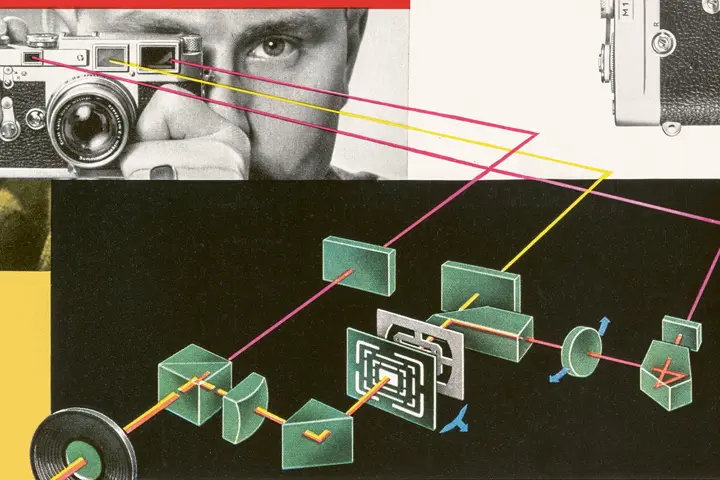
The rangefinder serves a dual purpose. First, it functions as an optical viewfinder, enabling the photographer to frame the shot. It presents a direct optical view of the scene and overlays a bright-line frame that corresponds precisely to the angle of view of the attached lens. Second, it is the camera's focusing mechanism: it projects a second, smaller image patch in the center of the viewfinder, and this patch only aligns perfectly with the main image when focus has been set accurately.
The entire mechanism operates on purely mechanical principles. The subject is observed from two separate vantage points — one through the main optical viewfinder and the other through a secondary rangefinder window positioned to the right. This secondary image passes through an elaborate arrangement of lenses and prisms, allowing it to be reflected and scaled to match the primary viewfinder image properly. Lens focusing is relayed through a component known as the "control cam," which engages a rotating mirror inside the camera body. The viewfinder, the rangefinder, and the subject together form a triangular relationship. Only when the distance ring on the lens is set to the correct focus point does the rotating mirror bring the two superimposed images into precise alignment.
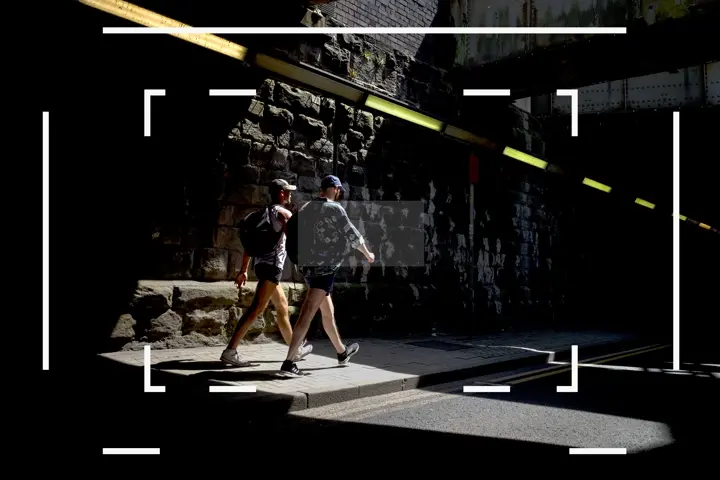
As the lens is focused, the bright-line frame shifts subtly to account for parallax, ensuring that the framed area always represents the actual image the sensor or film will capture. On most M-series bodies, a manual frame selector lever lets photographers preview the bright-line frames for different focal lengths. In older film-era models, an additional window on the camera body illuminates the bright lines. In contemporary digital M cameras, this illumination comes from an LED instead.
History
The control cam — the interface through which the lens communicates its focus distance to the camera — has a heritage that stretches back well before the Leica M3, the inaugural model in the M family, which debuted in 1954. Lenses fitted with the older M39 screw thread, the predecessor to the M-Bayonet, can still be mounted on today's Leica M cameras using an adapter, providing backward compatibility that reaches all the way to 1931 when Leica introduced the first mirrorless interchangeable-lens system cameras. Photographers who wish to shoot on 35mm film will of course depend on the optical viewfinder. Those who choose a digital M, however, have the additional option of engaging the live preview at the press of a button, allowing them to see directly through the lens on the rear screen. This means the photographer can always select whichever viewing method best fits the moment they intend to capture. Many of today's M-mount lenses, such as the acclaimed APO-Summicron-M 35 f/2 ASPH., also provide an extended close-focus capability. Since the rangefinder requires a minimum subject distance of roughly 70 centimeters, anything closer than that can be focused accurately by switching to the live preview instead.
One may wonder why the rangefinder, if it offers so many clear benefits, exists in this refined form only in Leica cameras. The answer is straightforward: the rangefinder is a precision-engineered mechanical instrument that is extraordinarily complex to produce and demands painstaking calibration. Only after this exacting assembly process can the camera reach its full potential. This is a major reason why every Leica M is handcrafted by skilled technicians at the company's factory in Germany — without that level of human craftsmanship, the rangefinder simply could not achieve the tolerances it requires.
Featured Product
Experience Rangefinder Photography
Discover the legendary precision and craftsmanship of the Leica M system — now available at Backyard Provider.
