
Quick Facts
- Top-load washing machines are a favorite among households because of their straightforward operation — simply lift the lid and drop in your clothes.
- Front-load washers require less water, often using close to half what a top-loader needs per cycle, making them more eco-friendly over time.
- A front-loading unit typically handles bigger loads, which means fewer cycles to get through your weekly laundry pile.
- If cost-efficiency is your number-one concern, a top-loader generally carries a friendlier price tag upfront.
One of the very first decisions you'll face when shopping for a new washing machine is deceptively simple: top-load or front-load? Both styles have devoted fans, and both have evolved considerably over the years. The answer ultimately comes down to how you do laundry, how much space you have, and which trade-offs matter most to you.
In this guide we'll walk through every factor worth considering — from purchase price and energy use to cleaning performance and long-term durability — so you can make a confident, well-informed choice.
What Are Top-Load Washing Machines?
Top-load washers are exactly what the name implies — machines that open from the top. You lift a hinged lid, place your garments inside the drum, add detergent, and start the cycle. The agitator or impeller at the center of the drum churns the water and clothes together to remove dirt and stains.
These machines have been a household mainstay for decades. Their upright design means you never have to bend down to load or unload, which can be a real advantage for anyone with back or knee concerns. They also tend to complete wash cycles a bit faster than their front-loading counterparts.

What Are Front-Load Washing Machines?
Front-load washing machines feature a door on the front face of the unit. Clothes tumble through a shallow pool of water as the drum rotates, relying on gravity rather than a central agitator to move fabrics through the wash. This tumbling action is gentler on clothing and uses significantly less water.
Most of the washing machines found in commercial laundromats are front-loaders, which speaks to their durability and efficiency at scale. At home, they can be stacked with a matching dryer — a huge bonus for anyone working with a compact laundry space.

Front-Load vs. Top-Load: The Head-to-Head Breakdown
Let's compare them across the factors that matter most.
💰 Upfront Cost
Generally speaking, a front-load washer carries a higher sticker price than a comparable top-load model. The technology inside — from the sealed drum bearing to the sophisticated spin mechanism — adds to manufacturing costs. If you're working with a tighter budget, a quality top-loader can deliver solid results without the premium price tag.
Tip: If keeping costs down is the priority, a well-reviewed top-loader is an excellent starting point. Just make sure to compare energy ratings so you aren't paying more on your utility bills over time.
🖐️ Ease of Use & Ergonomics
When it comes to everyday convenience, consider your physical comfort. Top-loaders let you load and unload while standing upright — no crouching required. You can also pause a cycle mid-wash to toss in a forgotten sock without draining the drum.
Front-loaders require bending at the waist, which can be uncomfortable over time. However, placing the unit on a pedestal stand raises the door to a more comfortable height. Another consideration: front-loaders lock during the wash cycle, so adding a stray item isn't always straightforward.
Tip: If you frequently forget items after starting a load, a top-loader's open-mid-cycle feature can save you a lot of frustration.
📐 Loading Space & Footprint
Front-loading machines tend to have larger usable drum capacity because there's no central agitator eating up interior space. That means you can wash bulkier items — comforters, heavy blankets, large bath towels — more easily.
From a footprint standpoint, front-loaders shine in tight spaces because they can be stacked with a dryer. Top-loaders need clearance above for the lid to swing open, so stacking isn't an option. If your laundry area is a closet or a narrow hallway nook, a stackable front-load pair could be the perfect solution.
🫧 Cleaning Power
This is where front-loaders truly stand out. The tumbling wash action combined with higher spin speeds produces a more thorough clean on most fabric types. Consumer testing organizations consistently rank front-loaders higher for stain removal and gentle fabric care.
Top-loaders with traditional agitators can be rougher on clothes, especially delicate items. However, newer high-efficiency top-load models that use an impeller instead of a full agitator have closed much of this performance gap while still being gentler than older designs.
Tip: For households that deal with tough stains regularly — think kids' sports uniforms or outdoor workwear — a front-loader's deeper clean may be worth the investment.
⏱️ Wash Cycle Duration
Cycle length is another area where the two types diverge. Top-load machines typically wrap up a standard cycle noticeably faster — sometimes shaving 15 to 30 minutes off the total time compared to a front-loader running a similar load.
Front-loaders compensate by using less water and energy per cycle, but if time is a precious commodity in your household, a top-loader's speed can be a decisive advantage.
🔧 Durability & Maintenance
Front-load washers use a rubber gasket around the door to create a watertight seal. That gasket can trap moisture and lead to mold or mildew if it isn't wiped down regularly. Leaving the door slightly ajar between loads helps air circulate and keeps odors at bay.
Mechanically, top-loaders have a simpler design with fewer components that can fail. This often translates to lower repair costs down the road. Front-loaders, while built to last, may require pricier part replacements — particularly the door seal and drum bearings.
Tip: A top-loader could be the better long-term pick if you prefer a low-maintenance appliance that's easy and affordable to service.
💧 Water & Energy Efficiency
If reducing your utility footprint is a priority, front-loaders are tough to beat. They use considerably less water — roughly 40–50% less per cycle — and their faster spin speeds extract more moisture during the final spin, which means your dryer has to work less too.
Over the lifespan of the machine, those savings on water and electricity can partially offset the higher initial purchase price. If you run several loads a week, a front-loader's efficiency really adds up.
Featured Product
LG 5.5 Cu. Ft. Mega Capacity Smart Top Load Washer
Equipped with TurboWash3D™ technology and smart Wi-Fi connectivity in a sleek Graphite Steel finish — the best of top-load innovation for your home.
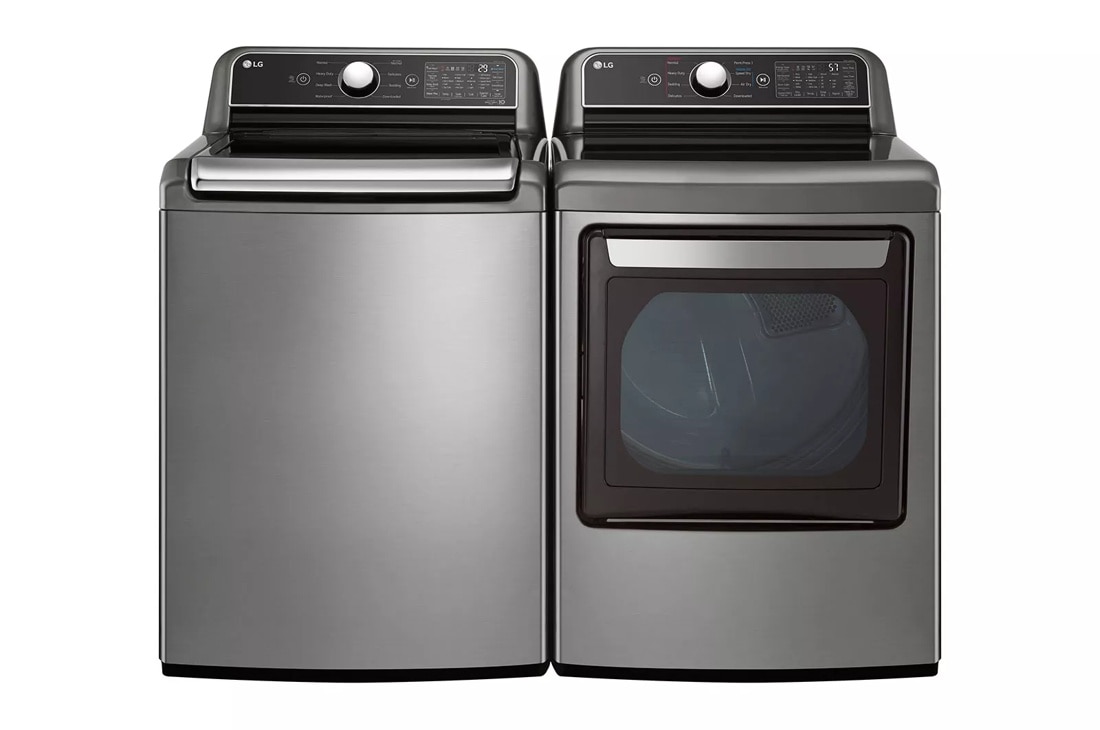
LG Smart Top Load Washer
Making the Right Choice for Your Household
There's no single "best" washing machine type — only the one that best matches how you live. Here's a quick way to think about it:
Choose a Top-Loader If…
You want a lower upfront cost, faster wash cycles, easier loading without bending, the ability to add items mid-cycle, and a simpler machine that's affordable to repair.
Choose a Front-Loader If…
You prioritize superior cleaning performance, water and energy savings, larger load capacity, stackability for small spaces, and gentler treatment of fabrics.
Whichever direction you lean, investing a little extra time in research now saves you from buyer's remorse later. Look at energy ratings, read owner reviews, measure your laundry space, and think honestly about your household's habits.
At Backyard Provider, we carry top-rated washers and home appliances designed to make everyday life easier. Browse our catalog, compare specs side by side, and find the perfect machine for your home — all backed by our commitment to quality and customer satisfaction.
© Backyard Provider — Your Trusted Source for Home & Outdoor Living