

Your top-load washing machine is one of the hardest-working appliances in your household. Whether you're tackling muddy sports gear or freshening up weekly laundry loads, this dependable machine handles it all. But have you ever stopped to think about what actually goes on inside the drum once you close that lid? Understanding how a top-load washer operates can help you get cleaner clothes, extend its lifespan, and troubleshoot problems before they turn into expensive repairs.
💡 Key Takeaways
- Top-load washers use a central agitator or impeller plate to circulate water and remove soil from fabrics.
- The washing cycle follows a predictable sequence: fill, wash, rinse, and spin.
- Routine care like cleaning the drum and using the correct detergent can dramatically improve performance.
- Many common issues — from excess vibration to drainage failures — can be resolved without a service call.
How a Top-Load Washing Machine Works
Every wash cycle in a top-load machine follows a logical sequence of four primary stages. Here's how your laundry goes from dirty to clean:
Loading & Filling
Once you add your clothes and select a cycle, the machine opens its water inlet valves to fill the drum with the appropriate amount of hot or cold water. Modern machines with automatic sensors gauge the load size and adjust water levels accordingly, saving both water and energy. The detergent begins dissolving and dispersing throughout the water as the tub fills.
Washing & Agitation
This is the heart of the cleaning process. The central agitator — that tall spindle in the middle of the drum — rotates back and forth, pushing garments through the soapy water. In impeller-style washers, a low-profile disc at the base of the tub creates turbulent currents that rub clothes against each other. Both mechanisms work to loosen dirt, dissolve stains, and lift debris out of fabric fibers.
Rinsing
After washing, the dirty water is pumped out through a drain hose. The tub then refills with clean water — sometimes multiple times — to flush out all remaining detergent and loosened soil. Some cycles include a brief agitation during the rinse to ensure every trace of soap is washed away, leaving your clothing residue-free and fresh.
Draining & Spinning
In the final stage, the washer pumps out all the rinse water and the inner drum spins at high speed. This centrifugal force pushes water out of your garments and through the small perforations in the drum wall. The faster the spin speed, the more moisture is extracted — which means less drying time later. Once the spin cycle ends, your clothes are ready for the dryer or the clothesline
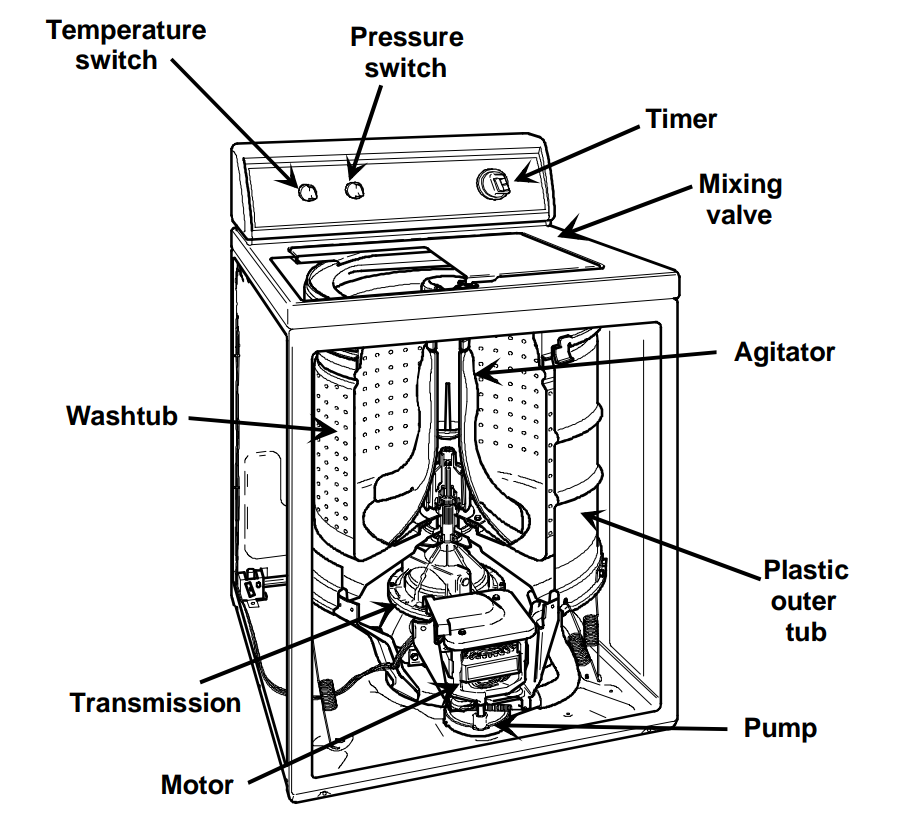
Key Top-Load Washer Components
Knowing what's inside your washer helps you understand how it cleans — and what might go wrong. Here are the most essential parts:
Agitator / Impeller
The agitator is a central post with fins that twists back and forth to move laundry through water. Impeller models use a rotating plate at the bottom of the drum to generate water currents, providing a gentler yet effective clean.
Motor & Drive System
The motor powers both the agitator rotation and the drum's high-speed spin. It's connected via a belt or direct-drive coupling and is the primary source of mechanical energy in the appliance.
Water Inlet Valves
Located at the back of the machine, these electronically controlled valves open and close to let hot and cold water flow into the drum at the precise temperatures your selected cycle demands.
Drain Pump
This pump removes used water from the tub through the drain hose after each wash and rinse cycle. A blocked drain pump is one of the most common causes of standing water issues.
Lid Switch Assembly
A safety mechanism that prevents the drum from spinning while the lid is open. If this switch malfunctions, the washer may refuse to start or advance through its cycle.
Suspension System
Springs and dampening straps keep the inner tub stable during high-speed spins. When these components wear out, you'll notice excessive shaking, loud banging, or the machine walking across the floor.
How to Use & Maintain a Top-Load Washing Machine
Getting the most out of your washer is about more than just tossing clothes in and pressing start. Follow these best practices to keep your machine running smoothly for years:
1. Clean the Drum and Tub Regularly
Even though the inside of your washer gets wet every cycle, it still needs periodic cleaning. Run an empty hot-water cycle with a washer cleaning tablet or two cups of white vinegar once a month. This breaks down detergent buildup, dissolves mineral deposits, and prevents musty odors from developing. Wipe down the rim, lid, and dispensers with a damp cloth afterward.
2. Use the Right Type & Amount of Detergent
More soap doesn't mean cleaner laundry. Excess detergent creates too many suds, which can leave residue on your clothes and gum up internal parts. If your machine is labeled HE (High Efficiency), always use HE-compatible detergent. Follow the dosage guidelines on the bottle — usually, a single measured cap is enough for a standard load.
3. Inspect Hoses & Connections
At least twice a year, pull your washer away from the wall and check the water supply hoses for cracks, bulges, or signs of wear. Replace rubber hoses with braided stainless-steel versions for added durability. Make sure all connections are tight and that the drain hose is properly positioned in the standpipe or utility sink.
4. Balance & Level Your Machine
An unbalanced washer vibrates excessively and can damage flooring and internal parts over time. Use a bubble level on top of the machine and adjust the threaded feet until it sits perfectly level. Also, avoid overloading one side of the drum — distribute your clothes evenly around the agitator before starting a cycle.
5. Schedule Annual Preventive Maintenance
Just like your car, your washer benefits from periodic professional maintenance. A qualified technician can inspect the motor, test the water inlet valves, examine the belt or drive coupling, clean the drain pump filter, and catch minor issues before they become major breakdowns.
Featured Product
Upgrade Your Laundry Room Today
Experience cutting-edge washing technology with smart connectivity, massive capacity, and ultra-fast wash cycles.
LG 5.5 Cu.Ft. Smart Top Load Washer
Common Top-Load Washer Problems & How to Fix Them
Before calling a repair service, many washer issues can be diagnosed and resolved at home. Here are the most frequent problems homeowners encounter:
The Washing Machine Won't Start
If nothing happens when you press the start button, first confirm the machine is plugged in and the outlet is working — try a lamp or phone charger in the same socket. Check your home's circuit breaker panel for a tripped breaker. Inspect the lid switch by closing the lid firmly; a faulty lid switch is a very common culprit. On electronic models, try unplugging the washer for 60 seconds and plugging it back in to perform a control board reset.
Water Won't Fill or Fills Slowly
When the tub doesn't fill — or takes forever to do so — start by verifying that both hot and cold supply faucets behind the machine are fully open. Next, examine the inlet hose screens for mineral buildup or debris; you can remove and clean them with an old toothbrush and vinegar. If flow is still weak, the water inlet valve itself may be failing and could need replacement.
Washer Won't Drain or Spin
Standing water at the end of a cycle usually points to a clogged drain hose or a blocked pump filter. Disconnect the drain hose and check for obstructions — coins, buttons, and small fabric items are frequent offenders. Make sure the hose isn't kinked. If the washer hums but the drum won't spin, the drive belt may be worn or broken, or the lid switch could be malfunctioning.
Excessive Noise or Vibration
Banging, thumping, or the machine creeping across the floor during the spin cycle is usually caused by an unbalanced load or an unlevel machine. Redistribute your laundry more evenly, and use a level to check the machine's footing. If the noise persists with balanced loads, the suspension springs or dampening straps may be worn and should be inspected.
Washer Leaks or Puddles on the Floor
Water on the floor can come from multiple sources. Check all hose connections — both supply and drain — for looseness or cracks. Inspect the door seal or tub gasket for tears. Overloading the machine or using non-HE detergent in an HE washer can create excessive suds that overflow. Also verify that the drain hose is inserted at the correct height in the standpipe to prevent siphoning.

Frequently Asked Questions
Can I use regular detergent in a high-efficiency top-load washer?
It's not recommended. Standard detergents produce far more suds than HE machines are designed to handle, which can lead to poor rinsing, residue buildup on clothing, and potential damage to the machine's pump and control system. Always use detergent labeled "HE" for high-efficiency washers.
How long does a typical top-load washing machine last?
With consistent maintenance — cleaning the tub, inspecting hoses, avoiding overloading — a quality top-load washer can last 10 to 14 years. Neglecting upkeep can cut that lifespan significantly, so following the maintenance steps outlined above is well worth the effort.
Is an agitator or impeller washer better?
It depends on your laundry habits. Agitator models tend to scrub more vigorously, making them ideal for heavily soiled workwear and large family loads. Impeller washers are gentler on delicate fabrics, offer more drum space since there's no central post, and generally use less water. Both deliver excellent cleaning results when used properly.
Should I leave the lid open after a wash cycle?
Yes. Leaving the lid open for a few hours after each load allows moisture inside the drum to evaporate, which helps prevent mold, mildew, and unpleasant odors from developing. This is one of the simplest and most effective maintenance habits you can adopt.
Why does my washer smell bad even though I clean my clothes in it?
Residual moisture, detergent buildup, and trapped lint create the perfect environment for bacteria and mildew growth. Running a monthly cleaning cycle with hot water and vinegar or a specialized washer cleaner eliminates these odors. Make sure to also wipe down the fabric softener and bleach dispensers, as gunk can accumulate in those areas.
Ready to Upgrade?
Get the LG Smart Top-Load Washer
5.5 cu. ft. mega capacity, TurboWash3D technology, and Wi-Fi-enabled smart controls — all in a sleek Graphite Steel finish.
LG 5.5 Cu.Ft. Smart Top Load Washer