
- What Is Sodium-Ion Battery Charging?
- How Sodium-Ion Batteries Store and Release Energy
- Optimal Charging Voltage and Current
- Factors Affecting Sodium-Ion Battery Charging Efficiency
- Safety Tips During Sodium-Ion Battery Charging
- Conclusion & FAQ
What Is Sodium-Ion Battery Charging?
Sodium-ion battery charging is the process of introducing electrical energy into a sodium-ion cell, where it is stored until the battery is called upon to power a device. Rooted in electrochemical science, this process governs how efficiently, safely, and how long the battery will perform over its lifespan.
As sodium-ion technology matures and moves toward mainstream adoption, understanding how charging works has become genuinely important — not just for engineers, but for everyday users who want to get the most from their investment. Sodium-ion batteries are increasingly found in energy storage systems, portable power units, and off-grid setups, making this knowledge practically relevant to a wide audience.

Although the chemistry differs from lithium-ion in meaningful ways, sodium-ion batteries charge through a fundamentally similar electrochemical process — with some distinct advantages in terms of raw material availability, thermal resilience, and environmental footprint that make them a compelling choice for sustainable energy applications.
How Sodium-Ion Batteries Store and Release Energy
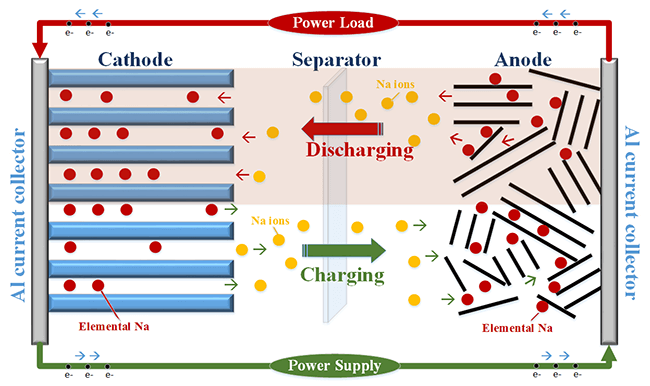
To understand how charging works, it helps to first understand the fundamental mechanism by which sodium-ion batteries store and release energy. During charging, sodium ions migrate from the cathode through the electrolyte and embed themselves within the anode material. This movement is driven by an applied electrical current and causes electrochemical changes that store potential energy within the cell's structure.
The efficiency of this process depends heavily on the electrode material's capacity to host sodium ions reliably without degrading over repeated cycles. Some electrode materials perform this role with impressive stability, while others are prone to structural stress — a key area of active research and development in the field.
Charging Phase
Sodium ions migrate from cathode to anode as electrical current is applied, storing energy within the cell structure.
Discharging Phase
Ions reverse their journey — from anode back to cathode — releasing stored energy as usable electrical current.
Cycle Stability
The cell's longevity depends on how well the electrode materials tolerate repeated ion insertion and extraction without structural damage.
During discharge, the process reverses — sodium ions travel back from the anode to the cathode, releasing the stored energy as usable electrical current. The overall round-trip efficiency of this charge-discharge cycle is directly influenced by internal resistance, electrode quality, temperature conditions, and the precision of the charging protocol applied.
These repeated charge-discharge cycles cause gradual changes in electrode materials, making it critical to use appropriate charging parameters to preserve long-term battery health and avoid premature capacity loss.
Optimal Charging Voltage and Current
Every sodium-ion battery operates within a defined voltage range that reflects its chemistry and design. Charging must stay within this window — typically around 3.0V to 4.2V per cell depending on the specific formulation — to ensure both safety and performance. Exceeding the upper voltage limit risks overcharging, which can cause electrolyte decomposition, heat buildup, and accelerated degradation.
Modern sodium-ion chargers generally employ a constant-current, constant-voltage (CC-CV) protocol. In the first phase, the charger delivers a steady current until the battery approaches its full charge voltage. It then transitions to the constant-voltage phase, gradually reducing the current as the battery tops off. This two-stage approach balances speed with protection, filling the battery efficiently without stressing the cell.
Optimal Charging: What to Look For
Chargers designed specifically for sodium-ion chemistry provide the most accurate voltage regulation and current tapering. Using generic or mismatched chargers — even those intended for lithium-ion cells — can introduce incorrect voltage profiles that shorten battery life or create hazardous conditions.
Always confirm your charger's output specifications against the battery manufacturer's requirements before connecting. A quality battery management system (BMS) adds another layer of protection by monitoring cell voltage and temperature in real time.
In addition, ambient temperature plays a significant role in charging behavior. Charging at low temperatures can reduce ion mobility and slow the process, while charging at excessively high temperatures accelerates internal side reactions. Staying within the manufacturer's recommended temperature range — typically between 0°C and 45°C — is essential for both performance and longevity.
Factors Affecting Charging Efficiency
Sodium-ion battery charging efficiency is not a fixed value — it varies based on a combination of external conditions and the battery's internal state. Understanding these variables puts you in control of both performance and longevity.
-
Operating Temperature
Extreme temperatures — either very cold or very hot — impair ion movement and reduce the efficiency of charge transfer. For best results, charge in a stable, room-temperature environment whenever possible.
-
State of Charge (SOC)
Sodium-ion batteries accept charge most efficiently in the mid-range of their SOC. Charging from near-empty or pushing to absolute full capacity repeatedly introduces additional electrochemical stress and can accelerate capacity fade over time.
-
Battery Age and Internal Resistance
As a battery ages, its internal resistance increases. Higher internal resistance means more energy is lost as heat during charging, reducing overall efficiency. Regular monitoring of charging behavior can provide early warning signs of capacity decline.
-
Charger Quality and Configuration
A charger that precisely matches the battery's voltage and current requirements will always outperform a generic alternative. Investing in a quality BMS-integrated charging solution pays dividends in both cycle life and daily performance reliability.
Limitless Lithium NoLi Sodium 50Ah Battery
Built for demanding off-grid and energy storage applications, the NoLi Sodium 50Ah delivers the reliability and cycle life that sodium-ion chemistry promises — in a ready-to-deploy package.
Safety Tips During Sodium-Ion Battery Charging
Proper charging habits are the single most effective way to keep your sodium-ion battery performing well and operating safely. The following best practices should be observed every time you connect your battery to a charger.

Use the Correct Charger
Only use a charger that is rated and designed for sodium-ion batteries. Confirm that its output voltage and maximum current align precisely with the specifications listed by the battery manufacturer.
Avoid Extreme Temperatures
Never charge in very hot or freezing environments. High temperatures dramatically increase the risk of thermal runaway, while very cold temperatures can cause lithium plating or uneven sodium insertion.
Ensure Proper Ventilation
Always charge your battery in a space with adequate airflow. Ventilation prevents heat accumulation around the battery and charger, reducing the risk of temperature-related complications.
Use a Battery Management System
A BMS actively monitors voltage, current, and temperature during each charge cycle. It provides automatic protection against overcharging, short circuits, and thermal events that could otherwise go unnoticed.
Avoid Overcharging
Consistently charging past the cell's upper voltage limit degrades electrode materials and shortens battery life. Use chargers with automatic cut-off and never leave batteries unattended on chargers for extended periods.
Inspect Before Charging
Before each charge session, quickly inspect the battery housing, terminals, and cables for signs of physical damage, corrosion, or swelling. Never charge a visibly damaged battery.
Conclusion
Sodium-ion batteries represent a genuinely exciting development in energy storage — offering compelling advantages in material sustainability, thermal stability, and long-cycle performance. But like any battery technology, their full potential is only realized when charging is handled with knowledge and care.
Understanding the electrochemical process, maintaining optimal charging conditions, and following established safety practices are not just theoretical guidelines — they are practical habits that will extend the working life of your battery and protect your investment for years to come.
As sodium-ion technology continues to mature and become more accessible, making informed choices about charging equipment, operating environments, and daily usage habits positions you to take full advantage of what this next-generation chemistry has to offer.