
Understanding voltage selection is fundamental to building efficient, reliable backyard power solutions. Learn which voltage level delivers the performance, safety, and value you need.
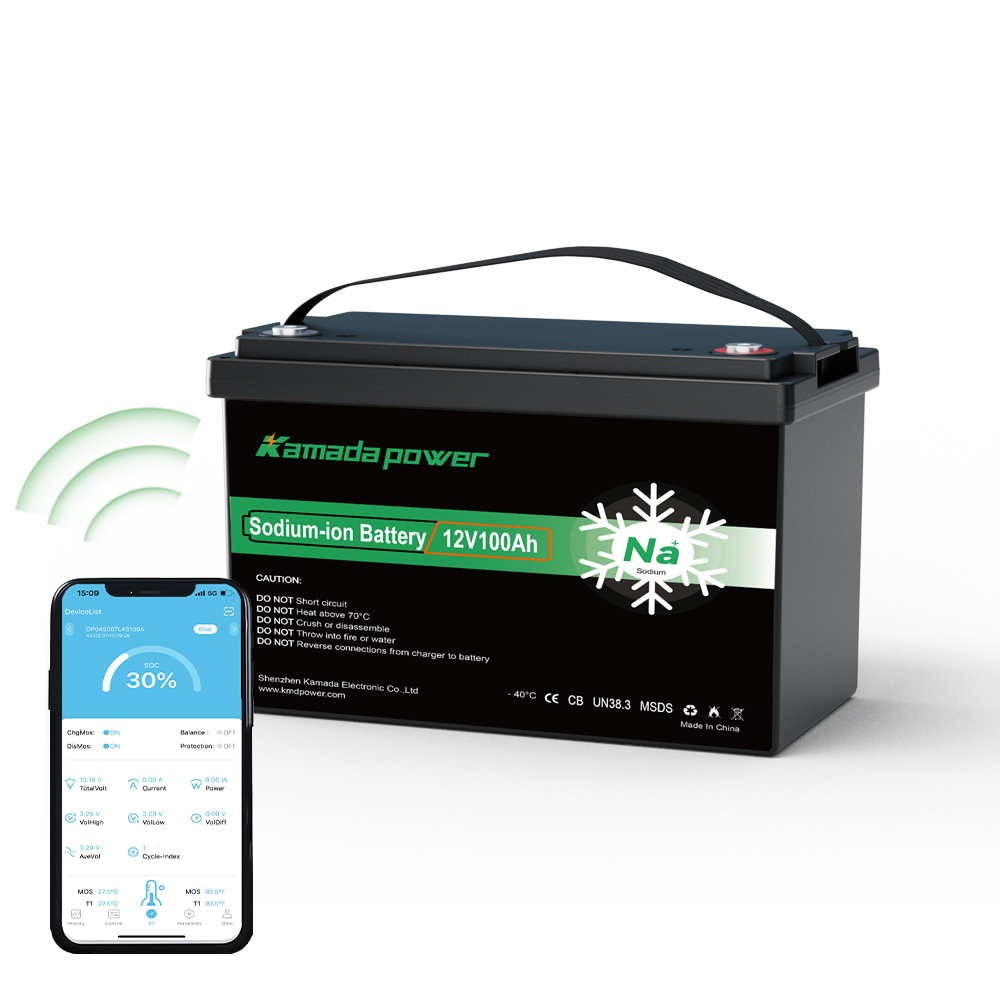
Next-Generation Energy Storage
Transform your outdoor space with advanced sodium-ion battery technology. Engineered for durability, efficiency, and consistent performance, this innovative power solution keeps your backyard projects running smoothly season after season.
NoLi Sodium 50AhWhy Voltage Matters for Backyard Power Independence
When planning your outdoor power system—whether for solar energy storage, garden automation, workshop equipment, or off-grid living—voltage selection forms the cornerstone of system design. This critical decision influences efficiency, component compatibility, expansion possibilities, and long-term operating costs.
Voltage isn't just a specification—it's the foundation that determines how efficiently your system operates, which components work together seamlessly, and how easily you can expand capacity as your power needs grow over time.
Essential Performance Considerations
- Power Efficiency: Higher voltage systems minimize energy loss during transmission and conversion, ensuring more stored energy reaches your equipment where it's needed most.
- Wire Size Economy: Increased voltage reduces current requirements, allowing thinner, less expensive wiring for equivalent power delivery, simplifying installation and reducing material costs.
- Component Availability: Different voltages offer varying equipment selection. Common voltages provide broader choices for inverters, charge controllers, and accessories.
- Scalability Potential: Some voltage configurations accommodate future expansion more gracefully, letting you add capacity without redesigning your entire system architecture.
Thoughtful voltage selection today prevents costly modifications tomorrow, ensuring your backyard power system grows alongside your evolving needs while maintaining optimal efficiency and reliability.
Comparing Voltage Options for Outdoor Applications
Entry-Level Systems
Ideal for simple applications requiring modest power delivery, offering wide compatibility with recreational and automotive-grade equipment.
Perfect for: Basic lighting, small water pumps, RV systems, portable tools
Versatile Mid-Range
Strikes an excellent balance between capability and simplicity, suitable for comprehensive backyard power needs with room for expansion.
Perfect for: Solar systems, garden automation, workshop power, greenhouse climate control
Professional Grade
Maximum efficiency for demanding applications and off-grid living, delivering superior performance with minimal power loss.
Perfect for: Complete off-grid homes, high-power workshops, large solar arrays, commercial applications
12V Systems: Simple, Accessible Outdoor Power
Twelve-volt systems represent the most straightforward entry point for backyard power projects. Their universal compatibility with automotive and recreational vehicle components makes them exceptionally accessible, though they're best suited for lighter-duty applications.
Optimal Uses
LED garden lighting, small pond pumps, security camera systems, outdoor entertainment equipment, and portable power stations all operate efficiently at 12V.
Key Advantages
Abundant component selection, straightforward wiring, lower upfront investment, widespread technical knowledge, and inherent compatibility with automotive accessories.
Practical Limitations
Higher current draw requires substantial wire gauge for longer runs, efficiency drops with distance, and total power capacity remains limited compared to higher voltages.
Choose 12V When: Your backyard power needs are modest, equipment locations are close to battery storage, you prioritize component availability and simplicity, or you're starting with a basic system you may upgrade later.
24V Systems: The Backyard Power Standard
Twenty-four volt configurations have emerged as the preferred choice for serious backyard power installations. This voltage level delivers substantially better efficiency than 12V while remaining more accessible than 48V systems, making it ideal for most residential applications.
Ideal Applications
Medium-sized solar installations, comprehensive garden automation, workshop tools, outdoor kitchens, pond filtration systems, and backup power for essential circuits.
Performance Benefits
Significantly reduced wire costs, improved efficiency over distance, excellent inverter selection, proven reliability, and capacity for meaningful expansion.
System Flexibility
Easy integration with both 12V devices (via converters) and native 24V equipment, offering maximum versatility for mixed equipment installations.
Choose 24V When: You're building a comprehensive outdoor power system, need reliable performance across various applications, want room for future expansion, or seek the best balance between cost and capability.
48V Systems: Maximum Efficiency for Serious Projects
Forty-eight volt systems deliver professional-grade performance for demanding backyard installations and off-grid living scenarios. While requiring higher initial investment, they provide unmatched efficiency, capacity, and long-term value for substantial power requirements.
The efficiency advantages of 48V systems compound over time. Reduced energy loss means more usable power from every watt-hour stored, translating to smaller battery banks for equivalent performance and reduced operating costs throughout system lifetime.
Premium Applications
Complete home backup power, large workshop installations, extensive garden operations, pool/spa systems, whole-property automation, and serious off-grid living.
Superior Performance
Minimal transmission losses, maximum power density, professional-grade component quality, excellent scalability, and superior efficiency under heavy loads.
Investment Value
Higher upfront costs offset by reduced energy waste, smaller wire requirements, fewer parallel connections, and exceptional long-term reliability.
Choose 48V When: You're planning significant off-grid capability, need maximum efficiency for large power loads, want professional-grade performance and reliability, or are building a system designed for decades of service.
Technical Factors Influencing Voltage Selection
Beyond basic voltage numbers, several technical considerations significantly impact real-world system performance and long-term satisfaction with your backyard power installation.
Understanding Voltage Behavior
Battery voltage isn't constant—it fluctuates based on charge state, load, and temperature. A "12V" battery actually ranges from about 10V when depleted to 14V+ when fully charged. Quality charge controllers and inverters accommodate these variations, but understanding this behavior helps set realistic expectations.
- Voltage drops under heavy load, potentially causing equipment to shut down if battery capacity is insufficient
- Cold temperatures reduce effective voltage and available capacity, requiring oversized systems in cold climates
- Hot weather accelerates battery degradation while improving short-term voltage stability
- Advanced battery management systems protect against voltage extremes, ensuring safe operation across all conditions
The Chemistry Connection
Battery chemistry profoundly affects voltage characteristics. Sodium-ion technology, for instance, maintains more stable voltage throughout discharge cycles compared to traditional lead-acid batteries, providing more consistent power delivery and better depth-of-discharge utilization.
Modern battery chemistry eliminates the voltage "knee" common in older technologies, where performance drops rapidly as batteries approach empty. This stable voltage profile ensures your equipment continues operating normally even when battery reserves run low.
Designing Your Voltage Configuration
Voltage selection influences every aspect of system architecture, from physical battery arrangement to component selection and wiring requirements. Understanding these relationships ensures optimal design from the start.
Series vs. Parallel Configuration
Achieving your target voltage requires specific battery arrangements. Connecting batteries in series adds voltages (two 12V batteries create 24V), while parallel connections maintain voltage but add capacity. Higher target voltages require more series connections.
Series Benefits
Creates higher voltages from lower-voltage cells, reduces current in wiring, improves efficiency, and simplifies wire routing for better system organization.
Parallel Advantages
Increases capacity at same voltage, provides redundancy if one battery fails, simplifies expansion, and reduces stress on individual batteries.
Hybrid Approaches
Large systems often use series-parallel combinations, achieving both desired voltage and capacity through strategic battery arrangement and connection.
Component Compatibility and Selection
Your voltage choice determines which inverters, charge controllers, and accessories are compatible with your system. Component availability and pricing vary significantly across voltage levels.
Inverter Considerations
Inverters convert DC battery power to AC household current. Higher input voltages allow inverters to operate more efficiently, reducing waste heat and improving conversion efficiency. However, 48V inverters typically cost more than 12V or 24V equivalents.
- 12V Inverters: Widely available, affordable, suitable for loads up to about 1500W, but less efficient for sustained heavy use
- 24V Inverters: Excellent efficiency, good selection, handle 3000W+ loads comfortably, represent the sweet spot for most applications
- 48V Inverters: Maximum efficiency, professional quality, support highest power levels, best for whole-home or large workshop power
Charge Controller Selection
Solar charge controllers must match both your panel voltage and battery voltage. MPPT controllers offer better efficiency than PWM types, especially important for higher-voltage systems where efficiency gains compound.
Wiring, Safety, and Installation
Voltage dramatically impacts wiring requirements, safety considerations, and installation complexity. Understanding these relationships helps budget appropriately and ensures safe, code-compliant installations.
Higher voltages reduce current for equivalent power, allowing smaller wire gauges. For example, delivering 1000W at 12V requires 83 amps (needing 4 AWG wire), while 48V needs only 21 amps (allowing 10 AWG wire). This difference saves substantial money on long wire runs.
Safety Across Voltage Ranges
All voltages require proper safety measures, but concerns shift as voltage increases. Low voltages pose fire risks from high currents, while higher voltages require attention to shock prevention and proper insulation.
- 12V systems are generally touch-safe but require heavy wire and robust connections to handle high currents
- 24V systems balance safety and performance, requiring basic protective measures and proper connection quality
- 48V systems approach shock-hazard thresholds, necessitating professional installation and enhanced protective measures
- All systems need proper overcurrent protection, secure connections, appropriate wire sizing, and regular inspection
Planning for Future Expansion
Few backyard power systems remain static—needs grow as you discover new applications and add equipment. Voltage choice significantly impacts expansion ease and cost-effectiveness.
12V Expansion
Limited by high currents—expanding capacity requires substantial wiring upgrades. Best for systems that will remain small or transition to higher voltage later.
24V Growth Potential
Excellent scalability up to several kilowatt-hours of storage. Adding batteries and capacity remains straightforward within reasonable system size limits.
48V Scalability
Nearly unlimited practical expansion potential. Systems can grow from modest beginnings to whole-home power without architectural changes.
When planning your initial system, consider not just current needs but anticipated growth over the next 5-10 years. Starting with appropriate voltage prevents expensive conversions later.
Total Cost of Ownership Analysis
While upfront costs differ across voltage levels, total ownership costs tell a more complete story. Factor in efficiency losses, wire costs, component longevity, and expansion expenses when evaluating options.
Initial Investment Comparison
However, these initial differences narrow when considering total lifetime costs. Higher-voltage systems' superior efficiency means smaller battery banks achieve equivalent usable capacity, offsetting higher component costs through reduced battery requirements and longer component lifespans.