
Everything You Need to Know Before Making Your Purchase
Consider the Contents
When selecting a back bar cooler, your first consideration should be the quantity and diversity of beverages you intend to store. Think carefully about the available configurations and temperature options that will best serve your needs. If you plan to serve draft beverages, consider whether incorporating a separate keg cooler makes more sense, or whether you can integrate it into your back bar cooler. For instance, certain manufacturers offer four-door cooler configurations where the keg sits behind two of the doors while shelf storage remains behind the other two.
Consider how racks and doors will maximize storage and access to drinks. Many back bar coolers come built with door openings large enough to accommodate two vertical rows for wine bottles, while others offer special wine rack options in which bottles can be stored horizontally. One important consideration: wine in a commercial setting doesn't need to be stored on its side to keep corks moist because it will likely be used before any storage issues arise. You can also find back bar coolers with storage drawers or rotary shelves to give users easier access to a variety of wine and beer bottles.
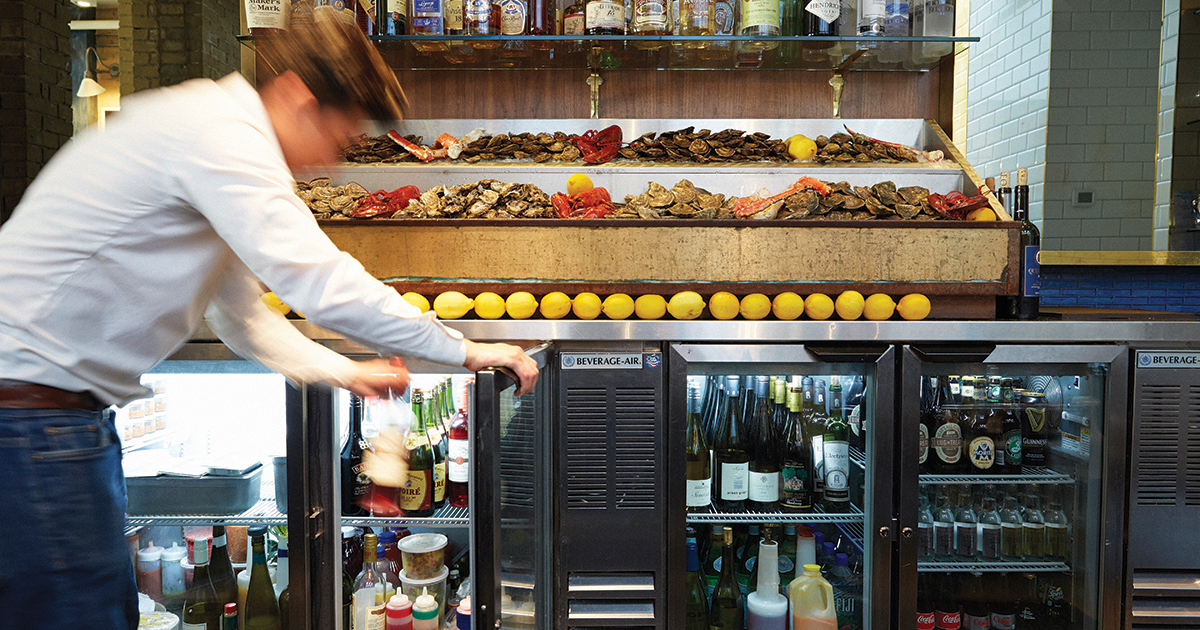
Back bar coolers can store other items such as milk and cream, along with food ingredients for beverage garnishes, including olives, onions, pickles, and more. Certain higher-end models earn NSF certification as food-grade units. These units typically come with an interior that's all stainless with rounded corners for easy cleaning, have been tested to maintain proper air temperature below 40°F, and have no unnecessarily exposed screws and cracks. Operations that store food items might prefer a cooler with solid doors to hide the hodgepodge collection, while glass doors make it easier to locate ingredients.
Perfect Fit
The space between the back and front bar can be fairly tight and so, typically, manufacturers design back bar coolers with somewhat shallower depths to conserve space. To keep flush in line with other under-bar equipment, coolers can be as shallow as 24-inch D but can go up to nearly 30 D.
Back bar cooler height may measure about 36 inches, though manufacturers design them to slide under an existing bar or built-in cabinets. Some lower profile units can be as short as 30 inches, with the option to add 6 inches with legs or casters. The most variation comes in the width of back bar cooler models, so choose the unit that best maximizes storage for your needs. Units come in one, two, three, or four-door options that range from 24 inches to 108 inches in width. Some back bar coolers will have multiple zones to chill one section for beer and another for red wine.
Design Decisions
In addition to factoring in what types of products you'll be storing and your available space, make sure that your back bar cooler has the right design for your business in terms of function and aesthetics. Some manufacturers offer a pass-thru style that can be accessed from both sides. Designers often specify this style in island bars or in layouts where the cooler is stocked from the back and served from the front.
To match your bar's flow and the location of outlets, pay attention to whether the unit's compressor is on the right or left side. Select manufacturers allow customers to choose either right or left side compressor placement. This is particularly important when you'll be using more than one back bar cooler in your lineup. These units shouldn't have their compressors directly next to each other because it could impact the longevity of the equipment and may even void its warranty.
Important: Ventilation Requirements
Because many back bar coolers back up to walls or sandwich between cabinets and other equipment, these units tend to have front vents, or if they're on casters, they could vent from the bottom. Make sure the vents are accessible. And if the unit vents from the bottom, note that the interior space may make it a challenge to store a full height keg. Three rows of beer bottles or two rows of vertically stored wine bottles typically fit well.
 Service and Maintenance Considerations
Also think about where a service agent will perform repairs. Typically, small back bar coolers are either rear or side-serviced. Front-serviced units are available and are a good option for bars in which the back bar cooler is built in and difficult to pull out. Some manufacturers build units so that their doors can be switched to open on either the right or left side to maximize efficiency within the bar layout and flow.
Specifiers can also choose between glass doors to show off well-organized stock or solid doors. Some manufacturers allow you to mix and match door styles on the same unit while others stick with one type of door. Doors can be either hinged or sliding depending on whether they are used outside or if enough human air is inside.
Door Handles and Finish Options
To combat this, some back bar coolers come outfitted with heating elements called mullion heaters that fill within the silo of the refrigerator's frame to prevent condensation from forming on the exterior of the unit. Ideally, doors should have handles with built-in locks for loss prevention and a design that minimizes catching clothing or apron strings as employees brush by them in tight quarters. Check to see how easy it would be to replace the door handle if it breaks. Some manufacturers build handles that attach to the doors while others recess them into the face of the door.
While many back bar coolers come in black or stainless finishes, there are units that come unfinished, ready for a custom finish to match the rest of the bar. Likewise, many units come with a standard stainless top but if you are going to put the back bar unit under a cabinet or countertop, you may be able to save some cost by choosing an unfinished top.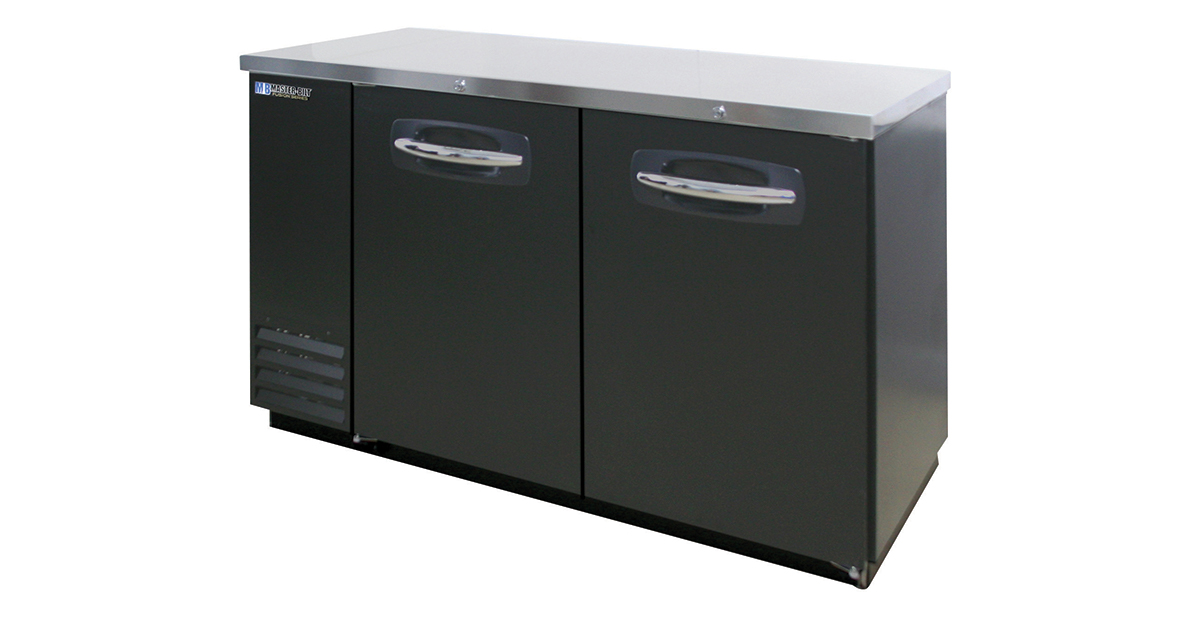
Energy Concerns
Like any refrigeration equipment, back bar coolers can be expensive to run, so take note of any area to optimize energy efficiency. For example, while deciding between glass or solid doors might seem like an aesthetic choice, note that glass doors are less energy efficient, meaning that the unit will have to work harder to maintain proper temperatures. Also related to saving energy, many units come standard with energy-efficient LED lighting.
The lights illuminate stock when users open doors and show off product when they're closed. Use all options when building a back bar cooler; when you make the right choice, it will prove to be a hardworker behind the bar for years to come.
One Big Unit or Two Small Units?
Confronted with all the many configurations of back bar coolers, users might be left wondering if it makes more sense to specify a pair of two-door units instead of one four-door unit. Opinions vary. Some manufacturers argue to go with two-door units instead of a four-door unit to decrease the number of times the same cooler will be opened, allowing the unit to better maintain temperatures. They also point out that having multiple units instead of one large cooler means that operations will have at least one back bar cooler if the other is out of service.
Featured Back Bar Cooler
Upgrade your bar with professional-grade refrigeration equipment designed for maximum efficiency and reliability.
MDD58-E Pro-Line CoolerKey Takeaways
Selecting the right back bar cooler requires careful consideration of your storage needs, available space, and operational requirements. Think about the beverages and ingredients you'll store, the layout of your bar, and how service technicians will access the unit for maintenance. Pay attention to door configurations, compressor placement, and ventilation requirements to ensure optimal performance and longevity.
Energy efficiency should also factor into your decision, as the right choice will save on operating costs over time. Whether you choose one large unit or multiple smaller units depends on your specific workflow and backup requirements. With proper planning and consideration of all these factors, your back bar cooler will serve as a reliable workhorse for your establishment for many years to come.
Ready to enhance your bar with quality refrigeration equipment?
View MDD58-E Pro-Line