
An elliptical trainer generally places less pressure on your joints compared to a treadmill. That said, individuals living with osteoarthritis (OA) in the knee can still enjoy the rewards of treadmill workouts — provided they observe a few important precautions along the way.
Both machines deliver meaningful health benefits, and most people with OA can safely incorporate either one into their routine as long as they respect their body's limits. In this guide, we break down how exercise supports OA management, weigh the pros and cons of each machine, and help you figure out which option may work best for you.
How Does Exercise Help Osteoarthritis?
Exercise can be tremendously beneficial for people with OA. Although OA is classified as a degenerative joint disease — meaning the cartilage inside the joint gradually wears away over time — that does not mean staying active will accelerate the damage. In fact, regular movement can slow cartilage breakdown and ease symptoms.

High-impact activities — think jumping, sprinting, or long-distance running — can aggravate arthritic knees. On the other hand, low-impact options like swimming, water aerobics, cycling, walking, or using an elliptical can actively support joint health.
A 2022 research review examined the effects of exercise on OA and concluded that physical activity can slow — or even help prevent — the breakdown of the extracellular matrix (ECM), a protective substance that cushions and strengthens cartilage. The enzyme MMP-2, which naturally breaks down ECM, is regulated more effectively through consistent exercise.
Beyond cartilage protection, exercise strengthens the muscles that support the knee joint, distributing load more evenly and reducing stress on the joint surfaces themselves. Read on to explore how treadmills and ellipticals each contribute to these benefits.
Treadmill: Pros and Cons
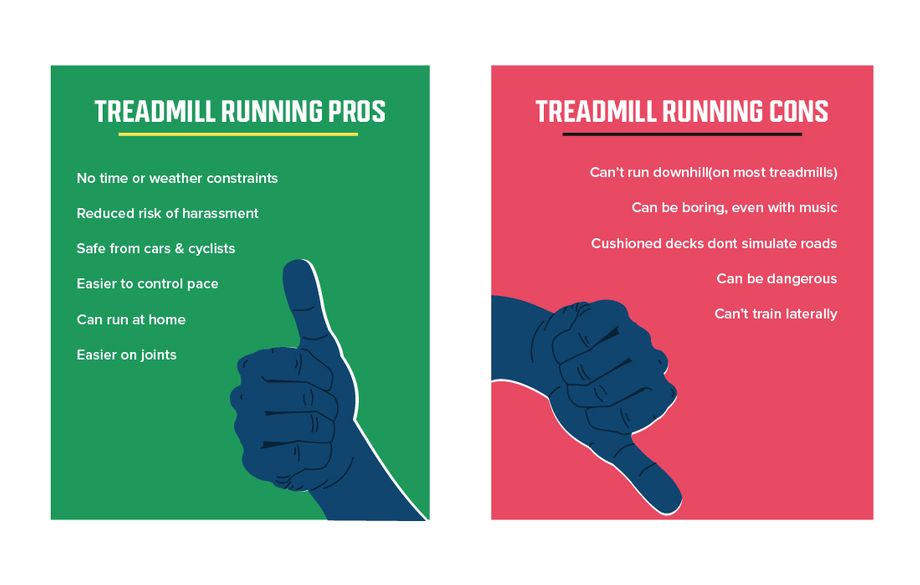
Treadmill belts offer a more forgiving surface than asphalt, concrete, or gravel, which means walking or light jogging on one places comparatively less stress on the knees. A 2021 study even found that combining physical therapy with regular treadmill walking produced better outcomes for OA management than physical therapy alone. Participants who walked on a treadmill in addition to their therapy sessions moved more freely, walked faster, and reported a broader range of motion.
Treadmills also tend to burn more calories than ellipticals during the same workout duration. For individuals managing their weight — a key factor in OA symptom reduction — this can be meaningful. According to the Centers for Disease Control and Prevention (CDC), shedding just one pound of body weight removes roughly four pounds of pressure from the knees.
Safety Tips for Treadmill Use
The Arthritis Foundation suggests walking at a modest 2% incline to reduce knee strain. However, walking at a steeper incline can actually increase the load on your joints, so moderation is essential.
Choose shoes with less than a one-inch heel and generous arch support. Flat, well-cushioned shoes are ideal for absorbing impact on a treadmill.
To stay safe, always look ahead, keep a steady pace, hold the handrails if needed, and familiarize yourself with the emergency stop feature before stepping on.
Elliptical Trainer: Pros and Cons
Working out on an elliptical places significantly less stress on the knees compared to a treadmill. Because your feet never leave the pedals, there is virtually no impact force traveling through the joint — making it an excellent option for anyone dealing with knee sensitivity. As a bonus, ellipticals engage both the upper and lower body simultaneously, delivering a comprehensive full-body workout.

A separate 2021 study investigated how pedal direction and incline settings affect the muscles around the knee during elliptical exercise. Researchers found that using a reverse motion at a low incline engages the quadriceps most effectively — the muscle group primarily responsible for stabilizing and extending the knee. Forward pedaling at an incline, meanwhile, targets the quadriceps from a different angle and can also strengthen the surrounding musculature.
This suggests that a mixed routine — predominantly using lower inclines and reverse motion with occasional forward-incline intervals — could offer the most well-rounded strengthening benefits for OA-affected knees.
Safety Tips for Elliptical Use
People with OA can generally exercise safely on an elliptical, but posture matters. Maintain an upright stance with relaxed shoulders and a straight back to reduce unnecessary strain on your knees.
Ellipticals encourage a slight forward lean, so be conscious of keeping your weight centered. Supportive, low-heeled footwear is recommended, and remember to look forward — not down at the pedals.
Featured Product
Low-Impact Training for Healthier Knees

Discover a premium elliptical built for joint-friendly, full-body workouts.
NordicTrack AirGlide 7i EllipticalSo Which Machine Is Better?
Everyone's body responds differently to exercise, and there is no single correct answer. In general, an elliptical is considered the safer default choice for people managing knee OA because of its minimal joint impact and full-body engagement.
That said, plenty of people with OA find that moderate treadmill use — particularly walking at a gentle incline — causes no discomfort and complements their fitness goals effectively. Many experts recommend trying both machines and paying close attention to how your knees respond during and after each session.
Whichever route you choose, it is always wise to consult with a healthcare professional before introducing a new exercise routine, especially if you are managing a chronic condition like osteoarthritis.
Frequently Asked Questions
What is the best type of cardio for osteoarthritis in the knees?
Low-impact cardio exercises are the gold standard. Swimming, water aerobics, walking, cycling, and using an elliptical at a slight incline with reverse motion are all excellent choices that keep the joints moving without excessive force.
What activities should you avoid with knee osteoarthritis?
Doctors generally advise against running long distances on hard surfaces. It is also smart to avoid exercises that involve jumping, sudden pivoting, or deep squats, as these place heavy loads on already-compromised knee cartilage.
Summary
An elliptical trainer is generally kinder to the knees than a treadmill, but individuals with knee OA can use a treadmill successfully when they take sensible precautions — such as walking instead of running, maintaining a slight incline, and wearing supportive footwear. Exercise overall is beneficial for OA because it helps preserve cartilage, strengthens the muscles that protect the joint, and assists with weight management.
Treadmills offer a softer surface than outdoor terrain and can aid in calorie burning and weight management. Ellipticals distribute effort across the whole body and provide a full-body workout with virtually no impact on the knees. Using reverse motion at lower incline settings is recommended for the best results.
Ultimately, the right machine depends on your individual needs, comfort level, and how your body responds. Speaking with a healthcare professional before beginning any new fitness routine is always the smartest first step.