
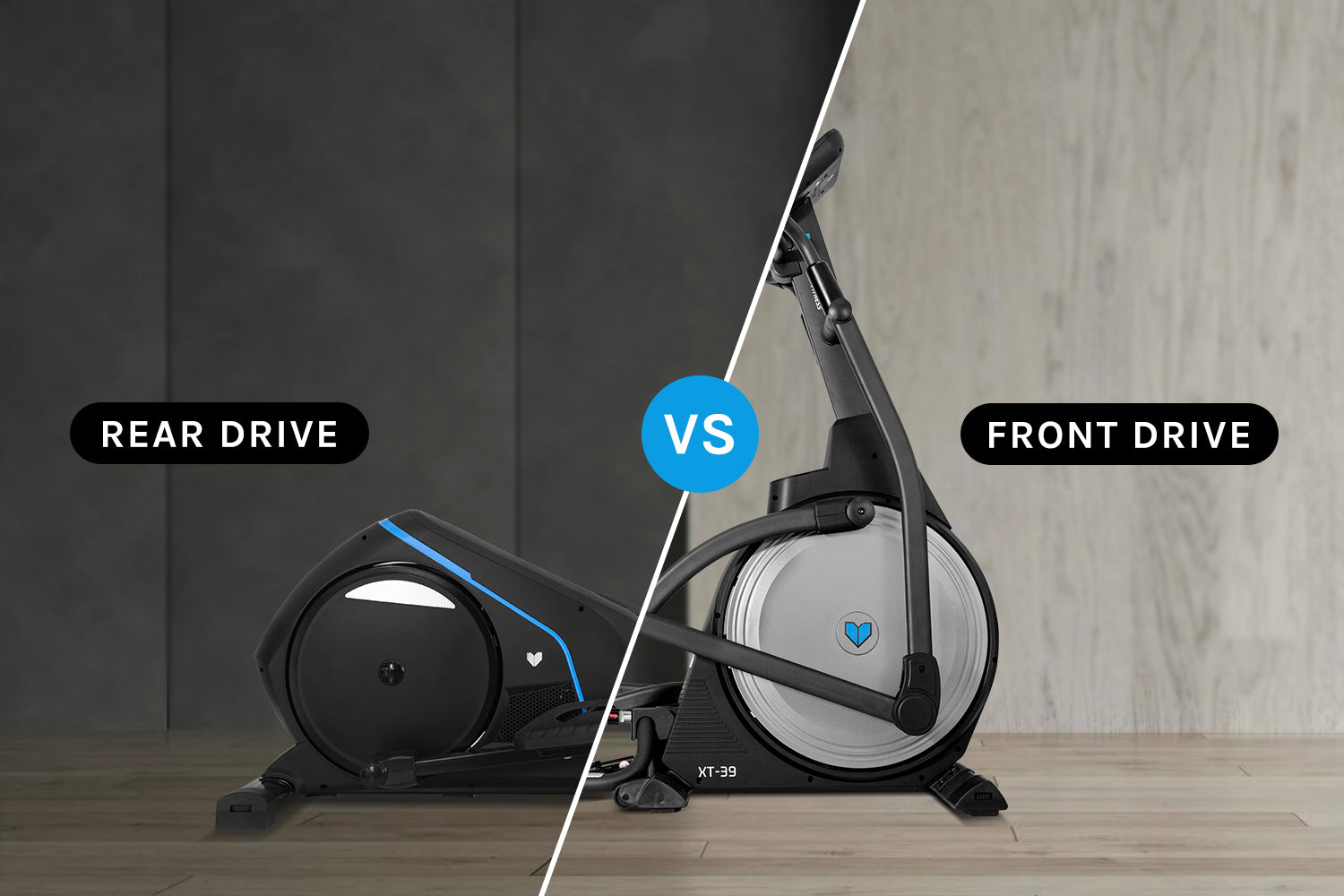
One of the most noticeable distinctions when shopping for an elliptical cross trainer is whether it uses a front-wheel drive or a rear-wheel drive system. This is arguably the first and most critical factor to evaluate before investing in any elliptical machine, since it affects almost every aspect of your workout experience.
In simple terms, a rear drive elliptical positions its flywheel at the back of the unit, while a front drive elliptical places it at the front. The flywheel is the weighted disc that spins when you pedal, generating the resistance that powers your exercise session. This mechanism shares similarities with how a spin bike functions, though the major distinction with ellipticals is that they engage both your upper and lower body simultaneously. Your choice between these two configurations will significantly influence the type of workout you ultimately experience, so let's break down the core differences.
Stride Feel
The stride feel refers to the overall sensation and motion pattern you experience while using the machine. Rear drive ellipticals typically deliver a slightly bouncy, arc-like motion that conforms to your body's natural movement path. Many users describe this as similar to the feeling of walking or jogging downhill.
Front drive ellipticals, in contrast, produce a flatter, more level stride that closely resembles natural walking. This smoother gliding motion comes from dual rollers that travel along rear-mounted rails, offering added stability during higher-intensity sessions. The pedal spacing — or stride width — also plays a role here. Front drive designs generally position the pedals closer together, which mimics a natural walking stance more accurately. The overall feeling on a front drive tends to replicate the sensation of climbing a hill, ascending stairs, or walking on an incline.
Stride Length

Stride length is a crucial consideration when selecting an elliptical that works well with your body proportions. You want a stride length that corresponds to your height — taller individuals will generally need a longer stride to feel comfortable and get the most out of their workout. Front drive models typically offer the longest available strides, with some reaching approximately 50cm in length. For most users, a stride length of at least 40cm is recommended in order to maintain comfort and achieve a full range of motion during exercise.
Size & Footprint

One notable advantage of rear drive ellipticals is their compact design, which makes them a go-to choice for home gym setups where space is limited. Because front drive models accommodate longer stride lengths, they inherently require a larger overall footprint. If you're working with a tight room or a dedicated corner of your house, a rear drive model may prove to be the more practical option.
Maximum Weight Capacity
Front drive ellipticals typically support a higher maximum user weight. This is because the user's weight is distributed more evenly across the rollers, rather than being concentrated on the machine's crank mechanism. A higher weight capacity not only accommodates a wider range of users but also contributes to a smoother, more stable pedaling motion overall.
Incline Capability

Incline functionality is a feature commonly available on front drive ellipticals, and it can typically be adjusted manually to increase resistance and add variety to your training sessions. Working out on an incline targets different muscle groups and promotes greater muscle development and definition, since the elevated resistance replicates the effort of climbing a hill or ascending a staircase — much like walking on a treadmill with an incline setting engaged.
Repairs & Maintenance
Because front drive ellipticals tend to have more moving components and a larger overall build, they generally demand more frequent maintenance and are somewhat more susceptible to mechanical issues over time. Rear drive machines, with their simpler and more streamlined construction, are less prone to breakdowns and easier to maintain. That said, the actual maintenance requirements will vary depending on the specific model you own and how well you care for it. Always take the time to review your owner's manual thoroughly to stay informed about the recommended upkeep schedule for your particular machine.
Which Type Is Best for You?

Ultimately, the decision comes down to what delivers the most comfortable and effective workout for your individual needs. Rear drive ellipticals are widely favored for home gym environments because they occupy considerably less floor space. However, taller users may find that a front drive elliptical provides a more natural and comfortable stride, making it the better long-term investment. Beyond these practical considerations, much of the preference is personal, so testing a few different models whenever possible is the best way to discover which configuration suits your fitness space and workout style.
It's also worth noting that there is significant variation among individual models within both front and rear drive categories. The distinction between the two is more of a general guideline than an absolute rule. If you have any questions about finding the perfect elliptical for your home, the Backyard Provider team is here to help you navigate the options and find the ideal match.
Quick Comparison at a Glance
| Feature | Front Drive | Rear Drive |
|---|---|---|
| Stride Feel | Flat & natural | Arc-like & bouncy |
| Stride Length | Longer (up to 50cm) | Shorter |
| Size | Larger footprint | More compact |
| Weight Capacity | Generally higher | Generally lower |
| Incline | Commonly available | Rarely available |
| Maintenance | More required | Less required |
Ready to experience a top-tier elliptical for your home gym? Check out one of our best-selling models below.
NordicTrack AirGlide 7i Elliptical