
The modern wood stove has evolved significantly over the years. While the fundamental purpose remains the same—providing efficient heat—today's models incorporate advanced technologies that maximize efficiency while minimizing environmental impact. Contemporary wood stoves can achieve heat efficiency rates of 70% or higher, a remarkable improvement over traditional designs.
Understanding the different types of wood stove technology helps homeowners make informed decisions when selecting the right heating solution. Whether you prioritize ease of use, maximum efficiency, or environmental compliance, there's a wood stove designed to meet your specific needs.
Understanding Wood Stove Categories
Today's wood stoves generally fall into several categories: non-catalytic, catalytic, hybrid, and automated systems. Each technology offers distinct advantages depending on your heating requirements, maintenance preferences, and efficiency goals.
Non-Catalytic Stoves
Non-catalytic wood stoves represent the most common type available today. These stoves utilize secondary combustion technology, where preheated air is introduced into the firebox to ignite smoke and gases that would otherwise escape up the chimney.
The internal baffle system creates a longer, hotter path for combustion gases, resulting in more complete burning and increased heat output. These stoves are favored for their straightforward operation and lower maintenance requirements compared to catalytic models.


Catalytic Stoves
Catalytic wood stoves employ a ceramic combustor coated with precious metals (typically platinum or palladium) that reduces the ignition temperature of smoke and gases. This technology allows for more complete combustion at lower temperatures, extracting maximum heat from your fuel.
While catalytic stoves offer superior efficiency—often exceeding 80%—they require more attention from the operator. The catalytic combustor must be engaged manually and requires periodic replacement, typically every 3-6 years depending on usage patterns and fuel quality.
Hybrid Stoves
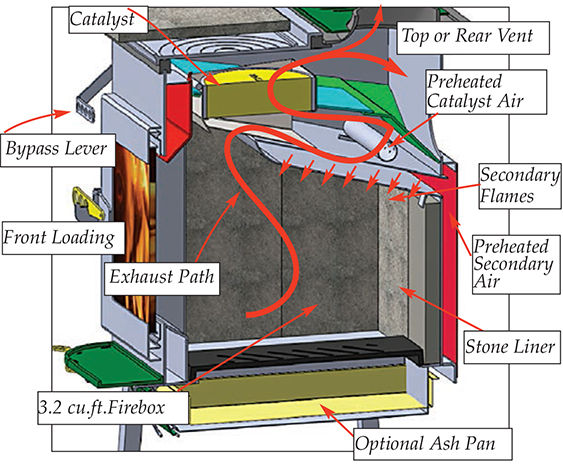
Hybrid wood stoves combine both non-catalytic and catalytic technologies to deliver exceptional performance. These advanced units use secondary combustion tubes alongside a catalytic combustor, providing multiple stages of smoke and gas combustion.
This dual-technology approach emerged as one of the most innovative developments in wood heating. Hybrid stoves consistently achieve the lowest emission levels and highest efficiency ratings available. They represent the premium choice for homeowners seeking optimal performance and environmental responsibility.
Automated Stoves
Advanced Technology for Modern Living
Automated wood stoves represent the cutting edge of wood heating technology. These sophisticated units utilize electronic controls and sensors to automatically regulate air intake, optimizing combustion without constant user intervention.
Advanced models feature temperature sensors, motorized dampers, and sometimes even WiFi connectivity for remote monitoring. This automation ensures consistent heat output and maximum efficiency throughout the burn cycle, making wood heating more convenient than ever before.

Inserts vs. Freestanding Stoves
Fireplace Inserts
Fireplace inserts are designed to fit directly into existing masonry or factory-built fireplaces. They transform inefficient open fireplaces into powerful heating appliances, dramatically improving heat output while utilizing your existing chimney infrastructure.
Inserts typically require a liner to be installed in the existing chimney and offer a built-in appearance that integrates seamlessly with your home's architecture.
Freestanding Stoves
Freestanding wood stoves stand independently and can be placed virtually anywhere with proper clearances and venting. They radiate heat from all sides, providing exceptional room heating and serving as a striking focal point in any space.
These stoves offer greater installation flexibility and typically provide more radiant heat than inserts, as heat radiates from all exposed surfaces rather than just the front face.
Certified vs. Uncertified Wood Stoves
The EPA established certification standards to ensure wood stoves burn cleanly and efficiently. Certified stoves must meet strict emission limits—currently 2.0 grams of particulate matter per hour or less. These standards have evolved significantly since their introduction in 1988.
EPA Certified
Meet strict emission standards, burn 70%+ more efficiently, produce less smoke, and qualify for rebates in many areas. Required for new installations in most jurisdictions.
Uncertified Stoves
Often pre-1988 models with significantly higher emissions and lower efficiency. Many regions offer change-out programs with incentives to replace older uncertified units.

Modern Single Burn Rate Stoves
Single burn rate stoves offer a simplified approach to wood heating. These units are designed to operate at a consistent, optimized burn rate without the need for frequent adjustment, making them exceptionally user-friendly.
While they provide less control over heat output compared to adjustable models, their fixed burn rate ensures clean, efficient combustion throughout the fire cycle. These stoves appeal to homeowners seeking simplicity without sacrificing environmental performance.
Exempt Wood Stoves
Certain wood-burning devices qualify for exemption from EPA certification requirements. These typically include cookstoves designed primarily for cooking, stoves with air-to-fuel ratios greater than 35:1, and units intended solely for outdoor use.
Exempt stoves must still meet specific design criteria and are generally intended for specialized applications rather than primary home heating. If you're considering an exempt stove, ensure you understand the regulations in your area and whether such a unit meets your heating objectives.
Ready to Upgrade Your Home Heating?
Discover our premium selection of EPA-certified wood stoves designed for maximum efficiency and lasting performance.
Osburn 3500 Wood StoveChoosing the Right Wood Stove
Selecting the ideal wood stove depends on your specific circumstances—available space, existing infrastructure, desired heat output, and commitment to maintenance. Non-catalytic stoves suit those preferring simplicity, while catalytic and hybrid models reward attentive operators with exceptional efficiency.
Regardless of which technology you choose, investing in an EPA-certified wood stove ensures you're getting a unit that burns cleaner, produces more heat from less fuel, and contributes to better air quality for your community. Modern wood heating offers a sustainable, renewable alternative that connects us to timeless traditions while embracing contemporary innovation.