
able tennis robots aren't for everyone — but for those who train with purpose, they can be an absolute game-changer. Used correctly, a robot will sharpen your technique, build muscle memory, and push your footwork further than any casual rally ever could.
In this guide, we break down the different types of table tennis robots available today — from entry-level units for beginners to high-end professional systems built for competitive training. We'll walk you through exactly what features to look for, which tier fits your game, and where to find the best options.
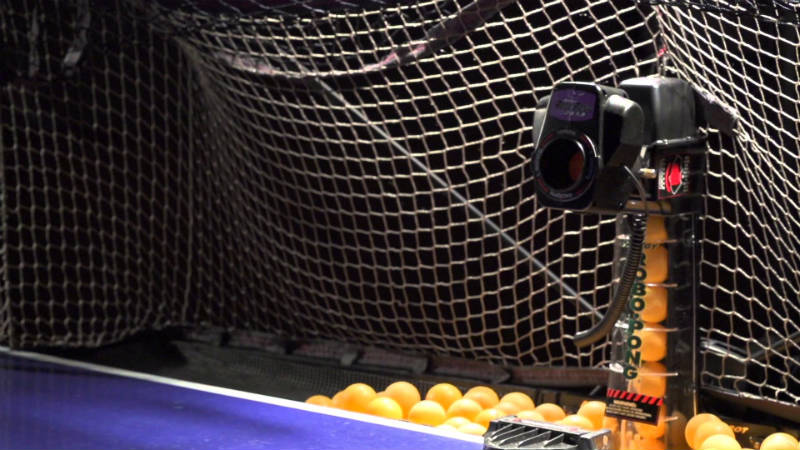
What Can a Table Tennis Robot Actually Do?
Before diving into product tiers, it's worth understanding the full range of what a robot is capable of. The best machines are more like intelligent training systems — capable of simulating entire match scenarios with varied spin, speed, and placement. Here's what the features look like in practice:
Ball Frequency
Control how many balls per minute the robot delivers. Most machines reach 80 balls/min, with advanced models surpassing 100 — demanding fast reflexes and sharp footwork.
Ball Placement
Choose where the ball lands on your side. Basic robots cover two positions; premium models deliver to multiple zones and can alternate placement with every shot.
Speed Control
Vary ball velocity during a session to replicate unpredictable opponent patterns — mixing slow floats with sharp drives in the same drill sequence.
Spin Variation
Switch between topspin, backspin, sidespin, and no-spin (float). Multi-spin robots change the rotation with every ball, creating a truly match-like challenge.
Random Play Mode
Engage full randomization across placement, speed, and spin — forcing you to read the ball rather than predict it, exactly like a real opponent.
Programmable Drills
Design and save your own multi-ball training sequences — targeting specific weaknesses or building complex footwork patterns for competition prep.
Ball Recycling
Mid-range and professional robots include a collection net that feeds balls back into the hopper automatically — so training never has to stop for a reload.
Service Simulation
Tilt the robot head down to bounce the ball on the far side of the table first — faithfully replicating a real table tennis serve for return-of-serve training.
At minimum, look for a robot that lets you control speed, spin, placement, and randomization. These four features alone will dramatically elevate the quality of your solo training sessions.
Entry Level Table Tennis Robots
Entry-level robots are the natural starting point for beginners or players working with a tighter budget. They cover the essentials — ball frequency, basic placement control, and a selection of spins — without the complexity of programmable drills or full randomization.
These units are notably compact. That's a genuine advantage when it comes to setup time and storage, but it means a smaller ball capacity too. Expect more frequent reloading compared to a larger, professional-grade machine.
If your goal is simply to get more ball time in — building consistency and getting comfortable with consistent ball delivery — an entry-level robot delivers exactly what you need.
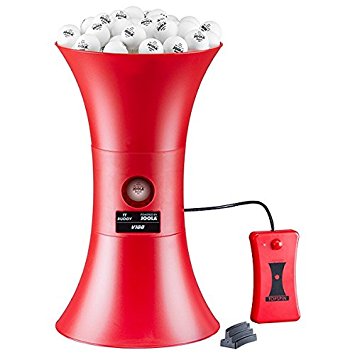
Entry Level
Beginner FriendlyBest for: casual players, beginners, limited-budget training setups.
Features: basic frequency, placement, and spin control. Limited randomization. Compact and portable.
Professional Level Table Tennis Robots

Professional robots are engineered for serious players who demand more from their training. These machines offer multi-spin capability, programmable drill sequences, precise multi-point placement, and full random-mode training — all controllable via a dedicated remote or app.
They're larger systems with significantly higher ball capacity, and most include an integrated recycling net for uninterrupted sessions. If you're competing regularly or working with a coach on structured development, a professional robot is worth every cent.
The Paddle Palace A32W Pro is an excellent example of this tier — a wireless, app-controlled training system with all the features serious players need to take their game to the next level.
Professional Level
Competitive TrainingBest for: intermediate to advanced players, club members, competitive athletes, and serious hobbyists.
Features: multi-spin variation per ball, programmable drills, app or remote control, ball recycling system, wide multi-zone placement, full randomization modes.
Which Robot Is Right For You?
The best table tennis robot isn't necessarily the most expensive one — it's the one that matches your training goals and playing level. A beginner who picks up a top-of-the-range machine may find it overwhelming. A competitive club player stuck with a basic unit will quickly outgrow it.
Think carefully about how you train. Do you solo drill for long uninterrupted sessions? Ball recycling is non-negotiable. Do you work on one specific shot type? Pre-set drills will serve you well. Do you want a realistic match simulation? Go multi-spin with full randomization.
Whatever your level, make sure your robot can do at minimum four things: vary speed, change spin, target multiple placements, and play randomly. These are the foundations of effective solo training.