
A practical, installation-focused guide to structured fiber management using the Panduit OptiCom QuickNet FCE1U — including standards, common mistakes, and best practices for long-term performance.
The rack mount fiber enclosure is one of the most important — and most frequently overlooked — elements of a structured cabling installation. Poor enclosure selection leads to bend radius violations, damaged fibers, increased attenuation, and long-term reliability headaches. This guide covers everything you need to know to get the installation right the first time.
What Is a Rack Mount Fiber Enclosure?
A rack mount fiber enclosure is a chassis designed to organize, protect, and terminate fiber optic cables within a standard 19" equipment rack. It serves as the central hub between incoming cable runs and outgoing patch connections — housing cassettes, panels, splices, or pigtails depending on the deployment type.
Panduit's FCE1U is a 1RU enclosure built for the OptiCom QuickNet system, accepting pre-terminated cassettes and panels for fast, tool-free deployment. It is widely used in data centers, enterprise LANs, and campus backbones where port density and installation speed are critical.
Cassette-Based Termination
Pre-terminated QuickNet cassettes snap directly into the enclosure — no field splicing or epoxy required. Reduces installation time dramatically.
Panel & Splice Support
Accepts standard fiber panels and splice trays, making the FCE1U versatile enough for both structured cabling and outside-plant terminations.
1RU / 19" Standard
Fits any EIA-310 compliant rack. Low profile, high-density — keeps rack space usage minimal while delivering maximum port capacity per U.

Why Proper Fiber Management Inside the Enclosure Matters
Bend Radius & Signal Integrity
Every fiber optic cable has a minimum bend radius — the tightest curve it can sustain without causing unacceptable signal loss or physical damage. Inside a rack enclosure, tight quarters make bend radius violations a common installation error. The FCE1U is specifically engineered with internal bend radius guides to keep fibers within safe limits at all times.
There are two bend radius specifications to respect:
- Dynamic bend radius — applies while routing or repositioning cables under tension
- Static bend radius — applies once the cable is installed and fully dressed
Violating either can cause macrobending (visible light-leaking bends) or microbending (microscopic deformations inside the fiber geometry) — both of which increase attenuation, especially on high-speed links like 40G, 100G, and 400G Ethernet.
Long-Term Reliability
A link that passes certification testing at installation can still fail prematurely if bend radius rules were ignored. Stressed fibers degrade gradually — increasing link errors and reducing headroom over time. Common downstream consequences include:
- Gradual signal degradation across the link
- Intermittent failures during temperature cycling
- Higher maintenance costs and unplanned downtime
Standards Compliance & Warranty Protection
BICSI, TIA, and most fiber manufacturers specify minimum bend radius requirements for their products. Non-compliant installations risk voiding manufacturer warranties, failing acceptance testing, and increasing operational risk across the entire network infrastructure.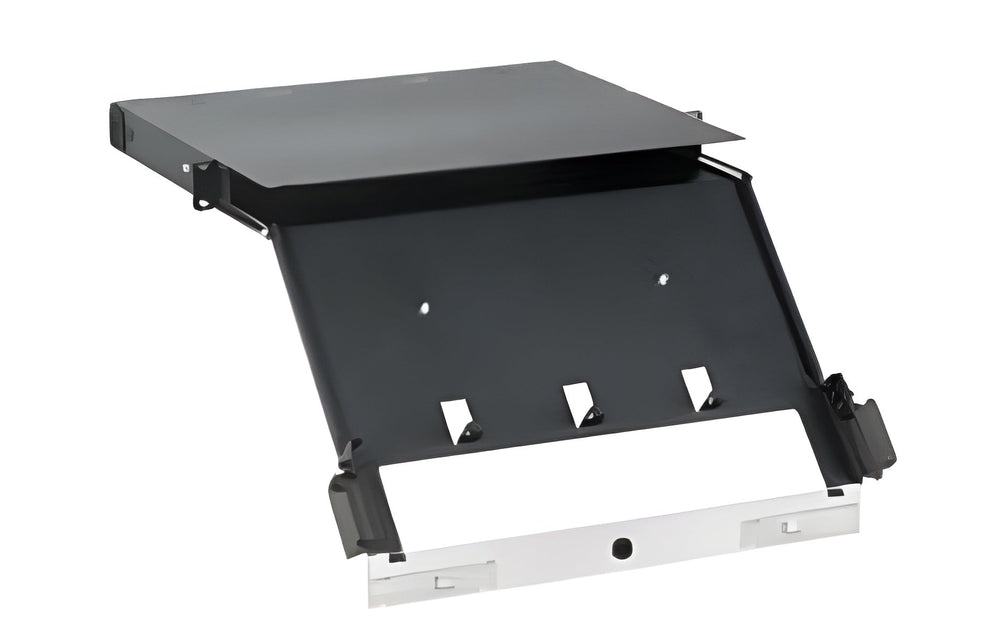
- Dynamic bend radius: 20× cable outer diameter
- Static bend radius: 10× cable outer diameter
Always check the cable manufacturer's datasheet — some specialty fibers have tighter tolerances that override these general guidelines.
Single-Mode vs. Multimode Fiber in Rack Enclosures
The FCE1U supports both single-mode and multimode fiber cassettes and panels — but each behaves differently when it comes to bend sensitivity.
| Property | Single-Mode (OS2, G.652) | Multimode (OM3, OM4, OM5) |
|---|---|---|
| Bend Sensitivity | Higher — stricter control required | More tolerant — but not immune to damage |
| Distance Support | Long-haul and campus backbone | Short-range data center and LAN |
| Common Applications | WAN, telecom, inter-building | Server-to-switch, storage area networks |
| Connector Type (typical) | LC/UPC, LC/APC | LC, MPO/MTP |
Bend-insensitive fiber variants (G.657) allow tighter bends — but manufacturers are clear that "bend-insensitive" does not mean damage-proof. Best practice is to still follow standard minimum bend radius guidelines during installation
Common Fiber Enclosure Mistakes and How to Avoid Them
Most fiber performance problems in rack environments trace back to avoidable installation errors. The following are the most frequently encountered issues and their solutions.
- Jamming excess cable slack inside the enclosure without proper management
- Over-tightening cable ties — distorts the cable jacket and stresses fibers internally
- Ignoring bend radius guides built into the enclosure chassis
- Mixing fiber types or polarity schemes without documentation
- Skipping post-installation OTDR and insertion loss testing
Effective Bend Radius Management Inside the FCE1U
The Panduit FCE1U includes internal routing guides and slack storage loops specifically designed to maintain correct fiber geometry. Use them. Routing fibers freehand across the chassis floor — even when it appears tidy — creates hidden stress points that only manifest as problems months later.
- Use proper cable management arms for rear cable entry and exit
- Secure slack in supervised loops, not compressed bundles
- Label every fiber run at the cassette and at the cable jacket entry point
- Perform insertion loss testing per TIA-526-14 after installation
- Document OTDR traces for future troubleshooting baseline comparison
Fiber Enclosure Management in High-Density Application Scenarios
Proper fiber enclosure management becomes increasingly critical as network density grows. Modern data centers supporting 40G/100G/400G architectures require precise organization inside every enclosure — tight spaces, frequent reconfigurations, and high port counts leave no room for improvised cable routing.
Data Center Core & Distribution
In core switching environments, the FCE1U houses high-density MPO/MTP cassettes that connect spine and leaf switches. Here, bend radius discipline is especially important because cable movement during adds, moves, and changes is frequent. Structured management reduces the risk of disturbing adjacent active fibers during maintenance.
Campus & Enterprise LAN
In enterprise buildings, the enclosure often serves as the inter-floor or inter-building termination point. Single-mode cables — which are more bend-sensitive — are typical in these runs, requiring careful attention to both the static and dynamic bend radius throughout the installed life of the link.
FTTx & Outside Plant Terminations
For fiber-to-the-premises deployments where outdoor cables are terminated indoors, the FCE1U provides a clean transition from outdoor-rated cable to indoor-grade pigtails or panels. Mechanical stress and temperature variation make rigid adherence to bend radius guidelines essential for long-term reliability in these environments.
Key Takeaway
Fiber enclosure performance is fundamentally a function of installation discipline. The vast majority of fiber link problems originate from improper installation practices — not defective hardware. The Panduit FCE1U provides the right physical architecture to support compliant, high-performance installations. What it cannot compensate for is a lack of attention to bend radius, cable dressing, and post-installation verification.
By following industry best practices and manufacturer guidelines, network operators can significantly reduce attenuation, extend fiber lifespan, and ensure stable, high-speed data transmission across all deployment scenarios.
Conclusion
From data centers to campus fiber backbones, proper rack mount fiber enclosure management directly impacts signal integrity, long-term reliability, and total cost of ownership. The Panduit OptiCom QuickNet FCE1U gives installers and network operators the platform to deploy structured fiber correctly — with built-in guidance for cassette organization, bend radius compliance, and scalable port density.
Understanding and applying the principles in this guide — bend radius rules, installation discipline, standards adherence, and post-installation testing — allows network engineers to maximize infrastructure performance and minimize the operational cost of fiber link failures.
Whether deploying a single rack in an equipment room or commissioning a full data center fabric, the practices outlined here apply equally and pay dividends across the entire lifecycle of the installation.