
Master the art of outdoor cooking with precision temperature control and authentic wood-fired flavor
Understanding Wood Pellet Grills
Imagine combining the rich, smoky essence of traditional wood-fired cooking with the convenience of modern technology. That's exactly what wood pellet grills deliver to your backyard. These innovative cookers use compressed hardwood pellets as fuel, automatically feeding them into a firebox to maintain consistent temperatures while infusing your food with genuine wood smoke flavor.
The magic happens through an integrated auger system that precisely delivers pellets to the fire, while a digital controller monitors and adjusts the heat to keep temperatures steady. Whether you're smoking brisket low and slow at 225°F or searing steaks at 500°F, pellet grills give you restaurant-quality results without the constant babysitting required by traditional smokers.
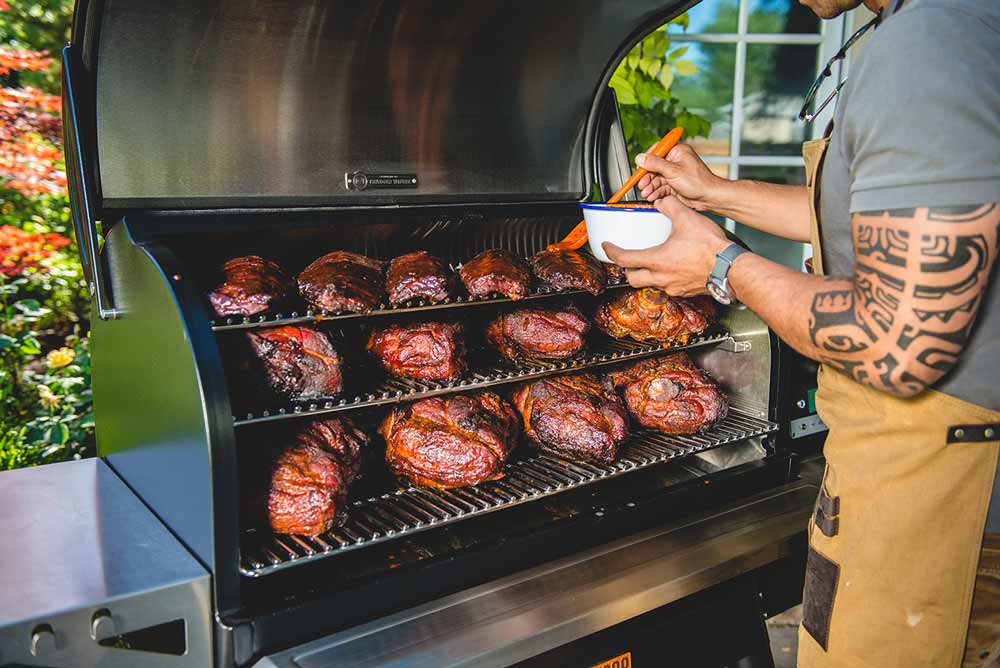
Since their introduction in the 1980s, pellet grills have evolved from simple backyard smokers into versatile outdoor cooking powerhouses. Today's models can smoke, grill, roast, bake, and even braise—making them the ultimate all-in-one solution for outdoor chefs who demand both quality and convenience.
The foundation of great pellet grill cooking lies in the fuel itself. Premium hardwood pellets are crafted from pure sawdust compressed under high pressure, with no fillers or additives. These food-grade pellets burn cleanly and efficiently, creating minimal ash while generating the authentic smoke that makes pellet-grilled food so irresistible.
Why Pellet Grills Are Worth the Investment

The question isn't whether pellet grills are worth it—it's whether you're ready to transform your outdoor cooking experience. For anyone serious about creating exceptional food in their backyard, a pellet grill represents one of the smartest investments you can make.
Consider the alternatives: gas grills offer convenience but lack authentic smoke flavor. Charcoal grills provide great taste but demand constant attention and temperature management. Traditional offset smokers deliver superior results but require expertise and hours of tending. Pellet grills bridge these gaps beautifully, giving you genuine wood-fired flavor with push-button simplicity.
Set-It-and-Forget-It Cooking
Digital temperature control maintains precise heat for hours without constant monitoring, freeing you to enjoy time with family and guests.
Authentic Wood Flavor
Real hardwood smoke penetrates your food, creating depth and complexity that gas grills simply cannot match.
Incredible Versatility
From low-and-slow smoking to high-heat searing, baking pizzas to roasting vegetables—one grill handles it all.
Consistent Results
Advanced temperature management eliminates hot spots and fluctuations, ensuring perfectly cooked food every time.
While pellet grills typically cost more upfront than basic gas or charcoal models—usually ranging from $400 to $2,000 or more—they deliver exceptional value over time. The fuel efficiency is impressive, with a 20-pound bag of pellets lasting through multiple long smoking sessions. When you factor in the versatility that eliminates the need for multiple outdoor cookers, the investment becomes even more compelling.
The learning curve is remarkably gentle. Even complete beginners can achieve impressive results from their very first cook. Meanwhile, experienced pitmasters appreciate the precision and repeatability that allows them to perfect their recipes and push their skills further.
How Wood Pellet Grills Operate

Understanding the mechanics behind your pellet grill helps you maximize its potential. The system is elegantly simple yet remarkably effective:
- Hopper Storage: Large-capacity hoppers hold pounds of wood pellets, automatically feeding fuel as needed throughout your cook.
- Auger-Driven Delivery: A motorized auger precisely meters pellets from the hopper into the firebox, responding to temperature demands in real-time.
- Controlled Combustion: An electric igniter lights the pellets, while a fan regulates airflow to maintain the exact temperature you've selected.
- Heat Distribution: Strategically positioned heat deflectors spread warmth evenly across the cooking surface, eliminating cold spots.
- Smoke Generation: As pellets smolder, they release clean smoke that circulates through the cooking chamber, flavoring every inch of your food.
The system integrates seamlessly through a digital controller—your command center for temperature management. Simply set your desired temperature, and sophisticated sensors continuously monitor the cooking chamber, adjusting pellet feed rates and airflow to maintain rock-solid heat levels.
This precision extends across a remarkably wide temperature range. Quality pellet grills can maintain steady temperatures from around 180°F for cold smoking delicate fish, all the way up to 500°F or higher for searing steaks with perfect grill marks. Some advanced models even offer direct flame access for true high-heat grilling.
Pro Tip for Optimal Performance
The digital controller functions as your grill's brain, but the quality of your pellets acts as its fuel source. Always choose premium, food-grade hardwood pellets specifically designed for grilling. Heating pellets or those containing fillers can compromise flavor, generate excessive ash, and potentially damage your grill's components. Store your pellets in a dry location to prevent moisture absorption, which can cause feeding issues and inconsistent burns.
Wood Pellet Varieties: Choosing Your Flavor Profile

One of the most exciting aspects of pellet grilling is the ability to customize your smoke flavor by selecting different wood types. Each variety brings its own character to the table, allowing you to match wood profiles to specific foods for optimal results.
The diverse array of pellet options available lets you experiment endlessly with flavor combinations. Some pitmasters maintain a collection of different woods, blending them to create signature smoke profiles. Others prefer the versatility of mild woods for everyday cooking, reserving stronger varieties for special occasions.
Hickory
Bold and hearty with a bacon-like essence, perfect for pork and beef
Mesquite
Intense and earthy, ideal for southwestern-style meats and vegetables
Apple
Subtly sweet and fruity, exceptional for poultry, pork, and fish
Cherry
Mild and slightly sweet with beautiful color, great for all proteins
Oak
Medium smoke intensity, versatile for virtually any food
Maple
Delicate sweetness that enhances pork, poultry, and vegetables
Pecan
Rich, nutty character that complements most meats beautifully
Competition Blend
Balanced mix designed for consistent, crowd-pleasing results
Premium wood pellets burn remarkably efficiently. A standard 20-pound bag typically provides 12-20 hours of cooking time, depending on your temperature settings. Lower temperatures for smoking consume pellets more slowly, while high-heat grilling increases fuel usage. Many backyard chefs find that a single bag lasts through several weekend cooking sessions.
When shopping for pellets, prioritize quality over price. Look for products made from 100% natural hardwood with no fillers, binders, or additives. The pellets should appear uniform in size, feel dry to the touch, and produce minimal dust in the bag. Avoid heating pellets or those not explicitly labeled as food-grade—they may contain chemicals or treatments unsuitable for cooking.
Pellet Grill Fuel Efficiency: What to Expect
Understanding pellet consumption helps you plan your cooks and budget your fuel costs effectively. The rate at which your grill uses pellets depends primarily on your cooking temperature and duration.
| Temperature Range | Pellet Usage Rate | Typical Applications |
|---|---|---|
| 180°F - 225°F (Low Smoke) | 0.5 - 1 lb/hour | Cold smoking, jerky, slow-cooked brisket |
| 225°F - 275°F (Low & Slow) | 1 - 1.5 lbs/hour | Ribs, pulled pork, traditional BBQ |
| 275°F - 350°F (Roasting) | 1.5 - 2 lbs/hour | Chicken, turkey, roasted vegetables |
| 350°F - 450°F (Baking/Grilling) | 2 - 2.5 lbs/hour | Pizza, burgers, standard grilling |
| 450°F+ (High Heat Searing) | 2.5 - 3+ lbs/hour | Steaks, searing, high-heat cooking |
These rates provide general guidelines, but actual consumption varies based on several factors: ambient temperature (cold weather increases fuel usage), wind conditions, grill insulation quality, and how frequently you open the lid. Well-insulated grills maintain temperature more efficiently, using less fuel overall.
At current pricing, quality wood pellets typically cost between $15-25 per 20-pound bag. This translates to remarkably affordable cooking—often just a few dollars per session for most cooks. When compared to the cost of dining out or even buying prepared smoked meats, the economics of pellet grilling become very attractive.
Maximizing Fuel Efficiency
Keep your grill well-maintained by regularly cleaning the firepot and removing ash buildup. Ensure your grill is properly sealed to prevent heat loss. During cold weather, consider using an insulated blanket designed for your grill model. Most importantly, resist the temptation to constantly check on your food—every time you open the lid, you release heat and force the grill to burn extra pellets recovering temperature.
Common Questions About Pellet Grilling
How Do Pellet Grills Compare to Gas?
Pellet grills and gas grills serve different purposes in the outdoor cooking world. Gas grills excel at quick, high-heat cooking and offer instant temperature control with the turn of a knob. They're ideal for weeknight dinners when you need food on the table fast. However, they lack the authentic smoke flavor that defines great barbecue.
Pellet grills shine when flavor matters most. The real wood combustion creates genuine smoke that penetrates deep into your food, developing complex flavors impossible to achieve with gas. While they require slightly more setup time and attention, modern pellet grills offer remarkable convenience through digital temperature control. For anyone prioritizing taste over pure speed, pellet grills deliver superior results.
Are Pellet Grills Beginner-Friendly?
Absolutely. Pellet grills are among the most approachable outdoor cookers available, making them perfect for beginners. The automated temperature control eliminates the steep learning curve associated with charcoal smokers or traditional offset smokers. Set your desired temperature, load your food, and the grill handles the rest.
That said, there are techniques worth learning to maximize your results. Understanding how different woods affect flavor, mastering temperature management for various foods, and developing proper meat preparation skills all enhance your outcomes. The beauty of pellet grills lies in their forgiving nature—even imperfect technique usually yields delicious results, giving beginners the confidence to keep improving.
What Maintenance Do Pellet Grills Require?
Regular maintenance keeps your pellet grill performing optimally for years. After every few cooks, vacuum out ash from the firepot and drip tray. Scrape the grill grates clean while they're still warm. Every month or so, perform a deeper cleaning: remove and wash the drip tray, clean out any accumulated grease, and check the auger tube for obstructions.
Seasonally, inspect gaskets and seals for wear, clean the temperature probe, and verify that all components function properly. Before extended storage, thoroughly clean the entire grill and cover it with a quality weather-resistant cover. This simple maintenance routine prevents problems and ensures consistent performance season after season.
Can You Get Authentic Smoke Rings?
Yes! Pellet grills absolutely produce authentic smoke rings—that prized pink layer just beneath the surface of smoked meats. The smoke ring forms when nitrogen dioxide from burning wood reacts with myoglobin in the meat, creating the characteristic coloration that signals traditional low-and-slow cooking.
To maximize smoke ring development, start with cold meat (letting it sit at room temperature reduces smoke absorption), maintain steady low temperatures during the critical first few hours of cooking, and ensure good airflow through your grill. While smoke rings don't affect flavor, they're a badge of honor for pitmasters and a visual indicator of proper smoking technique.
How Do Weather Conditions Affect Performance?
Pellet grills can operate year-round, but extreme weather does impact performance. Cold temperatures force the grill to work harder maintaining heat, increasing pellet consumption and potentially extending cooking times. Winter grilling often benefits from an insulated blanket designed for your specific model, which dramatically improves efficiency in freezing conditions.
Wind presents challenges by drawing heat away from the grill and creating temperature fluctuations. Position your grill in a sheltered location when possible, or use a windbreak to protect it from strong gusts. Rain and moisture require attention too—keep your pellets dry, as damp fuel causes feeding problems and inconsistent combustion. Store pellets indoors and use a quality grill cover when not cooking.
Ready to Transform Your Backyard Cooking?
Experience the perfect combination of authentic wood-fired flavor and modern convenience with a premium pellet grill combo that handles everything from low-and-slow smoking to high-heat grilling.
Pit Boss Sportsman Combo