
Smoking meat is a tradition that spans thousands of years, delivering rich, savory flavors to everything from beef brisket to whole chickens. Today, pellet smokers have taken center stage, winning over both backyard enthusiasts and seasoned pitmasters with their effortless temperature management and outstanding taste. But becoming a true pellet smoking expert takes more than just firing up the grill. Proper safety habits and consistent maintenance are the foundation of a long-lasting smoker and mouth-watering results. This all-in-one guide covers everything you need to know.
1. Understanding Pellet Smokers
What they are and how they work
A pellet smoker, also commonly referred to as a pellet grill, is an outdoor cooking appliance that merges the capabilities of a traditional grill with those of a dedicated smoker. It uses compressed wood pellets as fuel, which are automatically delivered to a combustion chamber through an electric auger mechanism. Inside a separate cooking area, your food absorbs the heat and smoke generated by those pellets. Thanks to their steady smoke production and precise temperature regulation, pellet smokers have surged in popularity and are now embraced by beginners and pit masters alike.

Why Safety and Maintenance Matter
Pellet smokers are undeniably convenient and versatile, but they still require attentive care and consistent upkeep. Skipping safety measures or neglecting maintenance can lead to accidents, shorten your equipment's life, and compromise the quality of your food. In this guide, we break down all the essential precautions and maintenance routines that will keep you cooking safely and your smoker performing at its peak.
Why Choose Pellet Smoking?
The benefits that set pellet grills apart
Pellet smoking has been gaining serious momentum among outdoor cooking enthusiasts, and for good reason. Once you understand the advantages, it becomes clear why so many people are making the switch. Here is a closer look at what makes pellet smoking stand out:
Reliable Temperature Control
One of the standout advantages is the ability to hold precise, uniform temperatures throughout the cook. Digital control systems automatically regulate airflow and pellet feed, making it easy to achieve the low-and-slow conditions needed for perfectly smoked meats — something that demands constant babysitting with conventional smokers.
Incredible Versatility
Pellet smokers serve as an all-in-one outdoor cooking solution. Beyond smoking, they can grill, bake, roast, and sear. This versatility means you can consolidate multiple outdoor cooking gadgets into one. Whether you are searing steaks, baking pizza, roasting a whole chicken, or slow-smoking brisket, a pellet grill handles it all.
Clean and Efficient Operation
Pellet smokers are recognized for their tidy operation. They generate far less ash compared to charcoal or traditional wood smokers, cutting down on cleanup. Because the pellets come from sustainable wood sources, they are also an environmentally conscious choice. The highly efficient combustion process delivers plenty of heat and smoke using relatively few pellets.
Rich, Customizable Flavor
Flavor is the number one draw for most people. With a wide variety of wood pellet types available — hickory, mesquite, cherry, applewood, and more — each one delivers a distinct flavor and aroma. You can experiment with blends and tailor the smoke profile to complement your dish perfectly. The slow, even burn of pellets imparts a depth of smoky taste that other cooking methods simply cannot replicate.
Set It and Let It Go
Pellet smokers are often called the "set it and forget it" barbecues. Load up the hopper, dial in your temperature, and the smoker takes care of the rest — maintaining heat and smoke levels on its own. This frees you to focus on side dishes, entertain guests, or just relax while your food cooks to perfection.
Advanced Cooking Control
Most pellet smokers come loaded with features like built-in meat probes and programmable timers. These tools let you set exact timings for preheating, smoking, and resting phases. The internal probes monitor your meat's core temperature in real time, whether you are aiming for a juicy medium-rare steak or fall-off-the-bone tenderness.
Built for Long Sessions
Pellet smokers excel at extended cooks. They can run for hours — even an entire day — without refueling, making them ideal for large cuts like pork shoulders and whole briskets. The automatic pellet feed keeps the fire burning steadily, the temperature locked in, and the smoke infusing your food, all without requiring your constant attention.
Welcoming to All Skill Levels
Whether you are a first-time griller or an experienced pitmaster, a pellet smoker accommodates every skill level. The set-it-and-forget-it nature means even complete beginners can produce impressive results. Meanwhile, experienced cooks can push the boundaries by experimenting with wood blends, advanced techniques, and fine-tuned temperature control.
Time-Saving Convenience
Compared to traditional smokers, pellet grills demand far less prep and maintenance time. There is no chopping wood, lighting charcoal, or fiddling with dampers. Just fire it up, set the temperature, and let it work its magic. This is a game-changer for busy people who still crave the taste of authentic smoked food.
Ready to experience the ultimate pellet smoking setup?
Recteq Deck Boss 8002. Safety First: Operating Your Pellet Smoker
Essential precautions every owner should follow
Pellet smokers are no exception when it comes to outdoor cooking safety. Following the right precautions protects you, your family, and your equipment from harm. Here is a thorough breakdown of the safety measures to keep in mind every time you fire up your grill:
Proper Ventilation and Location
Outdoor Use and Ventilation
It cannot be overstated: pellet smokers must only be used outdoors. Operating them inside — even in spaces that seem well-ventilated — can lead to carbon monoxide accumulation. Carbon monoxide is a colorless, odorless, and potentially deadly gas. Always place your smoker in an open area with ample airflow to safely disperse any emissions.
Distance from Flammable Materials
Keep a safe buffer between your pellet smoker and anything combustible — buildings, fences, structures, and overhanging branches. A minimum clearance of ten feet from buildings and combustible objects is generally recommended. This includes wooden decks, dry vegetation, and any material that could catch fire from heat or stray sparks.
Stable, Level Ground
Always position your smoker on a flat, stable surface. An uneven or wobbly setup is a serious safety risk — hot liquids and grease could spill, leading to burns or fire hazards. If the ground is not naturally level, use leveling tools or shims to stabilize the smoker before use.
Adequate Clear Space
Maintain a clear, unobstructed zone around your pellet smoker. This serves both safety and convenience — easy access for refilling pellets or performing maintenance, while also reducing the chance of someone accidentally brushing against a hot surface or tripping over nearby objects.
Avoiding Fire Hazards
Clear the Area
Before lighting your smoker, make sure the surrounding area is free of leaves, debris, and other combustible materials. This prevents grease drips, radiant heat, or sparks from igniting anything nearby. Regularly sweep and clean the zone around your grill, and inspect the cooking chamber for residue buildup after every session.
Quality Extension Cord
If you need an extension cord, choose one rated for outdoor use and capable of handling your smoker's wattage. Always follow the manufacturer's specifications for extension cord gauges and lengths. Using an undersized cord can cause overheating and fire risks. Plug into dedicated outlets to avoid overloading circuits.
Inspect Electrical Components
Routinely examine the control panel, power cable, and plug for signs of wear, damage, or exposed wiring. Frayed or broken electrical components can cause shocks and fires. Replace damaged parts immediately, and always hire a qualified electrician for any cord or plug repairs rather than attempting a DIY fix.
Electrical Safety
Use a GFCI Outlet
A Ground Fault Circuit Interrupter (GFCI) outlet is a critical safety device. It detects electrical faults and cuts power instantly, drastically reducing the risk of electric shock. Always plug your pellet smoker into a GFCI-protected outlet, or use an external GFCI adapter. This is especially important in outdoor settings where moisture is a constant concern.
Water and Electricity Don't Mix
Never allow rain, snow, or any moisture to come into contact with your pellet smoker's electrical connections or power supply. Water and electricity together pose a serious hazard. Ensure all electrical connections, including the power cord, are fully shielded from weather exposure. Never touch electrical components with wet hands — always keep your hands dry when operating the controls.
Food Safety
Safe Food Handling Practices
Food safety is a critical consideration when using your pellet smoker. Always follow established food safety standards and use a food thermometer to confirm that meats have reached safe internal temperatures. Keep the following guidelines in mind:
• Always thaw meat in the refrigerator — never at room temperature.
• Wash your hands and utensils thoroughly when handling food to prevent cross-contamination.
• Marinate meat in the refrigerator, not on the counter, to stop bacterial growth.
• Do not leave food — cooked or raw — sitting at room temperature for prolonged periods.
• Regularly clean and sanitize all food-contact surfaces on your smoker, including grates, meat probes, and drip trays. Proper sanitation ensures your smoked food is safe to eat and prevents cross-contamination.
3. The Anatomy of a Pellet Smoker
Know your machine inside and out
Understanding each component of your pellet smoker is essential to operating it safely and getting the best performance. Let us walk through the key parts of a standard pellet smoker:
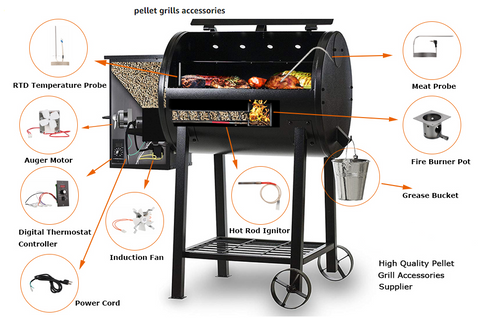
Pellet Hopper
The pellet hopper is the fuel reservoir of your smoker, typically located on the side of the unit. It stores the wood pellets and feeds them continuously to the combustion chamber throughout the cooking process. This component is fundamental to uninterrupted operation.
Safety Tip
Store wood pellets properly in a cool, dry location away from moisture. This prevents contamination, clumping, and combustion issues that can compromise your cook and your safety.
Auger System
The auger is the brain of the operation. This screw-like mechanism, powered by an electric motor, transports pellets from the hopper to the combustion chamber at a controlled rate. It determines how fast pellets are fed into the firepot, directly influencing the fire intensity and cooking temperature.
Safety Tip
Keep the auger system clean and free of debris. A clear auger is essential for consistent pellet feeding, steady fire, and preventing potential fire hazards caused by blockages.
Combustion Chamber
This is where the action happens. The combustion chamber is the space where wood pellets ignite and burn, producing the heat and smoke that cook and flavor your food. It is typically positioned behind the cooking grates, and you can often see the glow of burning pellets through the grates.
Safety Tip
Clear out ash and debris from the combustion chamber after every use. Ash buildup restricts airflow, creates fire risks, and leads to uneven temperature regulation.
Temperature Control Systems
A stable cooking temperature is maintained through multiple integrated systems working together. These include:
Digital Controllers — Allow you to precisely select and maintain your target temperature. They monitor conditions in real time and adjust the airflow and pellet feed rate to hold the smoker within your desired range.
Thermocouples — Temperature sensors that continuously track the smoker's internal heat and relay data back to the controller, which then makes real-time adjustments to maintain accuracy.
Blower or Fan — Controls airflow within the combustion chamber. By modifying air intake, the smoker can fine-tune the desired temperature.
Auger Control — Regulates the rate at which pellets are fed into the combustion chamber, directly influencing heat output. This regulation is essential for keeping temperatures constant.
Safety Tip
Periodically calibrate your temperature control system to verify accuracy. Discrepancies can result in overcooked or undercooked food, impacting both quality and safety.
Cooking Chamber
The cooking chamber is where your food sits while the heat and smoke from the combustion process infuse it with flavor. This compartment houses the cooking grates or racks where you place your meats, poultry, fish, and other items for smoking.
Safety Tip
Wipe down the cooking grates after every use. Removing oil and food residue prevents combustible material buildup and keeps your food safe and hygienic. Periodically deep-clean the entire cooking chamber, paying close attention to residue and ash accumulation.
4. Pellet Smoker Maintenance
Keep your grill in peak condition
Your pellet smoker's longevity, performance, and safety all hinge on consistent maintenance. Here is a detailed breakdown of the maintenance routines that will keep your smoker operating at its best:
Cleaning and Seasoning
Exterior Cleaning
Cleaning the exterior is not just cosmetic — it also prevents dirt and grime from interfering with your smoker's function. Wipe down the outside with a damp cloth and mild detergent, then dry thoroughly. Regular cleaning prevents oil and grease buildup that attracts pests and degrades the finish over time.
Interior Cleaning
The interior should be cleaned after every use. Remove leftovers and ashes from the combustion chamber using a shop vacuum with a hose attachment. It is equally important to clean the cooking grates, scraping away food residue and oil buildup to prevent the accumulation of combustible substances.
Seasoning the Grates
Seasoning involves applying a thin coat of vegetable oil to your cooking grates, then running the smoker at high heat for about thirty minutes. This process promotes even heat distribution, prevents food from sticking, and seals the grates with a protective oil layer that repels residue.
Maintaining the Pellet Hopper
Empty Excess Pellets
Remove any leftover wood pellets from the hopper after each cooking session. This prevents moisture absorption and pellet degradation. Pellets left sitting in the hopper can clump together or break down, which impairs combustion efficiency.
Check for Condensation
Depending on your local climate, condensation may form inside the hopper — especially in humid conditions. Moisture affects combustion and causes pellets to clump. Periodically inspect the hopper for any signs of moisture and wipe it dry before refilling.
Checking the Auger System
Clean the Auger
Inspect the auger regularly for pellet dust or debris accumulation. A clean auger ensures smooth, uninterrupted pellet delivery and reduces the risk of blockages. Use a vacuum or soft brush to clean it, but exercise caution around electrical components.
Lubrication
Some pellet smokers require periodic auger lubrication for smooth operation. Consult your smoker's user manual for specific guidance on when and how to lubricate. Always use manufacturer-recommended lubricants to maintain safe operation and avoid contamination.
Inspecting the Combustion Chamber
Remove Ash
Clear ash from the combustion chamber after every cooking session. Ash buildup hinders airflow, disrupts combustion, and can even start a fire. Use a dedicated ash removal tool or an ash vacuum to clean it out thoroughly.
Check for Creosote
Creosote is a combustion byproduct that can accumulate in the chamber during long, low-temperature smoking sessions. It poses both fire hazards and efficiency problems. Regularly inspect the combustion chamber and use a wire brush to scrub away any creosote buildup.
Temperature Control System Care
Calibration
Maintaining accurate temperatures requires routine calibration of your temperature control system. Compare the readings from your smoker's built-in thermometer against a reliable external thermometer. If you notice discrepancies, follow the manufacturer's instructions to recalibrate your system.
Check Probes
Verify the accuracy of your temperature probes by cross-referencing them with a separate thermometer. Routine testing ensures your temperature control system is functioning correctly, helping you avoid undercooking or overcooking your meals.
Cleaning the Cooking Chamber
Grate Maintenance
After each cook, scrub the grates using a grill brush or scraper to remove charred food and grease. This simple habit prevents flavor contamination between cooks and keeps your grates in top working condition.
Drip Tray and Grease Management
Regularly empty and clean the drip tray and grease bucket. Excess grease buildup is one of the most common causes of flare-ups and grill fires. Replace drip tray liners frequently and keep the grease management system clear to ensure safe, clean operation.
Elevate Your Pellet Smoking Game
Now that you have mastered the fundamentals of pellet smoker safety and maintenance, it is time to put your knowledge to work with a top-tier pellet grill.
Recteq Deck Boss 800This guide is provided for informational purposes by Backyard Provider. Always consult your pellet smoker's manufacturer manual for model-specific instructions and safety guidelines.