
Grilling is one of life's great pleasures — but stepping into the world of outdoor cooking can quickly become overwhelming. Gas, charcoal, and pellet grills each promise something distinct, and the differences go far deeper than price tags and size.
Before you invest in a grill that'll live in your backyard for the next decade, it's worth understanding what each type truly offers, where each one shines, and where it falls short. This guide will walk you through all three so you can make a decision you'll celebrate every time you fire it up.

The Gas Grill
If convenience is your top priority, a gas grill is hard to beat. Turn the knob, press the igniter, and you're cooking in minutes — no waiting for coals to ash over, no fussing with pellets. For busy families and weeknight cooks, this kind of simplicity is genuinely valuable.
Gas grills run on either propane tanks or a direct natural gas line from your home. Natural gas setups eliminate the hassle of running out of fuel mid-cook, while propane gives you full portability. Temperature control is precise and immediate — you can dial heat up or down in seconds, making gas grills especially well-suited for delicate proteins and vegetables that need careful management.
"Gas grills are the weeknight workhorse of the backyard — reliable, fast, and endlessly practical."
The one honest trade-off with gas is flavour. Without the combustion of wood or charcoal, gas grilling produces a clean-cooked result — excellent, but lacking the deep smoky character that many grilling purists crave. Drippings do hit the burner flames and create some flavour, but it won't replicate what charcoal or wood smoke delivers.
Gas grills range from compact two-burner units starting under $300 up to full outdoor kitchen setups that can run well past $2,000. For most families, a reliable mid-range four-burner model hits the sweet spot between features and budget.

Strengths
- Lights and heats up in under 10 minutes
- Precise, instant temperature control
- Easy to clean and maintain
- Wide range of price points and sizes
- Works well for everyday cooking
Limitations
- Lacks deep smoky flavour
- Propane tanks need refilling
- Less authentic outdoor cooking experience
- Not ideal for low-and-slow smoking
The Charcoal Grill
Ask any die-hard griller what they cook on and there's a good chance the answer is charcoal. There's a reason this method has endured for generations — the flavour it produces is simply unmatched. The combination of high radiant heat and the aromatic smoke from burning charcoal creates a bark, crust, and depth of flavour that no gas flame can replicate.
Charcoal grills demand more involvement than their gas counterparts. You'll need to light the coals, wait 20–30 minutes for them to reach proper cooking temperature, and manage the fire through the session by adjusting vents and repositioning coals. That process is part of the appeal for many grillers — it's a hands-on ritual that connects you to the food you're making.

Temperature control takes practice. Unlike a gas burner, charcoal heat isn't instant or precise — you manage it by controlling airflow and arranging the coals. This learning curve is real, but mastering it is genuinely rewarding. Charcoal grills also reach higher peak temperatures than most gas grills, making them ideal for achieving a proper sear on steaks.
On the cost side, charcoal grills are often the most affordable entry point — you can find quality options from $50 up to a few hundred dollars, though premium ceramic kamado-style grills can climb considerably higher. Ongoing fuel costs are modest, and the only real ongoing maintenance is ash disposal after each cook.
Strengths
- Superior smoky flavour and aroma
- Reaches very high searing temperatures
- Lower upfront and ongoing cost
- Portable and simple in design
- Rewarding, hands-on cooking experience
Limitations
- Longer setup and heat-up time
- Temperature control requires practice
- Ash cleanup after every cook
- Not ideal for quick weeknight meals
The Pellet Grill
Pellet grills are the newest player in the backyard cooking world, and they've earned their growing popularity for good reason. They combine the authentic wood-smoke flavour that charcoal delivers with a level of temperature precision and automation that rivals gas. For many outdoor cooks, pellet grills genuinely feel like the best of both worlds.
These grills burn compressed hardwood pellets — available in flavours like hickory, apple, mesquite, and cherry — fed automatically from a hopper into a firepot by an electric auger. A digital controller maintains your set temperature automatically, making long low-and-slow cooks almost effortless. Set your temperature, load your meat, and let the grill work while you get on with your day.
"A pellet grill is the closest thing to a set-and-forget smoker that still delivers genuine wood-fired character."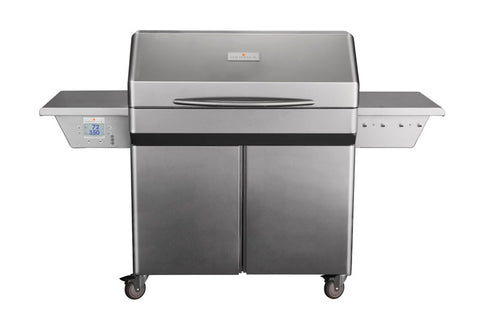
Pellet grills excel at smoking, slow roasting, and baking — yes, baking. Many models function as a full outdoor oven. They handle brisket, ribs, pulled pork, whole birds, and even bread with equal confidence. High-end models also sear well, though some entry-level pellet grills struggle to reach the extreme temperatures charcoal achieves.
The trade-off is price and electrical dependency. Good pellet grills start around $400 and premium models can exceed $1,500. They require a power outlet to run their electronics, limiting placement flexibility. Pellets themselves need replenishing, and hopper capacity determines how long you can cook unattended. That said, for those who love smoked meats and want consistency without constant attention, pellet grills are extraordinarily capable machines.
Strengths
- Genuine wood-smoke flavour with minimal effort
- Precise digital temperature control
- Excellent for low-and-slow smoking
- Versatile — grill, smoke, roast, and bake
- Wide variety of hardwood pellet flavours
Limitations
- Requires electricity to operate
- Higher upfront investment
- Pellets must be kept dry and stocked
- Some models limited in high-heat searing
Side-by-Side Comparison
| Feature | Gas Grill | Charcoal Grill | Pellet Grill |
|---|---|---|---|
| Startup Time | 5–10 mins | 20–30 mins | 10–15 mins |
| Smoke Flavour | Minimal | Excellent | Excellent |
| Temp Control | Instant & Precise | Manual / Skill-based | Digital / Automated |
| Fuel | Propane / Natural Gas | Charcoal / Lump | Hardwood Pellets |
| Versatility | Good | Moderate | Excellent |
| Price Range | $200 – $2,000+ | $50 – $800+ | $400 – $1,800+ |
| Best For | Everyday cooking | Flavour purists | Low-and-slow enthusiasts |
Our Recommendation for the Serious Backyard Cook
If you want the most well-rounded outdoor cooking experience — authentic wood-smoke flavour, precise temperature control, and the versatility to smoke, roast, and grill — a quality pellet grill is hard to argue with. The Recteq X-Fire Pro delivers on every front.
Recteq X-Fire Pro 825