
What Exactly Is a Pellet Grill?
If you have ever fired up a barbecue, you already know the magic that happens when smoke meets meat. A pellet grill takes that experience and makes it remarkably hands-off. Instead of wrestling with charcoal briquettes or monitoring a stick-burner all afternoon, you simply load compressed hardwood pellets into a hopper, dial in your target temperature, and let the grill do the heavy lifting.
The concept dates back to the late 1980s when Traeger introduced the first consumer pellet cooker. Since then, the technology has evolved dramatically. Modern pellet grills pair precision digital controllers with heavy-duty construction, giving backyard cooks a versatile outdoor oven that can smoke, grill, roast, bake, and even braise—all with genuine wood-fired flavor.
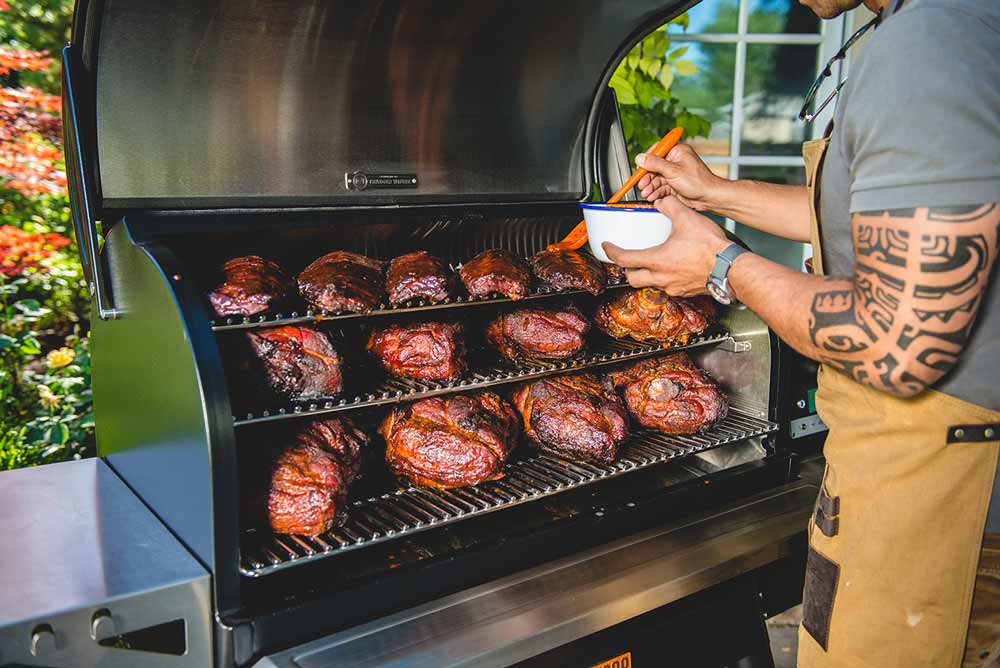
Are Wood Pellet Grills Actually Worth the Investment?
That is the question every aspiring pitmaster asks before pulling out the credit card. The short answer is a confident yes—especially if you value convenience, consistent results, and versatility in a single unit.
You can absolutely produce competition-quality brisket or perfectly smoked ribs on a traditional offset smoker, but doing so demands hours of hands-on attention. You need to babysit the fire, manage airflow vents, and constantly monitor temperature swings. A pellet grill automates most of that process through its built-in digital controller, which feeds pellets to the fire pot at a precise rate to maintain your set temperature—often within a few degrees.
Whether you are reverse-searing a thick ribeye or slow-smoking a pork shoulder overnight, the grill handles the tedious temperature management so you can relax, entertain guests, or simply enjoy your backyard. That kind of set-it-and-forget-it convenience is what makes pellet grills a worthwhile addition to any outdoor cooking setup.
How Does a Wood Pellet Grill Actually Work?
Understanding the mechanics helps you appreciate why pellet grills deliver such reliable performance. The process follows a straightforward sequence that repeats automatically throughout your cook:
Step 1
Load the Hopper
Fill the side hopper with your preferred hardwood pellets. Different wood species create different flavor profiles—from mild fruitwoods to bold hickory and mesquite.
Step 2
Set Your Temperature
Use the digital controller to choose your desired cooking temperature. The grill's onboard system takes it from there.
Step 3
Automatic Auger Feed
A motorized auger delivers pellets from the hopper to the fire pot at a controlled rate based on your temperature setting.
Step 4
Ignition & Circulation
A hot rod igniter lights the pellets in the fire pot while a fan circulates heat and smoke evenly through the cooking chamber—much like a convection oven.
The entire cycle is managed by the digital controller, which reads the internal temperature through built-in probes and adjusts the pellet feed rate in real time. The result is rock-steady heat and a clean-burning fire that infuses your food with authentic wood-smoked flavor—without constant intervention from you.
One important note: because pellet grills rely on an auger motor, a fan, and electronic ignition, they do require a standard electrical outlet. Keep that in mind when planning your outdoor cooking station.

What Are Wood Pellets and Why Do They Make Such Great Fuel?
Wood pellets used in pellet grills are manufactured from compressed hardwood sawdust. The sawdust is forced through a die under extreme pressure and heat, which binds the wood fibers naturally without chemical additives. The result is a dense, uniform cylinder about the size of a pencil eraser that burns efficiently and produces consistent smoke.
Because pellets burn so cleanly, they generate a mild, aromatic smoke that enhances your food rather than overwhelming it. This is a major advantage over raw firewood or even some charcoal, which can produce harsh, acrid smoke if not properly managed. It is essential, however, to use only food-grade grilling pellets in your cooker. Standard heating pellets may contain binding agents or softwood species that are not intended for culinary use.

Wood Pellet Flavor Guide
Different hardwood species deliver distinctly different smoke profiles. Here is a quick reference to help you match wood types to the proteins and dishes you love to cook:
| Wood Type | Flavor Profile | Intensity | Best Pairings |
|---|---|---|---|
| Hickory | Bold, bacon-like, savory | Strong | Pork, ribs, brisket |
| Mesquite | Intense, earthy, slightly sweet | Very Strong | Beef, game meats |
| Apple | Sweet, mild, fruity | Mild | Poultry, pork, fish |
| Cherry | Mildly sweet, slightly tart | Mild–Medium | Pork, poultry, duck |
| Oak | Medium, well-balanced | Medium | Versatile—works with everything |
| Maple | Subtle sweetness, light smoke | Mild | Vegetables, cheese, poultry |
| Pecan | Nutty, rich, slightly sweet | Medium | Brisket, pork, poultry |
Most pellet grills will burn through roughly two to four pounds of pellets per hour depending on your cooking temperature. Low-and-slow sessions at 225°F use less fuel, while high-heat searing at 450°F or above will consume pellets at a noticeably faster clip. A standard 20-pound bag typically provides 12 to 20 hours of cook time—more than enough for most weekend sessions.
Pro Tip
You might expect smoke from a small pile of pellets to produce a towering campfire-style column of smoke, but that is not how pellet grills operate. A half-cup of pellets creates a subtle, thin blue smoke that is actually the hallmark of a clean-burning fire—exactly what you want for the best-tasting results.
Frequently Asked Questions
How Do Pellet Grills Produce Smoke?
Pellet grills are technically indirect smokers that utilize a convection-style heating method. The controller feeds hardwood pellets into a fire pot where they smolder and combust. A circulation fan then pushes the resulting heat and smoke throughout the sealed cooking chamber, enveloping your food from all directions. The flavor compounds released during this slow combustion are what give pellet-grilled food its signature taste.
Are Pellet Grills Worth the Price?
In a word—absolutely. Pellet grills are comparable in price to many mid-range gas and charcoal grills, yet they deliver a level of versatility and flavor those alternatives simply cannot match. Whether you are searing steaks, slow-smoking a brisket, or even baking a pizza, a pellet grill handles it all from a single unit. The convenience of precise, automated temperature control alone justifies the investment for most outdoor cooks.
What Should I Look for When Buying a Pellet Grill?
Focus on cooking area size, hopper capacity, build quality of the fire pot and grates, and the sophistication of the digital controller. Wi-Fi connectivity and companion apps have become popular features that let you monitor and adjust your cook from your phone. Also consider how easy the grill is to clean—removable ash trays and grease management systems save a lot of time and effort between cooks.
Can You Use Pellets in a Non-Pellet Smoker?
Yes, you can place hardwood pellets inside a smoker tube or pellet box and use them in a charcoal or gas smoker to add wood-fired flavor. The pellets will smolder inside the tube and produce smoke for several hours. Keep in mind, however, that this approach will not give you the same automated temperature control and hands-off convenience that a dedicated pellet grill provides.
Backyard Provider — Equipping Your Outdoor Living Space