
What Is a Wood Pellet Grill?
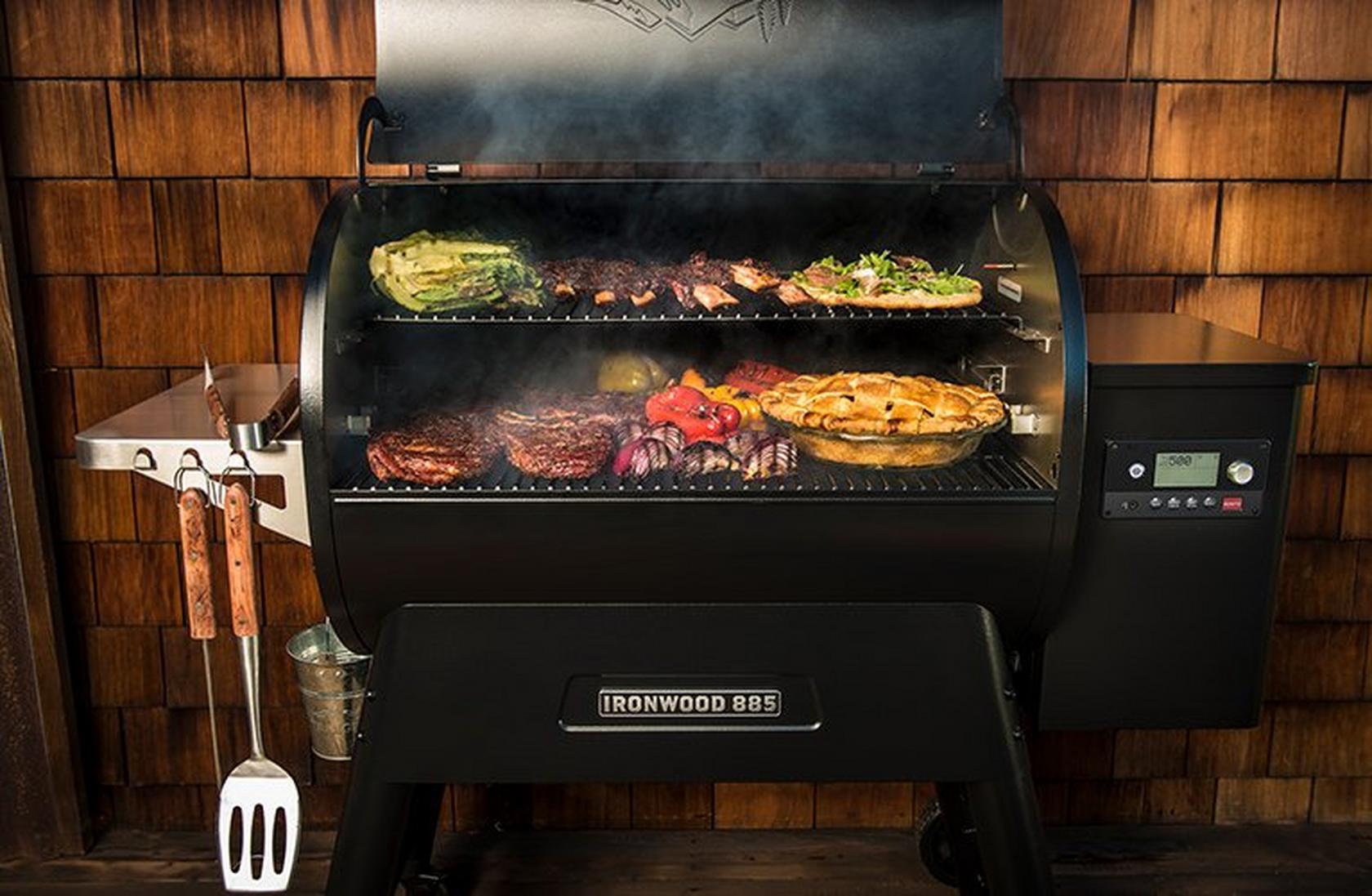
A wood pellet grill is an outdoor cooker that uses small, food-grade compressed wood pellets as both its fuel source and its flavoring agent. Fed automatically into a fire pot by an electric auger system, the pellets ignite to produce consistent heat and a steady ribbon of real wood smoke — giving you the approachable control of a gas grill with the authentic flavor of a traditional smoker.
Think of it as the Swiss Army knife of backyard cooking: a single unit that smokes, grills, bakes, roasts, braises, and sears without asking you to babysit the fire.
A Short History of Pellet Grills
Pellet grills were born in the 1980s when Joe Traeger — a heating technician in Oregon — looked at the wood pellets powering his home stove and asked a simple question: could the same concept work for cooking? He patented the design in 1986, and for years pellet grills were a niche curiosity known mostly among competition pitmasters who valued their precision above everything else.
When Traeger's patent expired in 2006, a wave of manufacturers entered the market, sparking rapid innovation in temperature control, build quality, and digital technology. Today, pellet grills are one of the fastest-growing segments in outdoor cooking, beloved by weekend warriors and serious smoke enthusiasts alike.
How Do Pellet Grills Work?
Despite their sophisticated results, the mechanism behind a pellet grill is elegantly simple. Wood pellets sit in a hopper on the side of the unit. An electric auger — controlled by a digital thermostat — feeds pellets into a small fire pot at a rate calibrated to maintain your target temperature. A hot rod ignites the pellets, a fan circulates the heat and smoke throughout the cooking chamber, and an auto-ignition system ensures everything starts reliably every time.

"Set your temperature, close the lid, and trust the system — the pellet grill does the hard work while you enjoy your backyard. No charcoal to arrange, no propane levels to guess, no flare-ups to manage."
What Are Pellet Grills Best For?
The short answer: almost everything. The longer answer depends on what you prioritize most as a cook.
Low & Slow Smoking
This is where pellet grills truly shine. Cooking a brisket, pork shoulder, or a full rack of ribs at 225°F for many hours is effortless when your grill manages the temperature automatically. You get deep smoke penetration, tender collagen breakdown, and consistent results that would take years of practice to replicate on a traditional offset smoker.
Roasting
A pellet grill operates like a convection oven outdoors. The circulating fan ensures even heat distribution, making it ideal for whole chickens, prime rib roasts, or leg of lamb — all with a subtle wood-smoke backdrop that a kitchen oven simply cannot deliver.
Baking
Surprising to many first-time owners, pellet grills bake beautifully. Pizza, cornbread, cobblers, and even artisan bread all benefit from the consistent, enclosed heat and that faint kiss of wood smoke that turns something good into something extraordinary.
Are Pellet Grills Worth the Investment?
Pellet grills command a higher price than basic charcoal or gas units, and that gap is worth examining honestly before you buy. What you are paying for is a combination of precision, convenience, and versatility that no other single cooker can match.
If you regularly host gatherings, enjoy slow-cooked meats, or simply want better results with less effort, the investment pays dividends quickly. The pellets themselves cost roughly the same per cook as quality charcoal, and the reduced time commitment — no fire-tending, no temperature spikes, no babysitting — has a real value for people with busy lives who still refuse to compromise on flavor.
"For backyard cooks who want restaurant-quality smoked meats without the learning curve of a traditional smoker, a pellet grill is one of the best investments you can make in your outdoor kitchen."
What's the Best Pellet Grill for You?
The right pellet grill depends on your cooking style, yard size, and how seriously you take your backyard kitchen. Here is what to look for:
Hopper Capacity
A larger hopper means longer unattended cooks. For overnight brisket sessions or all-day pork shoulders, look for a hopper that can hold at least 20 pounds of pellets — enough to run through most cooks without a refill.
Temperature Range
Quality pellet grills should reach a minimum of 500°F for searing and drop as low as 180°F for true cold-smoke-style cooking. The wider the range, the more versatile the unit.
Smart Connectivity
Wi-Fi enabled models let you monitor and adjust temperature from your phone — a feature that becomes invaluable during long cooks when you'd rather not stand next to the grill for eight hours straight.
Build Quality
Heavy-gauge steel construction, quality welds, and a tight-fitting lid seal all contribute to better temperature stability and a longer service life. Investing in a well-built unit upfront costs less over time than replacing a budget model every few seasons.

Our Top Pick: Recteq X-Fire Pro 825
Built for cooks who refuse to compromise — massive cooking area, Wi-Fi precision, and a 40 lb hopper for uninterrupted all-day sessions.
X-Fire Pro 825Pros and Cons of a Pellet Grill
Like any cooking system, pellet grills have distinct strengths and a few limitations worth knowing before you commit.
✦ The Upside
- Precise, automated temperature control
- Authentic wood-smoke flavor without manual fire management
- Extreme versatility — smoke, grill, bake, roast in one unit
- Set-it-and-forget-it convenience for long cooks
- Wi-Fi models allow remote monitoring
- Consistent, repeatable results every time
— The Tradeoffs
- Requires electrical power to operate
- Higher upfront cost than charcoal or basic gas grills
- Pellets must be kept dry or they degrade
- High-heat searing is not as intense as dedicated gas burners
- More components to clean and maintain
What Do You Need to Run a Pellet Grill?
Getting started is simpler than you might expect. Beyond the grill itself, you will need a reliable outdoor power source (a standard 110V outlet is sufficient for most models), a supply of quality food-grade wood pellets, and a good instant-read meat thermometer for checking internal temperatures.
Optional but highly recommended: a good cover to protect your investment between uses, a grill mat to protect your patio surface, and a pellet storage bin with a tight-fitting lid to keep your fuel fresh and dry through changing weather.

Pellet Grill vs. Gas or Charcoal: What's the Difference?
Precise Temperature Control
Gas grills offer convenient heat but rely on manual dial adjustments and struggle to hold low smoking temperatures. Charcoal gives incredible flavor but demands experience and constant attention to maintain consistent heat. Pellet grills automate the difficult part — the thermostat manages fuel feed rate continuously so your cooking temperature stays within a few degrees of your target for hours at a time.
Taste
Gas produces no smoke flavor at all. Charcoal, when managed well, gives a powerful, primal char that is hard to beat for fast cooks. Pellet grills occupy the sweet middle ground: genuine hardwood smoke flavor that is nuanced rather than overwhelming, and completely adjustable by simply changing your pellet variety — hickory for bold, apple for mild, cherry for color and sweetness.
Can Pellet Grills Be Used Indoors?
No — and this point is non-negotiable. Pellet grills produce real combustion smoke and carbon monoxide and must always be operated outdoors in a well-ventilated space, away from overhanging structures, fences, and any enclosed areas. Treat them with the same respect you would any open-flame cooking appliance.
Always ensure at least three feet of clearance on all sides, and never operate under a low-hanging deck, awning, or canopy that could trap smoke and heat.
How to Use a Wood Pellet Grill
Starting Up Your Pellet Grill
-
Fill the hopperFill with your choice of dry, quality hardwood pellets. Avoid mixing old pellets with new ones to prevent clogs in the auger system.
-
Power on and set temperatureTurn on the grill and dial in your target temperature on the digital controller. Most units will run through an automatic ignition sequence and begin heating within 5–10 minutes.
-
Preheat fullyAllow 15–20 minutes for the grill to stabilize at your target temperature before placing any food on the grates. This ensures consistent cooking from the first minute.
-
Place your food and close the lidKeep the lid shut as much as possible during cooking — every peek releases heat and smoke and extends your cook time.
-
Monitor with a meat thermometerCook to internal temperature, not time. A reliable probe thermometer takes the guesswork out of every cook.
How to Clean a Pellet Grill
After each cook, allow the grill to cool completely and brush down the grates. Every 3–5 cooks, vacuum out the ash from the fire pot and the bottom of the cook chamber using a shop vacuum. Periodically wipe down the interior walls to prevent grease buildup, and inspect the auger and hopper for any moisture-clumped pellets that could cause feeding issues.
How to Store Your Pellet Grill
If your grill will sit unused for more than a week — especially through rain or humidity — empty the hopper completely. Moisture is the enemy of wood pellets; once they absorb water they expand and can jam the auger. Use a quality fitted cover and store unused pellets in an airtight container in a dry location.
What Can You Cook on a Pellet Grill?
The honest answer is: almost anything you can prepare in a conventional kitchen oven, plus everything you would expect from a traditional smoker or grill. Here is a taste of what pellet grill owners cook regularly:
From competition-style spare ribs to a simple weeknight rotisserie chicken, a pellet grill handles it all without breaking a sweat — and more importantly, without asking you to break one either.
Ready to Upgrade Your Backyard?
A wood pellet grill doesn't just change how you cook outdoors — it changes how often you want to. When precise temperature, effortless smoke, and genuine flavor come together in one backyard-ready machine, every meal becomes an occasion worth hosting.
Browse our selection at Backyard Provider and find the pellet grill that fits your yard, your cooking style, and your ambition.
Shop the Recteq X-Fire Pro 825 Pellet Grill
825 sq. in. of cooking space · Wi-Fi precision control · 40 lb hopper · Built to last a lifetime.
X-Fire Pro 825