
Property owners, municipal crews, and plumbing professionals all share one common responsibility: making sure underground sewer lines stay in working order. Cracked pipes, root intrusion, sediment buildup, and hidden corrosion can escalate into expensive problems if they go undetected. Historically, identifying these issues has meant sending teams on-site with bulky equipment, spending hours recording footage, and then reviewing it frame by frame.
That process is now changing thanks to VR-enabled sewer camera systems. These advanced tools capture pipe interiors in immersive 360-degree views, enabling inspectors to evaluate conditions remotely and far more efficiently. In this guide, we explore how VR sewer camera technology works, why it saves valuable time on the job, and how it aligns with evolving industry regulations.
Traditional Pan and Tilt Sewer Inspection Methods
Since surveyors are unable to physically inspect underground pipes by walking through them, the most widely used approach has been to deploy a robotic CCTV camera mounted on a motorized crawler. These wheeled units travel through the interior of pipelines while transmitting a live video feed to a surface-level monitor.
The conventional inspection setup relies on what is known as the pan and tilt system. The camera head rotates horizontally and vertically, controlled remotely by a technician above ground. This allows the operator to point the lens at suspected damage areas — joints, cracks, or points of intrusion — and record each section of the pipe as the crawler advances.
While effective, the pan and tilt method is inherently time-consuming. According to industry professionals, the operator must stop and manually direct the camera toward every joint and connection throughout the entire length of the pipe. For a standard 50-meter survey, this process can take between 12 and 15 minutes just to record usable footage. The quality of the inspection is also heavily dependent on the skill and attentiveness of the operator — if a defect is missed in real time, the technician may need to return to the site to re-capture that segment.
The Rise of Affordable VR Sewer Camera Solutions
VR technology now has the potential to completely replace the traditional pan and tilt workflow. With a VR-equipped inspection camera, there is no need for constant manual repositioning. The camera captures the full interior of the pipe in every direction simultaneously, removing the bottleneck of frame-by-frame panning and significantly reducing the margin for human error.
Over the past decade, several large manufacturers developed VR-capable sewer inspection cameras, but these systems often carried price tags exceeding $100,000 USD. As a result, adoption remained limited — only a handful of specialized contractors invested in this technology, and the broader market continued relying on conventional equipment.
That landscape has shifted dramatically in recent years. Consumer-grade 360-degree cameras from brands like Samsung, GoPro, and Insta360 have pushed prices down while improving video resolution and durability. Field tests have shown that these compact cameras produce surprisingly high-quality footage when adapted for use inside sewer crawlers, delivering results that rival professional-grade setups at a fraction of the cost.
"We found the Insta360 ONE Series cameras to be the most practical option for capturing sewer surveys. The video quality and overall performance are excellent, and the cost difference compared to $100K+ professional VR rigs is remarkable."
— Industry Field Report

How VR Cameras Help Operators Save Time On Site
One of the greatest advantages of 360-degree sewer cameras is the ability to review and analyze footage after leaving the job site. With traditional systems, the operator must identify defects in real time or risk missing them entirely. VR footage, on the other hand, can be loaded into editing software and re-examined from any angle — all from the comfort of an office environment.
This means the technician on-site no longer needs to manually turn the camera every time a potential issue is spotted. Instead of pausing the crawler to adjust the pan and tilt, the operator simply drives forward while the 360-degree camera captures everything. When it comes time to review the footage, the video can be panned digitally to focus on any area of concern — post-inspection, at any time, from any location.
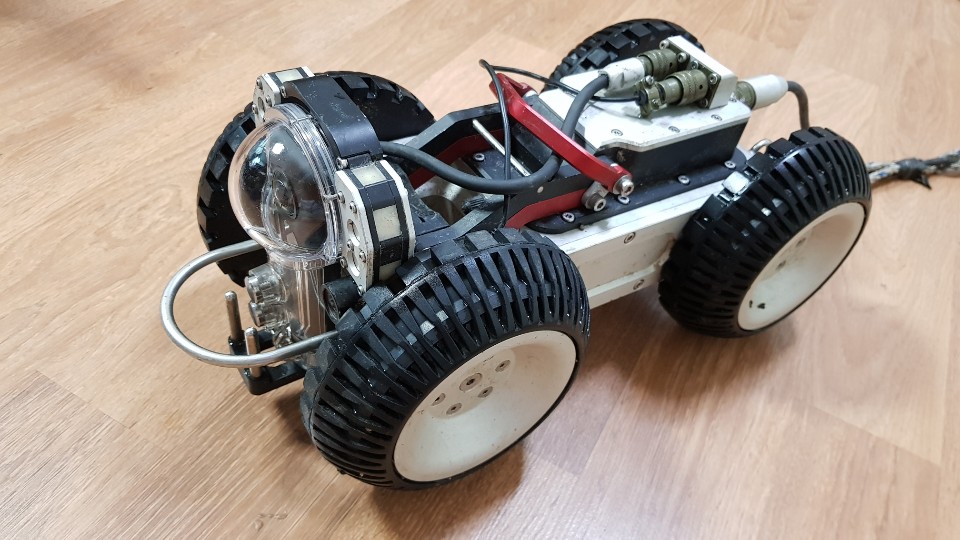
The time savings are substantial. Field data shows that a standard 50-meter survey captured with a 360-degree camera takes roughly 4 minutes to complete, compared to the 15 minutes typically required with a pan and tilt system. By eliminating the need for constant repositioning, VR cameras free up technicians to complete more jobs per day while maintaining — or even improving — the quality of their inspections.
Filming with a 360-degree camera also removes the anxiety of missing a defect and having to return to the site. The full spherical capture ensures that every inch of the pipe interior is documented, giving inspectors the confidence that nothing has been overlooked.
~4 min
VR 360° Survey (50m)
~15 min
Traditional Pan & Tilt (50m)
73%
Time Saved Per Survey
Meeting Government Regulations with VR Sewer Inspections
One concern that has slowed adoption of VR inspection technology is the question of regulatory compliance. In many jurisdictions, sewer inspection reports must conform to strict documentation standards. Government officials and municipal reviewers often need to verify specific details — pipe reference numbers, defect classifications, and precise location data — before signing off on an inspection.
Traditional survey reports rely on captions embedded directly into the video feed, and many VR camera systems have not historically supported this feature. Without proper captioning, a government reviewer may be unable to cross-reference the visual data against the required documentation, creating a compliance gap.
Across different countries, the regulatory landscape varies. Sewer inspection processes and their accompanying results must adhere to local government requirements. VR-based pipe inspection is currently accepted in countries such as Japan, the USA, and certain parts of Europe, though it has not yet been universally approved in all regions.
To bridge this gap, newer software tools are being developed that allow operators to overlay pipe reference information, captions, and defect markers onto 360-degree video feeds. In the most advanced systems, the pipe information appears as a caption layer on the footage, and the sewer display is shown alongside a top-left indicator — replicating the familiar layout of traditional survey reports while retaining the benefits of immersive VR capture.
What the Future Holds: AI-Powered Defect Detection
The evolution does not stop with VR capture alone. Leading developers in the sewer inspection space are now building software platforms that combine 360-degree imaging with artificial intelligence. Rather than relying solely on a human reviewer to spot damage in video footage, these systems can automatically flag potential defects using pattern recognition algorithms trained on thousands of hours of inspection data.
This AI-enhanced approach makes it faster to identify cracks, deformations, root intrusions, and other common issues — dramatically accelerating the reporting process. Some platforms can even export survey data points in formats compatible with GIS tools, enabling municipalities to build comprehensive digital maps of their underground infrastructure.
Key Takeaway By combining 360-degree VR capture with AI-driven defect recognition, the next generation of sewer inspection tools promises to deliver faster results, reduce human error, and produce data that integrates seamlessly with modern infrastructure management systems.
Lighter, Faster Crawlers Built for VR Cameras
As VR cameras become smaller and lighter, the crawlers that carry them can be redesigned for greater efficiency. Traditional crawlers are often large and heavy because they need to support bulky pan and tilt camera assemblies. VR-ready crawlers, by contrast, can be built with a much more compact footprint — in some cases weighing as little as 8 kilograms.
A lighter crawler means less physical strain for operators, faster deployment at the job site, and the ability to navigate tighter pipe diameters that were previously inaccessible. This combination of reduced weight and full-sphere imaging capability represents a significant leap forward for the sewer inspection industry.
Upgrade Your Inspection Setup
Pair your VR sewer camera system with a professional-grade digital recording monitor for superior on-site documentation and Wi-Fi enabled reporting.
Ridgid CS6x VERSA MonitorFinal Thoughts
VR sewer camera inspection technology is no longer a futuristic concept — it is a practical, cost-effective solution that is already reshaping how professionals approach underground pipe surveys. From dramatic time savings on-site to enhanced post-inspection analysis and emerging AI capabilities, the benefits are clear and measurable.
As regulations continue to evolve and more jurisdictions adopt VR-compatible standards, the transition from traditional pan and tilt systems to 360-degree capture will only accelerate. For contractors, municipalities, and property managers looking to stay ahead of the curve, now is the time to explore how VR inspection technology can improve efficiency, reduce costs, and deliver more thorough results on every job.