
Stop feeding balls mindlessly into a machine. These proven strategies will transform your robot sessions into elite-level practice — starting today.
Got a table tennis robot at home? Are your sessions starting to feel repetitive and stale? If you've been launching the same ball from the same spot for hours on end, it's time for a serious upgrade. Here are 11 actionable strategies to make your robot training more dynamic, purposeful, and genuinely effective.
Build in Variation
Every great rally involves two things: reading the incoming ball and forcing your opponent to adapt to yours. Your robot sessions should mirror exactly that. Set up drills that challenge you with speed variations, spin changes, height differences, depth shifts, and placement diversity. If every ball feels identical, you're not preparing for a real match.
Simulate a Real Opponent
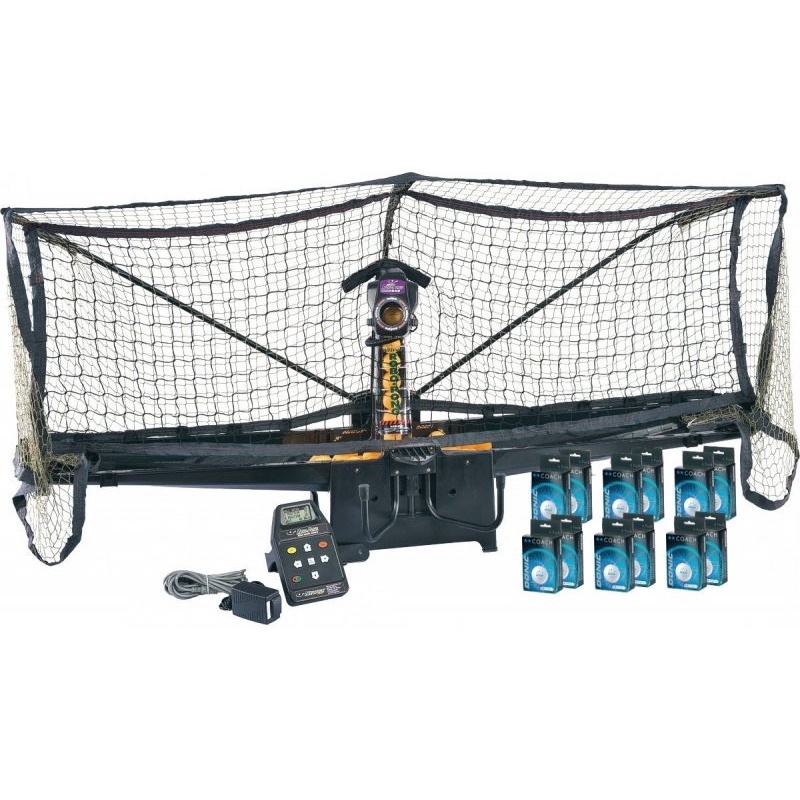
Your most focused training will happen when you mentally place a real rival across the table. Visualize their style, their habits, their signature shots. Script multi-ball sequences — a short serve into a forehand follow-up, a backhand rally finishing with a sharp punch to the middle. Set up 4 to 6 ball point scenarios and challenge yourself to win every one.
03
Train with Efficiency
Before you even switch the robot on, write a plan. Aim for focused 20–30 minute sessions with clear goals and set durations for each drill. Don't let the time between drills go to waste — fill those gaps with serve practice or light footwork. A structured plan means every minute on the table counts toward real improvement.
Count Every Hit
One of the biggest advantages of robot training over live practice? You can measure your consistency precisely. Run a 20-ball drill and count how many land where you intended. Scoring 20 out of 20? Raise the difficulty — faster speed, deeper placement, sharper angles. Only landing 8 out of 20? Slow down and examine your footwork, timing, and ball tracking before pushing further.
Record and Review Yourself
Your phone is the best coaching tool you're not using. Prop it up, hit record, and watch yourself back during water breaks. Look critically at your table distance, your response to incoming spin, your stroke path, your placement, your recovery position between shots, and even your breathing rhythm. The list of things to self-coach is virtually endless — and incredibly valuable.
Reposition the Robot
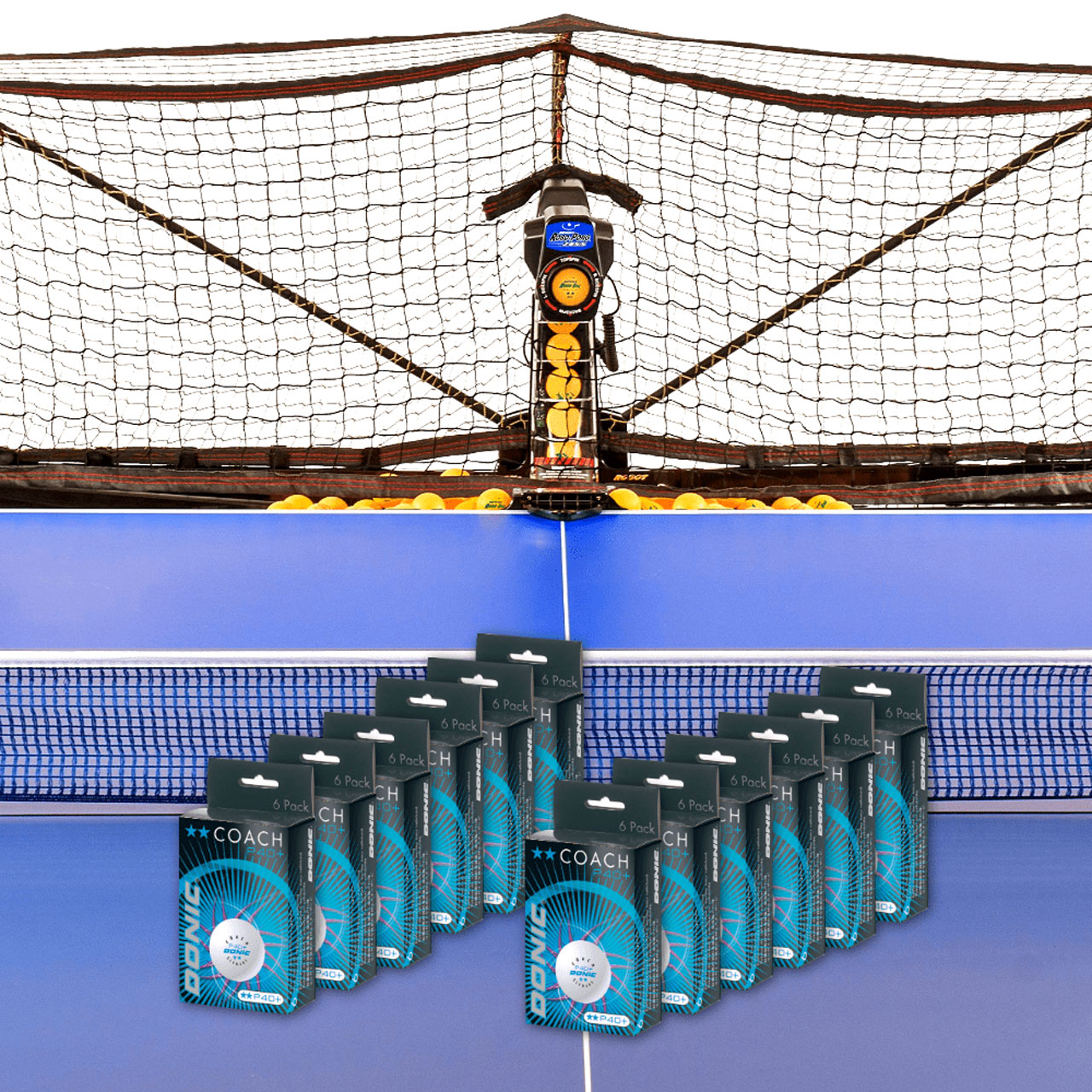
The most underused feature of robot training is simple: move the machine. Try placing it on a chair, pushing it farther from the table, or positioning it to one side. Even put it on the floor and practice high-lob returns. Every new position creates a completely different feel and challenges your adaptability — exactly what you need to handle unpredictable opponents.
Use This Time to Experiment
No upcoming tournaments? Perfect. Now is the moment to develop that tricky sidespin push, explore off-speed blocking, experiment with looping from unusual court positions, or start learning a new serve technique you've been curious about. Skills developed during low-pressure periods often deliver massive dividends once competitive play resumes.
Master Your Placement
A robot never penalizes a miss — which makes it the perfect training partner for placement work. Push yourself into the corners. Go for extreme angles. Drive deep into that final few inches of the table. Place physical targets on the table surface and aim for them repeatedly. This is your chance to develop pinpoint accuracy in a consequence-free environment.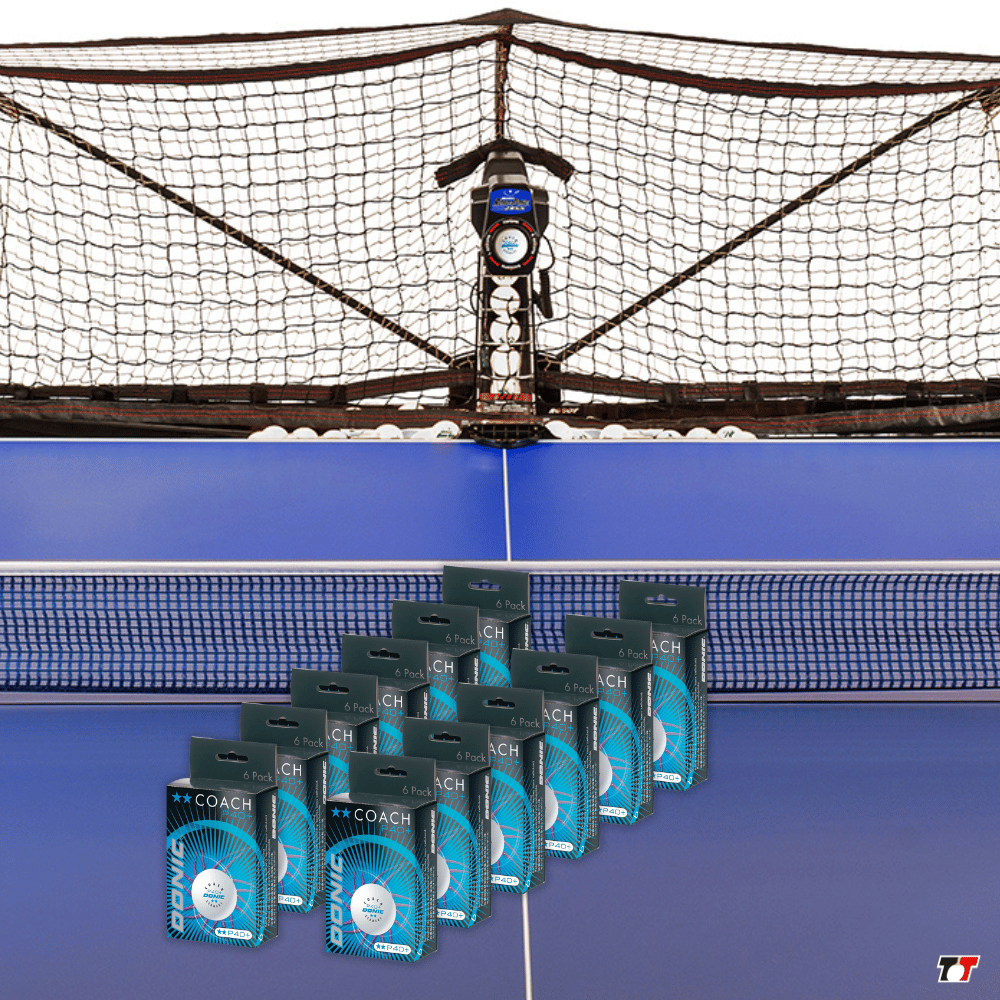
Make It a Family Activity
Robot training doesn't have to be a solo pursuit in the garage. Get your family involved. Set the robot up for a 2-minute beginner-level drill for a younger family member while you follow with an advanced sequence. Table tennis is a sport for all ages and skill levels — and shared sessions make practice more energizing and more consistent.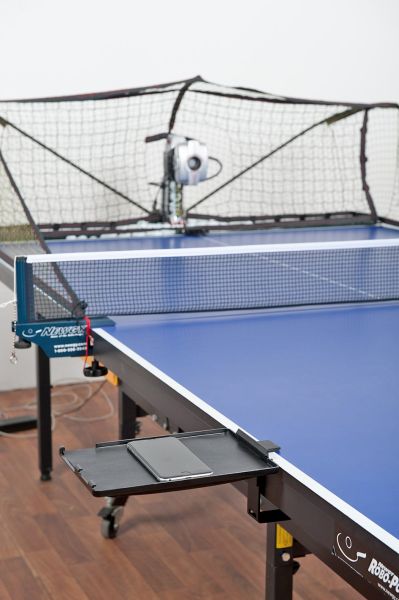
Take Detailed Notes
Before every session, spend a few minutes writing down your goals. Afterward, note what worked, what didn't, and what you want to tackle next time. As the saying goes — if you don't know where you're going, any road will take you there. Session notes give your training direction and make improvement visible over time.
Share Your Progress Online
Record a quick 60-second clip of your session and post it to Instagram, Facebook, or YouTube. Sharing your journey keeps you accountable, builds community with fellow players, and lets you track your own growth over weeks and months. There's no better motivation than seeing your technique improve in real time — and knowing others are watching too.
Ready to Train Smarter?
The Robo-Pong 2055 is engineered for serious players who want full control over speed, spin, placement, and timing — everything you need to put all 11 of these tips into action.
Elevate Every Session
Whether you're working on consistency, tactical variety, or technical refinement — the robot is only as good as the strategy behind it. Apply these 11 principles and watch your game reach a level you didn't think was possible at home. Stay focused, train with purpose, and enjoy every minute of the process.