
- Why Many Players Fear Developing Bad Habits with Robot Training
- What Table Tennis Robots Are Actually Good At — And Where They Fall Short
- How Bad Habits Form During Unsupervised Robot Practice
- Why Repetition Without Feedback Can Hold You Back
- Why Coaching Is the Missing Link in Robot-Based Training
- Using Video Feedback to Catch and Fix Errors Early
- What an Effective Robot-Based Training Session Looks Like
- Who Benefits Most from Robot Training with Coaching Support
- Final Thoughts: Robots Don't Create Bad Habits — Unstructured Training Does
Robot training is one of the most powerful tools in the game — when used correctly. Here's everything you need to know to make it work for you.
Why Many Players Fear Developing Bad Habits with Robot Training
The moment you search for advice on table tennis robots, a familiar warning almost always appears: "Be careful — you might develop bad habits." It's among the most repeated concerns players have when considering robot training, and it's not entirely without merit.
The worry stems from a very real dynamic. A robot does not evaluate your technique. It delivers the ball whether your stroke is correct or flawed. When the same movement is repeated dozens or hundreds of times without correction, whatever you are doing — right or wrong — becomes increasingly automatic. Inefficient patterns don't fade with repetition. They deepen.
Because of this, some players stay away from robots completely. Others use one regularly but remain unsure whether their practice is actually translating into better performance or quietly reinforcing mistakes.
The real takeaway is this: the risk exists, but it is entirely manageable. To train effectively with a robot, you need a clear understanding of what the machine does well — and where it needs support from additional guidance.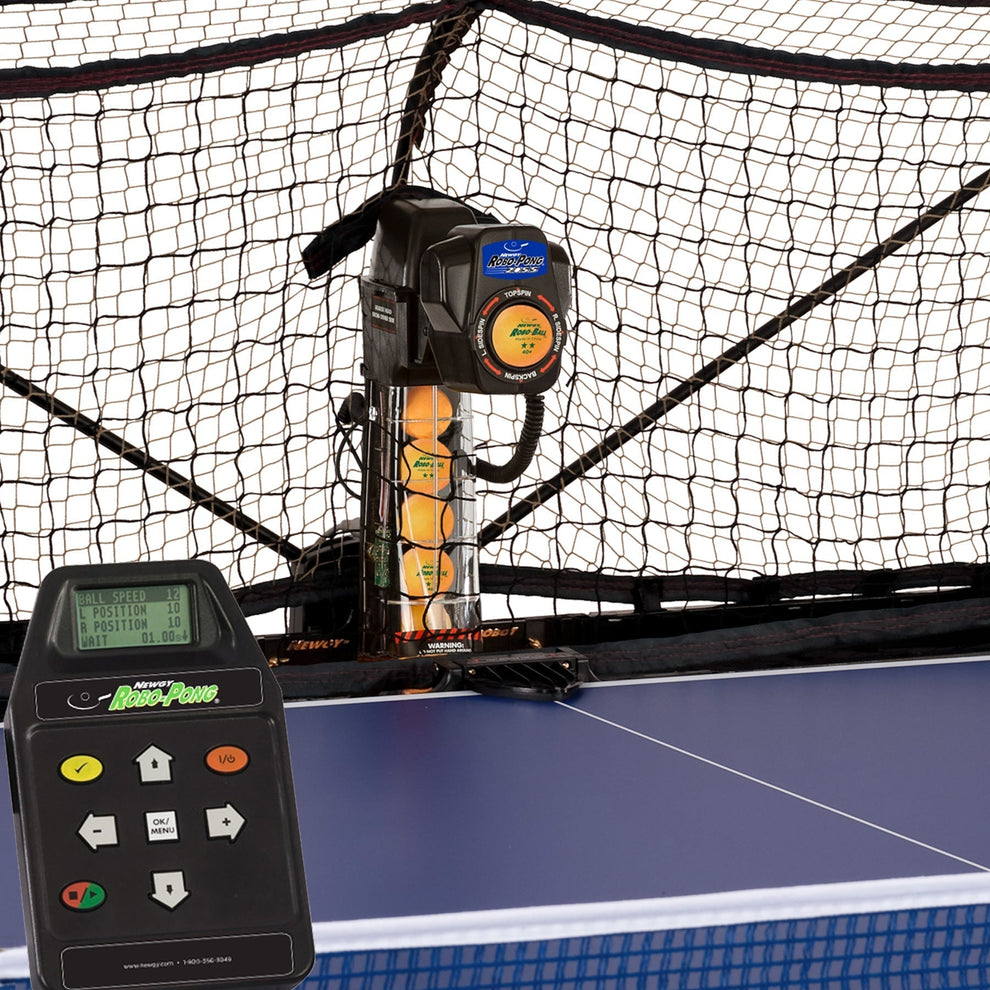
What Table Tennis Robots Are Actually Good At — And Where They Fall Short
Table tennis robots are exceptional training tools. They are not, however, complete training systems. Understanding the difference is what separates players who improve quickly from those who plateau.
Where Robots Excel
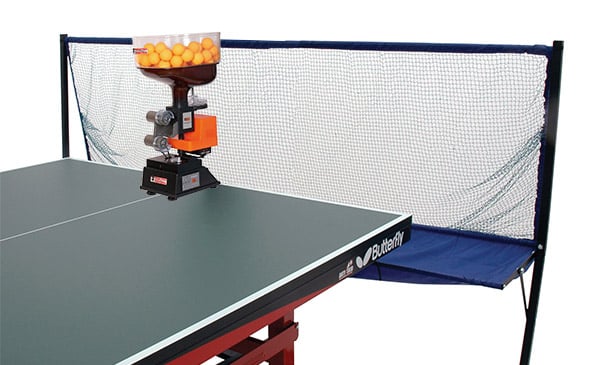
Robots deliver consistent, repeatable ball feeds. They let you drill specific strokes, build muscle memory, and develop preset footwork patterns — all without needing a training partner. Variables like spin, speed, placement, and ball frequency can be dialed in and repeated with precision. For players who have limited access to practice partners, a robot offers an efficient way to accumulate focused repetitions on demand.
Where Robots Fall Short
Robots do not evaluate technique quality. They cannot identify inefficient movement patterns, mistimed contact, or poor body positioning. Sessions don't adapt based on how well you are executing or where you are struggling. These are not flaws in the technology — they are simply the boundaries of what the tool does. Understanding those boundaries ensures you use the robot for what it genuinely does best.
How Bad Habits Form During Unsupervised Robot Practice
Inefficient habits rarely emerge because of the robot itself. They tend to form when practice continues for extended periods without observation or feedback.
A typical pattern looks like this. A player starts training with a specific drill. Early on, small imperfections show up — a slight elbow that drifts outward, a contact point that runs a little late, a follow-through that gets cut short. These deviations don't cause an immediate visible problem. The ball still lands on the table, the drill appears to succeed, and there's little obvious reason to make adjustments.
As repetitions accumulate, these small deviations become more familiar. Movements that were once slightly off begin to feel entirely natural. At this point, practice is no longer reinforcing the intended technique — it is reinforcing an adapted version that may quietly cap future progress.
Robots provide the volume of repetition needed to build skills, but they do not evaluate movement quality. Without an external reference, a player has no reliable way to know whether each session is refining their technique or gradually embedding inefficiencies.
Why Repetition Without Feedback Can Hold You Back
Repetition is essential to building skill. But repetition on its own is not enough. Without feedback, practice can reinforce inefficient patterns just as effectively as efficient ones.
This idea is often captured in a simple principle: practice does not make perfect — practice makes permanent. When a player repeats a flawed movement many times, they are not developing skill. They are cementing a pattern that may eventually need to be unlearned entirely.
Practice doesn't make perfect — it makes permanent. Without an external reference point, improvement often becomes inconsistent or even counterproductive.
The challenge is that many technical inefficiencies are genuinely difficult to detect from inside the movement. A slightly closed bat angle, early weight transfer, or rushed backswing can all start to feel completely normal after enough repetitions. The player adapts to these movements without realizing they are drifting from correct technique.
Feedback interrupts this cycle. It introduces an outside reference — something beyond how a stroke feels — that allows execution to be compared against intention. Without that reference point, improvement tends to be inconsistent and sometimes counterproductive.
Why Coaching Is the Missing Link in Robot-Based Training
Robots provide consistent repetition. Coaching provides direction. Together, they form a far more complete training system than either delivers on its own.
A coach contributes what the robot simply cannot: observation, assessment, and correction. While the robot reliably delivers ball feeds, a coach evaluates whether movement is efficient, whether timing is appropriate, and whether technique holds up under realistic match conditions. This layer of judgment transforms mechanical repetition into deliberate, purposeful development.
Coaching also brings structure to training. Rather than practicing a disconnected series of drills, sessions are organized around clearly defined goals. Each session builds on the previous one — based on observed strengths and the areas that need attention most.
A coach doesn't need to be present at every session. With remote coaching, feedback can be delivered through video review and targeted guidance. What matters most is that an expert perspective is part of the process — ensuring repetition leads to improvement rather than reinforced inefficiency.
Using Video Feedback to Catch and Fix Errors Early
Video feedback is one of the most effective tools available for identifying and correcting technique issues before they become deeply ingrained habits.
When players record their own practice, they gain access to something impossible to have in the moment: an objective view of how their body actually moves. What feels correct during execution often looks quite different on a screen. A follow-through that feels full may appear shortened on playback. A stance that seems balanced may expose subtle weight distribution problems. Video closes the gap between what a player perceives and what is actually happening.
For coaches, video provides the precise detail needed to give actionable feedback. Rather than relying on memory of a live session or working from broad impressions, a coach can pause, slow down, and review specific moments. This makes it possible to catch small inefficiencies that are nearly impossible to detect during live play.
For the Player
Recording sessions lets you see your own movement objectively — often revealing errors in stance, timing, and stroke mechanics that feel completely normal in the moment.
For the Coach
Video allows frame-by-frame analysis, enabling precise identification of subtle issues and making targeted feedback possible even through remote coaching arrangements.
When video review is incorporated into robot training, each session becomes part of a feedback loop. Players practice specific drills, record their sessions, and receive targeted guidance before the next one. Errors are addressed early — before repetition turns them into long-term habits.
What an Effective Robot-Based Training Session Looks Like
A well-structured robot training session looks very different from simply hitting balls for an extended period. The key distinction is intentionality — every component of the session has a clear purpose tied to a defined technical goal.
The session typically begins with a focused warmup using simple, high-success-rate feeds to groove consistent movement before introducing complexity. The primary drill phase then targets a specific technical element — a stroke, a footwork pattern, or a particular transition — using robot settings matched to that objective.
A defined session structure — warmup, focused drill phase, match-simulation feeds, and cooldown review — ensures that every minute of robot time contributes to genuine improvement rather than unmonitored repetition.
After the primary drill phase, the robot settings shift toward match-simulation feeds — more varied placement, speed, and spin — to transfer trained technique into less predictable conditions. The session closes with a brief review: notes on what felt effective, what still needs attention, and what to focus on next time. When combined with video review and coaching input, this structure ensures the session produces meaningful, trackable progress.
Who Benefits Most from Robot Training with Coaching Support
Robot training paired with coaching guidance delivers strong results across a broad range of players, but certain groups see particularly significant gains.
Players with Limited Practice Access
For those who cannot train with a partner or club regularly, a robot combined with coaching provides structured development that would otherwise be unavailable. The robot handles volume; coaching handles direction.
Competitive Players Targeting Weaknesses
Players working to refine specific technical weaknesses benefit enormously from the robot's ability to isolate and repeat precise situations — particularly when a coach is actively monitoring technique during those repetitions.
Beginners Building Foundations
For newer players, establishing correct technique from the very start is critical. Robot training under coaching supervision ensures that the strokes being drilled are worth drilling — and that fundamentals are built correctly before bad habits have a chance to form.
Returning Players Rebuilding Consistency
Players returning after a break often need to rebuild stroke consistency and footwork patterns. The robot's repeatable feeds make this efficient; coaching ensures the rebuilt technique reflects current best practices rather than old habits.
Final Thoughts: Robots Don't Create Bad Habits — Unstructured Training Does
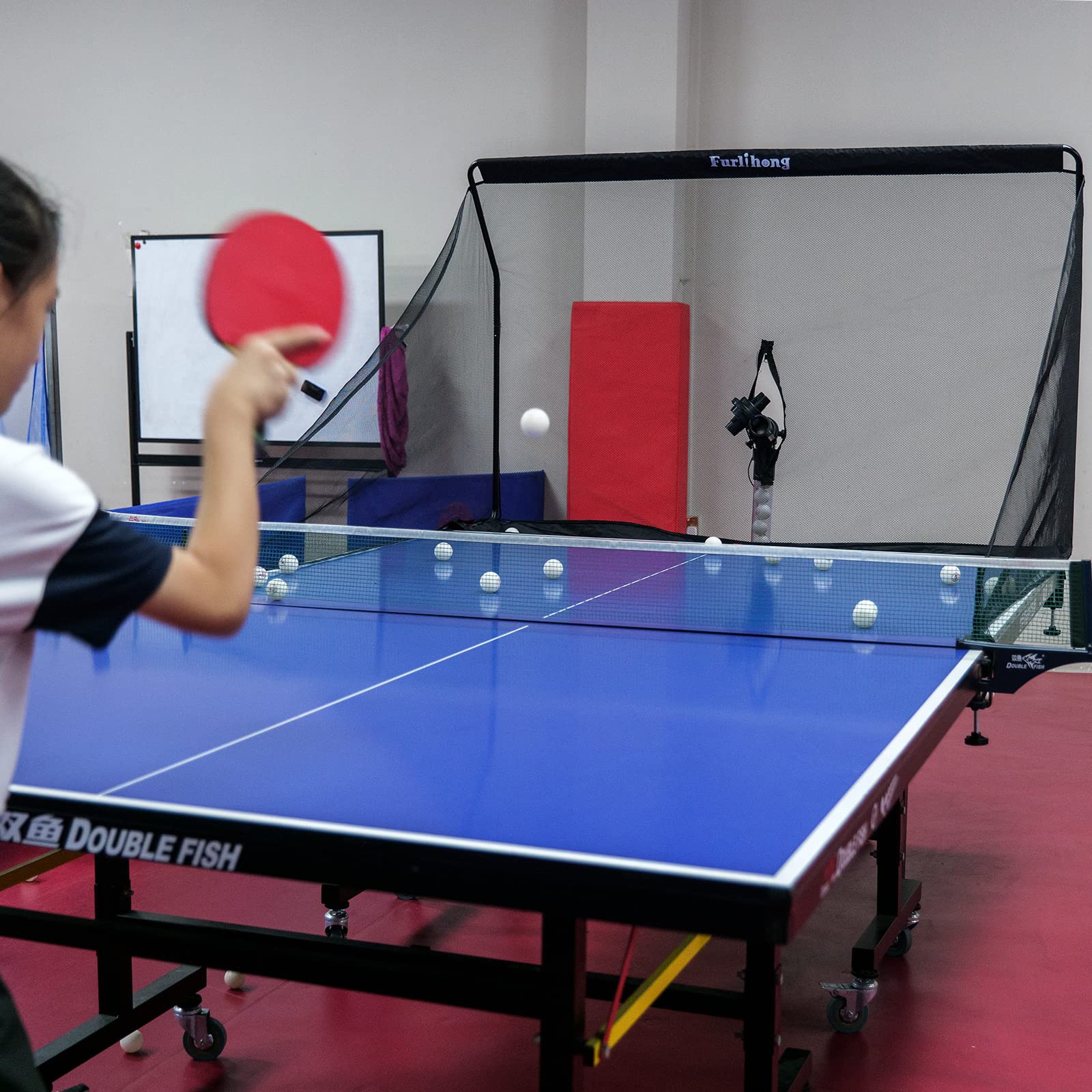
The concern that robot training leads to bad habits is understandable but ultimately misplaced. Robots don't create bad habits. Unstructured, unsupervised training does — and that can happen with or without a robot.
A robot used intelligently, with clear session goals, periodic video review, and coaching input, is not a shortcut to bad habits. It is one of the most efficient tools available for building real, lasting skill. The machine provides the repetitions. Coaching provides the direction. Video provides the evidence. Together, these three elements create a training environment where improvement is measurable, mistakes are caught early, and every session moves the needle.
The machine provides the repetitions. Coaching provides the direction. Together, they create a training environment where every session drives genuine, measurable improvement.
If you have been hesitant about robot training, the answer is not to avoid it — it is to use it with intention. Set clear goals for each session. Record your practice. Seek feedback from a qualified coach. And pair your training with equipment designed to support serious development.
Ready to Train Smarter?
The Robo-Pong 2055 delivers consistent, programmable feeds designed for structured, goal-driven practice — the foundation of every effective training session.
Robo-Pong 2055