
Food processors stand as essential workhorses for outdoor kitchens, catering operations, and backyard cooking enthusiasts. Whether you're hosting large gatherings or running a food service operation, these powerful machines handle everything from slicing vegetables to kneading dough with remarkable efficiency.
Throughout this comprehensive guide, we'll explore the various categories of food processors, their specialized blades and attachments, material options, and key features that matter most. Our goal is to arm you with the knowledge needed to select the ideal machine that matches your specific preparation requirements and budget considerations.
In This Guide:
- What is a Food Processor
- Types of Food Processors
- Commercial Food Processor Blades
- Types of Commercial Food Processor Disks
- Commercial Food Processor Bowl Materials
- Commercial Food Processor Features
What is a Food Processor?
A commercial food processor represents a professional-grade kitchen appliance engineered to execute numerous tasks with precision. These versatile machines leverage interchangeable blades and disc attachments to perform operations ranging from rough chopping to ultra-fine pureeing. The robust bowl design captures and contains ingredients while the motorized base provides consistent power for thorough processing.
The most significant advantage of commercial-grade food processors lies in their durability, processing capacity, and operational consistency compared to household models.
Food Processors vs Blenders
While food processors and blenders might appear similar at first glance, they serve distinctly different purposes in food preparation. Both utilize spinning mechanisms to process ingredients, yet the key distinctions lie in their design and optimal applications.
A food processor excels at handling drier, more solid ingredients and offers multiple blade options for varied tasks. Blenders, conversely, are optimized for liquid-based preparations and produce smoother consistencies. Think of food processors as your go-to for chopping, slicing, and dough work, while blenders handle smoothies, soups, and purees.
Types of Food Processors
Selecting the appropriate food processor category represents the critical first step in matching equipment to your specific requirements. Each type is engineered for particular primary functions, directly influencing your workspace needs, power consumption, and achievable results.
Batch Bowl Processors
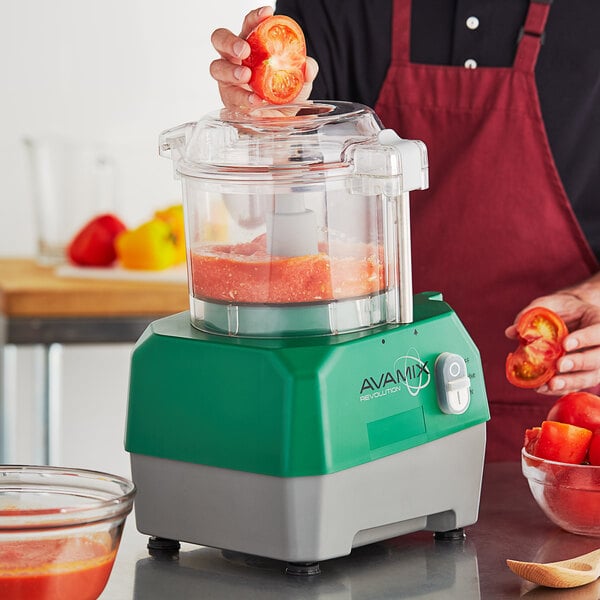
Batch bowl processors handle ingredients in contained, enclosed compartments for the kitchen user. A single motor base delivers power to various attachments within a large, removable bowl, making them exceptionally versatile for diverse preparation tasks and changing menu requirements.
✓ Ideal for creating doughs, pastries, and cookie batters
✓ Accommodates wide variety of blades and disks for multi-purpose applications
✓ Sealed bowl design prevents spillage and contains splatters during operation
✓ Best suited for lower-volume processing with superior consistency
Continuous Feed Processors
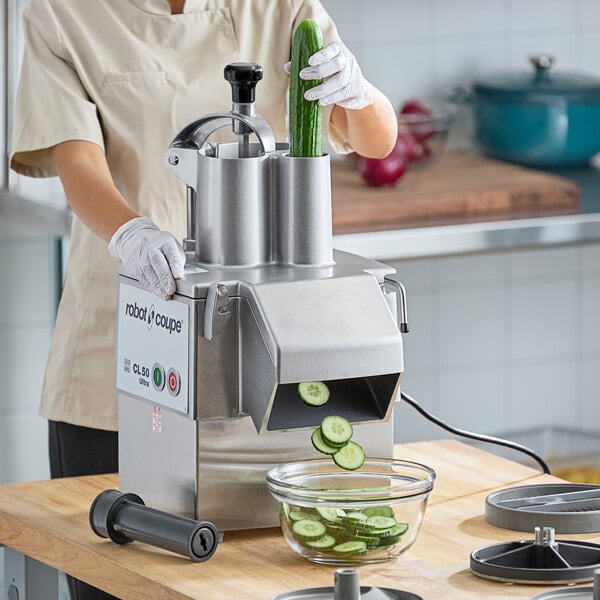
Continuous feed processors are built for high-volume, single-purpose processing with remarkable efficiency. They function by continuously ejecting processed product from the feed tube, eliminating the need to stop and empty bowls repeatedly.
✓ Engineered for non-stop processing of large ingredient volumes
✓ Various disks accommodate everything from chunky tomatoes to uniformly sliced cucumbers
✓ Minimal downtime between batches maximizes preparation efficiency
Combination Processors
Combination processors merge the capabilities of batch bowl and continuous feed systems into one unified work unit. This hybrid approach offers exceptional versatility, allowing operations to switch between processing modes seamlessly.
✓ Dual-function system integrates batch bowl and continuous feed capabilities
✓ Maximum prep versatility saves valuable kitchen real estate
✓ Enables single-operator switching between tasks like shredding cheese and blending dressings
Buffalo Choppers
Buffalo choppers serve as heavy-duty grinding machines featuring a rotating bowl and a stationary curved blade assembly. Designed for rugged construction and ability to handle large, unprocessed ingredients, these machines excel at producing consistent results with minimal supervision.
✓ Creates consistent, coarser chop perfect for salsas, relishes, and ground preparations
✓ Open bowl design allows for easy monitoring and addition of ingredients
✓ Exceptionally durable construction built to handle tough, bulky foods
Vertical Cutter Mixers
Vertical Cutter Mixers (VCMs) use high-speed vertical metal blades to process ingredients in a single, powerful cycle. They function as compact, ultra-efficient food preparation systems capable of completing multiple steps. The enclosed bowl structure and high blade speed enable comprehensive processing in fractions of time that traditional methods require.
✓ High-powered blades effortlessly avert contents through friction in any vessel
✓ Tilted, clean-shell design ensures operator safety during high-powered processing
✓ Ideal for operations that substantially reduce prep time for sauces
Types of Commercial Food Processor Disks and Blades
The true versatility of a commercial food processor stems from its interchangeable attachments, which transform a single machine into a comprehensive preparation station. Understanding these components and their specific applications helps maximize your investment and prep efficiency.
Types of Commercial Food Processor Blades
The blades housed within the main bowl are responsible for the fundamental tasks of chopping, mixing, and pureeing. Selecting the right blade for the ingredient helps ensure optimal consistency and processing time.
S-Shaped Blades
These are often called "S" blades. They have curved, sharp edges designed for fine chopping, grinding, and pureeing tasks with excellent efficiency.
Smooth Edge Blades
These feature flattened small teeth that spin fast through fibrous or hard foods. They are the go-to blade for emulsification methods.
Serrated Edge Blades
These feature flattened small teeth that spin fast through fibrous or hard foods. They are the go-to blade for leafy greens and cutting meats or fresh vegetables.
Specialty Discs
This category encompasses unique designs, such as dough kneading for gentle mixing and waffle of French fry cutters.
Types of Commercial Food Processor Disks
Processor disks mount above the bowl and are dedicated to creating uniform slices, shreds, and specialty cuts at high volume, ensuring consistent plate presentation and reducing manual knife work.
Slicing Disks
Produce thin, consistent slices of vegetables, fruits, or cheese
Grating Disks
Cut problematic and other root vegetables into standard fine shreds
Shredding Disks
Rectangular openings in varied sizes for coleslaw and hash browns
Julienne Disks
Create matchstick strips ideal for stir-fries and garnishes
Ripple Disks
Create wavy, crinkle cuts on items like carrots and potatoes
Brunoise Disks
Designed to produce precise, fine diced, typically 8 mm cubes
Commercial Food Processor Bowl Materials
The material of a food processor bowl directly impacts its durability, weight, and how easily you can monitor contents during operation. Each type offers distinct advantages that suit different operational demands.
Polycarbonate Bowls
Constructed from polycarbonate or impact-resistant clear plastic, these provide excellent visibility for monitoring contents while maintaining strength and thermal resistance. A lightweight option that resists impact better than glass alternatives.
Stainless Steel Bowls
Gray plastic bowls are engineered to resist staining and discoloration better than clear types for the processor. They're especially suited for operations that frequently process colorful or acidic ingredients that might affect other materials over time.
Clear Plastic Bowls
Typical clear plastic craft from heavier-duty materials. Gray plastic bowls are engineered to resist staining and discoloration for professional environments and for transparency while monitoring processing levels during operation.
Commercial Food Processor Features
Modern commercial food processors offer an array of features designed to enhance functionality and integrate into your kitchen's workflow. These added features expand versatility even further into specialized culinary tasks.
Dicing Kits
A dicing kit is a step-beyond-slicing upgrade. It combines plates to create uniformly cubed ingredients for salads, stir-fries, and more.
Variable Speed
This design reduces operator errors and speeds up high-capacity processing—perfect for large quantity preparations.
Timer
An integrated timer allows for precise, hands-off operation and recipe documentation. Particularly useful for achieving consistency in batch processing.
Continuous Motion
Dishwasher-safe components refresh the high-load workload of commercial dish facilities without wearing on machine finishes.
Commercial Motor
When different tasks demand alternate speed settings, this feature allows precise control over blade velocity for optimal processing texture.
Find Your Perfect Food Processor
The right food processor is a strategic partner that directly elevates your kitchen's output, consistency, and workflow. Whether you need high-volume continuous processing or versatile batch bowl capabilities, selecting the appropriate machine ensures your preparation efficiency matches your culinary ambitions.
Robot Coupe BLIXER3