
By the Backyard Provider Team — Your Trusted Source for Outdoor Living & Home Comfort Solutions
Your home should be your sanctuary — a place where the temperature is always just right, no matter what the weather throws your way. When it comes to selecting a cooling and heating system, you'll likely find yourself weighing two popular contenders: the ductless mini split and traditional central air conditioning.
Both options keep your indoor environment comfortable, but they achieve it in very different ways. Whether you're building a new home, renovating a room above the garage, or replacing an aging HVAC unit, understanding the strengths and trade-offs of each system will help you make a confident decision.
Let's dive in and break down everything you need to know.
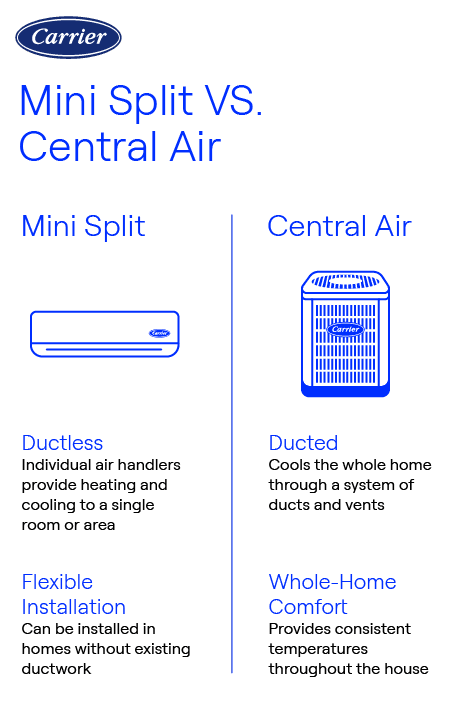
Mini Split
- ✦ Ductless Operation
- ✦ Zone-by-Zone Control
- ✦ Flexible Placement
- ✦ Ideal for Additions & Specific Rooms
Central Air
- ✦ Ducted System
- ✦ Whole-Home Coverage
- ✦ Consistent Temperature
- ✦ Works With Existing Ductwork
What Exactly Is a Ductless Mini Split?
Think of a ductless mini split as a compact, self-contained climate control unit. Unlike traditional systems that rely on a maze of ductwork hidden behind your walls, a mini split consists of just two core components: a slim indoor air handler mounted on a wall or ceiling, and a quiet outdoor compressor unit connected by a small conduit.
Refrigerant circulates between these two units through copper tubing, absorbing heat from inside your home and releasing it outdoors in cooling mode — or reversing the process for heating. Because there are no air ducts involved, you eliminate the energy losses that commonly plague conventional ducted systems.
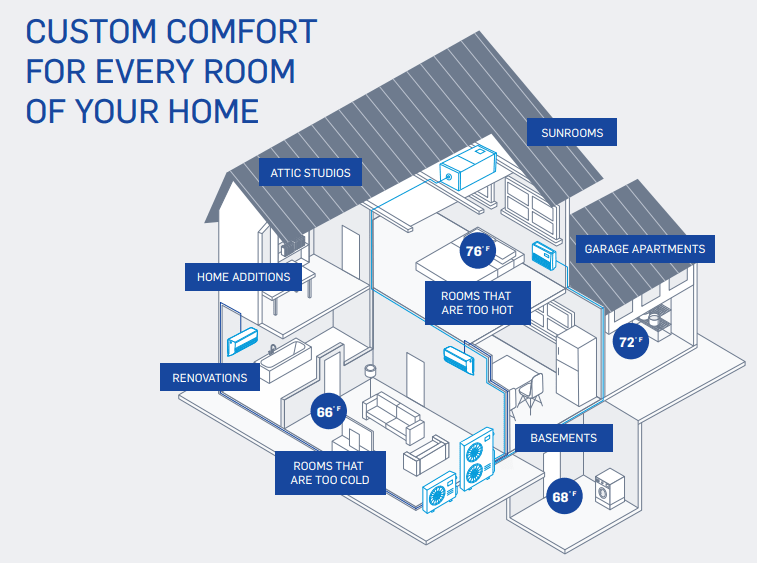
Mini splits come in single-zone configurations for individual rooms and multi-zone setups that allow you to connect several indoor units to one outdoor compressor — giving each room its own independent thermostat.
Advantages of a Ductless Mini Split
Ductless mini split systems bring a host of benefits that traditional setups simply can't match. Here's why homeowners across the country are making the switch:
⚡ Superior Energy Efficiency
Ductless systems deliver remarkably high efficiency ratings because they eliminate the duct losses that waste up to 30% of the energy in traditional systems. Inverter-driven compressors adjust speed continuously rather than cycling on and off, which conserves energy and reduces your utility bills considerably.
🏠 Minimal Installation Footprint
Installation is refreshingly simple. A small hole in the wall — typically just three inches — is all it takes to connect the indoor and outdoor units. No tearing open walls or ceilings, no costly ductwork fabrication. This makes mini splits an exceptional choice for older homes, additions, converted garages, and spaces where ductwork simply isn't feasible.
🎯 Personalized Zone Control
Every indoor unit operates independently with its own thermostat and remote control. That means you can keep the bedroom cool for sleeping while the living room stays a few degrees warmer — or turn off climate control entirely in rooms that aren't in use. This level of precision saves energy and keeps everyone in your household comfortable.
💨 Improved Indoor Air Quality
Ductwork is a notorious collector of dust, allergens, mold spores, and other airborne contaminants. Without ducts, a mini split dramatically reduces the pathways for pollutants to circulate throughout your home. Most units also feature multi-stage filtration systems that actively clean the air as they condition it.
🔇 Whisper-Quiet Operation
Modern mini split indoor units operate at sound levels as low as 19 decibels — quieter than a library. The noisier compressor sits outside, so all you experience indoors is a gentle breeze of perfectly tempered air.
Disadvantages of a Ductless Mini Split
While mini splits offer impressive advantages, they do come with a few considerations that are worth noting before you commit:
Higher Per-Unit Cost: Installing a ductless system across your entire home — especially multiple zones — can add up. Each indoor unit carries its own cost for equipment and installation, which can exceed the price of a single central air system when you need coverage in many rooms.
Visible Indoor Units: Mini split air handlers are wall-mounted and visible inside each room. While modern designs have become increasingly sleek and unobtrusive, they don't disappear into the architecture the way a vent register does with central air.
Regular Filter Maintenance: Each indoor unit has its own filter that requires consistent cleaning or replacement to maintain peak performance. With multiple units, this adds a maintenance responsibility that a single central system doesn't require.
Potential Air Quality Perception: While mini splits move air effectively within their zone, some homeowners feel that central air offers a more uniform distribution throughout larger open-concept spaces. The perceived difference comes down to room layout and personal comfort preferences.
Featured Product
Ready to Experience Ductless Comfort?
Explore our top-rated dual zone mini split system — built for whole-home comfort without the ductwork.
Senville 36000 BTU Dual Zone Mini Split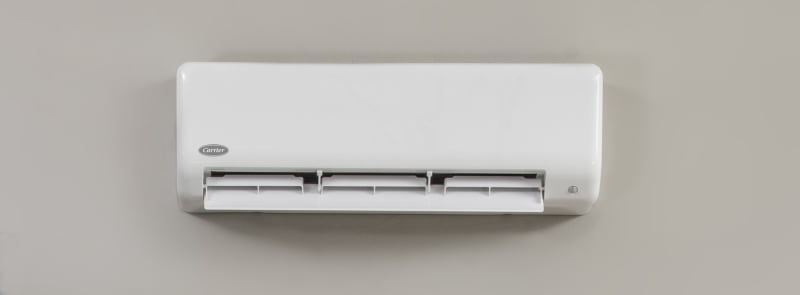
Are Mini Splits Worth the Investment?
If you've been eyeing a mini split and wondering whether it justifies the price tag, the short answer is: for many homeowners, absolutely. The real value of a mini split system extends well beyond the initial purchase price and becomes evident over years of use.
First, there are the monthly energy savings. Because mini splits don't lose conditioned air through leaky ducts, they operate at far greater efficiency than most central systems. Over the course of several years, these savings can recoup a significant portion of the upfront cost — or even exceed it entirely.
Second, mini splits provide both heating and cooling from a single unit, which means you may be able to eliminate a separate furnace or space heater. That dual functionality adds meaningful value to your investment.
And then there's the comfort factor. Having precise control over the temperature in each room is a luxury that, once experienced, is hard to give up.
For a closer look at our recommended systems, visit our air conditioner collection to explore the options available.
Understanding Central Air Conditioning & Heating
A central air conditioning system works by pairing an outdoor condenser and compressor with an indoor evaporator coil and air handler. The system uses a network of ducts to pull warm indoor air through a return vent, cool it as it passes over the refrigerant-chilled evaporator coil, and then distribute the conditioned air back through supply vents in every room of the home.
When the system is combined with a furnace, it becomes a complete year-round solution — cooling in summer and heating in winter through the same ductwork network. A single thermostat controls the entire home, making operation straightforward and familiar to most homeowners.
Advantages of Central Air Conditioning
Seamless Whole-Home Coverage
If your home already has ductwork in place, a central air system is a plug-and-play solution that delivers consistent climate control to every room through a single system. There's no need for multiple units or individual installations.
Lower Upfront Cost for Larger Homes
When you need to cool and heat an entire home with many rooms, a single central system is often more cost-effective than installing individual mini split units in every space. The per-room cost drops significantly with central air.
Clean, Invisible Design
Central air is invisible inside your living spaces. Everything hides behind small vent registers in the floor, wall, or ceiling. For homeowners who value a clean interior aesthetic, this is a meaningful advantage.
Familiar & Simple Operation
One thermostat manages the entire home. Smart thermostats, programmable schedules, and integration with home automation systems are all standard and well-supported with central air setups.
Disadvantages of Central Air Conditioning
Duct-Related Energy Loss: Even in well-maintained homes, ductwork is responsible for substantial energy waste. Air leaks at joints and seams, heat gain in unconditioned attic spaces, and friction through long duct runs all reduce the efficiency of the system — money you're essentially blowing through the walls.
Expensive Installation Without Existing Ducts: If your home doesn't already have ductwork, adding it can be extremely expensive and disruptive. Costs for installing ducts can range from several thousand to over ten thousand dollars — often rivaling or exceeding the cost of the air conditioning unit itself.
Energy Efficiency Ceiling: While newer central systems have improved dramatically, even the best conventional central units typically cap around 20–22 SEER, whereas premium mini split systems regularly achieve 25 SEER or higher.
Installing Central Air in a Home Without Ductwork
Installing a central system in a home that was never built for ductwork is one of the most expensive HVAC upgrades you can undertake. The costs for new ductwork fabrication alone can easily reach $8,000 to $15,000 or more, on top of the equipment costs.
The construction work is equally daunting — cutting through finished walls, ceilings, and floors to route duct runs. In historic or older homes, this can compromise structural integrity and architectural character.
For homes in this situation, a ductless mini split system is not just an alternative — it's often the clearly superior choice both financially and practically.

How to Choose: Mini Split vs. Central Air
The best system for your home depends on your specific circumstances. Here's a quick decision framework to guide you:
| Scenario | Mini Split | Central Air |
|---|---|---|
| No existing ductwork | ✓ Best | — |
| Existing ducts in good condition | — | ✓ Best |
| Room addition or garage conversion | ✓ Best | — |
| Whole-home coverage, 5+ rooms | — | ✓ Best |
| Maximum energy efficiency priority | ✓ Best | — |
| Budget-conscious for large home | — | ✓ Best |
If you're weighing the pros and cons for your particular situation, the most practical next step is to assess your home's existing infrastructure, your budget, and which rooms you need to prioritize for comfort.
Frequently Asked Questions
Are mini splits cheaper to operate than central air?
In most cases, yes. Because mini splits eliminate duct losses and use inverter technology that adjusts output to demand, they typically cost less to run month-over-month compared to central air systems of similar capacity. The savings become even more pronounced in homes where only certain rooms need conditioning at a given time.
Can I replace my central air system with mini splits?
Absolutely. Many homeowners are transitioning from aging central systems to multi-zone ductless setups. The key is to have a qualified HVAC professional conduct a load calculation to determine how many indoor units you'll need and what capacities are appropriate for your home's size and layout.
Which system is more energy efficient overall?
Mini splits hold a clear edge in energy efficiency. Their ductless design, inverter-driven compressors, and zone-based control all contribute to significantly reduced energy consumption. Central air has improved with higher SEER models, but duct losses remain an inherent disadvantage that's difficult to fully overcome.
Explore More From Backyard Provider
Whether you're looking for detailed specifications on mini split sizing, exploring heat pump options for year-round comfort, or curious about the latest innovations in ductless HVAC technology, we've got you covered. Here are a few topics worth exploring next:
→ How to determine the right mini split size for your space
→ Understanding air conditioner efficiency ratings and what they mean
→ Ductless heating and cooling system comparisons
→ How to maintain your mini split for peak performance
→ Choosing between a mini split and a window air conditioner
Start Your Home Comfort Upgrade Today
Discover efficient, powerful, and whisper-quiet ductless cooling and heating solutions built for real homes.
Senville 36000 BTU Dual Zone Mini Split