
Key Takeaways
- The cooling capacity of a mini split depends on its BTU rating, with a 9,000 BTU unit typically covering around 350–400 sq ft.
- Single-zone mini splits serve one room, while multi-zone systems can condition multiple rooms independently.
- Ceiling height, insulation quality, sun exposure, climate zone, and the number of windows all influence the BTU capacity you actually need.
Many homeowners are turning to ductless mini split systems for their energy-efficient heating and cooling capabilities. Whether you are outfitting a single room addition, a detached garage, or an entire home, selecting the right mini split size based on square footage, BTU output, and model specifications is essential for maximum comfort and efficiency.
Mini split air conditioners have become increasingly popular because they deliver precise climate control, operate quietly, and eliminate the need for bulky ductwork. However, choosing a unit that is too small or too large for your space can result in poor performance, higher energy bills, and premature wear.
In this guide, we will walk you through how to determine the ideal BTU rating, mini split size, and system type for your specific space — ensuring effective heating and cooling year-round.

How Many Rooms Can a Mini Split Cool?
What Is a BTU?
BTU stands for British Thermal Unit. It is the standard measurement used to describe the heating and cooling output of a mini split system. A higher BTU rating means the unit can handle a larger space. Choosing the correct BTU level for your room size is crucial for maintaining consistent comfort and maximizing energy efficiency.
An undersized unit will struggle to reach your desired temperature, cycling continuously and driving up electricity costs. An oversized unit will short-cycle — turning on and off too frequently — which reduces dehumidification and wastes energy.
Number of Rooms a Mini Split Can Cool
The number of rooms your ductless mini split can condition depends on whether you opt for a single-zone or multi-zone configuration. A single-zone system pairs one outdoor compressor with one indoor air handler to serve a single area. Multi-zone systems, on the other hand, connect one outdoor unit to two, three, four, or even five indoor units — allowing you to set independent temperatures in each room.
Another key factor is the BTU rating of the outdoor condenser. A system with a higher total BTU capacity can support more indoor heads, each serving its own zone.

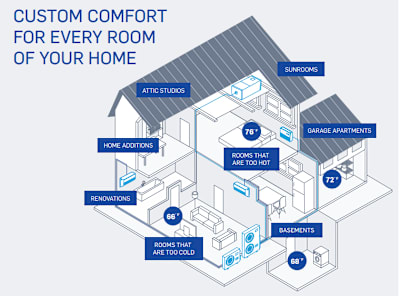
One of the biggest advantages of a multi-zone mini split is the ability to customize comfort room by room. Each indoor unit can be controlled independently, so you are never wasting energy conditioning spaces that are unoccupied. For example, a 9,000 BTU unit is ideal for a small bedroom or home office, while a 36,000 BTU multi-zone system can comfortably serve an entire home.
If you live in a region with a wider temperature range, a multi-zone system also lets you balance heating and cooling demands across different parts of the house — unlike a single traditional HVAC system that pushes the same temperature everywhere.
How Many Square Feet Can a Mini Split Cool?
The area a mini split can effectively cool or heat depends on its BTU output. As a general rule, you need approximately 20 BTUs per square foot of living space. A standard 12,000 BTU unit, for instance, is suitable for a room of around 450–550 sq ft. Meanwhile, high-capacity models rated at 36,000 BTU can comfortably cover 1,500 sq ft or more.
Keep in mind that these estimates assume standard 8-foot ceilings. Rooms with higher ceilings, large windows, or poor insulation may require additional BTU capacity. Multi-zone configurations also let you distribute cooling across several rooms, each with its own dedicated air handler.
Mini splits are available in single-zone and multi-zone configurations. Common sizes include 9K, 12K, 18K, 24K, and 36K BTU options, offered in single, dual, tri, and quad zone arrangements.
How to Choose the Right Mini Split Size Based on Square Footage
The mini split size you select should correspond to the total square footage of the area you intend to cool or heat. Below is a general BTU sizing chart to help you determine the right capacity:
| Mini Split BTU Rating | Approximate Coverage (sq ft) |
|---|---|
| 6,000 BTU | 150 – 250 sq ft |
| 9,000 BTU | 250 – 400 sq ft |
| 12,000 BTU (1 Ton) | 400 – 600 sq ft |
| 15,000 BTU | 600 – 800 sq ft |
| 18,000 BTU (1.5 Ton) | 800 – 1,000 sq ft |
| 24,000 BTU (2 Ton) | 1,000 – 1,300 sq ft |
| 30,000 BTU (2.5 Ton) | 1,300 – 1,600 sq ft |
| 36,000 BTU (3 Ton) | 1,500 – 2,000 sq ft |
Pro Tip: Use our online sizing calculator for a more precise heating or cooling capacity recommendation based on your exact room dimensions and local climate conditions.
Common Mini Split Applications
Single-Zone Setup
A 500 sq ft home addition or standalone structure like a workshop, garage, or sunroom is perfectly served by a single-zone mini split, typically rated at 12,000 BTU.
Multi-Zone Home
A home measuring 1,500 sq ft or more would generally benefit from a multi-zone mini split system rated between 30,000 and 36,000 BTU. This approach applies to both new construction and retrofit HVAC replacement projects.
Supplemental Heating & Cooling
A 750 sq ft basement recreation room may need a 30,000 BTU mini split. A 1,100 sq ft basement would require roughly 24,000 BTU or more depending on insulation.
Recommended for Your Space
A powerful dual-zone system perfect for conditioning two separate areas — ideal for open-concept living spaces, home additions, and multi-room setups up to 1,500 sq ft.
Senville 36000 BTU Dual Zone Mini SplitAdditional Mini Split Sizing Considerations
- High Ceilings & Open Floor Plans: If your ceilings exceed 8 feet, increase the BTU estimate by roughly 20%. Taller ceilings mean more air volume that needs to be conditioned.
- Extreme Climates: If your area regularly experiences temperatures above 95 °F or below 15 °F, you should size up to ensure the unit can handle peak demand without straining.
- Sunlight Exposure: Rooms that receive heavy direct sunlight throughout the day may need an additional 10% BTU capacity to offset the heat gain.
Factors That Affect Mini Split Efficiency and Performance
Several variables impact how efficiently your mini split operates. Understanding these will help you choose the correct unit and ensure it performs at its best for years to come.
Insulation Quality
A well-insulated room retains conditioned air much longer by minimizing heat exchange between indoors and outdoors. Poor insulation forces the system to work harder, leading to higher energy consumption. For instance, an older room with thin walls may need a 12,000 BTU mini split, while a similarly sized modern room with R-19 insulation could get by with a 9,000 BTU unit.
Ceiling Height
Room height directly affects air circulation and cooling efficiency. Taller ceilings create a larger volume of air to cool. A room with a 10-foot ceiling may require a 12,000 BTU mini split, while a standard-height room of the same footprint could be served by a 9,000 BTU unit.
Number of Doors & Windows
Windows and doors are common sources of heat transfer. Rooms with many windows or doors experience greater temperature swings from direct sunlight and drafts. Installing the correct BTU capacity — and factoring in window quality — ensures your mini split can keep up.
Local Climate Conditions
Your geographic region significantly affects how hard your mini split has to work. In hot, humid climates, a unit with a higher BTU rating may be necessary. In cooler climates, the same-sized room could be conditioned efficiently with a lower-capacity unit. Always consider seasonal temperature extremes when sizing your system.
Heat-Generating Appliances & Electronics
Heat-producing devices — such as ovens, computers, servers, and large monitors — add to the thermal load in any room. A home office packed with equipment may need a slightly higher BTU rating than a bedroom of the same size. Factor in all internal heat sources when calculating your needs.
Unit Placement
Proper mini split placement ensures efficient airflow and prevents uneven cooling. Install the indoor unit high on a wall with unobstructed airflow. Placement near corners or behind furniture can restrict air circulation and reduce performance significantly.
Regular Maintenance
Routine servicing maximizes both performance and longevity. Clean or replace filters monthly to maintain optimal airflow. Neglecting filter cleaning for six months can reduce cooling efficiency by up to 20%, potentially causing a larger system to underperform compared to a well-maintained smaller unit.
Mini Split Frequently Asked Questions
Where Should I Place a Mini Split Indoor Unit?
Mount the indoor unit high on a wall, ideally centered in the room. Avoid placing it directly above heat sources, behind furniture, or in corners where airflow would be restricted.
How Much Clearance Does a Mini Split Need?
Most indoor units require at least 6–8 inches of clearance on all sides and 4–6 feet of unobstructed space below for proper airflow distribution.
Can You Install a Mini Split Above a Window?
Yes. Mounting above a window is a common installation choice that helps distribute air evenly across the room while keeping the unit out of the way.
Can You Install a Mini Split Above a Door?
It is possible, though less common. Ensure there is enough vertical clearance and that the air pattern will not be disrupted by the door opening and closing.
Where Should I Place the Outdoor Condenser?
Position the outdoor unit on a level, stable surface with at least 24 inches of clearance on all sides. Keep it away from shrubs, debris, and direct snow accumulation to maintain airflow and efficiency.