
When shopping for your best mini split, choosing the correct size is the single most critical decision you'll make. Get it right, and you enjoy efficient cooling and heating year-round. Get it wrong, and you could face skyrocketing energy bills, uneven temperatures, and premature equipment failure. This guide walks you through everything you need to know.
What Is BTU in a Mini Split System?
In the HVAC world, the standard unit used to describe the cooling and heating capacity of an air conditioner is the BTU (British Thermal Unit). A BTU is technically defined as the amount of heat energy required to raise the temperature of one pound of water by one degree Fahrenheit.
A higher BTU rating means the air conditioner has greater cooling or heating capacity. So when you see a unit rated at 12,000 BTU, it can handle a larger room than one rated at 6,000 BTU.
Quick Rule of Thumb: You generally need about 20 BTUs per square foot of living space. A 500 sq ft room, for example, requires approximately 10,000 BTU of cooling capacity.
How to Calculate Mini Split Size
Step 1: Measure Your Room Area
Begin by measuring the length and width of the room or area you want to cool or heat. Multiply these two numbers together to get the total square footage.
Step 2: Use the Simple BTU Formula
Take your total square footage and plug it into this simple formula:
BTU = Room Area (sq ft) × 20
This gives you a baseline estimate. However, several real-world conditions — like sun exposure, ceiling height, and room insulation — can push your actual requirements higher or lower. We cover those adjustment factors further below.
Mini Split AC BTU Sizing Chart
The table below provides a convenient reference for choosing the right mini split capacity based on room size. These recommendations are drawn from years of practical experience and manufacturer guidelines.
| BTU Rating | Coverage Area (sq ft) | Recommended Room Size Range (sq ft) |
|---|---|---|
| 6,000 BTU | Up to 250 | 150 – 250 |
| 9,000 BTU | Up to 400 | 250 – 400 |
| 12,000 BTU | Up to 550 | 400 – 550 |
| 18,000 BTU | Up to 800 | 550 – 800 |
| 24,000 BTU | Up to 1,100 | 800 – 1,100 |
| 36,000 BTU | Up to 1,500 | 1,100 – 1,500 |
| 48,000 BTU | Up to 2,000 | 1,500 – 2,000 |
Keep in mind that these figures are starting points. Actual needs can differ based on local climate, building construction, and personal comfort preferences.

Senville 36000 BTU Dual Zone Mini Split
Powerful dual-zone coverage for spaces up to 1,500 sq ft. Efficient heating and cooling in one system — ideal for open-plan living areas, large bedrooms, and home additions.
Senville 36000 BTU Dual ZoneAdjust Your BTUs Based on Room Types
The baseline 20 BTU per square foot formula works for standard rooms, but different spaces have unique characteristics that affect how much cooling or heating power you actually need. Here are recommendations for common room types:
Living Room
High-traffic areas with electronics and sunlight. For 300–500 sq ft, consider 8,000 – 12,000 BTU. Add 600 BTU per additional person regularly present.
Bedroom
Smaller and less demanding than living areas. A standard 150–350 sq ft bedroom typically requires 5,000 – 8,000 BTU.
Kitchen
Cooking appliances generate significant extra heat. For a 150–300 sq ft kitchen, plan on 7,000 – 10,000 BTU — higher than a similarly sized bedroom.
Basement
Naturally cooler but can be damp. A typical 400–600 sq ft finished basement needs around 8,000 – 12,000 BTU.
Bathroom
Usually small. A 60–110 sq ft bathroom generally only requires about 3,000 – 5,000 BTU to stay comfortable.
Garage / Workshop
Poor insulation and variable use. A 400–600 sq ft space may need 10,000 – 15,000 BTU or more depending on insulation quality.
7 Factors That Affect BTU Requirements
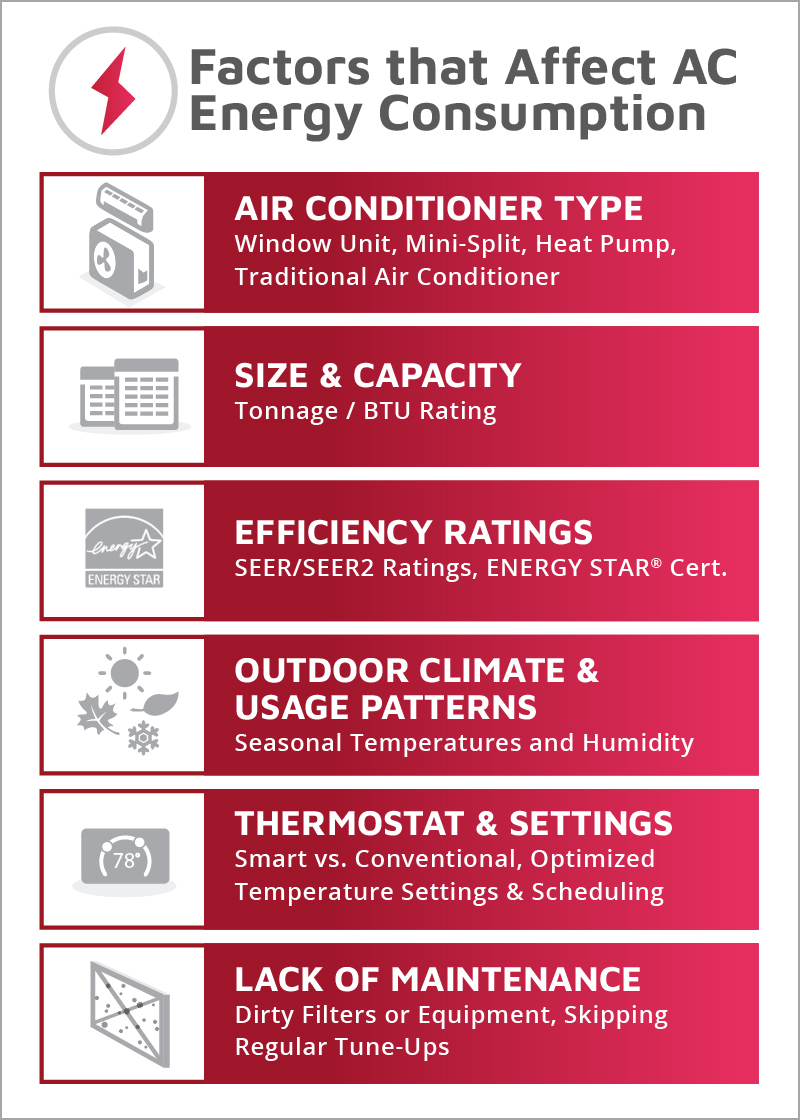
Beyond basic room size, these seven variables will influence the final BTU capacity you should select:
Ceiling Height
Standard BTU calculations assume 8-foot ceilings. For every additional foot of height, increase your BTU requirement by roughly 10–15%. A room with 10-foot ceilings needs noticeably more capacity.
Sunlight Exposure
Rooms with large windows or south-facing walls absorb considerably more heat during the day. If the room receives heavy direct sunlight, increase your BTU estimate by about 10%. For rooms with heavy shade, you can reduce it by roughly 10%.
Climate Zone
Your geographic location has a major impact. In hot, humid regions like the southern United States, your mini split needs to handle higher cooling loads. In milder climates like the Pacific Northwest, a smaller unit may suffice.
Insulation Quality
Well-insulated homes retain conditioned air far better, reducing the demands on your mini split. Older homes with thin walls, single-pane windows, or uninsulated attics will require higher BTU capacity to compensate for energy loss.
Number of Occupants
Each additional person in a room generates roughly 600 BTU of body heat. A home office with one person is very different from a family room that regularly seats five or more.
Heat-Producing Devices
Desktop computers, large monitors, gaming consoles, kitchen appliances, and similar electronics all add heat to a space. Rooms packed with electronics may need an extra 1,000–2,000 BTU beyond the baseline calculation.
Room Layout & Open Floor Plans
Rooms connected to other open areas — like a kitchen that flows into a dining room — effectively increase the total space the unit needs to condition. Measure the entire connected area, not just the single room.
Is It OK to Oversize or Undersize Your Mini Split?
Many homeowners instinctively believe that a bigger air conditioner is always better. That is not the case, and here is why both oversizing and undersizing can cause problems.
Risks of Oversizing
- The unit will cool the room too quickly and shut off before properly dehumidifying, leaving the air clammy and uncomfortable.
- Frequent on-off cycling wastes energy and increases your electricity bill.
- Short cycling puts unnecessary stress on the compressor, shortening the system's lifespan.
- Higher upfront purchase cost with no real benefit in comfort.
Risks of Undersizing
- The system runs nonstop trying to reach the set temperature, consuming excessive electricity.
- Even at full capacity, the unit cannot adequately cool or heat the space, leaving hot or cold spots.
- Continuous operation shortens equipment life and increases maintenance costs.
- You will likely feel frustrated and may end up replacing the unit sooner than expected.
Pro Tip: It is always wiser to choose a unit that is slightly larger than your calculated need rather than one that is too small. A modest 10–15% buffer is reasonable — but avoid going significantly beyond that range.
Ready to Find Your Perfect Mini Split?
The Senville 36000 BTU Dual Zone system provides versatile coverage with independent zone control — perfect for homes that need flexible cooling across multiple rooms.
Senville 36000 BTU Dual ZoneFinal Thoughts
Figuring out the right mini split air conditioner size for your space is not complicated, but it does require a bit of attention to detail. Start with the simple 20-BTU-per-square-foot formula, reference the sizing chart for a quick estimate, then fine-tune your number by considering factors like ceiling height, sun exposure, insulation, and the number of people who regularly use the space.
Getting the right BTU ensures your system runs at peak efficiency, keeps your energy bills under control, and delivers reliable comfort through every season. As always, BACKYARD PROVIDER is here to help you make the best choice for your home — explore our selection of mini split systems and find the ideal match for your needs.
© 2025 BACKYARD PROVIDER — Your Trusted Source for Outdoor Living & Home Comfort Solutions