
Mini split heat pumps are quickly becoming the preferred choice for energy-conscious homeowners — particularly ducted units that run on a low total external static pressure (TESP) of 0.2 inches of water column or less. But there's a persistent myth in the field that's causing real problems on real installs. Let's clear it up.
Built for Low Static — Not No Static
Ducted mini splits are engineered to operate at a static pressure of around 0.5 inches water column (iwc). But here's the thing: in real-world conditions, actual duct systems regularly push the air handler well past that design point. Manufacturers know this, which is why they build in extra blower capacity as a buffer. That extra capacity exists for a reason — don't ignore it.
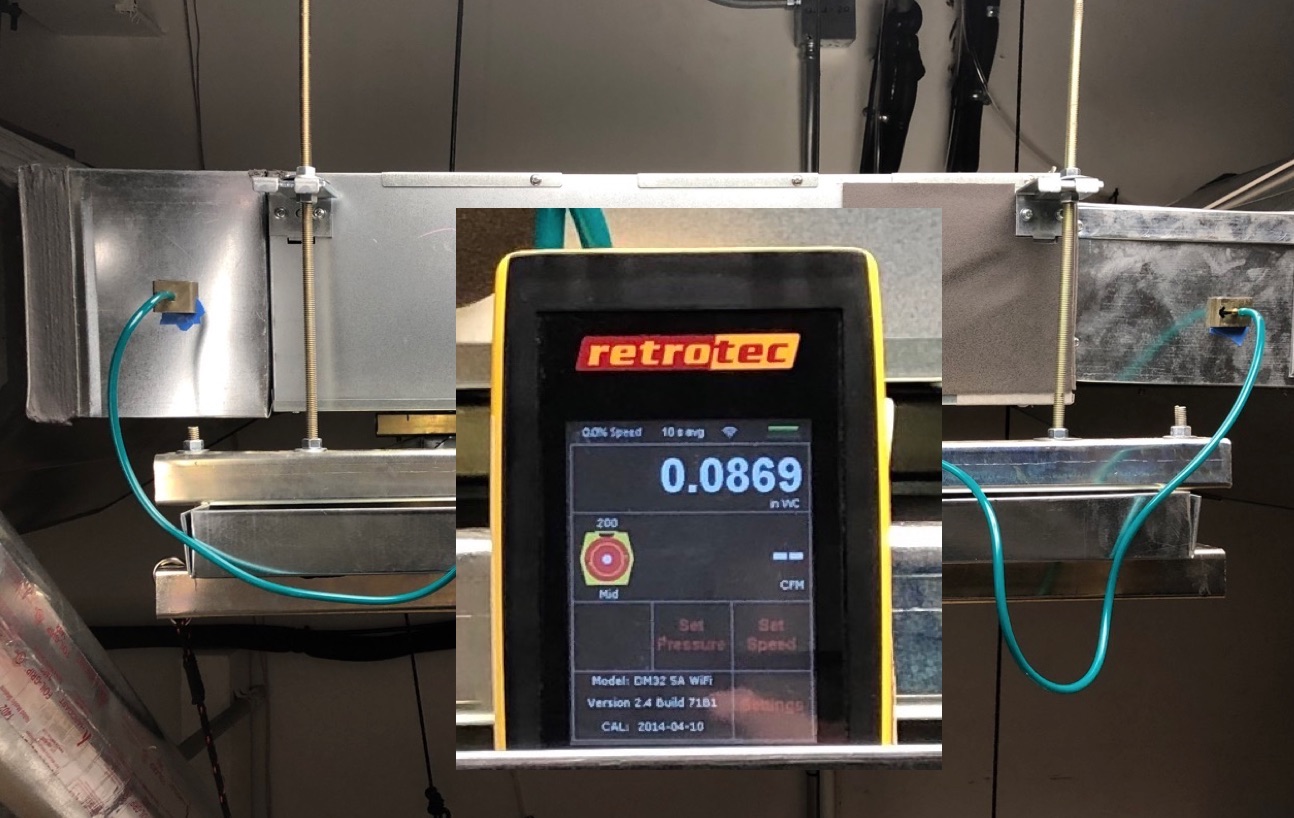
In our office, we use a ducted mini split that was specified to run at a TESP of 0.2 iwc. When we measured the actual pressure during operation, we found it was running at roughly half of its rated maximum. That's a well-designed system doing exactly what it should.
The Myth That's Getting People in Trouble
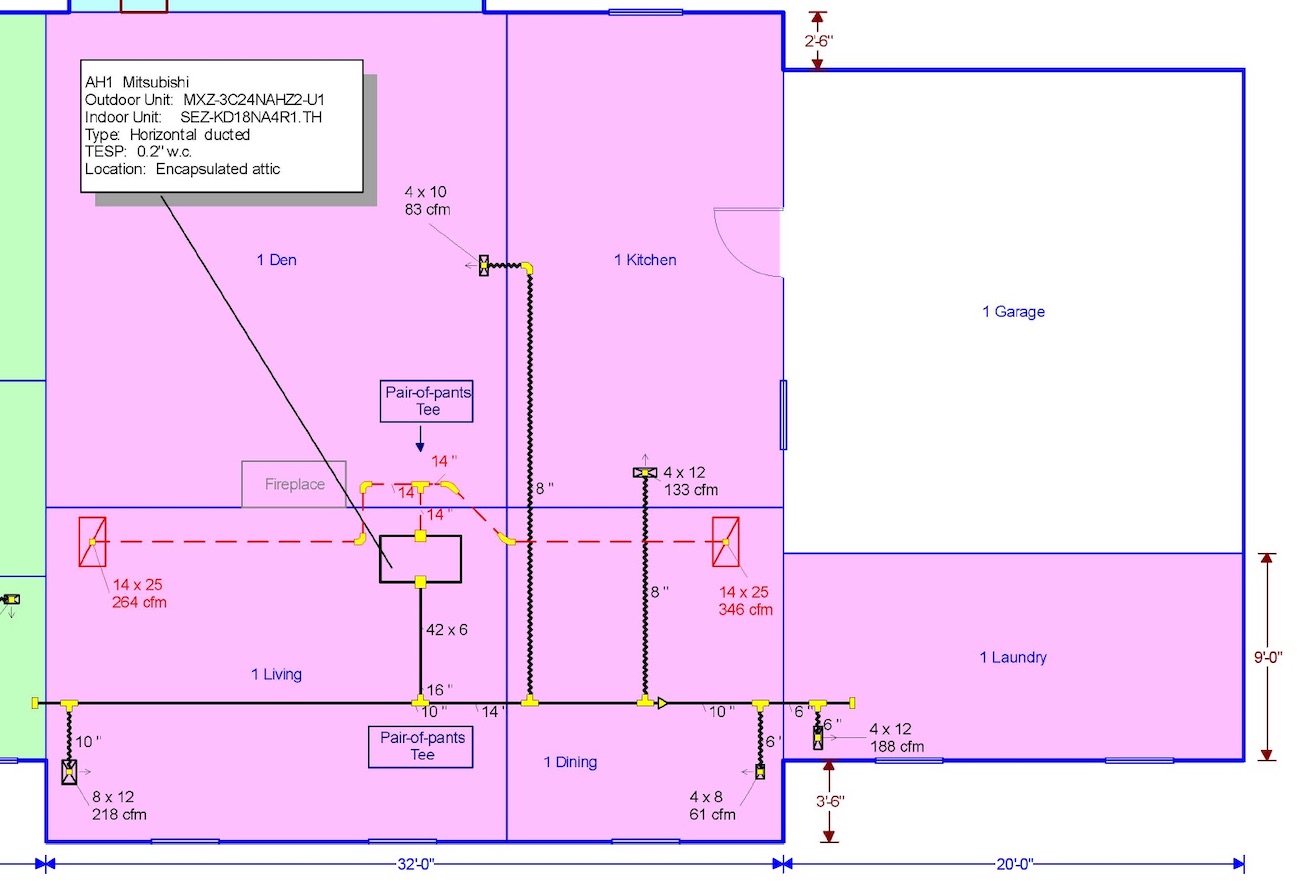
Here's the misconception we hear constantly in the field: "You have to use short, straight ducts with a low-static ducted mini split because it doesn't have enough power to push air through a real duct system."
This is simply not true — and it's actually leading installers and homeowners to cut corners in ways that make systems underperform. The real lesson isn't about duct length at all.
The total length of the ductwork doesn't matter much as long as you keep the static pressure — that is, the resistance — low. Longer ducts with proper cross-sectional area and good fittings can perform better than short, cramped runs with tight bends and undersized registers.
Two Things That Make All the Difference
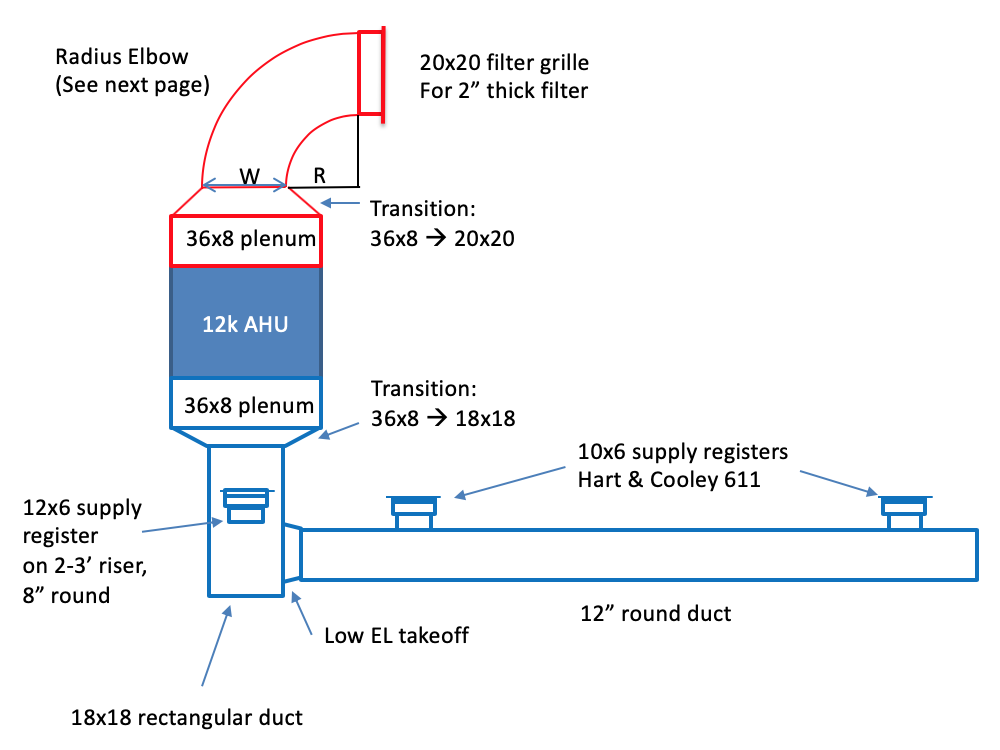
When we designed the duct system for our office, we focused on two principles that consistently deliver results — regardless of system size or layout complexity:
-
1Upsize the cross-sectional area of ducts. Larger duct cross-sections mean air moves more slowly through the system. And slower air means dramatically lower pressure drop. This is the single biggest lever you have to reduce static pressure without shortening your duct runs.
-
2Use large, low-resistance supply registers. Undersized grilles are one of the most common sources of excess static pressure. Use registers with generous face area, and size them to keep air velocity — and therefore resistance — low at the point of delivery.
When pressure drops, air velocity drops with it. And that's a good thing — lower velocity means quieter operation, more even air distribution, and a system that consistently hits its rated output without struggling.
More Duct Than You Think — Done Right
This is one of the more counterintuitive takeaways from working with low-static ducted systems: you can — and often should — use more ductwork than you might initially assume. Larger-diameter ducts, smooth transitions, and well-chosen fittings can dramatically reduce pressure drop. The system ends up with generous ductwork that moves air quietly and efficiently.
Look at our office duct layout and you'll see exactly this philosophy in action. Radius elbows instead of sharp bends. Big rectangular trunk sections transitioning down gradually. High-flow supply registers. It looks like a lot of duct — but that's precisely why it works so well.
🔍 Key Concept: Effective Length vs. Physical Length
Pressure drop accumulates based on a concept called effective length — not just the physical feet of duct. Every fitting (elbow, transition, tee) adds resistance equivalent to several feet of straight duct. A sharp 90° elbow can add the equivalent of 25–50 feet of pressure drop all on its own.
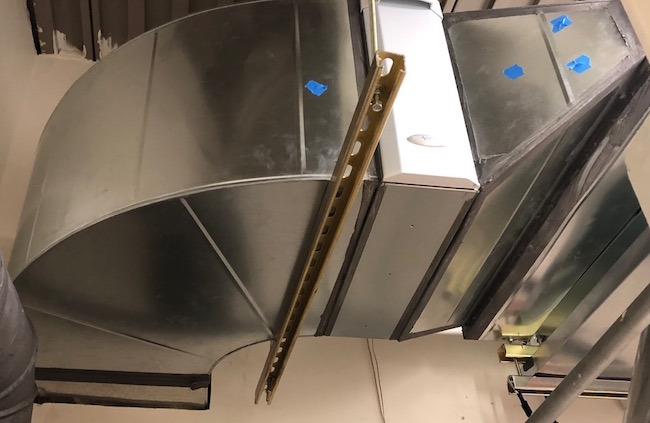
This is why radius elbows and gradual transitions are so critical in low-static designs. Choose your fittings wisely and your straight-run length becomes almost irrelevant to the final pressure calculation.
Senville AURA 18,000 BTU Concealed Duct Mini Split
A high-performance ducted heat pump engineered for low-static duct systems — ideal for whole-room or multi-zone conditioned spaces where quiet, efficient airflow is the priority.
On short duct runs: There is one legitimate edge case to consider. In unconditioned spaces — like attics or unconditioned basements — duct surface area does matter because it affects heat gain and loss through the duct wall. More surface area in an unconditioned space means more thermal transfer. That's a real consideration. But for the systems we design for clients, nearly all ductwork is inside conditioned space. That's exactly where it belongs.
On low-static air handlers in general: The same principles discussed here apply more broadly — not just to mini splits. Any air handler operating at reduced static pressure benefits from the same design discipline: larger ducts, better fittings, bigger registers, and attention to effective length over physical length.