
Your complete guide to choosing the perfect mini split size for maximum comfort and efficiency

Mini split systems rank among the most efficient HVAC solutions available for modern homes. However, their effectiveness depends entirely on selecting the right size for your space. When a mini split is improperly sized—whether too large or too small—it operates far less efficiently than it should, ultimately costing you money and comfort.
An oversized system will short cycle, repeatedly turning on and off in quick succession. This behavior damages components over time, creates uneven room temperatures, and wastes energy. Conversely, an undersized unit runs continuously without ever reaching your desired temperature, wearing out prematurely while failing to keep you comfortable.
Working with a qualified HVAC professional ensures proper sizing and installation. These experts possess the tools and experience necessary to install mini split systems correctly, maximizing both performance and longevity.
Why Proper Mini Split Sizing Matters
Getting the size right isn't just about comfort—it directly impacts your energy bills, equipment lifespan, and indoor air quality. A properly sized mini split maintains consistent temperatures, controls humidity effectively, and operates quietly without the stress of constant cycling.
Determining the Right Size
The most reliable method for sizing a mini split involves performing a load calculation for each room you plan to condition. Here's a straightforward approach to get started:
Basic BTU Calculation
Multiply your room's square footage by 25 to estimate the required BTU (British Thermal Units).
Example: A room measuring 30 feet by 30 feet equals 900 square feet. Multiply 900 by 25 to get 22,500 BTU. The nearest standard rating is 24,000 BTU, so you would round up to that capacity.
Other Factors to Consider
Square footage provides a starting point, but several additional variables influence your actual heating and cooling needs:
Home Age
Older homes often have drafts and poor insulation that allow conditioned air to escape, requiring additional capacity.
Insulation Quality
Poor insulation means hot and cold air escapes more readily, increasing your load requirements significantly.
Local Climate
Extreme outdoor temperatures in your region directly affect how hard your system must work to maintain comfort.
Ceiling Height
Ceilings exceeding the standard 8-foot height add to your room's volume and require more BTUs to condition.
Windows and Doors
More openings mean more opportunities for air to escape, regardless of how well-sealed they appear.
Sun Exposure
Rooms receiving direct sunlight naturally heat up, increasing cooling demands during warm months.
How Do Mini Split Systems Work?
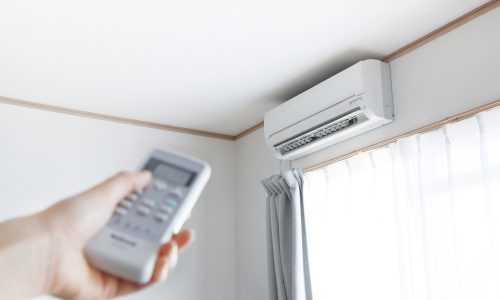
Understanding how these systems operate helps you appreciate why proper sizing matters so much. Mini splits transfer heat energy rather than generating it, making them remarkably efficient compared to traditional HVAC equipment.
The system consists of an outdoor unit containing a compressor and an indoor air handler mounted on your wall, connected by refrigerant lines. During cooling, compressed liquid refrigerant travels through these lines to the indoor unit, where it absorbs heat from your room's air. A blower pushes warm air across the cold coils, cooling it down while removing humidity.
The now-gaseous refrigerant returns to the outdoor unit, releases its captured heat, and converts back to liquid form. This cycle continues until your space reaches the desired temperature. For heating, the system simply reverses this process, extracting warmth from outdoor air and transferring it inside.
The Benefits of a Mini Split System
Installing a mini split system delivers numerous advantages for homeowners seeking efficient climate control:
Cost Savings
Save up to 60% on energy bills compared to conventional central air systems.
Energy Efficiency
Look for Energy Star certified units with high SEER2 ratings for maximum efficiency.
Ductless Design
No ductwork means simpler installation, quieter operation, and no duct losses.
Space Saving
Compact, discreet units integrate seamlessly into any room's decor.
Choosing a mini split benefits both your wallet and the environment. However, realizing these advantages requires selecting the correct size for your application—an undersized or oversized unit undermines all these benefits.
Types of Mini Split Systems
When sizing your mini split, consider which type best suits your needs:
Ductless AC Systems
These function exclusively as air conditioning units, cooling your space without heating capability. Ideal for regions with consistently warm climates like tropical areas, or for specialized applications like server rooms and workshops where cooling alone meets your requirements.
Heat Pump Systems
Heat pumps provide year-round comfort by both heating and cooling your home. The same sizing calculations apply whether you're installing an AC-only unit or a heat pump—the BTU requirements remain consistent regardless of which direction you're moving heat.
Single-Zone vs. Multi-Zone
Once you've selected your system type, determine how many zones you need. Single-zone systems pair one outdoor unit with one indoor unit, perfect for conditioning a single room, basement, or addition. These configurations cannot be expanded later.
Multi-zone systems connect one outdoor unit to multiple indoor units—typically supporting up to eight indoor handlers. This setup allows independent temperature control in different rooms throughout your home, all managed from a single outdoor compressor.
Ready to Upgrade Your Home Comfort?
Discover our selection of premium mini split systems designed for efficiency, reliability, and quiet operation.
Senville AURA 18000 BTU Mini SplitFinal Thoughts
Mini split systems offer a cost-effective, energy-saving approach to heating and cooling your home—but only when sized correctly. Taking time to calculate your BTU requirements and consider all relevant factors ensures you select equipment that delivers maximum comfort and efficiency for years to come.
We hope this guide has clarified the mini split sizing process. Whether you're conditioning a single room or planning a whole-home solution, understanding these principles puts you on the path to smarter, more comfortable living.