
Mini split air conditioners have revolutionized home cooling by offering a ductless, energy-efficient solution that provides targeted comfort for individual rooms or zones. Unlike traditional central air systems, these units give you precise temperature control without the expense of extensive ductwork installation.
Whether you're a seasoned DIY enthusiast or preparing to work alongside a professional, understanding the installation process ensures your system operates at peak efficiency for years to come. This guide walks you through everything you need to know—from pre-installation preparation to final testing.
What's Inside This Guide
- 5 Critical Things to Know Before Installation
- 8 Steps to Install Your Mini Split System
- Common Installation Questions Answered
Essential Pre-Installation Knowledge
1. Location Selection Is Everything
The placement of your indoor unit directly impacts cooling efficiency and comfort levels. Position it away from direct sunlight, heat sources, and obstructions that could restrict airflow. The ideal mounting height typically ranges between 7-8 feet from the floor, allowing cool air to distribute evenly throughout the space.
For the outdoor condenser unit, select a location with adequate ventilation, minimal exposure to debris, and sufficient clearance on all sides for proper heat dissipation. Avoid areas prone to flooding or excessive moisture accumulation.

2. Handle Refrigerant Lines With Care
Refrigerant copper pipes are the lifeline of your mini split system. These lines must remain free of kinks, dents, and contamination throughout the installation process. Even minor damage can significantly reduce system efficiency or cause complete failure.
Always maintain the protective caps on pipe ends until you're ready to make connections. This prevents moisture, dirt, and debris from entering the system—contaminants that can damage the compressor and void your warranty.
3. Bundle Pipeline Components Properly
The refrigerant lines, electrical wiring, and condensate drain pipe should be bundled together securely with weatherproof tape or cable ties. Proper bundling protects these components from physical damage, UV exposure, and pest interference while creating a cleaner, more professional appearance.
4. Vacuum the Refrigerant Circuit
Before releasing refrigerant into the system, the entire line set must be evacuated using a vacuum pump. This critical step removes all air and moisture from the copper tubing, ensuring optimal heat transfer and preventing internal corrosion.
The vacuum should reach at least 500 microns and hold steady for 15-20 minutes to confirm a leak-free seal. Skipping this step or performing it inadequately is one of the most common causes of premature system failure.
Pro Tip: If you're not EPA Section 608 certified, refrigerant handling must be performed by a licensed HVAC technician. This certification is legally required for purchasing and handling refrigerants in the United States.
Step-by-Step Installation Process
Choose Your Installation Location
Survey your space and identify the optimal mounting positions for both indoor and outdoor units. Consider airflow patterns, structural support, electrical access, and the required distance between units. Mark your mounting points precisely before proceeding.
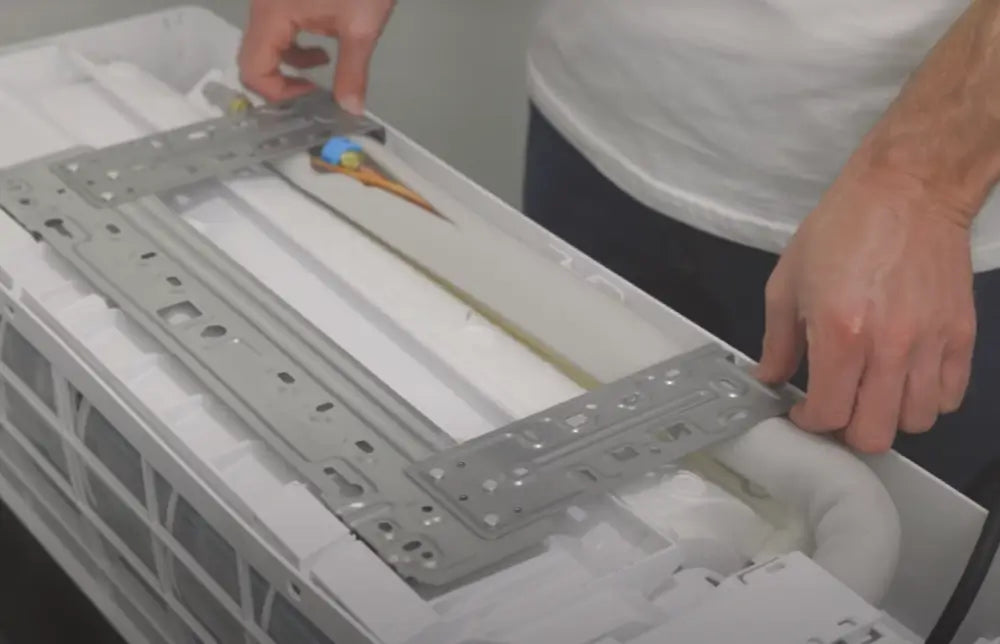
Install the Mounting Plate and Drill Access Holes
Secure the mounting bracket to the wall using appropriate anchors for your wall type. Use a level to ensure perfect horizontal alignment. Then drill the 3-inch access hole through the wall at a slight downward angle toward the outside to facilitate drainage.

Route the Refrigerant Lines, Cables, and Drain Pipe
Carefully feed the refrigerant tubing, electrical connections, and condensate drain line through the wall opening. Maintain gentle bends with a minimum radius of 4 inches to prevent kinking. Ensure the drain line maintains a continuous downward slope.
Complete Indoor Unit Connections
Mount the indoor unit onto the bracket and connect the refrigerant lines using proper flare fittings. Apply appropriate torque to prevent leaks without over-tightening. Complete the electrical connections following the manufacturer's wiring diagram precisely.
Install and Connect the Outdoor Unit
Position the outdoor condenser on a level mounting pad or wall bracket with adequate clearance for airflow and maintenance access. Connect the refrigerant lines securely and complete all electrical connections according to code requirements.
Perform Vacuum and Leak Testing
Connect a vacuum pump to the service ports and evacuate the system thoroughly. Monitor the vacuum gauge to confirm the system holds pressure, indicating a leak-free installation. Apply leak detection solution to all connections as an additional verification step.
Power On and Test Run
Release the refrigerant from the outdoor unit's service valves and power on the system. Allow it to run in cooling mode for 15-20 minutes while monitoring temperatures, checking for unusual noises, and verifying proper condensate drainage.
Final Inspection and Finishing
Seal the wall penetration with weatherproof caulk and install the decorative line cover if desired. Secure all exposed lines with appropriate clips. Program the remote control, walk the homeowner through operation, and document all installation details for warranty purposes.
Ready to Install Your Mini Split?
Explore our high-efficiency dual-zone system for whole-home comfort
Senville 36000 BTU Dual Zone Mini SplitCommon Installation Questions
Do mini split installations require holes in the wall?
Yes, a 3-inch diameter hole is typically needed to route the refrigerant lines, electrical wiring, and condensate drain between the indoor and outdoor units. Some installations may utilize existing openings or window pass-through options to minimize wall penetration.
Do I need a mini split in every room?
Not necessarily. Multi-zone systems can cool several rooms with a single outdoor unit. Strategically placed indoor units in main living areas often provide adequate comfort for adjacent spaces. Your specific needs depend on room sizes, layouts, insulation quality, and personal comfort preferences.
Can I install a mini split air conditioner myself?
Handy homeowners can handle mounting the units, running lines, and making basic connections. However, refrigerant charging and electrical work typically require licensed professionals. Some pre-charged DIY systems exist, but professional installation ensures optimal performance, maintains warranty coverage, and guarantees code compliance.
Where should mini splits NOT be installed?
Avoid installing indoor units near heat sources like stoves or direct sunlight exposure, behind furniture that blocks airflow, in areas with high humidity like bathrooms without proper drainage, or locations where condensate drainage is impossible. Outdoor units should stay away from dryer vents, gas meters, and areas prone to snow accumulation.
When can I turn on the system after installation?
Once all connections are complete and the system has been properly vacuumed and charged, you can power it on immediately for testing. Some manufacturers recommend letting the unit sit for 24 hours if it was transported on its side to allow compressor oil to settle before operation.
What are cooling options for very small rooms?
For compact spaces under 200 square feet, consider smaller-capacity mini splits (6,000-9,000 BTU), portable air conditioners, or window units. Oversized equipment in small rooms leads to short-cycling, poor humidity control, and reduced efficiency. Proper sizing ensures comfortable temperatures and optimal energy consumption.
Final Thoughts
Installing a mini split air conditioner represents a significant upgrade to your home comfort system. While the process involves multiple steps and technical considerations, understanding each phase helps ensure a successful installation—whether you're tackling it yourself or working with professionals.
Proper planning, careful execution, and attention to detail during installation directly impact your system's efficiency, longevity, and performance. Take your time, follow manufacturer guidelines, and don't hesitate to consult professionals for the more technical aspects like refrigerant handling and electrical connections.
Browse our complete selection of mini split systems and HVAC equipment
Shop Senville Mini Splits