
Mini split systems are transforming how homeowners approach indoor climate control. Unlike conventional forced-air systems that rely on extensive ductwork, mini splits use advanced heat transfer technology to deliver efficient heating and cooling directly where you need it most. This innovative approach provides year-round comfort while significantly reducing energy consumption and installation complexity.
In this comprehensive guide, we will explore the inner workings of mini split heat pumps, examine their key components, and help you understand why these systems have become the preferred choice for modern home climate control.
What Are the Components of a Mini Split and Why Are They More Efficient Than Traditional AC Systems?
A mini split system operates on the same fundamental principles as traditional air conditioning but with a streamlined, more efficient design. These systems consist of two primary components: an outdoor compressor unit and one or more indoor air handlers connected through a small conduit.
The outdoor unit houses the compressor and condenser coil, while the indoor unit contains the evaporator coil and fan. These components are linked by a narrow conduit carrying refrigerant lines, power cables, and a condensate drain. This design eliminates the need for bulky ductwork that runs throughout your home, reducing both installation costs and energy losses.

Mini Split Efficiency: No (or Minimal) Ductwork, Less Heat Loss
Traditional ducted HVAC systems can lose 20-30% of their heating and cooling energy through duct leaks, poor insulation, and lengthy air travel distances. Mini splits bypass this inefficiency entirely by delivering conditioned air directly into each room without the need for an extensive duct network.
Since mini splits only require a small opening in the wall to connect the indoor and outdoor units, thermal losses are minimized. This direct delivery method means nearly all the energy used for heating or cooling actually reaches your living space, resulting in lower utility bills and reduced environmental impact.
The Efficiency of Independently Controlled Zones
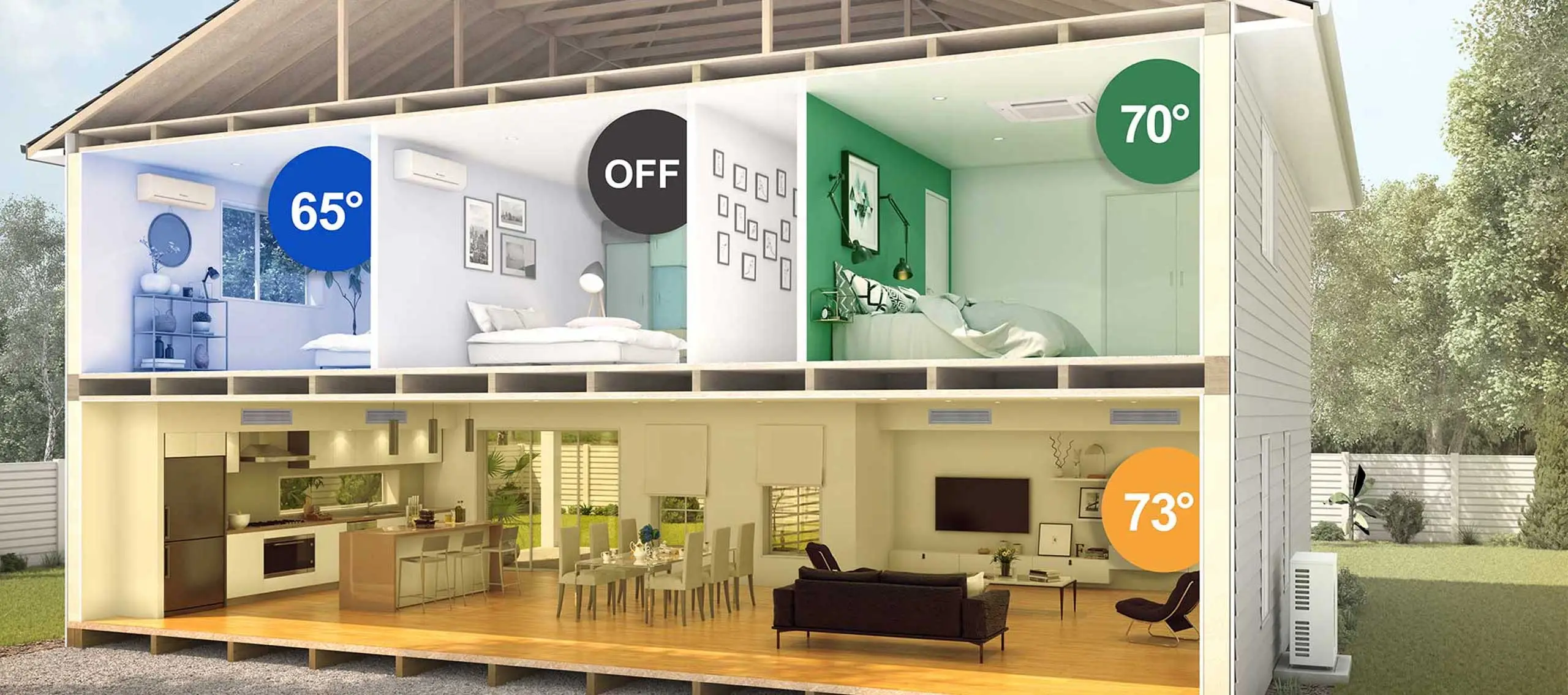
One of the most significant advantages of mini split systems is their ability to create independently controlled climate zones throughout your home. Rather than heating or cooling your entire house to a single temperature, each indoor unit can be adjusted to meet the specific comfort needs of that particular space.
This targeted approach means you can maintain different temperatures in different rooms based on usage patterns and personal preferences. Unoccupied rooms can be set to energy-saving modes while frequently used spaces stay perfectly comfortable. The result is a dramatic reduction in wasted energy and a more personalized comfort experience for everyone in your household.
Single Zone Mini Splits vs Multi-Zone Mini Splits
Single Zone Systems
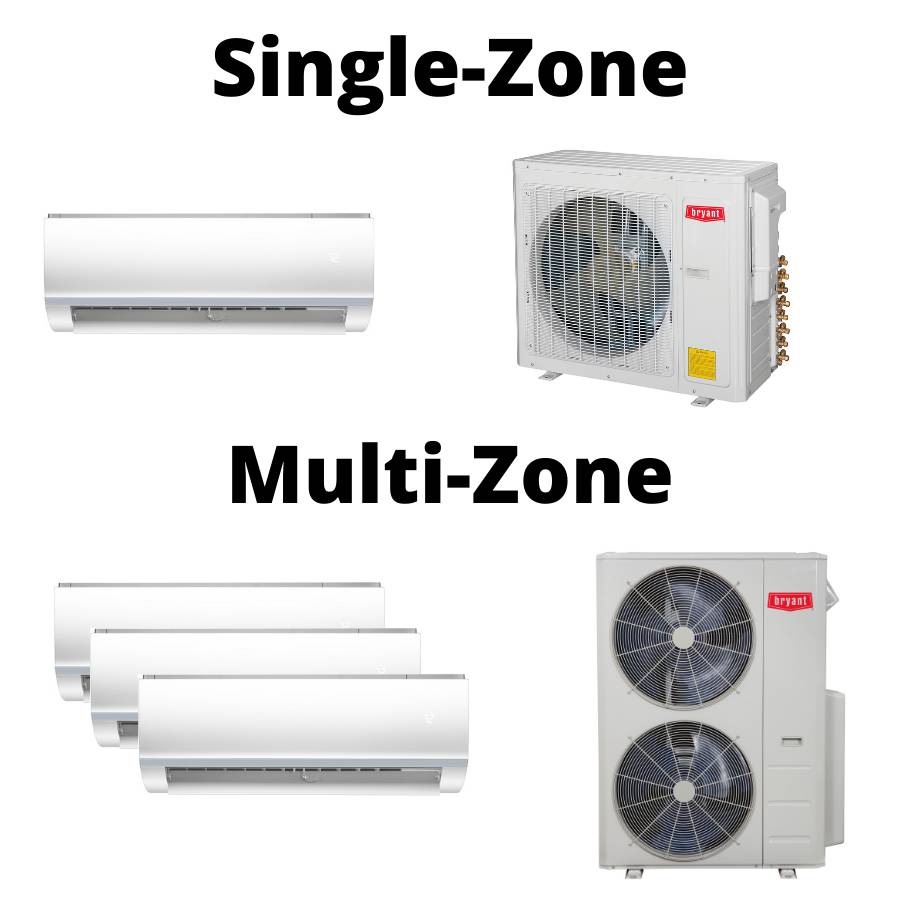
Single zone mini splits are designed to climate control a specific room or area. They consist of one outdoor compressor unit paired with one indoor air handler, making them ideal for targeted heating and cooling applications. These systems work exceptionally well for additions, converted spaces, garages, workshops, sunrooms, or any single room that needs supplemental climate control. Single zone units are cost-effective, straightforward to install, and perfect for spaces where extending existing ductwork would be impractical or expensive.
Multi-Zone Systems
Multi-zone mini splits offer greater flexibility by connecting multiple indoor units to a single outdoor compressor. These systems can control the climate in several different rooms or areas simultaneously, with each zone maintaining its own temperature settings. Multi-zone configurations are excellent for whole-home climate control, allowing you to manage comfort levels throughout your entire living space with a single outdoor unit. The key difference between single and multi-zone systems lies in their capacity to handle multiple indoor units, giving you comprehensive climate control across your property.
Types of Mini Split Indoor Units
When selecting a mini split system, you have several indoor unit styles to choose from, each designed to suit different installation requirements and aesthetic preferences:
Wall Mounted Units
The most popular option, typically installed high on a wall for maximum air circulation and easy maintenance access. These units blend well with most interior designs.
Floor Standing Units
Positioned close to the ground, ideal for spaces without suitable wall mounting options or for rooms where low placement is preferred for heating efficiency.
Ceiling Cassette Units
Recessed into the ceiling for a discreet appearance, these units distribute air in multiple directions and are excellent for commercial or open-plan residential spaces.
Concealed Duct Units
Hidden within ceiling spaces or walls with only small vents visible, offering maximum aesthetic flexibility for those who prefer completely hidden HVAC equipment.
Each indoor unit style provides unique advantages, and selecting the right type depends on your room layout, ceiling height, aesthetic preferences, and specific climate control requirements.
What Is a Heat Pump and Why Does It Matter?
At the core of every mini split system is heat pump technology, a system designed to move heat rather than generate it. This distinction is crucial because moving existing heat requires significantly less energy than creating heat through combustion or electrical resistance.
A heat pump works by circulating refrigerant between the indoor and outdoor units, absorbing heat from one location and releasing it in another. In cooling mode, the system extracts heat from inside your home and expels it outdoors. In heating mode, the process reverses, pulling heat from the outdoor air and transferring it inside, even when temperatures outside are quite cold.
This ability to both heat and cool with a single system makes mini split heat pumps incredibly versatile and efficient, often delivering three to four times more heating or cooling energy than the electrical energy they consume.
Heat Transfer vs Heat Generation
Understanding the difference between heat transfer and heat generation helps explain why mini splits are so energy efficient. Traditional heating systems like furnaces and electric baseboard heaters generate heat by burning fuel or converting electricity directly into warmth. This process is inherently limited in efficiency because you can only get out as much heat energy as you put in.
Heat pumps, on the other hand, simply move heat that already exists in the environment. Even cold outdoor air contains thermal energy that can be captured and concentrated. By transferring this existing heat rather than creating new heat, mini split systems can achieve efficiency ratings of 300% or higher, meaning they deliver three units of heating for every one unit of electricity consumed.
How Heat Transfer Works in a Mini Split Heat Pump
The heat transfer process in a mini split relies on the refrigeration cycle, a continuous loop of evaporation and condensation that moves thermal energy between locations. Here is how the process works step by step:
As mentioned, heat transfer is the process of moving heat from one location to another. In a heat pump, the refrigerant absorbs heat from one area, transforms from a low-pressure gas into a high-pressure liquid through compression, and then releases that heat in another location before returning to repeat the cycle.

Mini Split Cooling Mode
During warmer months, the mini split operates in cooling mode. The heat pump extracts heat from inside your home and transfers it outdoors. This process begins at the indoor unit where the evaporator coil absorbs heat and humidity from the room air, causing the refrigerant inside to evaporate.
The compressor then pressurizes this refrigerant gas, significantly increasing its temperature. The hot, pressurized refrigerant travels to the outdoor unit where the condenser coil releases the absorbed heat into the outside air. The refrigerant then flows through an expansion valve, cooling rapidly before returning indoors to repeat the cycle. This continuous process maintains your desired indoor temperature while efficiently removing unwanted heat from your living space.
Mini Split Heating Mode
When temperatures drop, the mini split reverses its operation to provide heating. In this mode, the outdoor unit becomes the evaporator, absorbing heat from the outside air even when it feels cold to us. A reversing valve redirects refrigerant flow, sending the captured thermal energy indoors where it is released through the indoor unit.
Modern mini split heat pumps can extract heat from outdoor air even in temperatures well below freezing, making them effective heating solutions for most climates. The system's ability to reverse its cycle means you get both heating and cooling from a single, efficient system, eliminating the need for separate furnaces and air conditioners.
The Power of Inverter Technology
Many modern mini split systems utilize inverter-driven compressor technology, which represents a significant advancement over traditional fixed-speed compressors. Instead of cycling on and off at full capacity, inverter compressors can adjust their speed to precisely match the current heating or cooling demand.
This variable-speed operation means the system runs more consistently at lower power levels rather than repeatedly starting and stopping. The result is quieter operation, more precise temperature control, reduced wear on components, and substantially improved energy efficiency. Inverter technology allows mini splits to maintain steady comfort levels while consuming only the energy actually needed at any given moment.
Why Choose a Mini Split Heat Pump System for Heating and Cooling?
Mini split systems have become increasingly popular for several compelling reasons. Their ductless design allows for easy installation in both new construction and existing homes without the expense and disruption of installing ductwork. By eliminating ducts, you also eliminate the significant energy losses associated with forced-air distribution.
The flexibility of mini splits makes them ideal for a wide range of applications: cooling a hot upstairs bedroom, heating a converted garage or workshop, adding climate control to a new addition, or providing whole-home comfort through a multi-zone configuration. Their quiet operation, precise temperature control, and exceptional energy efficiency make them an excellent investment for homeowners seeking both comfort and cost savings.
With a wide selection of indoor unit styles and system capacities available, there is a mini split solution for virtually any space or climate control challenge you might face.
Ready to Experience the Comfort of a Mini Split System?
Explore our selection of high-quality mini split systems designed for reliable performance and energy efficiency.
Senville 36000 BTU Dual Zone Mini SplitMini split heat pump systems represent the future of home climate control, combining advanced technology with practical efficiency. Whether you need to heat a single room or cool your entire home, these versatile systems offer an elegant solution that saves energy and provides exceptional comfort.
By understanding how mini splits work, you can make informed decisions about your home's heating and cooling needs. From the refrigerant cycle to inverter technology, every component is designed to deliver maximum comfort with minimum energy consumption. Explore our collection of mini split systems today and discover the difference efficient climate control can make in your home.