
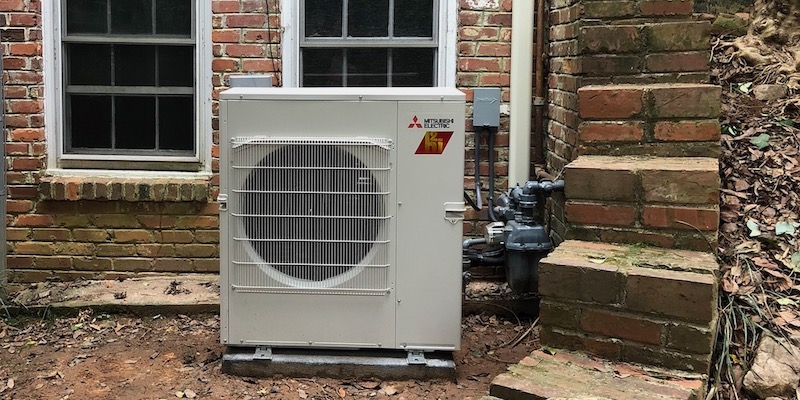
When my partner and I purchased a ranch-style home built in the early 1960s, the real adventure began — not with moving in, but with fixing it up. After tackling poor spray foam coverage in the attic, addressing air sealing at the top plates, and swapping out the old natural draft gas water heater for a modern heat pump water heater, it was time for the biggest upgrade: a brand-new heating and cooling system.
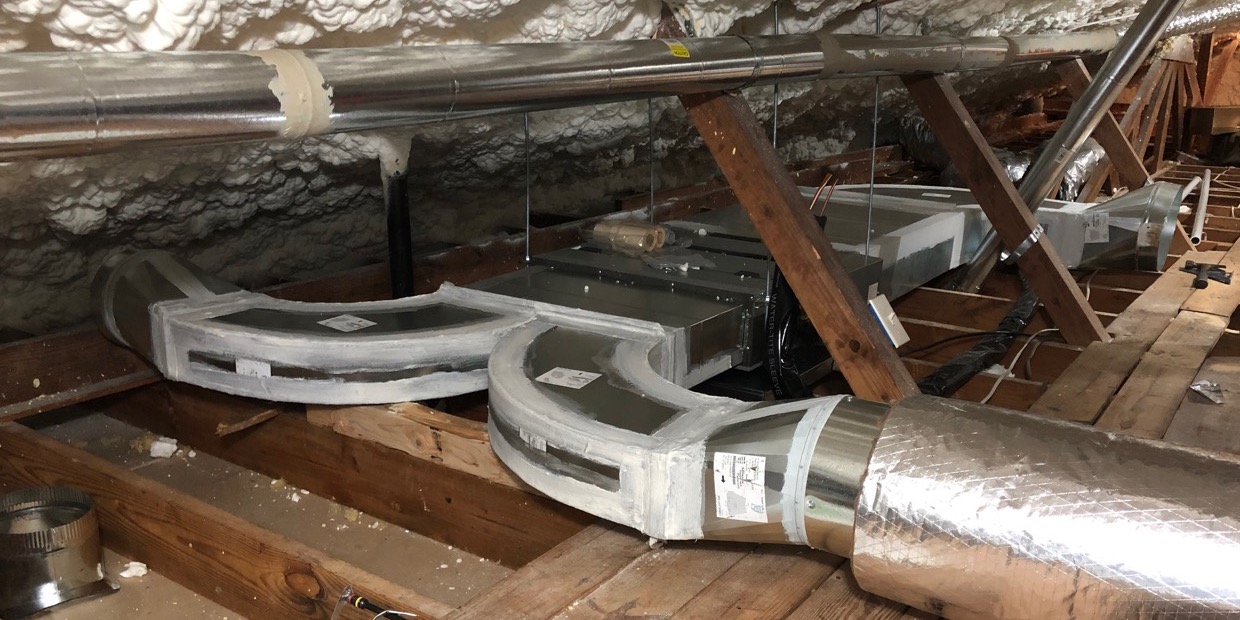
We chose an inverter-driven mini-split heat pump with one outdoor unit and two ducted indoor air handlers, all installed in the conditioned attic. The installation was handled by skilled professionals who specialize in this kind of equipment. The workmanship was exceptional, and the system has performed brilliantly — even though we chose to undersize it intentionally. Here's why we made that choice and how it's been working out.
Dividing the Home Into Zones and Calculating Loads
Before selecting any equipment, the first step was performing a thorough load calculation and dividing the house into climate zones. The floor plan naturally broke down into three areas: the bedrooms on one side formed one zone, the common living areas formed another, and the sunroom — with its enormous amount of glazing — had to be treated as its own separate zone. Nearly 60% of the sunroom's exterior wall area is covered with double-pane windows from decades past, making it a unique thermal challenge.
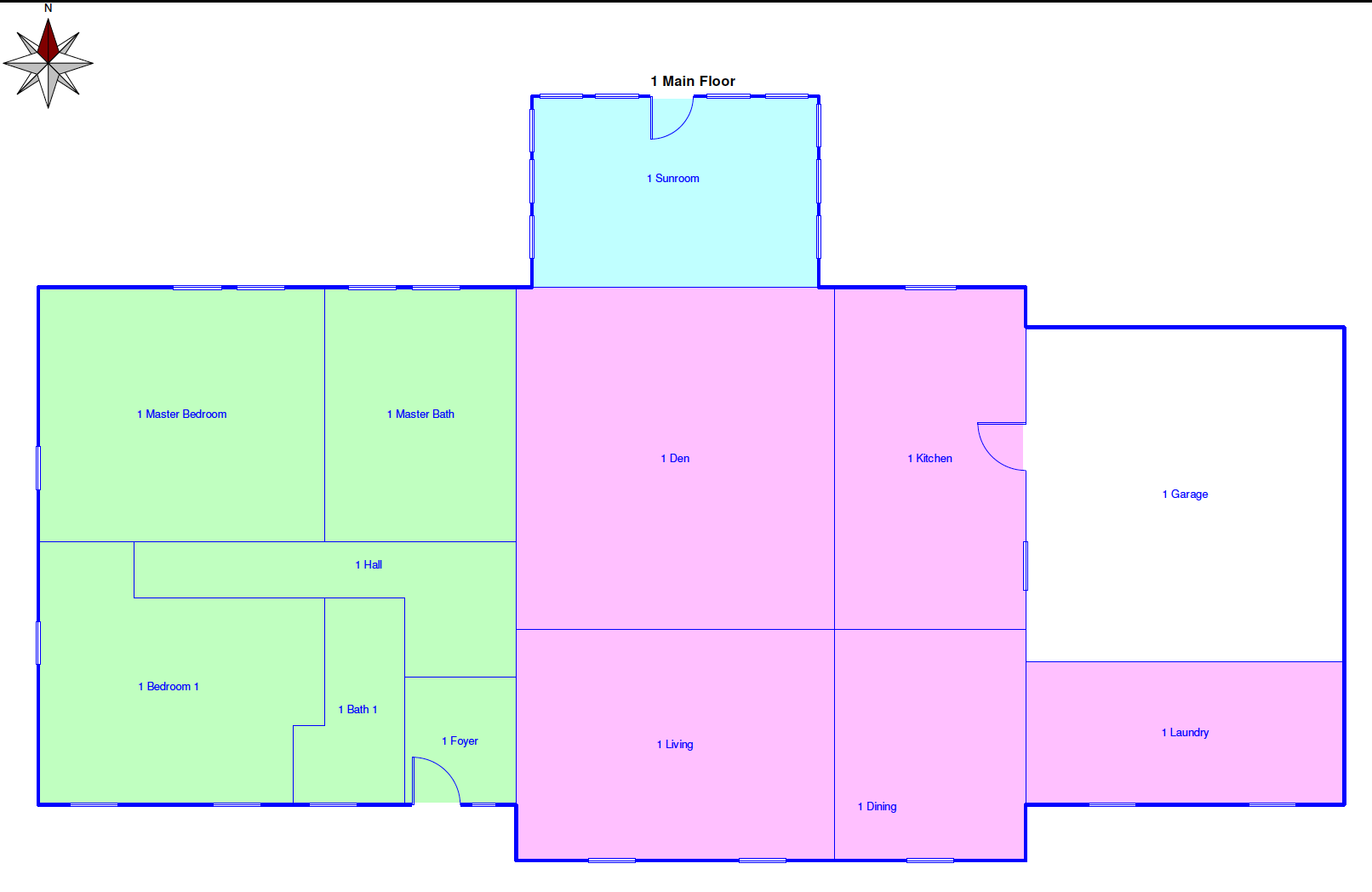
Professional HVAC design software was used to run a full Manual J load calculation. The specifications fed into the calculations included details on wall insulation, ceiling R-values, window types (both single-pane with storm windows and double-pane), infiltration rates from blower door testing, and both indoor and outdoor design temperatures. The indoor targets were set at 70°F for winter and 75°F for summer, using standard outdoor design temperatures for the Atlanta region — 23°F in winter and 93°F in summer.
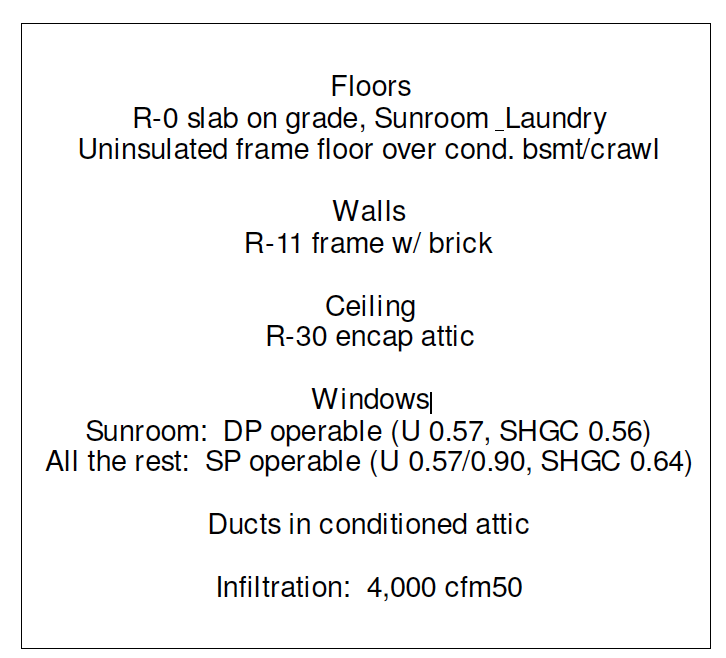
Key Insight: The ceiling was modeled conservatively at R-30, though with additional spray foam it was closer to R-40. Conversely, the air leakage rate was slightly worse than modeled. These two factors roughly canceled each other out in the final calculations.
One important observation from the results: the heating loads in every zone were higher than the cooling loads. This surprises many homeowners but is actually quite common in the southeastern United States. Additionally, the sensible heat ratios — the fraction of the cooling load that involves temperature reduction rather than moisture removal — were above 0.80 across all zones, reaching 0.92 in the window-heavy sunroom. Expressed in square feet per ton, the bedrooms came in at about 1,537 sf/ton, the common areas at 1,123 sf/ton, and the sunroom at a remarkably low 394 sf/ton (all that glass at work).
Choosing Equipment That's Intentionally Undersized
Here's where the strategy gets interesting. Instead of matching equipment to the current loads, the decision was made to intentionally select a system that falls short of the calculated requirements. The reasoning? Major renovations were on the horizon — a full basement remodel, better windows, more air sealing on the main floor. Once those improvements are complete, the loads would drop dramatically. Buying a system sized for today's leaky house would leave us with oversized equipment tomorrow.
There's another important consideration: Manual J calculations, even when done correctly, consistently overestimate the actual load by 10 to 20 percent. This built-in safety margin means a system that looks undersized on paper may actually be closer to right-sized in the real world.
The equipment chosen was a single outdoor condenser unit paired with two horizontal ducted indoor air handlers. With one outdoor unit, it functions as a single heat pump system. The nominal total capacity is 2 tons (24,000 BTU/hr). The ducted air handlers serve the entire main floor except the sunroom, which would later receive its own dedicated wall-mounted ductless unit.
The bedroom zone is served by a smaller 9,000 BTU air handler, while the common living areas are conditioned by a larger 18,000 BTU unit. Here's how the loads and equipment capacities compare:
Since total system capacity is governed by the outdoor unit, the bottom line is this: total cooling capacity sits at just 88% of the calculated cooling load — a deficit of roughly 2,500 BTU/hr. Heating capacity is only about 65% of the design heating load, leaving it approximately 11,000 BTU/hr short. On paper, that seems risky. In practice, it's been a different story.
Did the Undersized Heat Pump Keep Up in Winter?
Both ducted air handlers were up and running by November 2019, giving us a full winter season to evaluate. And here's the bold part: no supplemental heat was installed. No electric resistance backup, no gas furnace — nothing. Just the undersized heat pump on its own, paired with the HyperHeat technology that allows the system to keep producing warmth even when outdoor temperatures plummet into single digits.
Admittedly, the winter was milder than average, with approximately 2,200 heating degree days compared to the regional norm of about 3,000. However, there was a three-day stretch when nighttime lows dropped to 25°F, 24°F, and 25°F, with daytime highs barely reaching the upper 30s to low 40s. The house held its temperature throughout. We occasionally woke up to temperatures slightly below the thermostat setpoint, but the system always caught up once daytime warmth arrived.
65%
of Design Heating Load Covered
0
Supplemental Heat Sources Needed
24°F
Coldest Night — House Stayed Warm
Manual J heating loads don't account for interior heat gains — the warmth generated by our bodies, cooking appliances, electronics, and lighting. All of those contribute free heat that helps bridge the gap between our calculated load and the system's output. Furthermore, having two independently controlled air handlers provides flexibility. If an extended cold snap occurs, heating efforts can focus on the common living areas during the day while allowing bedrooms to stay slightly cooler (which is preferable for sleeping anyway).
The HyperHeat technology also provides peace of mind. The unit is rated to deliver its full heating capacity down to 5°F outdoor temperature, offering meaningful protection even if our region experiences a truly extreme cold event.
Cooling Season Results — Hot Days and Humidity
With total cooling capacity sitting at 88% of the load, hot summer days were the real test. On days reaching 90°F — just a few degrees below the 93°F summer design temperature — the system had no trouble bringing the house down to the thermostat setpoint. Cooling performance was reliable, comfortable, and quiet.
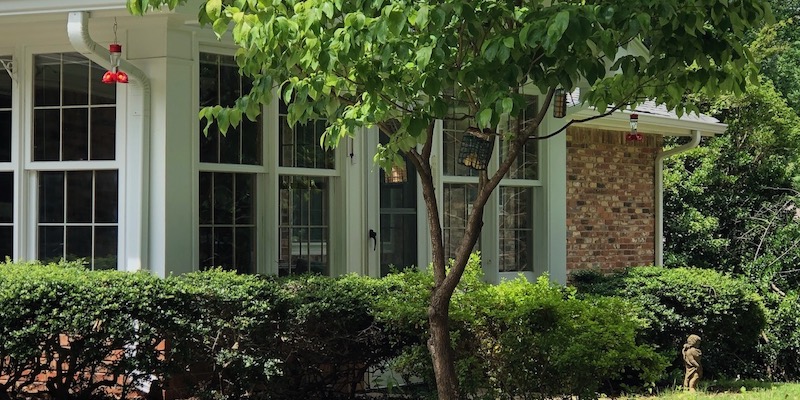
An interesting experiment pushed the system further. When the sunroom's French doors were left open to the den during hot weather, the cooling system had to work harder than designed. The den still reached its 74°F setpoint, but the extra load caused the living room to drop to about 71°F because the thermostat is located in the den. Closing the sunroom doors restored even temperatures throughout. The plan to add a dedicated wall-mounted ductless unit in the sunroom would solve this completely.
A Note on Humidity Control
The system's software initially indicated the total latent (moisture-removal) capacity was a mere 718 BTU/hr against a latent load of 3,803 BTU/hr. In practice, this low number appears to be misleading. Even on warm, humid days with outdoor dew points hitting 74°F, the indoor relative humidity has mostly stayed below 60%. The system is doing considerably more dehumidification work than the software predicted.
The Bottom Line — Undersizing Can Work
After a full heating season and most of a cooling season, deliberately undersizing this ducted mini-split heat pump has not led to uncomfortable conditions. The house stays warm in winter and cool in summer. There's been no emergency need for supplemental heating. Humidity has remained manageable.
This approach works for several reasons. First, inverter-driven variable-speed technology allows the heat pump to modulate its output rather than cycling on and off, extracting maximum efficiency from every BTU it produces. Second, Manual J calculations build in safety margins that make "right-sized" systems effectively oversized for real-world conditions most of the time. Third, when you have a clear plan for future building envelope improvements, sizing equipment for where the house is going — not where it is today — avoids the waste and inefficiency of oversized systems down the road.
Of course, this isn't a universal recommendation. Every home, climate zone, and homeowner's tolerance for temperature fluctuations is different. Proper load calculations remain essential. But the fear of undersizing — especially with modern inverter technology and HyperHeat capabilities — is often more exaggerated than the real-world experience warrants.
With further improvements to the building envelope on the horizon — including window upgrades, additional air sealing, and a full basement renovation — the gap between this system's capacity and the home's loads will only shrink. For now, the compact, efficient, undersized heat pump is doing exactly what it was chosen to do.
Ready to Upgrade Your Home's Comfort?
Explore efficient, high-performance mini-split heat pump systems designed to keep your home comfortable year-round — without oversizing or overspending.
Senville LETO 18000 BTU Mini Split