
Key Takeaways
- ✓ Mini‑split technology continues to evolve — understanding every available option helps you make a smarter investment.
- ✓ Learning how a ducted mini‑split operates will help you determine if it suits your property.
- ✓ Concealed duct systems can be an outstanding fit for many homes and commercial spaces.
If you've spent time researching ductless mini‑split systems, you may have stumbled upon an intriguing variation — the ducted mini‑split. Yes, it's real, and yes, it could be exactly what your home or workspace needs.
As more homeowners search for ways to trim heating and cooling expenses while building a more energy‑conscious living environment, mini‑split systems have surged in popularity. But knowing which configuration truly fits your situation is critical to long‑term comfort and savings.
"The real question isn't whether a mini‑split can work for you — it's knowing which type of system will deliver the best comfort and value for your space."
Could a concealed duct unit be the ideal choice? Let's break it all down.
What Is a Ducted Mini‑Split System?
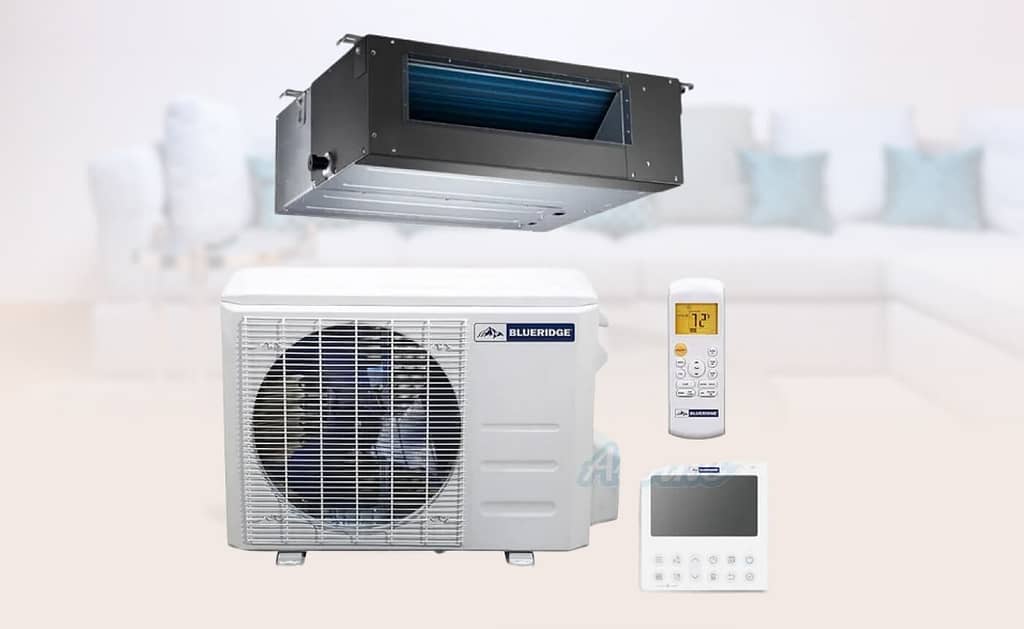
A ducted mini‑split — commonly called a concealed duct mini‑split in the HVAC world — is a climate‑control system built to heat and cool up to three separate rooms while staying virtually hidden from sight.
Unlike the wall‑mounted units most people picture when they think "mini‑split," the major indoor components of a concealed duct system are tucked away — in attics, basements, closets, or crawl spaces.
This hidden design gives homeowners the clean, streamlined appearance of a traditional forced‑air system without sacrificing any of the advantages that have made mini‑splits so sought after: precise temperature control, superior energy efficiency, and remarkably quiet operation.
The Core Strengths of Concealed Duct Mini‑Split Systems
While they may not get as much attention as their wall‑mounted cousins, ducted mini‑splits bring a set of benefits that make them an excellent option for many property owners. Here's what sets them apart.
Lower Utility Bills Through Smarter Operation
One of the biggest advantages of a ducted mini‑split is the way it manages energy. Equipped with advanced inverter technology, these systems continuously adjust their output to match real‑time demand. Instead of cycling on and off at full power like conventional HVAC equipment, they modulate smoothly — consuming only the energy required at any given moment. The result? Noticeably lower electricity bills month after month.
Multi‑Room Coverage, Individual Control
Where traditional systems push a single temperature across an entire building, ducted mini‑splits allow you to customize the climate in each zone. Bedrooms can stay cooler at night while the open‑plan living and dining area stays comfortable during a gathering — all from a single concealed air handler covering up to three rooms.
Need broader coverage? Dual‑zone, tri‑zone, or even quad‑zone concealed duct configurations let you scale up — each zone independently controlled so every room stays exactly the way you want it.
Aesthetic Appeal & Space‑Saving Design
For homeowners who care about interior design, a ducted mini‑split is a dream come true. Because the air handler hides behind walls, inside ceilings, or in attics, there are no bulky units on display. Rooms stay clean and uncluttered, and every square inch of living space remains available for furnishings and décor rather than climate equipment.
Ready to Upgrade Your Comfort?
Explore our featured concealed duct mini‑split system.
Senville AURA 24000 BTU Concealed DuctHow Ducted Mini‑Splits Work
Concealed duct mini‑split systems represent a modern leap forward in home climate control, blending high efficiency with a nearly invisible installation footprint. To truly appreciate what they offer, it helps to understand the mechanics.
The two core components: an indoor air handling unit (hidden in an attic, basement, or crawl space) and an outdoor condenser or heat pump.
The indoor unit houses the evaporator coil, which absorbs heat from the air during cooling mode and releases heat during heating mode. Meanwhile, the outdoor unit — similar to a central AC condenser but significantly more compact — contains the compressor and condenser coil. The compressor circulates refrigerant to facilitate heat exchange, while the condenser coil either releases or collects thermal energy depending on the operating mode.
The Role of Ductwork in Distributing Conditioned Air
While many mini‑split systems are completely "ductless," the ducted variants use flexible ductwork — typically routed through attics, ceilings, or crawl spaces — to deliver conditioned air to up to three rooms.
The concealed air handler pushes air through these ducts and distributes it via discreet vents in each room. This approach ensures even, efficient climate coverage to every designated space while keeping the look of your home absolutely clean.
Ducted Mini‑Splits vs. Traditional Ducted Systems
Traditional HVAC setups also pair indoor and outdoor components — but the differences are significant.
Size & Space
Central air demands large, professionally installed ductwork that can be nearly impossible to retrofit into older homes. Concealed duct mini‑splits use compact, flexible ducts that fit almost anywhere.
Energy Efficiency
Thanks to inverter technology, ducted mini‑splits adjust output in real time — significantly outperforming conventional systems that only run at full power or not at all.
Flexibility
Conventional HVAC pushes one temperature everywhere. Ducted mini‑splits serve individual zones, letting you customize each area's climate independently.
Installation
Ducted mini‑splits frequently offer a simpler installation process — especially valuable when retrofitting older buildings that lack existing ductwork.
In short, concealed duct mini‑splits combine the targeted efficiency of ductless technology with the distributed delivery of traditional ductwork — the best of both worlds.
What Makes a Ducted Mini‑Split Truly Unique?
In the expanding world of advanced air conditioning, concealed duct mini‑splits have carved out a distinct category. Here's why they stand apart.
One Air Handler Covers Up to Three Rooms
Rather than needing a separate unit in every room, a single concealed air handler can service up to three spaces. This consolidation simplifies the system and delivers meaningful cost savings compared to installing a multi‑zone wall‑mounted setup to cover the same area.
The Most Discreet Appearance of Any Mini‑Split
Aesthetics matter — especially in well‑designed homes and professional offices. Concealed duct mini‑splits take the crown for invisibility. Every major component hides behind walls, within ceilings, or inside closets and attics, leaving your rooms free from visible equipment and preserving the integrity of your interior design.
Whisper‑Quiet Operation
Noise is a common complaint with HVAC systems, but the concealed duct mini‑split is among the quietest on the market. Because the air handler sits behind drywall, ceilings, or other structural barriers rather than inside the room itself, those extra layers of separation muffle the already minimal operating sounds — creating a truly peaceful environment whether you're resting at home or focused at work.
Installing a Ducted Mini‑Split
One of the standout advantages of a concealed duct mini‑split is the sheer flexibility of where it can be installed. Attics, closets, crawl spaces, or even within the walls of different rooms — this system adapts to your property, not the other way around.
What makes this possible is the ducted design itself. Unlike units that require precise placement to effectively condition a space, the concealed duct system channels air through flexible ductwork, giving you far greater freedom when choosing where to locate the air handler.
Because the system delivers conditioned air via ducts rather than direct line‑of‑sight, you can place the air handler wherever makes the most structural and logistical sense — without sacrificing performance.
The Bottom Line
Concealed duct mini‑split systems offer a compelling blend of multi‑room efficiency, invisible installation, and whisper‑quiet performance. For homeowners and business owners who refuse to compromise on comfort, aesthetics, or energy savings, they represent one of the smartest HVAC investments available today.