
A heat pump transfers warmth from the outside environment into your living space, providing an energy-efficient way to manage your home's temperature year-round. With so many different sizes and capacities on the market, however, selecting the ideal unit for your home can feel overwhelming.
In this guide, we will walk you through every essential factor that goes into determining the right heat pump size for your household — so you can stay comfortable without overspending on energy.
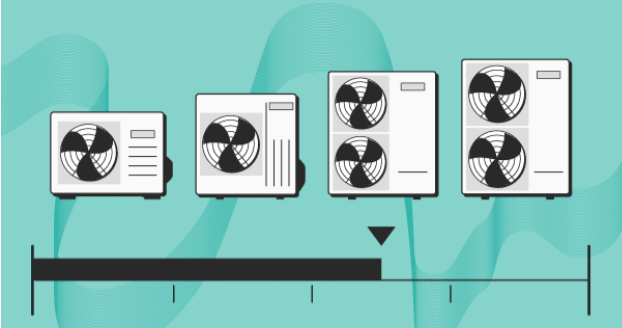
Heat Pump Capacity — Measured in BTU or Tons
Purchasing a heat pump is both a major home improvement decision and a significant financial investment. Before committing, it pays to understand how heat pump capacity is measured — and which capacity is appropriate for your space.
Heat pump sizing is expressed in British Thermal Units (BTU) or tons. BTU quantifies the thermal output of a heating or cooling system. In simple terms, the BTU rating of your heat pump indicates how much heating or cooling power it delivers.
One "ton" of capacity is equivalent to 12,000 BTU. Therefore, a 2-ton heat pump equals 24,000 BTU, a 3-ton unit equals 36,000 BTU, and so on.
Choosing the correct capacity for your home means year-round comfort and lower energy bills — a win on both fronts.
Skip the Oversimplified Sizing Rules
You may have come across popular shortcuts for sizing a heat pump, but these rules of thumb are frequently inaccurate. The internet is flooded with misleading guidance such as:
• Multiply your living area (sq. ft.) by 30
• Multiply your home's square footage by 20
• Depending on climate, multiply square footage by a number between 30 and 60
• Start with 1 ton for the first 1,000 sq. ft. and add a ton for each additional 500 sq. ft.
The reality is that every home has unique characteristics. There is no one-size-fits-all formula or shortcut that reliably works across all houses.
Why Getting the Right Heat Pump Size Matters
In the HVAC world, size truly matters. Installing a heat pump that is either too small or too large for your home introduces a host of problems. Here are the key reasons why proper sizing is critical:
Energy Efficiency
A correctly sized heat pump maintains your desired temperature without overworking. This keeps energy consumption low and reduces monthly utility costs.
Consistent Comfort
When a heat pump is the right fit, it delivers even heating and cooling throughout your house. No more constant cycling on and off — just steady, reliable airflow.
Longer Lifespan
A properly matched heat pump faces less mechanical stress and strain, leading to fewer breakdowns and a much longer service life with minimal maintenance.
Environmental Impact
An appropriately sized system consumes only the energy it needs, which translates to lower greenhouse gas emissions and a smaller carbon footprint for your household.
What Happens When a Heat Pump Is Too Small?
If you install a heat pump that lacks the capacity your home requires, the system will run continuously trying to keep up. This constant struggle drives up energy consumption, increases your utility bill, and accelerates wear and tear — leading to higher maintenance and repair costs over time.
If you find yourself stuck with an undersized unit temporarily, you can adjust your thermostat to a temperature the system can comfortably manage. Alternatively, you can let the heat pump's built-in electric resistance heater compensate for the shortfall — though keep in mind that electric resistance heating is not meant for extended, continuous operation and will add significantly to your energy costs.
Note: Running a heat pump's electric resistance backup continuously causes excessive wear that can eventually damage the entire system.
What Happens When a Heat Pump Is Too Large?
If you end up with an oversized heat pump, it will generate more heating or cooling output than your home actually needs. This wastes energy and increases your operating costs for no added comfort.
Heat pumps run most efficiently when they operate continuously at a steady pace, using variable-speed compressors and blower motors to match real-time demand. An oversized unit, however, will cycle on and off repeatedly because even its lowest output exceeds your home's needs. This frequent short-cycling behaves like a traditional HVAC system — consuming more energy with no meaningful improvement in comfort.
Bigger Is Not Better When It Comes to Heat Pumps
The objective is to match your heat pump's maximum capacity to your home's peak heating and cooling demand — not to exceed it. Focus on alignment, not excess. A higher capacity does not equal better efficiency. It simply means higher costs if the unit is oversized for your needs.
Unfortunately, many homeowners fall into the trap of choosing the largest available unit, believing that overshooting their heating and cooling requirements is the safest approach. This misconception is partly fueled by HVAC contractors who rely on experience rather than precise measurements — skipping detailed load calculations and recommending units based on habit rather than your home's specific characteristics.
Every home is different. Factors like total square footage, the number of occupants, window placement, insulation quality, and more all play a role. A proper assessment is essential.
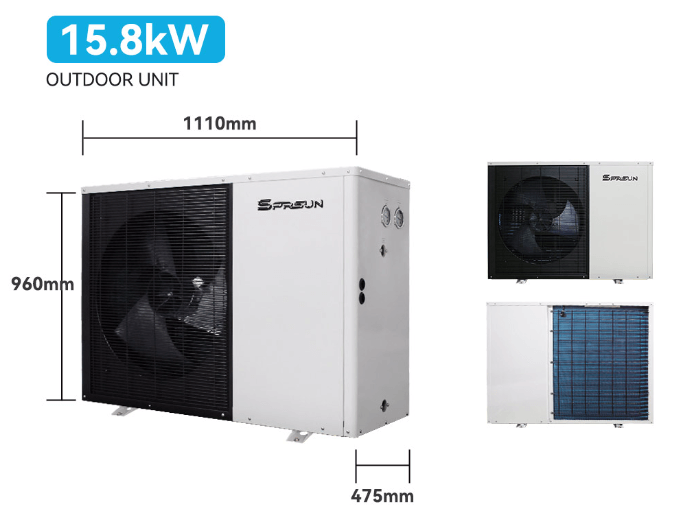
How to Properly Size a Heat Pump for Your Home
Ask ten different HVAC professionals how to size a heat pump and you may get ten different answers. That is because multiple methodologies exist. However, the two most widely recognized and trusted approaches are the Square Footage method and the Manual J standard.
Method 1: Square Footage
This is the simpler of the two methods and provides a solid starting point. As a general guideline, every 500 square feet of living space requires approximately 1 ton (12,000 BTU) of heating and cooling capacity.
Once you know your estimated tonnage, you can begin shopping with confidence. It is also wise to consult with a reputable HVAC manufacturer or installer for additional guidance tailored to your home.
Method 2: Manual J Load Calculation
Manual J is the industry standard established by the Air Conditioning Contractors of America (ACCA). It provides a detailed, science-based approach to heat pump sizing by analyzing your home's structural and thermal properties. Key factors include:
Total Square Footage & Volume
The overall size of your home — including ceiling height — directly affects how much heating and cooling capacity you need. Houses with high ceilings have more air volume and generally require larger units.
Home Layout
Since heat naturally rises, single-story homes that spread horizontally tend to carry a higher load than multi-story structures. Open floor plans also allow better airflow, while homes divided into many enclosed rooms may need greater capacity for proper distribution.
Windows — Size, Number & Orientation
Larger and more numerous windows increase your heating load because they allow heat to escape quickly. South-facing windows let in more solar heat — beneficial in winter but demanding more cooling in summer. Strategic window placement can significantly reduce your energy requirements.
Insulation Quality
Insulation is your home's defense against outdoor temperatures. Well-insulated homes retain more heat, so a smaller heat pump may suffice. Older homes with deteriorating insulation or poor air sealing will need additional capacity — or insulation upgrades — to achieve the same level of comfort.
Air Leakage
This is one of the trickiest variables to pin down. Consider questions like: Does your home feel noticeably cooler on windy days? Are there drafts near certain windows or doors? The more air infiltration your house experiences, the larger the heat pump you will need to maintain comfort.
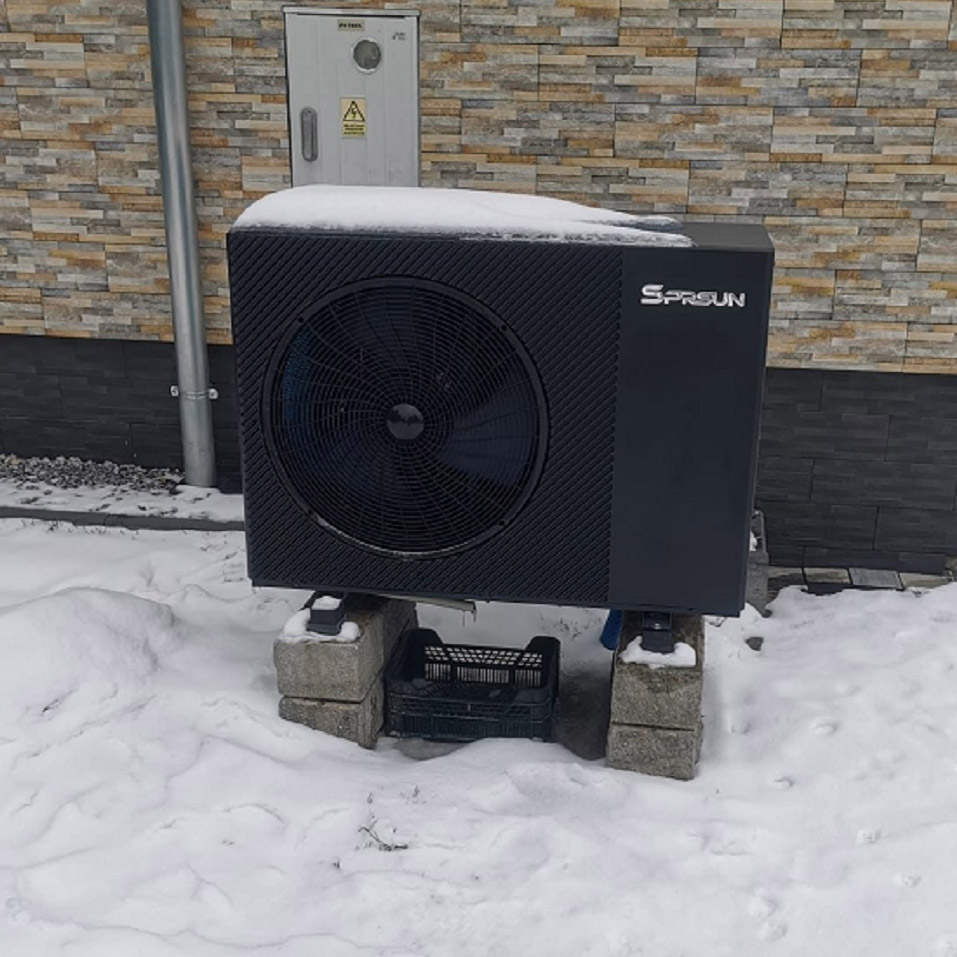
Local Climate
Heat pumps perform best in moderate climates because they transfer heat from outdoors to indoors. In extremely cold locations where temperatures regularly fall below 10°F to 25°F, an auxiliary heating source may be needed for complete comfort.
Ductwork Condition
For ducted systems, the quality of your ductwork has a major impact. Studies indicate that 20% to 30% of conditioned air can be lost through leaky, disconnected, or poorly designed ducts. Ensuring your ducts are properly sized, sealed, and connected is essential for optimal heat pump performance.
Occupants & Internal Heat Sources
More people means more body heat, which adds to the cooling load. Heat-generating appliances such as ovens, refrigerators, and computers also contribute to your home's internal heat gain and should be factored into your sizing calculation.
Heat Pump Efficiency Ratings
The Seasonal Energy Efficiency Ratio (SEER) measures cooling performance, while the Heating Seasonal Performance Factor (HSPF) measures heating performance. Units with higher ratings can handle heavier loads more efficiently, which may influence the size and model you select.
Temperature Preference
Your ideal thermostat setting matters more than you might think. If you prefer warmer temperatures, the heat pump works harder, so you will need a unit with sufficient capacity to handle your preferred comfort level.
Shade & Sunlight Exposure
The direction your home faces and the amount of surrounding vegetation both influence heat gain. South-facing homes absorb more sunlight — helpful in winter but demanding in summer. Trees and landscaping that provide shade can reduce cooling loads considerably.
Heat Pump Size Calculator
Here is a straightforward method for estimating the ideal heat pump size based on your home's square footage, insulation quality, and climate region.
Step 1: Calculate Your Square Footage
Multiply the length of your home by the width. If your ceilings are higher or lower than the standard 8 feet, divide the ceiling height by 8, then multiply that result by the total area.
Step 2: Rate Your Home's Insulation
Assign a multiplier based on your insulation quality:
Step 3: Identify Your Heating/Cooling Region
Different regions have different climate demands. Apply the appropriate regional multiplier:
Example Calculation
Adjusted Sq. Ft. = 750 × 1.0 (Good Insulation) × 1.15 (Region 2) = 862.5 sq. ft.
BTU Required = 862.5 × 25 = 21,562.5 BTU (approximately 2 tons)
Heat Pump Size Guide
Beyond square footage and Manual J, you can also reference BTU equivalents using CFM (Cubic Feet per Minute) and tonnage for a more precise match.
Sizing by CFM (Cubic Feet per Minute)
In residential applications, each CFM is roughly equivalent to 30 BTU. Here is a quick reference:
Sizing by Tonnage
Each ton equals 12,000 BTU. Use this chart for a quick tonnage-to-BTU conversion:
Frequently Asked Questions
1. What size heat pump do I need for 2,000 sq. ft.?
At 24 BTU per square foot (based on 12,000 BTU per 500 sq. ft.), a 2,000 sq. ft. home requires approximately:
2. What size heat pump do I need for 1,800 sq. ft.?
3. What size heat pump do I need for 1,500 sq. ft.?
4. What size heat pump do I need for 1,200 sq. ft.?
5. What size heat pump do I need for 1,000 sq. ft.?
Ready to Find the Perfect Heat Pump?
Browse our selection of high-performance heat pump systems at Backyard Provider and enjoy reliable comfort all year round.
Armstrong Air 2.5 Ton Heat Pump — 14 SEER