
So what exactly is a heat pump, and how does it keep your home comfortable? A heat pump is a versatile climate control system that can both warm and cool your living spaces throughout the year. Unlike a traditional furnace that generates heat by burning fuel, a heat pump transfers thermal energy from one location to another — pulling warmth from outdoors to heat your home, or removing indoor warmth to cool it down.
Think of it as an air conditioner that works in reverse when needed. Powered by electricity, heat pumps use refrigerant to absorb and release heat, making them remarkably efficient compared to conventional heating methods. Because they move heat rather than create it, they can deliver exceptional energy savings — which translates to lower utility bills and a smaller environmental footprint.
"Heat pumps don't actually generate heat — they move it. This fundamental difference is what makes them up to three times more energy-efficient than traditional heating systems."
What Types of Heat Pumps Exist?
Heat pumps come in several distinct varieties, each tailored to different environments and installation requirements. The three primary categories include:
Air-Source Heat Pumps
The most widely installed variety, air-source models extract thermal energy directly from outdoor air. Even in surprisingly cold conditions, there is harvestable warmth available. These systems are cost-effective to install and work well in moderate climates.
Geothermal (Ground-Source)
Geothermal systems tap into the earth's stable underground temperatures. By circulating fluid through buried pipes, they achieve outstanding efficiency year-round. Installation costs are higher, but long-term savings and reliability are exceptional.
Water-Source Heat Pumps
These systems draw thermal energy from a nearby water source — such as a pond, lake, or well. They offer remarkable efficiency similar to geothermal units and are ideal for properties situated near a reliable body of water.
How Does a Heat Pump Actually Work?
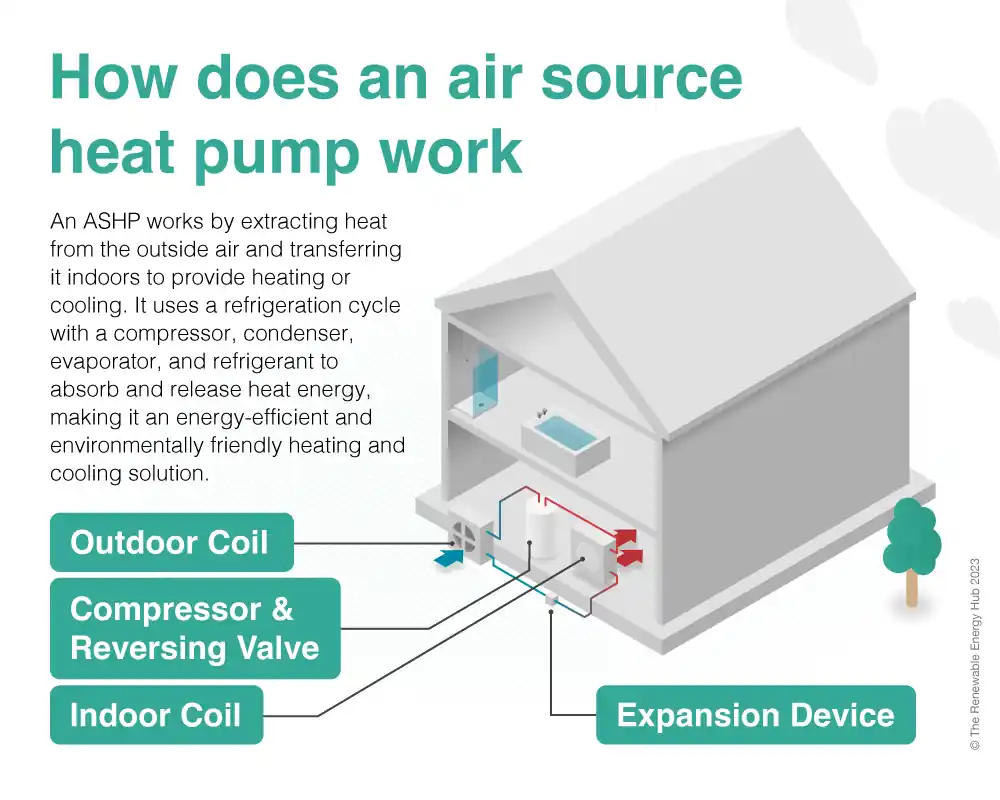
At its core, a heat pump operates on a straightforward scientific principle: heat naturally flows from warmer areas to cooler ones. A heat pump simply harnesses this process and controls the direction of heat flow using a closed-loop refrigerant cycle.
The refrigerant — a specialized fluid with a very low boiling point — circulates between an indoor and outdoor unit. As it travels through the system, it alternates between liquid and gas states, absorbing heat in one location and releasing it in another. This is the same basic technology behind your kitchen refrigerator, just applied on a larger scale to condition your entire home.
Heat Pump Fundamentals
Despite what you might assume, outdoor air contains usable thermal energy even when temperatures drop significantly. A heat pump is engineered to capture that ambient warmth and concentrate it for indoor use. The secret lies in the refrigerant's ability to boil at extremely low temperatures — meaning it can absorb heat energy from air that feels freezing to us.
During warmer months, the cycle reverses seamlessly. The system extracts excess warmth from inside your home and expels it outdoors, functioning just like a conventional air conditioning unit. This dual capability is what makes heat pumps such an attractive all-in-one solution for homeowners seeking year-round comfort with a single system.
Where Do Heat Pump Systems Perform Best?
Heat pumps are exceptionally well-suited to regions with moderate climates — areas where winters are relatively mild and temperatures rarely plunge below freezing for extended stretches. In these environments, heat pumps deliver peak efficiency and can handle the full heating and cooling load without supplemental assistance.
However, modern advancements have dramatically expanded their operating range. Cold-climate heat pump models can now maintain effective heating performance even when outdoor temperatures drop well below zero. For homeowners in colder regions, pairing a heat pump with a backup heating source provides an efficient hybrid solution that keeps energy costs low while ensuring you're never left without adequate warmth.
Essential Components of a Heat Pump System
Every heat pump system relies on a carefully coordinated set of components working in unison. Understanding each part helps you appreciate the engineering behind your home's comfort — and empowers you to make smarter purchasing decisions.
Outdoor Unit
Houses the compressor and a coil that functions as either a condenser or evaporator depending on the operating mode. A fan moves outdoor air across the coil to facilitate heat exchange.
Indoor Unit
Contains a coil and blower fan that distributes conditioned air throughout your home via your ductwork. This unit handles the indoor side of the heat exchange process.
Refrigerant
The lifeblood of the system — a specialized substance that circulates through the loop, absorbing and releasing heat as it transitions between liquid and gaseous states.
Compressor
Often called the heart of the system, the compressor pressurizes the refrigerant to raise its temperature, enabling efficient heat transfer throughout the cycle.
Reversing Valve
The component that gives heat pumps their dual-mode ability. It redirects refrigerant flow, switching the system between heating and cooling operations seamlessly.
Expansion Valve
Regulates refrigerant flow and reduces its pressure before it enters the evaporator coil. This pressure drop causes a temperature drop, preparing the refrigerant to absorb heat.
How Does a Heat Pump Cool and Heat?
The beauty of a heat pump lies in its remarkable versatility. A single system handles both sides of climate control with a simple switch in the refrigerant's direction of flow. Let's break down each mode.
❄ Cooling Mode
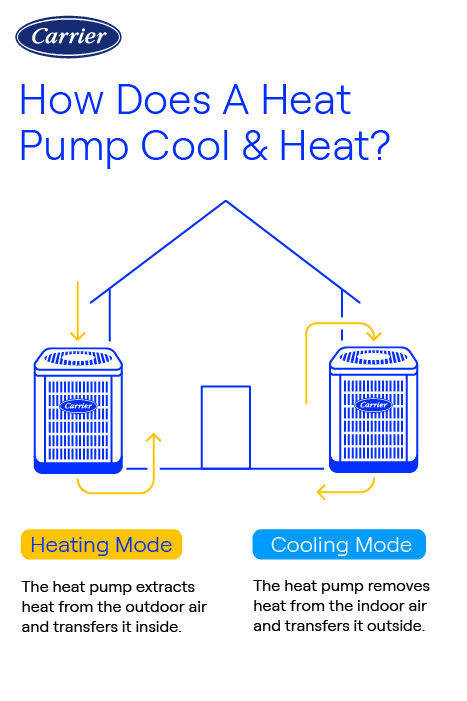
When summer arrives, the heat pump operates much like a standard air conditioner. Warm indoor air passes over the evaporator coil where the cold refrigerant absorbs that excess heat. The now-heated refrigerant travels to the outdoor unit, where the compressor raises its temperature further before the condenser coil and fan expel the collected warmth into the outside air.
The cooled refrigerant then cycles back inside to repeat the process. Air flowing over the cold evaporator coil also loses moisture, providing the added benefit of dehumidification — leaving your indoor spaces feeling cooler and more comfortable.
☀ Heating Mode
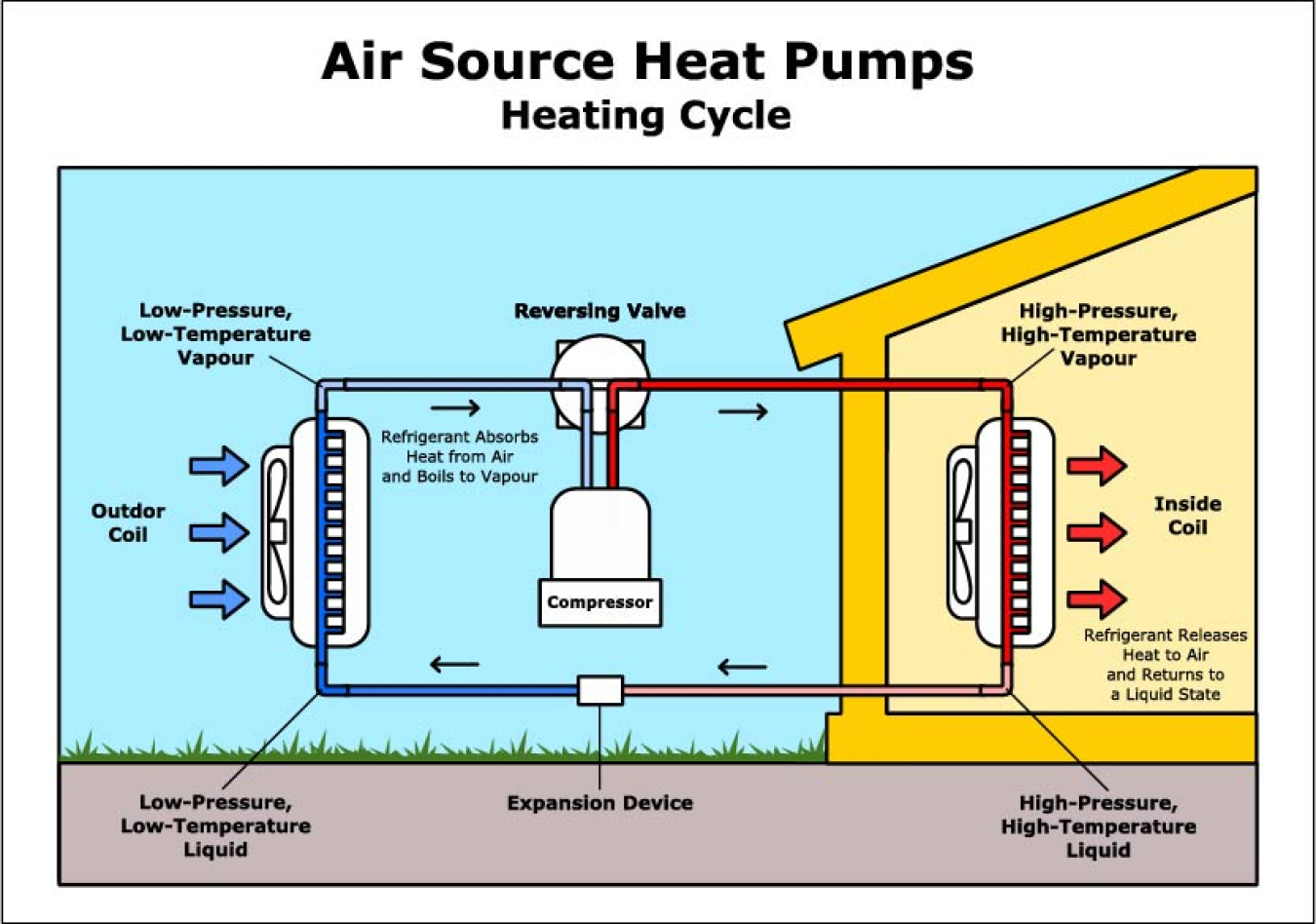
In colder months, the reversing valve flips the script. Now the outdoor coil serves as the evaporator, drawing latent thermal energy from the cold outside air. Even when it feels bitterly cold, the refrigerant's ultra-low boiling point allows it to absorb available warmth and carry it indoors.
Once indoors, the compressor raises the refrigerant's temperature significantly. The hot refrigerant passes through the indoor coil, releasing that concentrated warmth into your home's air supply. The blower distributes the heated air throughout your rooms, and the cycle continues for consistent, efficient comfort.
How Heat Pumps Work — A Quick Review
To summarize, a heat pump is a remarkably efficient, electrically powered system that handles both heating and cooling through a single mechanism. It uses refrigerant circulating between indoor and outdoor units to transfer thermal energy — absorbing it in one place and releasing it in another.
The reversing valve is what gives the heat pump its dual-function capability, allowing the refrigerant flow to switch direction depending on the season. In cooling mode, indoor heat is moved outside. In heating mode, outdoor warmth is captured and delivered inside. The expansion valve regulates refrigerant pressure and temperature, while the compressor provides the energy that drives the entire cycle.
Choosing the Right Heat Pump
Selecting the ideal heat pump for your home involves balancing several factors: your local climate, the square footage of your living space, your home's insulation quality, and your budget for both upfront purchase and long-term operating costs.
Consulting with a qualified HVAC professional is always recommended. They can perform a detailed load calculation to determine the correct system size and type for your specific needs. An oversized unit wastes energy and creates uneven temperatures, while an undersized system will struggle to keep up — so proper sizing is critical to getting the best performance and value from your investment.
Featured Product
Ready to Upgrade Your Home Comfort?
Explore our top-rated heat pump system — engineered for dependable year-round performance with outstanding energy efficiency.
Armstrong Air 2.5 Ton Heat Pump — 14 SEERFrequently Asked Questions
Do Heat Pumps Consume a Lot of Electricity?
Heat pumps are among the most energy-efficient HVAC systems available. Because they transfer heat rather than generate it through combustion, they typically use significantly less electricity than traditional electric furnaces or baseboard heaters. High-efficiency models with favorable SEER and HSPF ratings deliver excellent performance per watt consumed.
Are Heat Pumps Costly to Operate?
In most cases, heat pumps are more economical to run than conventional heating systems, especially in moderate climates. Operating costs depend on local electricity rates, climate severity, and system efficiency. Many homeowners see noticeable reductions in their monthly energy bills after switching to a heat pump.
What Is a Heat Pump in Simple Terms?
A heat pump is a two-way climate control system. In winter, it pulls warmth from outdoor air and brings it inside. In summer, it pulls warmth from indoor air and pushes it outside. It's powered by electricity and uses a refrigerant cycle — no burning of fuel required.
Why Do Some People Dislike Heat Pumps?
Common concerns include reduced heating efficiency in extremely cold temperatures, higher upfront purchase costs compared to basic furnaces, and the perception that the warm air they produce doesn't feel as intensely hot as gas-heated air. However, newer cold-climate models and proper system sizing have addressed many of these traditional objections.
How Do Heat Pumps Perform in Winter?
Modern heat pumps can function effectively in winter, even as temperatures approach zero or below. Cold-climate models are specifically designed with enhanced compressors and advanced defrost cycles to maintain reliable heat output. In regions with extreme cold, a supplemental heating source can work alongside the heat pump for complete coverage.
At What Temperature Does a Heat Pump Lose Effectiveness?
Traditional air-source heat pumps begin losing efficiency when outdoor temperatures drop below roughly 25°F to 30°F (-4°C to -1°C). However, modern cold-climate units can maintain solid performance at temperatures as low as -15°F (-26°C) or even colder, depending on the model and manufacturer specifications.
Can a Heat Pump Handle 100°F Weather?
Absolutely. Heat pumps are designed to provide cooling in extreme heat just as effectively as traditional air conditioners. While efficiency may dip slightly at extreme outdoor temperatures, a properly sized and maintained system will keep your home comfortably cool even during severe heat waves.
Does a Heat Pump Bring in Outside Air?
No. A common misconception is that heat pumps draw outdoor air directly into your home. In reality, they only transfer thermal energy — not the air itself. The indoor air is recirculated through the system, heated or cooled, and returned to your living spaces. Your indoor air quality remains unaffected by outdoor conditions.
Can a Heat Pump Cool Your Home?
Yes — cooling is one of the heat pump's core functions. When operating in cooling mode, a heat pump works identically to a central air conditioner, removing heat and humidity from indoor air and expelling it outdoors. Many homeowners choose heat pumps specifically because they eliminate the need for separate heating and cooling systems.
© Backyard Provider — Your Trusted Source for Outdoor Living & Home Comfort Solutions