
In This Article
◆ What Types of Heat Pumps Exist?
◆ How Does a Heat Pump Work?
◆ Heat Pump Fundamentals
◆ Where Do Heat Pump Systems Perform Best?
◆ Key Components of a Heat Pump System
◆ How Does a Heat Pump Cool & Heat?
◆ Cooling Mode Explained
◆ Heating Mode Explained
◆ Heat Pump Operation — Full Review
◆ Selecting the Right Heat Pump
◆ Frequently Asked Questions
So what exactly is a heat pump, and how does it keep your home comfortable? A heat pump is a versatile home climate system designed to both heat and cool your living space. Think of it as an air conditioner that can reverse itself — during warmer months, it pulls heat out of your home, and when temperatures drop, it draws warmth from the outdoor air and brings it inside. Heat pumps run on electricity and utilize refrigerant technology to transfer thermal energy rather than generating it from scratch. Because they move heat instead of creating it, they can deliver both heating and cooling with remarkable efficiency throughout the year.
Homeowners who want a multi-purpose system often turn to heat pumps as an all-in-one solution. They eliminate the need for separate furnaces and air conditioning units. And while heat pumps don't burn fossil fuels the way traditional furnaces do, they are capable of keeping your home warm even in cold weather — though performance characteristics can vary. For a deeper dive into every aspect of heat pump technology, keep reading.
What Types of Heat Pumps Exist?
There are several distinct categories of heat pumps, each designed for different environments, climates, and installation scenarios. The three primary types homeowners encounter are air-source, ground-source (geothermal), and ductless mini-split systems.
Air-source heat pumps are the most widely installed variety. They transfer thermal energy between the air inside your home and the air outdoors. These units work efficiently in moderate climates and have improved significantly for cold-weather performance in recent years.
Ground-source (geothermal) heat pumps tap into the stable temperatures found underground. By circulating fluid through buried loops, they exchange heat with the earth itself. While installation costs are higher, they deliver exceptional efficiency and consistent performance regardless of air temperature swings.
Ductless mini-split heat pumps provide zone-based heating and cooling without requiring ductwork. They're ideal for room additions, older homes without ducts, or spaces where independent temperature control is desired.
Additionally, absorption heat pumps represent a less common category, mainly used in commercial or industrial applications. They rely on a heat source such as natural gas or solar-heated water instead of electricity to power the refrigeration cycle.
How Does a Heat Pump Work?
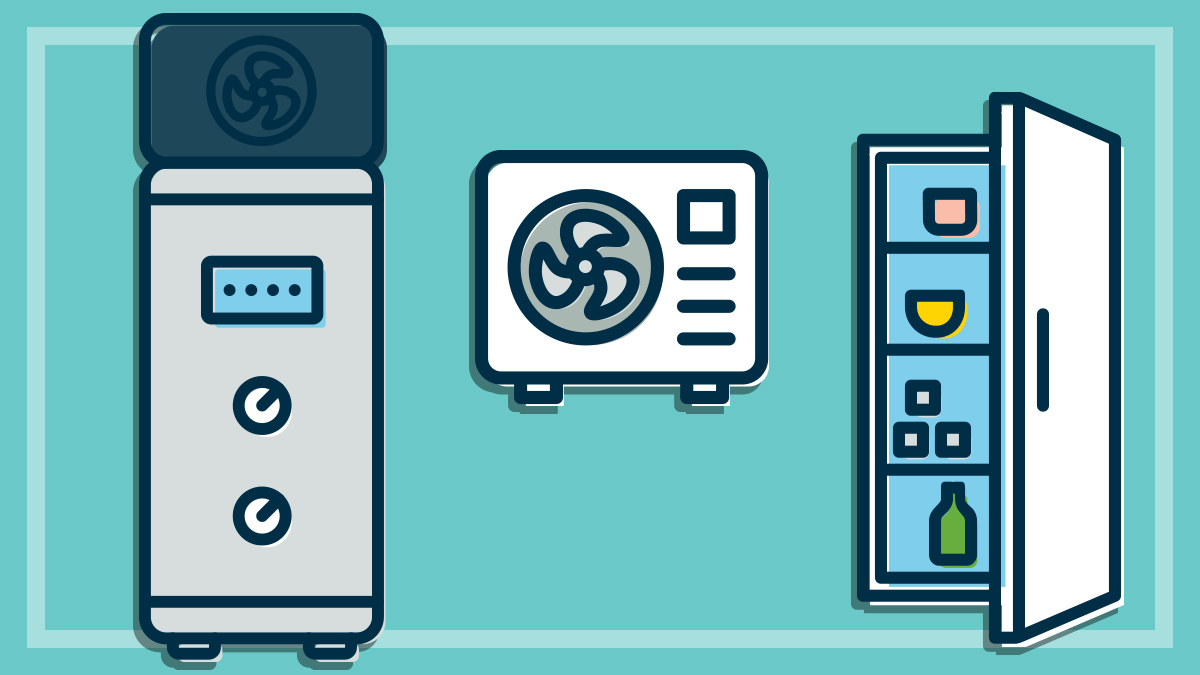
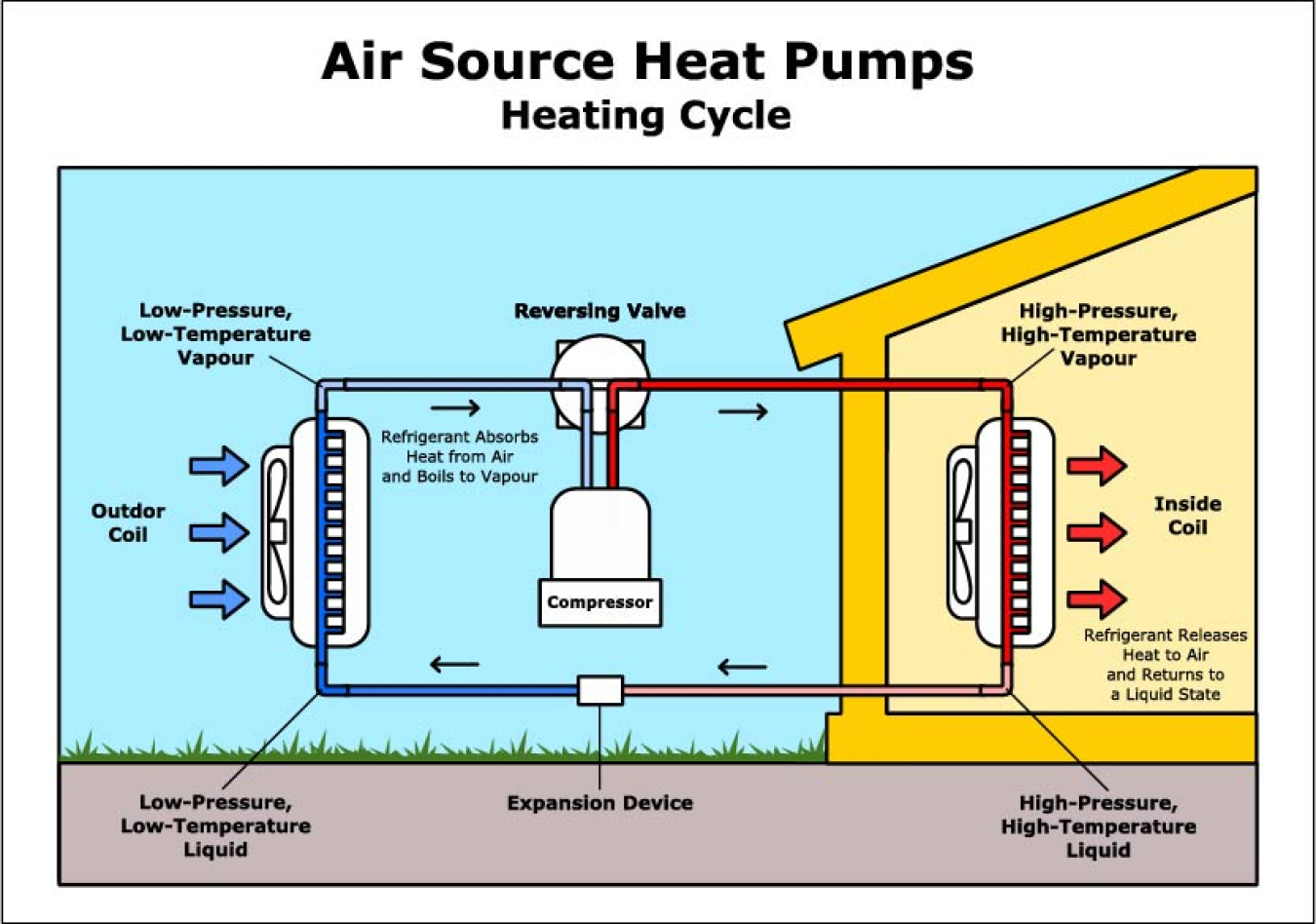
Heat pumps operate on a beautifully simple principle: they don't generate heat — they relocate it. Using a closed-loop refrigerant cycle, a heat pump absorbs thermal energy from one location and deposits it in another. In summer, it extracts warmth from inside your home and releases it outdoors. In winter, the process flips — it harvests heat energy from outdoor air (yes, even cold air contains usable thermal energy) and channels it indoors.
This transfer mechanism is powered by electricity and relies on the same fundamental refrigeration science that runs your kitchen refrigerator. The refrigerant cycles between liquid and gas states, absorbing heat when it evaporates and releasing heat when it condenses. A compressor pressurizes the refrigerant to intensify the heat exchange, and a reversing valve switches the direction of flow depending on whether you need cooling or heating.
Because heat pumps transfer existing thermal energy rather than burning fuel to produce it, they can achieve efficiency ratings far beyond those of conventional furnaces. For every unit of electrical energy consumed, a heat pump can deliver two to three times that amount in heating or cooling output.
Heat Pump Fundamentals
At its core, a heat pump takes advantage of the second law of thermodynamics. Heat energy naturally flows from warmer areas to cooler ones. A heat pump uses electrical energy to reverse that natural flow, moving warmth against the temperature gradient — from a cooler space to a warmer one.
The outdoor air, ground, or water source always contains some level of thermal energy, even when it feels cold to us. A heat pump's evaporator coil is able to capture this low-grade heat, and the compressor concentrates it into high-grade energy that can meaningfully warm your home. This is why heat pumps remain functional even in below-freezing temperatures, though their efficiency does decrease as outdoor temperatures plummet.
Understanding the concept of the coefficient of performance (COP) is helpful. COP measures how many units of heating or cooling a system delivers per unit of electricity consumed. A heat pump with a COP of 3.0 produces three units of thermal comfort for every one unit of electricity used — a level of efficiency that combustion-based systems simply cannot match.
Where Do Heat Pump Systems Perform Best?
Heat pumps deliver their peak efficiency in regions with moderate climates — areas where winters don't regularly dip into extreme sub-zero territory. The southeastern United States, the Pacific Northwest, and much of the mid-Atlantic corridor are prime examples of zones where heat pumps thrive as a primary heating and cooling system.
That said, modern cold-climate heat pump technology has pushed the boundaries dramatically. Today's advanced models can maintain effective heating output at outdoor temperatures as low as -15°F or below. If you live in a colder region, pairing a heat pump with a supplemental heating source (sometimes called a dual-fuel system) can provide both economy and reliability.
Climate data tools such as psychrometric charts help HVAC professionals determine how a heat pump will behave in your specific locale. These tools map the relationship between temperature, humidity, and air properties to predict system performance with accuracy.'
Key Components of a Heat Pump System
Every heat pump system relies on a set of essential components working in harmony. Understanding these parts helps you make smarter purchasing and maintenance decisions.
Outdoor Unit
The outdoor unit houses the compressor, a coil that functions as either a condenser or evaporator depending on the mode, and a fan that moves air across the coil. This is where heat is either expelled or collected from the outside environment.
Indoor Unit
Often called the air handler, the indoor unit contains a coil and blower fan. It distributes conditioned air throughout your home via ductwork or, in ductless systems, directly into the room.
Refrigerant
Refrigerant is the lifeblood of the system. This specialized chemical compound cycles continuously between liquid and gas phases, absorbing and releasing heat as it changes state throughout the system.
Compressor
The compressor pressurizes the refrigerant, raising its temperature and energy level. It's the engine that drives the entire refrigerant cycle, and its efficiency significantly impacts overall system performance.
Reversing Valve
This clever component is what separates a heat pump from a standard air conditioner. The reversing valve changes the direction of refrigerant flow, allowing the system to switch seamlessly between heating and cooling modes.
Expansion Valve
The expansion valve reduces refrigerant pressure rapidly, causing it to cool down dramatically before it enters the evaporator coil. This pressure drop is essential for the heat absorption process to occur.
How Does a Heat Pump Cool & Heat?
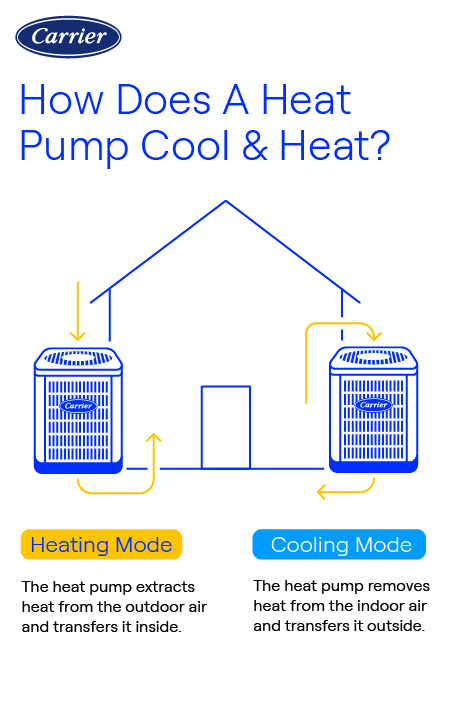
The dual functionality of a heat pump is what makes it such a compelling choice for homeowners. The exact same equipment that chills your home during a scorching July afternoon will warm it on a frigid January evening. The secret lies in that reversing valve — one component that fundamentally changes the direction of the entire operation.
When your thermostat signals a need for cooling, the heat pump operates almost identically to a traditional air conditioner. When it detects a call for heat, the reversing valve redirects refrigerant flow so the outdoor coil becomes the evaporator and the indoor coil becomes the condenser — effectively running the air conditioning process in reverse.
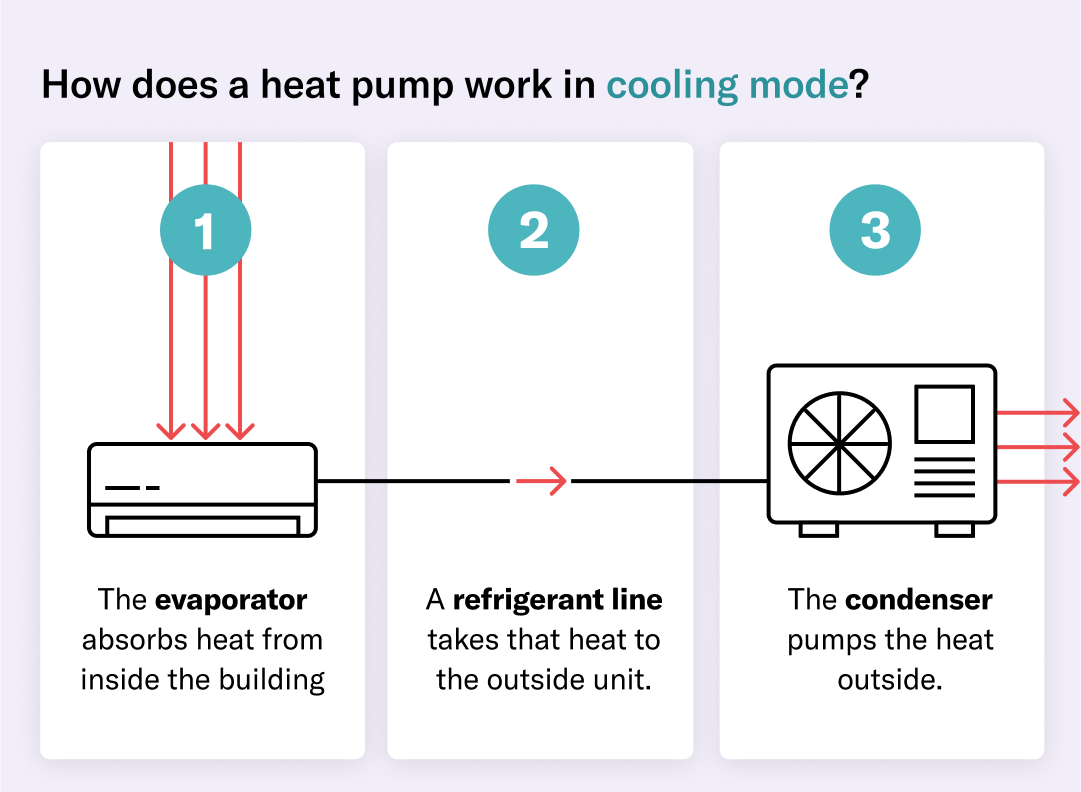
Cooling Mode — How It Works
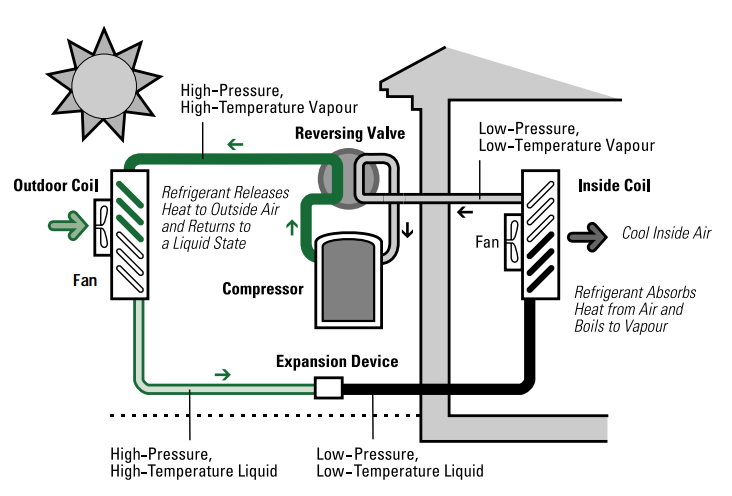
When operating in cooling mode, the heat pump follows the standard refrigeration cycle that air conditioners use. Here's the step-by-step process:
1Liquid refrigerant circulates to the indoor evaporator coil. As warm indoor air passes over this coil, the refrigerant absorbs the heat and evaporates into a gas.
2The gaseous refrigerant travels to the compressor, where it is pressurized. This compression raises both the temperature and pressure of the refrigerant significantly.
3The hot, high-pressure refrigerant gas flows to the outdoor condenser coil, where the outdoor fan blows air across it. The refrigerant releases its captured heat into the outside air and condenses back into liquid form.
4The liquid refrigerant passes through the expansion valve, which drops its pressure and temperature dramatically, preparing it to absorb heat once again.
5The cycle repeats continuously until your home reaches the desired thermostat temperature.
Heating Mode — How It Works
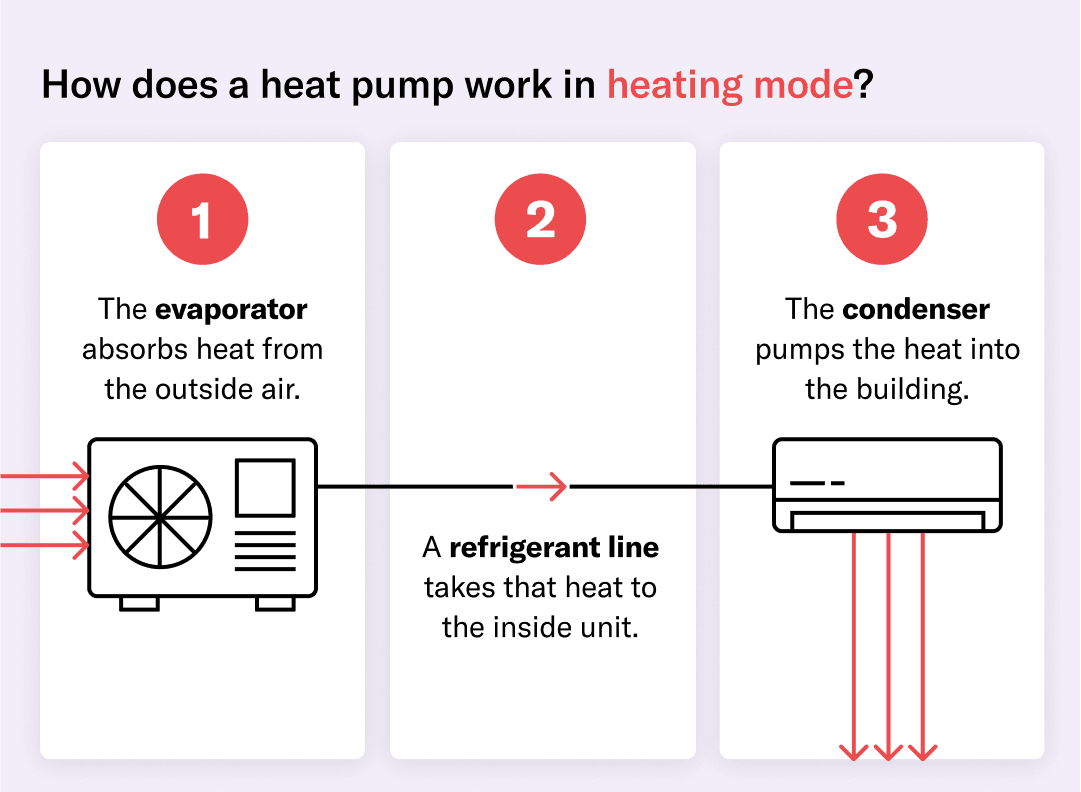
In heating mode, the reversing valve flips the script. The outdoor coil now acts as the evaporator and the indoor coil acts as the condenser. The process works as follows:
1Cold liquid refrigerant flows to the outdoor evaporator coil. Even in chilly weather, the outdoor air contains thermal energy. The refrigerant — being even colder than the ambient air — absorbs this heat and transitions into a gas.
2The gaseous refrigerant moves to the compressor, where it is pressurized and superheated to a much higher temperature.
3The superheated refrigerant gas flows to the indoor condenser coil. As the blower fan pushes indoor air over this coil, the refrigerant releases its concentrated heat into your home and condenses back into liquid.
4The liquid refrigerant passes through the expansion valve, losing pressure and temperature, and returns outdoors to start the process over again.
5This cycle continues until the interior of your home reaches the thermostat's set temperature.
Heat Pump Operation — Full Review
To summarize the complete operational picture: a heat pump is a single system capable of delivering both heated and cooled air through the same set of components. The entire magic rests on the reversing valve and the thermodynamic properties of refrigerant.
In cooling mode, it behaves like a conventional air conditioner — absorbing indoor heat and ejecting it outside. In heating mode, it reverses direction, pulling heat from the outdoor environment and concentrating it indoors. The compressor is the workhorse, the refrigerant is the medium, and the expansion valve and coils facilitate the phase changes that make heat transfer possible.
The elegance of this design means homeowners get a single installation that replaces both a furnace and an air conditioner. Fewer moving parts, lower maintenance overhead, and outstanding energy efficiency — particularly when compared to resistance-based electric heating or older combustion furnaces.
Selecting the Right Heat Pump
Choosing the ideal heat pump for your home involves weighing several important factors. Climate, home size, insulation quality, existing ductwork, and your budget all play a role in determining which unit is the best match.
SEER and HSPF ratings are your primary efficiency benchmarks. SEER (Seasonal Energy Efficiency Ratio) measures cooling efficiency, while HSPF (Heating Seasonal Performance Factor) measures heating efficiency. Higher numbers indicate better performance and lower operating costs. Units rated 14 SEER or above represent solid baseline efficiency.
Tonnage matters, too — a system that's too small will struggle to keep up, while an oversized unit will short-cycle, wasting energy and wearing out prematurely. A professional load calculation (often called a Manual J calculation) ensures you get the right capacity for your specific home.
Don't overlook features like variable-speed compressors, smart thermostat compatibility, and sound ratings. These can significantly impact your day-to-day comfort and satisfaction with the system.
Featured Product
Armstrong Air 2.5 Ton Heat Pump Split System — 14 SEER
A reliable, efficient split-system heat pump designed to deliver dependable year-round comfort for your home.
Frequently Asked Questions About Heat Pumps
Do heat pumps consume a lot of electricity?
Heat pumps are among the most energy-efficient climate control systems available. Because they transfer heat rather than generate it, they typically consume significantly less electricity than baseboard heaters, electric furnaces, or portable space heaters. Your actual consumption depends on climate, home insulation, system efficiency rating, and usage habits.
Are heat pumps expensive to operate?
Running costs are generally lower than those of combustion-based systems. In moderate climates, a heat pump can reduce heating bills substantially compared to oil, propane, or electric resistance heating. However, in extremely cold climates, supplemental heating may be needed, which can increase costs during the coldest months.
What are the drawbacks of a heat pump?
The main limitations include reduced heating efficiency in extreme cold, higher upfront installation costs compared to a basic furnace, and the potential need for supplemental heating in northern climates. Some homeowners also note that heat pumps produce a gentler warmth compared to the intense blast of a gas furnace, which can feel different initially.
How does a heat pump work in simple terms?
A heat pump moves warmth from one place to another using refrigerant and electricity. In summer, it pushes heat out of your house. In winter, it pulls heat from outside air and brings it in. It's like a reversible air conditioner.
Why do some people dislike heat pumps?
Common objections tend to center around the softer warmth they produce compared to a gas furnace, upfront equipment costs, and concerns about performance in extreme winter conditions. Many of these concerns have been addressed by newer cold-climate models, but personal preferences vary.
How does a heat pump work in winter?
Even in cold weather, outdoor air contains thermal energy. The heat pump's refrigerant — which is far colder than the outside air — absorbs that energy at the outdoor coil. The compressor then concentrates it and delivers it indoors. Modern units can operate effectively even when temperatures drop well below freezing.
At what temperature does a heat pump lose efficiency?
Traditional heat pumps begin to see noticeable efficiency drops around 25°F to 30°F (-4°C to -1°C). However, advanced cold-climate models using variable-speed compressors can maintain strong performance down to -15°F or lower. A dual-fuel configuration can supplement the heat pump when conditions become extreme.
Can a heat pump handle 100-degree weather?
Absolutely. Heat pumps in cooling mode operate identically to air conditioners and are fully capable of maintaining indoor comfort even during triple-digit heat. Their cooling performance is rated by the SEER metric, and modern units handle extreme summer heat with no issues.
Does a heat pump bring in outdoor air?
No. A common misconception is that heat pumps pump outside air into your home. In reality, they only transfer heat energy — not the air itself. The indoor air recirculates through the system and is heated or cooled as it passes over the coils. Your home's air stays indoors.
Can a heat pump cool your house?
Yes — cooling is one of a heat pump's primary functions. In fact, a heat pump in cooling mode is functionally identical to a standard air conditioner. It absorbs heat from inside your home, transports it outdoors via the refrigerant cycle, and leaves your living space cool and comfortable.
© Backyard Provider — Your Trusted Source for Outdoor Living & Home Comfort