
Heat pumps have become one of the most popular choices for home heating and cooling, and for good reason. These systems work by transferring warmth rather than generating it from scratch, which means they can deliver impressive energy savings compared to conventional HVAC setups. But how do you actually measure a heat pump's performance? That comes down to understanding the efficiency ratings that define how well a unit converts energy into comfort.
In this guide, we break down the key efficiency metrics — SEER2, HSPF2, EER, and COP — so you can make a confident, well-informed decision when shopping for a heat pump system for your home.

Are Heat Pumps Really More Efficient Than Other HVAC Systems?
In short: yes. A traditional furnace or boiler creates heat by burning fuel, which inherently limits its efficiency to 100% at best. A heat pump, on the other hand, moves existing thermal energy from outdoor air (or the ground) into your home. Because it relocates heat instead of producing it, a heat pump can deliver two to three times more heating energy than the electrical energy it uses.
During the cooling season, heat pumps reverse the cycle and extract warm air from your home, functioning essentially like a high-efficiency air conditioner. This dual capability means one system handles both seasons, often at a lower combined operating cost than running a separate furnace and AC unit.
Key takeaway: Heat pumps don't create heat from a fuel source — they move it. That fundamental difference is what makes them capable of operating at effective efficiencies well above 100%, saving you money year-round.
Defining the Important Efficiency Terms: SEER2, HSPF2, EER & COP
When you shop for a heat pump, you'll encounter several acronyms on specification sheets and product listings. Each one measures a slightly different aspect of the system's performance, and understanding them will help you compare units accurately.
SEER2 (Seasonal Energy Efficiency Ratio 2)
SEER2 is the updated standard for measuring a heat pump's cooling efficiency over a full season. It replaced the original SEER metric and uses testing conditions that more closely mirror real-world installation scenarios, including the effects of ductwork and static pressure. The higher a unit's SEER2 number, the less electricity it needs to cool your home. Most modern heat pumps range between 14 and 22+ SEER2, with premium models reaching even higher.
HSPF2 (Heating Seasonal Performance Factor 2)
Where SEER2 covers summer, HSPF2 covers winter. This rating tells you how efficiently a heat pump heats your home over a complete heating season, again factoring in updated test conditions. Typical HSPF2 ratings fall between 7.5 and 13+, and every point higher can translate to noticeable savings on your winter energy bill.
EER2 (Energy Efficiency Ratio 2)
EER2 is a snapshot measurement rather than a seasonal one. It evaluates cooling efficiency at a single high-temperature outdoor condition — usually around 95°F. This metric is useful if you live in a consistently hot climate where your heat pump will frequently operate near peak load. A higher EER2 means better performance when the mercury really climbs.
COP (Coefficient of Performance)
COP is the most straightforward efficiency metric. It simply divides the energy output by the energy input. A COP of 1.0 means you get exactly as much energy out as you put in — equivalent to a standard electric heater. Modern heat pumps routinely achieve COPs of 2.0 to 4.0 or higher in moderate climates, meaning they deliver two to four times more heating energy than the electricity they consume.
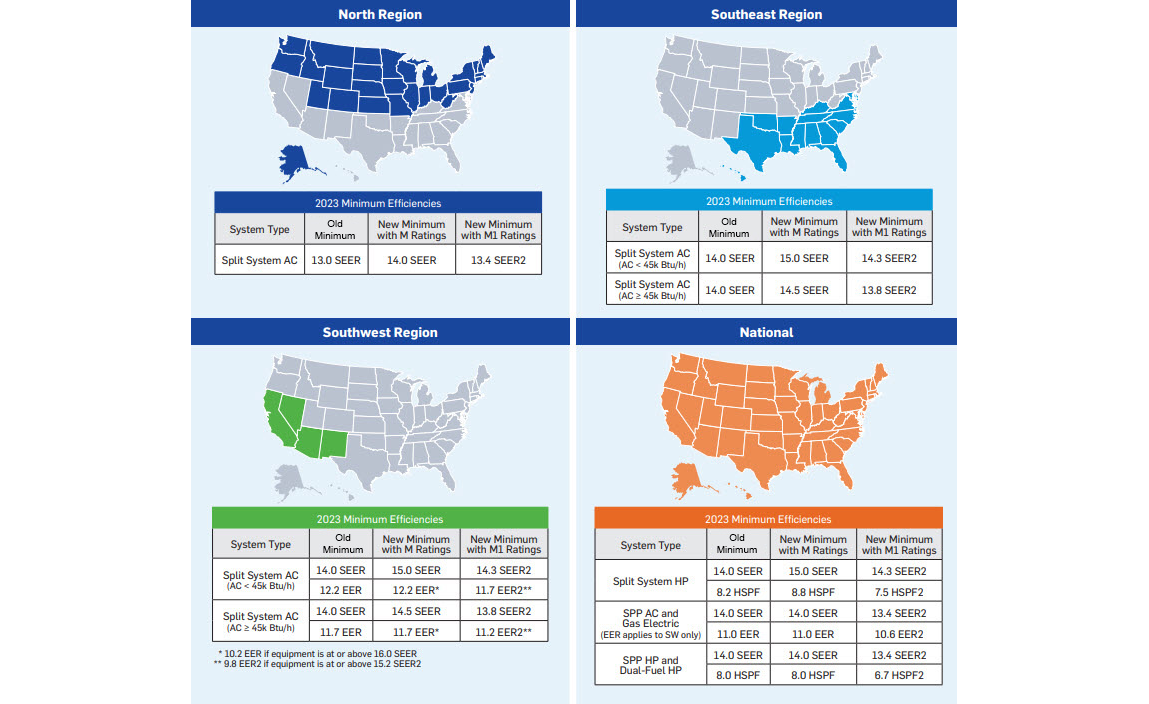
Heat Pump Efficiency Requirements by Region
The U.S. Department of Energy sets minimum efficiency standards for heat pumps, and those standards vary depending on where you live. Because climate demands differ from region to region, the required baseline ratings ensure that systems sold in each area meet a reasonable level of performance for the local conditions.
| Region | Min. SEER2 | Min. HSPF2 | Notes |
|---|---|---|---|
| North | 14.3 | 7.5 | Emphasis on heating efficiency for cold winters |
| Southeast | 15.0 | 7.5 | Higher cooling demands in hot, humid climates |
| Southwest | 15.0 | 7.5 | Dry heat means high EER2 matters most |
| Nationwide Min. | 14.3 | 7.5 | Federal baseline effective Jan 2023 |
Keep in mind that these are minimum requirements. Upgrading to a model that exceeds the local baseline can substantially lower your annual utility costs and may qualify you for federal tax credits or local rebates.
Factors That Influence Heat Pump Efficiency
A heat pump's rated efficiency is only part of the story. Several real-world factors determine how closely your system performs to its advertised numbers. Understanding these variables helps you maximize the value of your investment.
Type of Energy Source
The vast majority of residential heat pumps are air-source models, meaning they pull thermal energy from outdoor air. These units work well in moderate and even cold climates, though their efficiency naturally decreases as outdoor temperatures drop. Ground-source (geothermal) heat pumps tap into the stable temperatures below ground and generally deliver higher, more consistent efficiency — but they come with a significantly higher installation cost.
Climate and Temperature Extremes
Heat pump performance is directly tied to the outdoor temperature. In mild conditions, even a standard-efficiency unit will run remarkably well. As temperatures approach freezing and below, air-source models have to work harder, which reduces their effective COP. Cold-climate heat pumps are specifically engineered with enhanced compressors and controls to maintain strong output in sub-zero weather.
Ductwork Condition
Your duct system is the highway that delivers conditioned air throughout your home. Leaks, poor insulation, or improper sizing in ductwork can waste 20–30% of the energy your heat pump produces. Before upgrading your HVAC system, having your ducts inspected and sealed is one of the highest-return investments you can make.
Pro tip: Even the most efficient heat pump will underperform if your ductwork is leaking or undersized. A professional duct inspection and sealing can recapture a significant portion of lost efficiency before you spend a dollar on new equipment.
Sizing the System Correctly
An oversized heat pump short-cycles — turning on and off too frequently — which wastes energy and accelerates wear. An undersized unit struggles to maintain comfortable temperatures and runs continuously. Both scenarios result in higher bills and reduced equipment life. A proper Manual J load calculation by a qualified technician ensures you get the right-sized system for your home's specific heating and cooling demands.
Home Insulation and Air Sealing
Your home's thermal envelope has an enormous impact on how hard your heat pump has to work. Drafty windows, gaps in attic insulation, and unsealed penetrations all force the system to compensate for energy that's escaping. Investing in insulation upgrades and air sealing before or alongside a heat pump installation helps the system operate closer to its peak rated efficiency.
Regional Climate Considerations
Choosing the right efficiency tier depends heavily on where you live. In the southern states, cooling output and a high SEER2 rating take priority since your system will spend the majority of its runtime removing heat from your home. In northern climates, HSPF2 becomes the more critical number because extended heating seasons dominate your energy usage.
For moderate climates in the mid-Atlantic and Pacific Northwest, a balanced approach works best — look for units that score well in both SEER2 and HSPF2 without necessarily chasing the absolute top of either scale. This balanced profile gives you solid performance across both seasons without overpaying for capacity you won't fully utilize.
Sizing and Its Impact on Efficiency
We cannot stress this enough: proper sizing is essential. A heat pump that's too large for your space may cool it quickly but will cycle on and off in short bursts, preventing the system from running long enough to efficiently dehumidify the air. Conversely, a system that's too small will run endlessly trying to reach the thermostat setpoint, racking up energy costs and putting excessive strain on the compressor.
The solution is a professional load calculation that accounts for your home's square footage, insulation levels, window area, orientation, local climate data, and more. This ensures the system is matched precisely to your home's actual heating and cooling requirements.
Ductwork: The Hidden Efficiency Factor
Even homeowners who invest in top-tier equipment often overlook the condition of their ductwork. Ducts that run through unconditioned spaces — attics, crawlspaces, garages — can lose a tremendous amount of energy through conduction and leaks. Sealing joints, adding insulation, and correcting any design flaws in the duct layout can have a dramatic positive effect on overall system performance.
If your home uses an older duct system that was originally designed for a furnace, it may also need modifications to handle the different airflow characteristics of a heat pump. A qualified HVAC technician can evaluate whether your existing ductwork is compatible or if targeted upgrades are needed.
Taxes, Rebates, and Incentives for High-Efficiency Heat Pumps
One of the best reasons to invest in a high-efficiency heat pump is the financial incentives available to offset the cost. The federal government currently offers tax credits for qualifying energy-efficient HVAC equipment, and many state and local utility programs provide additional rebates. These programs can reduce your out-of-pocket expense by hundreds or even thousands of dollars, making a premium-efficiency system much more affordable than the sticker price suggests.
To take advantage of these programs, make sure your chosen model meets the specific efficiency thresholds outlined by the relevant tax credit or rebate program. Your HVAC installer should be able to help you verify eligibility before purchase.
Frequently Asked Questions About Heat Pump Efficiency
What is the true efficiency of a heat pump?
True efficiency depends on the climate, installation quality, and system sizing. Under ideal conditions, a modern heat pump can deliver 200–400% effective efficiency, meaning it transfers two to four units of heat for every unit of electricity consumed. In extreme cold, that ratio decreases but still typically outperforms electric resistance heating.
At what temperature do heat pumps lose efficiency?
Standard air-source heat pumps begin losing efficiency as outdoor temperatures drop below about 40°F, with a more noticeable decline below freezing. Cold-climate models are engineered to perform well even at sub-zero temperatures, though supplemental heating may still be needed during the most extreme cold snaps.
Are heat pumps truly 200% or 300% efficient?
Yes, in practical terms. Because a heat pump moves heat rather than creating it, the thermal energy it delivers to your home can far exceed the electrical energy it draws. A COP of 3.0 equals 300% effective efficiency — three units of heat delivered for each unit of electricity consumed.
How does temperature affect heat pump efficiency?
As the outdoor temperature drops, there's less thermal energy available in the air for the heat pump to capture, so it has to work harder. This means efficiency gradually declines in colder weather. Conversely, heat pumps operate at peak efficiency in mild conditions when there's abundant outdoor thermal energy to draw from.
Will a heat pump actually save me money?
For most homeowners, yes. The savings depend on your current heating fuel costs, local electricity rates, and the efficiency of the system you install. Homes switching from electric resistance heat, oil, or propane typically see the largest savings. Even in regions with higher electricity prices, the 2–4x efficiency multiplier usually results in net savings.
Which types of heat pumps work best for different climates?
In mild-to-moderate climates, a standard air-source heat pump delivers excellent year-round performance. In very cold climates, look for cold-climate rated models with enhanced low-temperature operation. In consistently hot regions, prioritize high SEER2 and EER2 ratings. Ground-source (geothermal) systems offer top-tier efficiency in virtually any climate but require a larger upfront investment.