
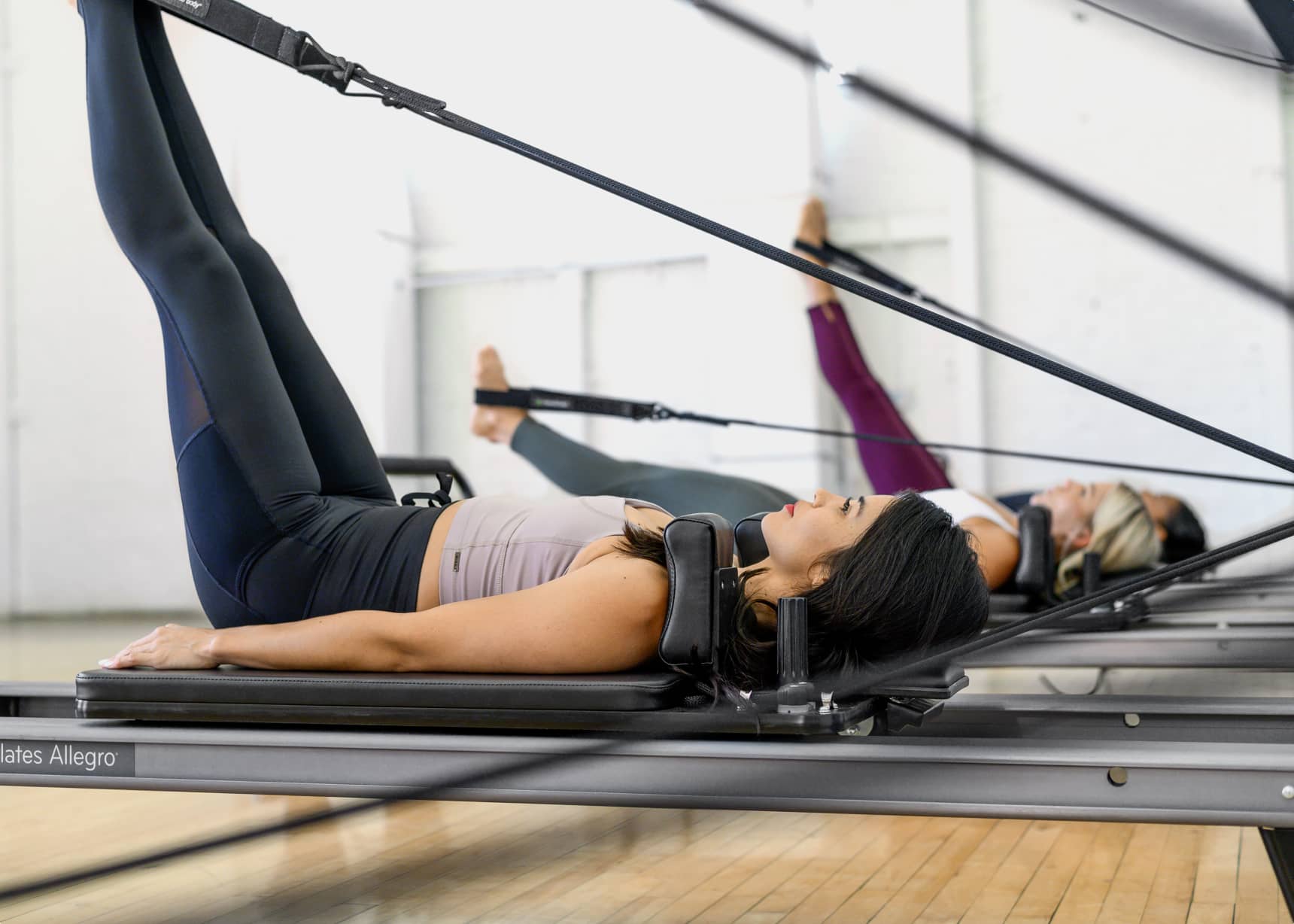
How Is Reformer Pilates Different?
Traditional Mat Pilates — originally developed by Joseph Pilates — relies primarily on body weight and gravity to build core strength and flexibility. Reformer Pilates takes this foundation and amplifies it dramatically. The Reformer machine introduces variable spring-loaded resistance along a gliding carriage, allowing you to challenge your muscles through a far wider range of movements and intensities.
Because the resistance level can be fine-tuned by adjusting the springs, the Reformer accommodates everyone — from gentle rehabilitation exercises to advanced athletic conditioning. The carriage tracks your alignment, the footbar provides leverage, and the ropes add upper-body and stability challenges that mat work simply cannot replicate.
Benefits of Reformer Pilates
Why thousands are making the switch to Reformer-based training.
1. Superior Core Strength & Stability
The Reformer's unstable carriage surface forces your deep stabilizer muscles — including your transverse abdominis, obliques, and pelvic floor — to engage constantly. This builds a level of core strength and postural stability that goes far beyond what crunches or planks can achieve.
2. Greater Flexibility & Range of Motion
Consistent Reformer practice progressively increases your flexibility. The machine's design encourages elongated, controlled movements that safely stretch connective tissue and muscles while simultaneously strengthening them — reducing injury risk and improving everyday mobility.
3. Complete Full-Body Workout
Unlike routines that isolate specific muscle groups, Reformer Pilates engages your entire body in every session. From your arms pulling the ropes to your legs pressing the footbar and your core stabilizing the carriage, every major muscle group is challenged through compound, functional movements.
4. High Results with Low Impact
Reformer Pilates is exceptionally joint-friendly. The smooth gliding carriage eliminates jarring impact, making it ideal for individuals recovering from injuries, managing arthritis, or dealing with chronic joint pain — all while delivering a workout intense enough to satisfy competitive athletes.
5. Fully Personalized Experience
With adjustable spring resistance, movable components, and countless exercise variations, the Reformer can be tailored precisely to your current fitness level and goals. As you progress, the same machine grows with you — making it a long-term investment in your health.
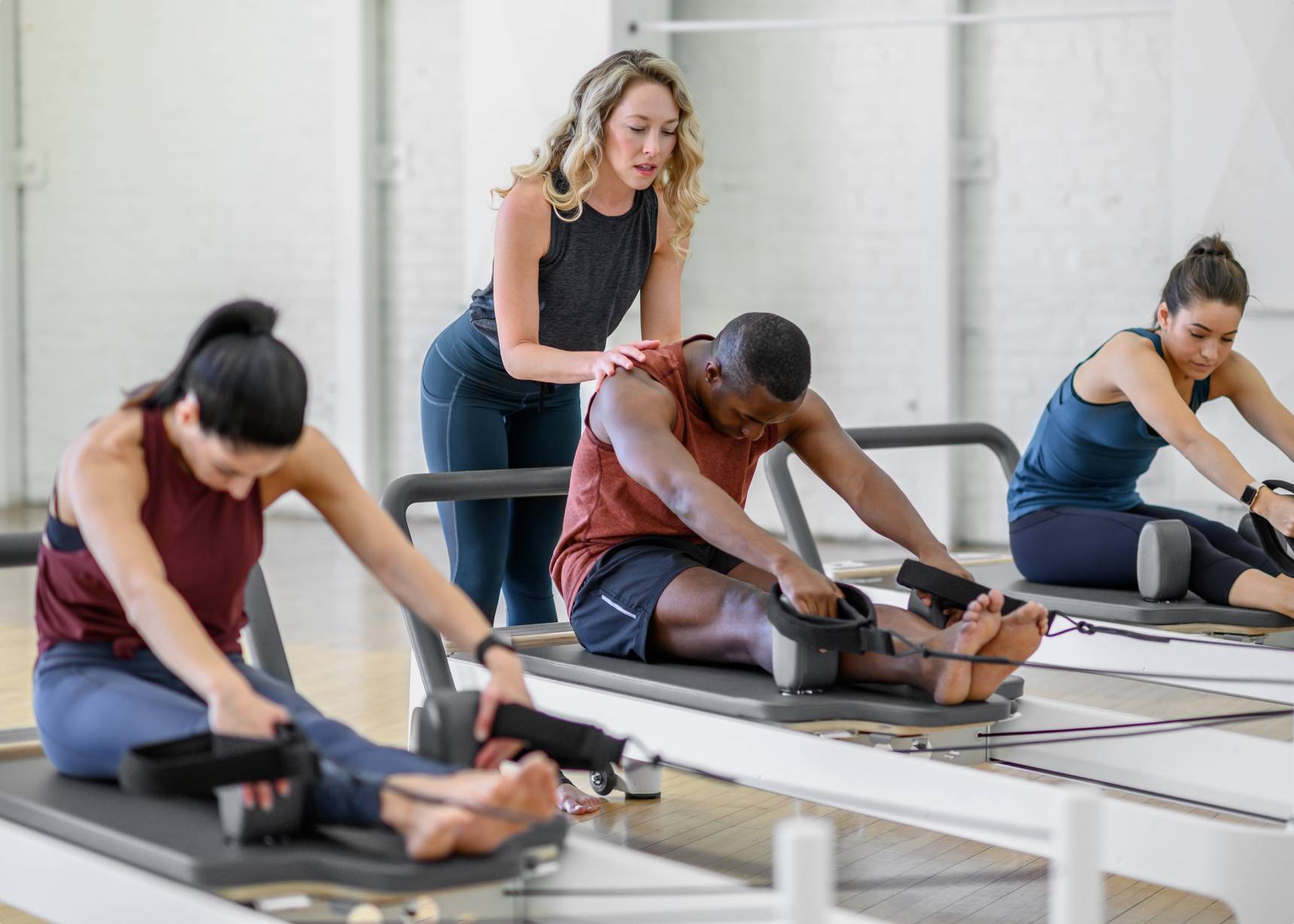
Getting Started with Reformer Pilates
If you have never tried the Reformer before, the best approach is to begin with an introductory class or a private session led by a certified instructor. A qualified Pilates professional will walk you through the machine's components, demonstrate correct form, and help you understand how to adjust the resistance for your body. Once you feel confident with the basics, you can explore group classes or more advanced techniques at your own pace.
What to Expect in Your First Session
A quick overview so you arrive prepared and confident.
During your first Reformer Pilates class, the instructor will introduce you to the machine — the sliding carriage, the spring settings, the footbar positions, the shoulder rests, and the rope-and-pulley system. You will learn how to position yourself safely, engage your core before each movement, and control the carriage with intention rather than momentum.
Expect a blend of familiar exercises such as leg presses, arm pulls, and hip bridges — along with Pilates-specific movements that may feel entirely new. The pace is deliberate, the focus is on precision, and even seasoned gym-goers are often surprised by how challenging the controlled movements can be.
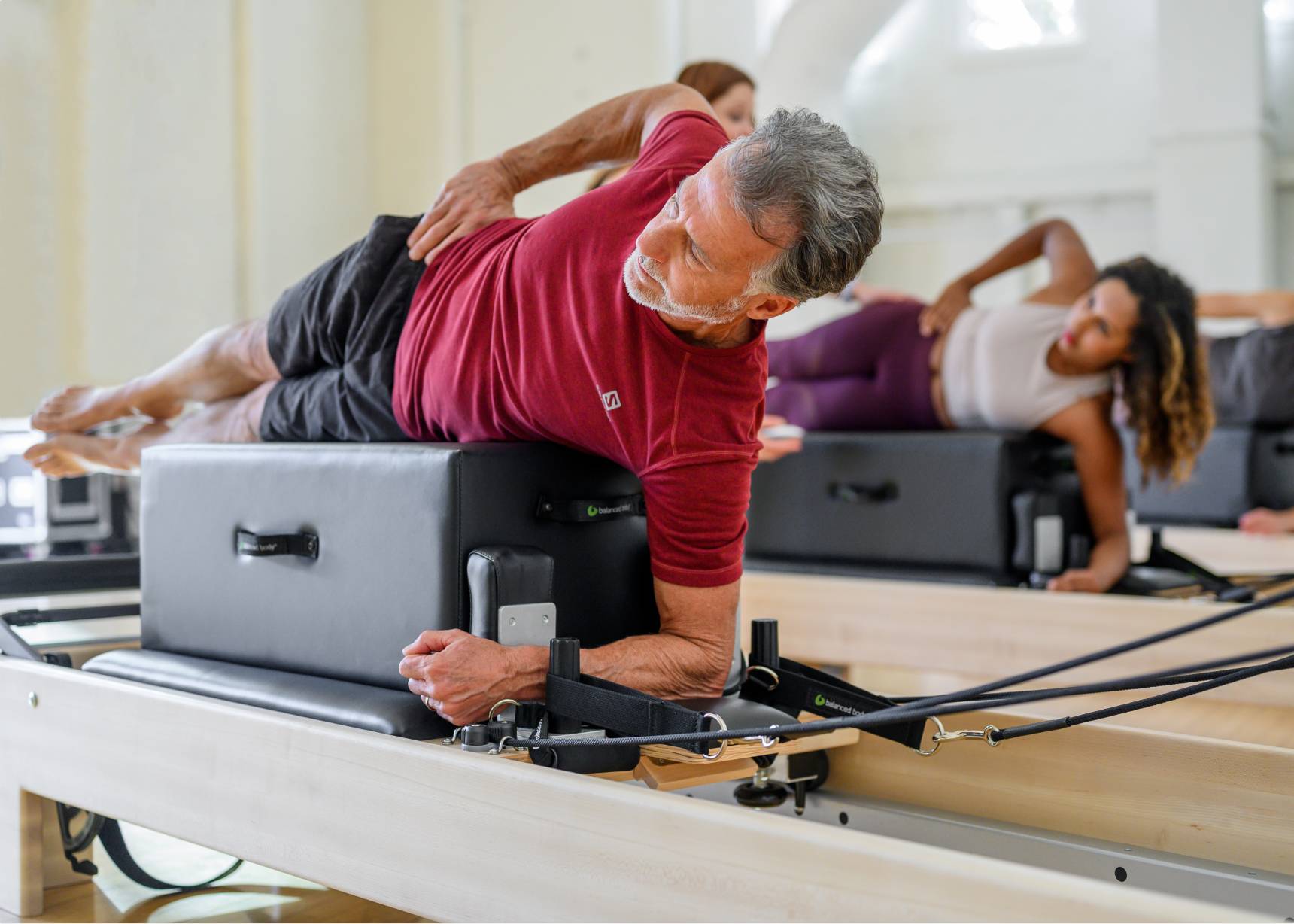
Frequently Asked Questions
What type of workout is Reformer Pilates?
Reformer Pilates is a low-impact, full-body training method that emphasizes core strength, balanced flexibility, and coordinated movement. It uses precise, controlled motions performed on a spring-loaded Reformer machine combined with focused breathing techniques to improve both physical fitness and mental clarity.
How does it differ from Mat Pilates?
The biggest distinction lies in the equipment. Mat Pilates is performed on the floor using body weight alone, while Reformer Pilates utilizes the machine's adjustable spring resistance and pulley system. This gives you access to a much broader variety of exercises and the ability to target specific muscle groups with greater precision.
What equipment is required?
The primary piece of equipment is the Pilates Reformer itself — a specialized machine with a sliding carriage, adjustable springs for resistance, a footbar, shoulder rests, and rope-and-pulley attachments. Some practitioners also use supplementary accessories like a Pilates box, a jump board, or a stability cushion for added variety.
Can complete beginners do Reformer Pilates?
Absolutely. Reformer Pilates is designed to be fully scalable for individuals at all fitness levels. The spring resistance can be dialed down for gentle, introductory movements or increased for advanced challenges. Many studios offer dedicated beginner classes, and a certified instructor can adapt any session to suit your current abilities.
How often should you practice to see results?
For noticeable improvements, aim for two to three sessions per week. Consistency matters more than intensity — maintaining a regular schedule will produce measurable gains in core strength, posture, flexibility, and overall body awareness within just a few weeks.
What should you wear to a session?
Wear comfortable, form-fitting activewear that allows a full range of motion without getting caught in the machine's moving parts. Avoid overly loose or baggy clothing. Grip socks are strongly recommended as they provide traction on the carriage surface and keep you stable during exercises.
Can you do Reformer Pilates at home?
Yes — home Reformers have become increasingly popular and accessible. Provided you have adequate floor space and ceiling clearance, a quality home Reformer can replicate the studio experience. It is highly recommended to first learn proper technique from a certified instructor before transitioning to independent home practice, so you can train safely and effectively on your own.\

Ready to Start Your Home Pilates Journey?
Explore the Stamina AeroPilates Precision Series — a complete resistance Reformer system built for home use.
Stamina AeroPilates Reformer →