
Here is a truth every serious griller lives by: the temperature outside has absolutely no say over when you light the coals. For those of us who are genuinely passionate about outdoor cooking, winter is not a reason to stop. If anything, it is the season that separates the casual weekend flipper from the dedicated pitmaster. There is something deeply rewarding about standing in the cold, tending a flame, and pulling off a flawless cook while the world around you shivers.
That said, cold weather grilling is a different game. The wind steals your heat, the air fights your fuel, and everything takes longer. But none of that matters if you approach it with the right mindset and the right tools. This guide will walk you through every strategy, technique, and piece of gear you need to keep your grill roaring hot no matter how low the mercury drops.
Embrace the Cold Weather Grilling Mindset
Before you even touch your grill, you need to reset your expectations. Winter cooking is not the lazy, sun-soaked ritual of summer. It demands more attention, more planning, and more engagement. You are not simply grilling food. You are actively managing a hostile environment to produce something extraordinary.
This means building strategies around your setup, thinking carefully about positioning, and accepting that every cook will require a bit more patience. Opening the lid takes longer to recover from. Charcoal burns differently. Timing shifts. Once you embrace this reality and plan for it, you are already ahead of the game.
First Priority: Windbreaks and Positioning
Wind is the single greatest threat to maintaining consistent grill temperature. It rips heat away from your cooking surface, pushes your burner to work overtime on a gas grill, and can create dangerous temperature swings on a charcoal setup. The solution is simple: block it.
Set Up a Windbreak: Place your grill against a wall, fence, or the side of your home. If you do not have a natural barrier, create one with a sheet of plywood, a privacy screen, or a fireproof tarp staked into the ground. Even a partial wind block makes a massive difference in temperature stability.
Choose Your Spot Wisely: Stay away from wide open areas. A sheltered corner of your patio or a spot next to a shed will dramatically improve your results. One critical warning though: never move your grill into a garage, enclosed porch, or any indoor space. Carbon monoxide poisoning is silent, invisible, and deadly.

Shield your cooking zone from harsh winter gusts with a professional-grade stainless steel wind guard built to last season after season.
Tagwood BBQ Wind GuardFuel Management: The Key to Consistent Heat
Cold air is denser than warm air, which means your grill has to burn through more fuel just to reach the same temperature. Whether you are running charcoal or propane, winter demands that you plan your fuel supply more carefully than any other time of year.
1Charcoal Users: Plan to use significantly more briquettes or lump charcoal than a summer cook requires. For long sessions, light a full chimney starter and have a second batch ready. Techniques like the snake method or the minion method deliver long, steady burns ideal for cold conditions.
2Propane Users: Always have a spare tank available. Running out of gas mid-cook in freezing weather is a nightmare. Store your backup in a sheltered area because cold propane does not vaporize efficiently and can reduce burner output.
And no matter what fuel source you use, make sure your prep work is done before you head outside. A sharp knife is safer and faster. Have your rubs, sauces, and tools within arm's reach so you are not running back and forth through the cold.
The Pre-Heat Is Non-Negotiable
In the summer, a 10-minute pre-heat might be enough. In winter, you need to at least double that. Give your grill a full 20 to 30 minutes to come up to proper cooking temperature. You are not just heating the grates. You are saturating the entire body of the grill with thermal energy: the lid, the walls, every piece of metal that holds and radiates heat.
Think of all that heated metal as a thermal battery. The more energy stored in the grill itself, the faster it recovers when you open the lid. This thermal mass is your best weapon against cold air rushing in. The longer you pre-heat, the more resilient your grill becomes throughout the entire cook.
Mastering Temperature Control and Cook Times
Forget the built-in lid thermometer. That dial on your grill lid is unreliable on a good day. In cold, windy conditions it is practically worthless. What you need is a dependable dual-probe digital thermometer. Set one probe on the grate surface away from direct heat to monitor your actual cooking temperature, and use the second probe inside whatever you are cooking to track internal doneness.
Keep that lid closed. Every time you lift the lid, you lose a massive amount of accumulated heat and force the grill to start the recovery process all over again. Resist the urge to peek. If your probes are reading correctly, there is no reason to open the lid until it is time to act.
Add buffer time to every cook. Plan for an extra 15 to 25 percent on top of your usual estimated time. A brisket that normally takes 12 hours might push to 14 or more in freezing conditions. Start earlier than you think you need to. A finished piece of meat resting in a cooler is always better than hungry people watching you sweat over a grill that is not cooperating.

Gear Up for the Fight
Standing out in bitter cold for an hour or more is genuinely miserable if you are not dressed for it. And when you are cold and uncomfortable, you make bad decisions. You pull the meat too early. You open the lid too often. You rush steps that need patience. The right clothing and gear turn a freezing ordeal into a comfortable, even enjoyable experience.
Your Cold Weather Game Plan
30 Minutes Before
Set up your windbreak. Get your grill station fully organized with everything within reach.
25 Minutes Before
Light the charcoal or turn on the gas. Start the extended pre-heat process immediately.
During the Cook
Layer up warm. Trust your probes completely and keep the lid sealed as much as possible.
After the Cook
Let the grill cool down completely before covering it, even if it is snowing outside.
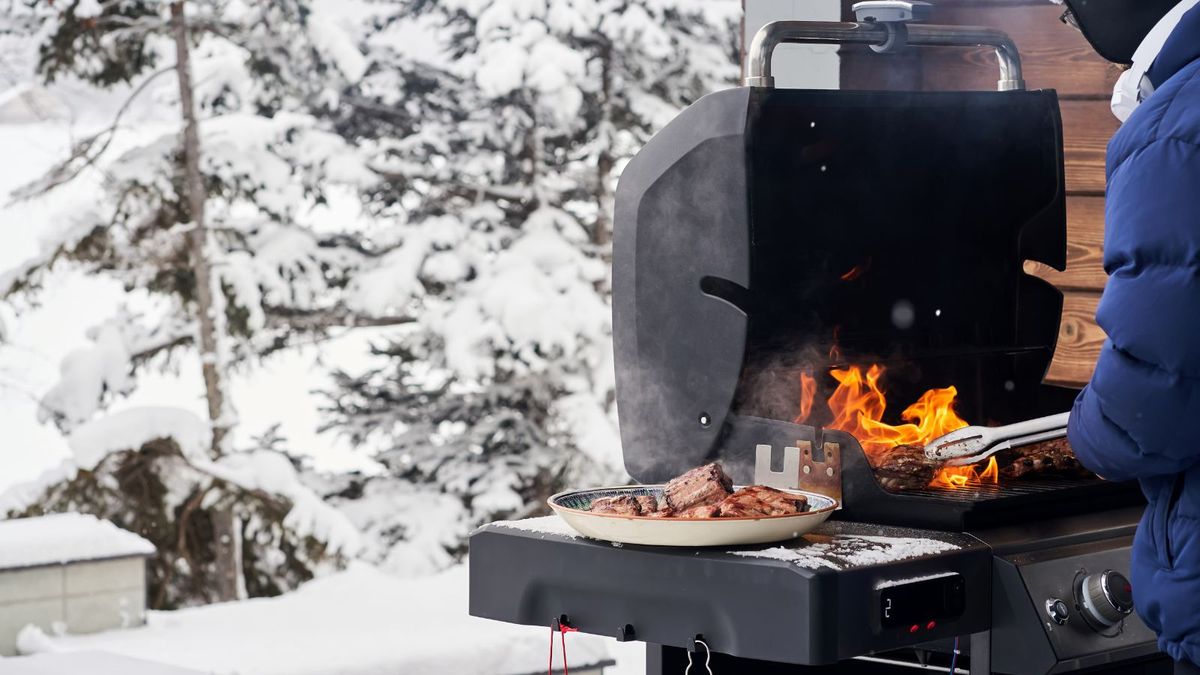
Conquer the Cold, One Steak at a Time
Do not let a drop in temperature send you running to the oven. This winter, step outside and claim your patio. With the right preparation, the right mindset, and the right gear, you are not just surviving cold weather cooks. You are thriving in them. The reward is a perfectly executed meal that carries an extra layer of satisfaction because you earned it in the elements.
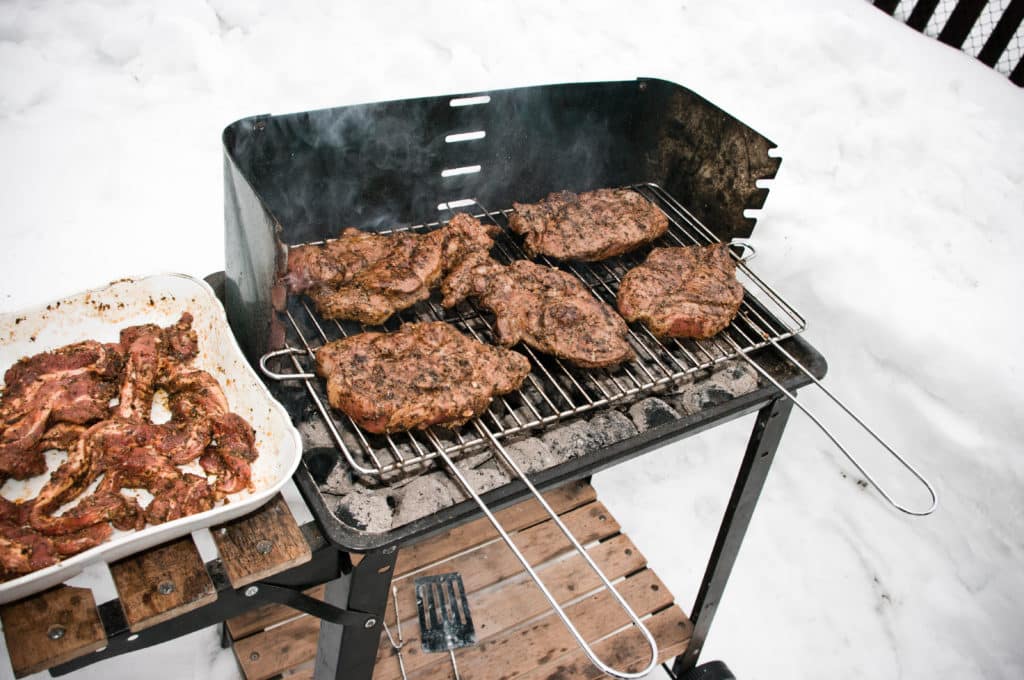
Gear Up for the Winter Grill Season
This is where the right accessories stop being optional and start being essential. A dedicated stainless steel wind guard is your front line of defense against the elements. It blocks gusts, stabilizes your heat zone, and lets you focus entirely on the food. It is the difference between cutting a session short out of frustration and confidently managing your fire from start to finish.
Beyond wind protection, make sure you have insulated gloves that still let you grip tongs properly, a headlamp for early dark evenings, and all your prep completed inside before you walk out the door. The less time you spend scrambling, the more you can enjoy the ritual. And when you enjoy the process, the results always speak for themselves.

So layer up, stock your fuel, protect your flame, and get out there. Winter grilling is not a compromise. It is a statement. Your backyard is open for business 365 days a year, and the cold does not get a vote.
Ready to Beat the Cold?
Equip your grill with professional wind protection and own every season.
Tagwood BBQ Wind GuardBackyard Provider — Your Year-Round Outdoor Living Destination