
For a long time, planks have been hailed as the gold standard of core training. Walk into virtually any gym, browse any fitness magazine, or follow any social-media workout influencer, and you will find the plank front and center. But is this simple isometric hold really the most effective way to build a rock-solid midsection? A team of exercise scientists decided to find out — and the results may reshape the way you approach your next ab workout.
Core strength is not just about sculpted abdominals. It plays a critical role in athletic performance, everyday movement, injury prevention, and spinal health. When the muscles that wrap around your trunk are strong and coordinated, everything from carrying groceries to sprinting after a bus becomes smoother and safer. That makes choosing the right core exercises more than a vanity project — it is a genuine health decision.
How the Plank Study Was Conducted
The research was carried out at a university exercise-science laboratory. A group of healthy, physically active volunteers — both men and women — were recruited to participate. Each subject performed a series of plank-based exercises while researchers measured the electrical activity in four key core muscles using electromyography (EMG) sensors adhered directly to the skin.
The four muscles monitored were the rectus abdominis (the "six-pack" muscle on the front of the abdomen), the external obliques (located along the sides of the torso), the internal obliques and transverse abdominis (deeper stabilizers), and the erector spinae (the long muscles running along the spine). By comparing EMG readings across multiple exercises, the researchers could determine which plank variations demanded the most from each muscle group.
Key Insight: EMG (electromyography) measures the electrical signals your muscles produce during a contraction. The higher the signal, the harder that muscle is working — giving scientists an objective way to rank exercises.
Why Planks Became So Popular
Part of the plank's appeal lies in its simplicity. No equipment is required, it can be performed almost anywhere, and the basic form is easy to learn. Fitness professionals have long favored it because, unlike crunches or sit-ups, it trains the core in a way that closely mirrors how the muscles function in real life — by resisting unwanted movement rather than producing it.
The traditional plank is what experts call an "anti-extension" exercise. Your core muscles must fire to prevent the lumbar spine from sagging toward the floor. This bracing pattern carries over to real-world activities such as lifting heavy objects, maintaining posture during long hours at a desk, and stabilizing the body during sports. However, researchers wanted to know whether the standard plank could be improved upon — or whether other variations might activate the core even more intensely.
What the Research Revealed
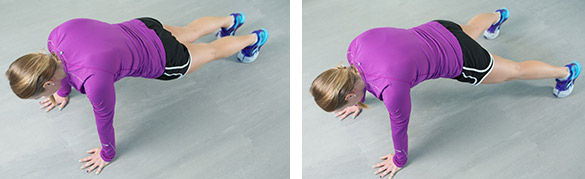
Perhaps the most significant discovery was that not all planks are created equal. The standard forearm plank, while solid, did not produce the highest muscle activation across the board. Several modifications dramatically increased the demand on one or more core muscle groups.
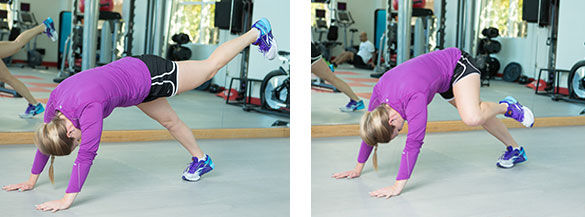
Exercises that introduced instability — such as placing the forearms on a stability ball instead of the ground — forced the core to work significantly harder to maintain balance. Movements that reduced the number of contact points, like lifting one leg or one arm, also ramped up muscle activation because the body had to compensate for the shifting center of gravity.
Interestingly, exercises that combined rotation or lateral challenges — such as the side plank and the "stir-the-pot" variation on a stability ball — ranked among the top performers for the oblique muscles. These lateral and rotational demands are often underrepresented in many people's training routines, yet they play a huge role in functional strength and injury prevention.
| Exercise | Rectus Abdominis | External Obliques | Erector Spinae |
|---|---|---|---|
| Standard Forearm Plank | Moderate | Moderate | Moderate |
| Stability Ball Plank | High | High | Moderate–High |
| Side Plank | Moderate | Very High | Moderate |
| Stir-the-Pot | Very High | Very High | High |
| Plank with Arm/Leg Lift | High | High | High |
The Top Plank Variations You Should Try
Based on the study's findings, incorporating a mix of the following exercises into your routine will challenge your core from every angle. Below are the standout performers, along with brief descriptions of each movement.
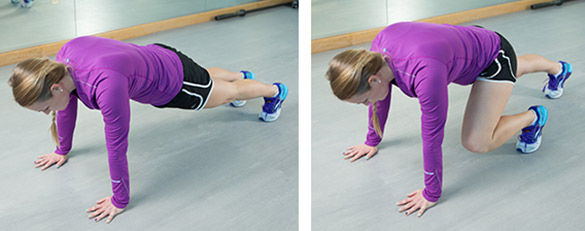
Mountain Climber
Begin in a standard push-up position and drive one knee toward your chest. Alternate legs in a controlled, rhythmic fashion while keeping your hips level and your core braced throughout the movement.
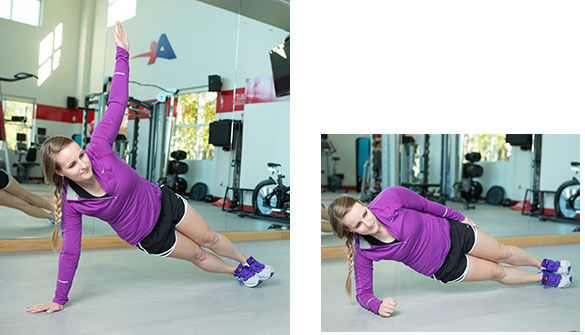
Side Plank
Lie on your side with your elbow directly beneath your shoulder. Lift your hips off the ground so your body forms a straight diagonal line. Hold the position while breathing steadily and keeping your core tight.
Stability Ball Roll-Out
Kneel behind a stability ball with your forearms resting on top. Slowly roll the ball forward, extending your arms while maintaining a rigid torso. Pull back to the start without letting your lower back arch.
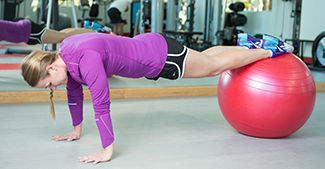
Stir-the-Pot
Assume a forearm plank with your arms on a stability ball. Move your forearms in small, controlled circles — as though stirring a giant pot — while keeping the rest of your body completely still.
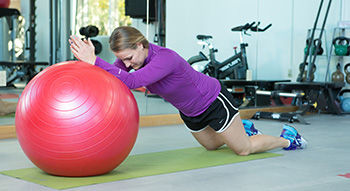
Forearm Plank with Hip Dips
From a standard forearm plank, rotate your hips to one side and gently dip toward the floor. Return to center and repeat on the opposite side. This targets the obliques while maintaining overall core engagement.
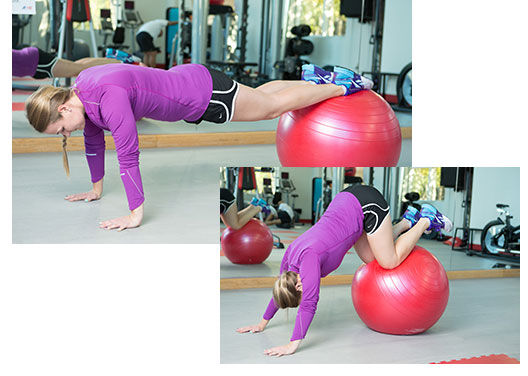
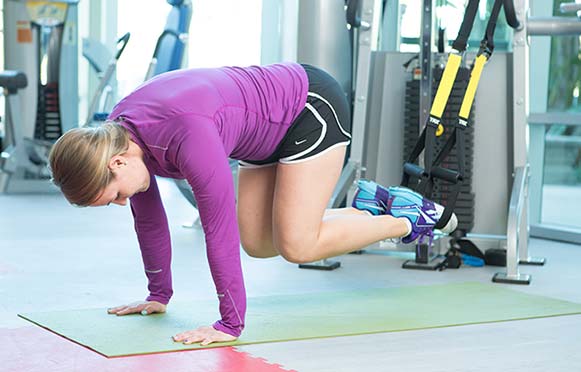
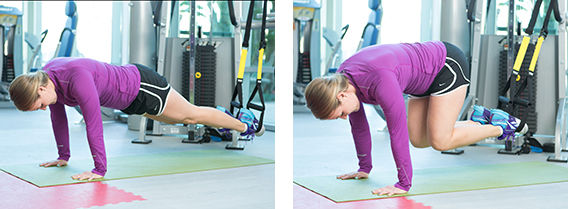
Suspension Trainer Knee Tuck
Place your feet in the loops of a suspension trainer and assume a push-up position. Drive both knees toward your chest simultaneously, pause, then extend back out with control. Keep your hips from piking up.
Beyond the Standard Plank
One takeaway from the research that surprised even seasoned trainers was the degree to which instability tools — particularly the stability ball — elevated muscle activation. The constant micro-adjustments required to stay balanced on an unstable surface mimic the unpredictable demands of real-world movement far better than a static hold on a solid floor.
This does not mean the traditional forearm plank is useless. For beginners, it remains an outstanding starting point because it teaches proper bracing mechanics and builds foundational endurance. Once that baseline is established, however, progressing to more challenging variations is essential for continued improvement.
Pro Tip: Aim to include at least one frontal-plane exercise (such as a standard or ball plank), one sagittal-plane challenge (like a mountain climber), and one rotational or lateral exercise (like a side plank or stir-the-pot) in every core session. This three-dimensional approach ensures balanced development.
Practical Recommendations for Your Routine
For the average fitness enthusiast, the research suggests a few clear strategies. First, swap out at least some of your static planks for dynamic plank variations once you have mastered the fundamentals. Second, incorporate an unstable surface when possible — a stability ball is inexpensive and widely available. Third, do not neglect the obliques and the muscles along the spine. A core program that only targets the front of the abdomen leaves significant gaps in functional strength.
Most people will benefit from training core two to four times per week, selecting three or four exercises per session, and performing two to three sets of each. For timed holds, aim for 20 to 45 seconds at a challenging level of difficulty rather than grinding through two-minute holds with compromised form. Quality always trumps duration.
Finally, consider pairing bodyweight plank variations with a dedicated core training machine that provides adjustable resistance. Machines designed specifically for core conditioning allow you to add progressive overload — the same principle that drives strength gains in every other muscle group. This combination of free-movement planks and guided machine work covers all bases.
The Bottom Line
Planks deserve their place in any well-rounded fitness program — but the basic forearm plank is merely the starting line, not the finish. The research makes a compelling case that modified and dynamic plank variations, especially those involving instability and rotation, activate the core muscles to a far greater degree.
By diversifying your plank repertoire and progressively challenging yourself, you can build a core that is not only aesthetically impressive but genuinely functional. Whether you are an athlete chasing better performance, a weekend warrior looking to move pain-free, or simply someone who wants to feel stronger every day, the message is the same: evolve your plank game, and your core will thank you.