
Discover How to Select the Perfect Dust Collection System for Your Workshop
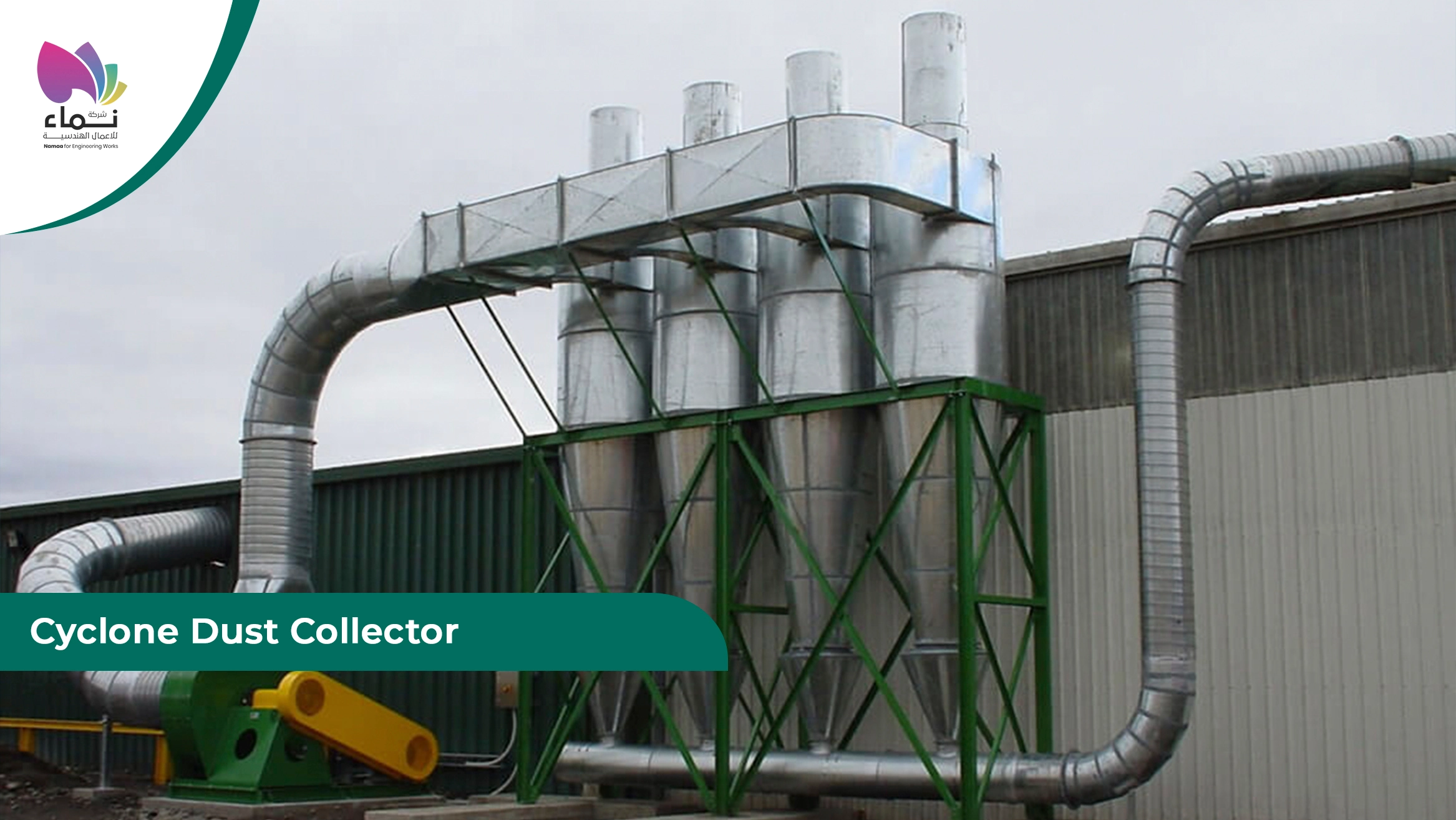
Engineered with meticulous attention to detail and crafted to meet the highest industry benchmarks, the Cyclone Dust Collector marks a revolutionary advancement in workshop dust management. Featuring exceptional performance and dependable operation, this equipment stands as a cornerstone of quality—protecting air purity and fostering a cleaner, more secure working atmosphere.
Understanding Cyclone Dust Collector Mechanics
Cyclone dust collectors, appropriately named after their tornado-like internal air movement, feature distinctive funnel-shaped chambers. Debris and particles enter the intake at considerable velocity, where they encounter powerful centrifugal forces that drive them into a spinning cyclonic motion. Consequently, denser particles migrate toward the outer walls and descend to the collection bin below, while purified air ascends and exits through the upper discharge port.
For enhanced particle capture, a secondary fabric filtration unit can be installed after the cyclone stage. The separation effectiveness relies heavily on the centrifugal dynamics applied to airborne particulates, with larger mass particles experiencing stronger outward forces. Variables including airflow speed, the cyclone's geometric profile, and exposure duration all contribute to overall collection performance.
Varieties of Cyclone Dust Collection Systems
Our commitment lies in delivering all-encompassing solutions for industrial air quality management, featuring an extensive selection of cyclone dust collectors engineered to address various operational demands. Below are the primary categories available:
1. Single-Chamber Cyclone Collector
The foundational design featuring one cyclone chamber. Optimal for compact workshops or situations where floor space is at a premium.
2. Multi-Chamber Cyclone Collector
Incorporates several cyclone chambers arranged in parallel or sequential configurations. Delivers superior efficiency and expanded throughput versus single-chamber alternatives.
3. Reverse-Airflow Cyclone Collector
Features an inverted airflow pattern compared to standard models. This engineering approach reduces pressure losses and enhances energy efficiency.
4. Premium-Efficiency Cyclone Collector
Built with refined aerodynamic profiles and specialized internals to achieve exceptional separation rates, even capturing microscopic particles with negligible pressure reduction.
5. Cyclonic Wet Scrubber
A sophisticated hybrid combining cyclonic action with wet scrubbing technology. Excels at capturing both arid and moisture-laden particulates across diverse applications.
6. Industrial-Grade Cyclone Collector
Heavy-duty systems engineered for demanding, large-scale environments commonly found in metalworking facilities, foundry operations, and production plants.
Every cyclone dust collector variant presents distinct benefits suited to particular scenarios, with selection criteria including particle dimensions, air volume requirements, available space, and operational specifications.
Experience Superior Air Quality with Our Professional-Grade Cyclone Dust Collector
South Bend SB1099 3HP Cyclone CollectorWhat Exactly is a Cyclone in Dust Collection?
Within dust collection frameworks, a cyclone represents specialized apparatus designed to isolate particulate matter from air streams. It functions through cyclonic separation principles, harnessing centrifugal dynamics to extract heavier contaminants from the airflow.
The operational sequence unfolds as follows:
Intake Stage: Contaminated air enters the cyclone via an inlet port, typically angled tangentially. This angular approach initiates the characteristic spiral motion within the chamber.
Centrifugal Action: As the air spirals downward within the cyclone, powerful centrifugal forces develop and act upon suspended particles.
Particle Migration: Due to centrifugal influence, heavier debris migrates toward the peripheral walls while cleaner air gravitates toward the central axis.
Collection Phase: The separated particles, now traveling along the walls, lose momentum and descend into the hopper positioned at the cyclone's base.
Purified Discharge: Cleaned air exits through an upper outlet, prepared for environmental release or subsequent filtration stages.
Cyclones demonstrate remarkable effectiveness in trapping larger particulates and frequently serve as preliminary filters in comprehensive dust collection systems, eliminating coarse debris before air reaches fine-filtration components. Their widespread adoption spans woodworking, metalworking, agricultural, and mining sectors where substantial dust and byproduct generation is commonplace. The technology earns recognition for its straightforward design, reliable performance, and minimal maintenance demands—making cyclones a favored solution across numerous dust management scenarios.
Key Benefits of Cyclone Dust Collectors
Explore the compelling advantages that cyclone dust collectors bring to your operation:
Cost-effective solution for high-volume, particle-intensive environments
Customizable configurations matching specific work conditions
Proven efficiency through essential performance metrics
Superior handling of substantial particulate matter
Standalone capacity for particles up to 200 mesh
Excellent pre-separation stage for baghouse systems
Minimized total dust accumulation
Reduced upkeep requirements
Cyclone Collectors Versus Alternative Dust Collection Technologies
Understanding how cyclone technology stacks up against other dust collection methods helps ensure you select the ideal solution:
Cyclone vs. Baghouse Collectors
Baghouse systems deliver enhanced fine-particle capture compared to cyclones. However, cyclones prove more economical for coarser debris, whereas baghouses excel with microscopic particulates. This makes baghouses preferable when precision filtration is paramount.
Cyclone vs. Electrostatic Precipitators (ESPs)
Baghouse collectors are celebrated for their simplicity and durability when compared to ESPs. Despite ESPs achieving impressive capture rates, their intricate electrical systems demand greater maintenance. Baghouse units offer easier operation, making them the go-to choice for many industrial applications.
Cyclone vs. Wet Scrubbers
Baghouse collectors generally suit dry particulate management better than wet scrubbers, which specialize in moist or sticky contaminants. Wet scrubbers employ liquid media to neutralize and trap particles, whereas baghouses utilize fabric filtration for dry dust capture.
Cyclone vs. Cartridge Collectors
Baghouse systems feature greater filtration surface area versus cartridge units, enabling higher airflow capacity and extended filter life. Cartridge collectors, though more compact and suitable for tight installations, may not match baghouse performance in restricted-space scenarios.
The Science Behind Cyclonic Filtration
Cyclonic filtration mechanisms operate through a sophisticated yet elegant process: Fluid enters the cyclone chamber via the inlet, where geometric design prompts the formation of a central downward spiral. Centrifugal forces propel the fluid along the chamber perimeter.
The Essential Role of Cyclone Separators
A cyclone dust separator functions as industrial equipment engineered to extract solid contaminants from gas streams. Though frequently termed a dust collector, it primarily serves as supplementary filtration apparatus for comprehensive dust management systems.
Ready to Transform Your Workshop Air Quality?
Invest in professional-grade dust collection and experience the difference clean air makes in your workspace productivity and health.
South Bend SB1099 3HP Cyclone CollectorDiscover premium dust collection solutions and outdoor equipment at BACKYARD PROVIDER