
The biggest living room lighting shift of 2026 centre's on sculptural chandeliers blended with metallic accents, supported by a thoughtful mix of ambient, task, and accent illumination. If you're rethinking how to light your living space, begin with a statement fixture, incorporate warm dimmable bulbs, and layer in sconces and table lamps to achieve both balance and atmosphere.
The Mood-Making Power of Light

Layer sculptural and metallic lighting to add warmth and depth to your living room ambiance.
Living room lighting in 2026 is all about statement illumination, layered glow, and metallic textures that inject warmth and dimension into every corner. The direction for this year favors sculptural chandeliers, gleaming metallics reminiscent of brushed brass or soft gold, and a deliberate mix of light sources you can dim and adjust throughout the day. It's dynamic, it's inviting, and it's thrilling all at once.
Design influencers and celebrity homes have accelerated this shift, with highly curated fixtures that function as living art. Picture a chandelier with organic arms or milk-glass globes, supported by sleek wall sconces and low-profile table lamps. The outcome is livable luxury — visually arresting, comfortable at every hour, and flattering to furniture, fabrics, and art.
Your Lighting Game Plan for 2026
Layered lighting delivers its best results when you combine ambient, task, and accent illumination along with warm dimmable bulbs and one sculptural focal piece.
Begin with a focal piece. A sculptural chandelier or statement pendant becomes your ambient lighting and visual anchor. In living rooms with 9 to 10 foot ceilings, set it at least 7 feet of clearance under a chandelier. In rooms with seating beneath, hang it so the bottom sits roughly 30 to 36 inches above a coffee table.
Select warm, flattering bulbs. For living rooms, designers often advise 2700K to 3000K color temperatures with high CRI (90+). Opt for LED bulbs with soft, warm skin tone flattery. As a rule of thumb, aim for 20 to 30 lumens per square foot; layered multiple fixtures let each source share the effort rather than one harsh "big light."
Add task lighting where you live. Pair sofas and chairs with table lamps or adjustable floor lamps for reading at 30 to 36 inches high. If you love conversation nooks, small-scale articulating sconces or swing-arm lamps keep light off the TV and on faces.
Place accent lights for dimension. Wall sconces centered 60 to 66 inches from the floor add height and texture; picture lights at 3 to 7 inches above a frame. Wash niches or shelves with low-glow lights to create depth without visual clutter.
Bring in metallic fixtures for quiet glamour. Brushed brass, soft gold, or blackened bronze mix beautifully. Keep it to two or three finishes total for a cohesive layered lighting look. Metallics bounce warm light and introduce a subtle sparkle that reads as luxurious, not loud.
Use dimmers and zones. Put the chandelier, sconces, and lamps on separate dimmers so you can shift from 100 percent for cleaning, to 50 percent for guests, to 20-to-30 percent for movie night. Smart dimmers or tunable LEDs are small tweaks with big impact.
Featured Product
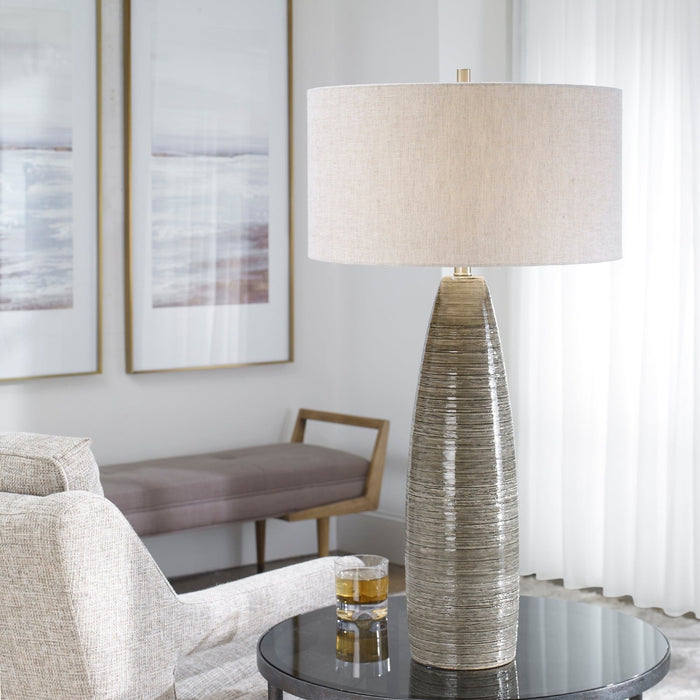
Alt: Sculptural brass chandelier over a neutral sofa with layered table lamps and wall sconces.
Caption: Layered living room lighting with metallic finishes and warm bulbs.
Cosmo Charcoal Table LampUser Insight
"I've seen living rooms transform simply by swapping out 4000K bulbs for 2700K and adding a dimmer — the same furniture suddenly feels softer, richer, and more inviting."
Anecdote
One couple installed their chandelier bodyguard over the coffee table, but it hung too high and felt cold. They lowered it to give 7 feet of clearance in the walking path and added two low-shade sconces at 62 inches. The room suddenly glowed, and their art popped. A renter tossed a simple plug-in arc lamp in brushed brass with a pair of clip-on picture lights; all on smart plugs, the metal accents made the space feel custom without a single wire in the wall. A minimalist client tried smoked-glass globes over a slim brass frame, with 2700K bulbs and a small brass tray on the coffee table — the glow felt warm, not fussy.
Common Mistakes to Avoid
Overhead-only lighting: Relying on a single overhead fixture flattens a room and makes it feel colder and smaller. Layer in ambient, task, and accent light to add depth and warmth.
Relying on one ceiling fixture: If it happens, fix it. Add two table lamps and a pair of wall sconces to create three distinct light zones.
Blue-white bulbs everywhere: Why it happens — assuming "brighter is better." Fix it: Use 2700K to 3000K warm bulbs in living spaces and keep CRI at 90+ for true color.
Hanging heights that feel off: Why it happens — guessing. Fix it: keep chandelier clearance at 7 feet in circulation paths; mount sconces 60 to 66 inches to center.
Too many metallics: Why it happens — trend chasing. Fix it: cap finishes at two or three; repeat each at least twice so it looks intentional.
Ignoring dimmers: Why it happens — "I'll add them later." Fix it: install dimmers now; they're the cheapest way to make lighting feel custom and controllable.
Expert Moves to Make Your Room Sing
Aim for three to five light sources in a medium-sized living room and put every circuit on a dimmer for precise mood control.
Go sculptural, not just oversized. A chandelier with organic arms, sphere clusters, or folded-metal shades reads like art and reduces the need for extra décor.
Try asymmetric pairing: one slim floor lamp on the left of a sofa and a low ceramic table lamp on the right to balance heights and textures.
Use tiered accent visuals. A 45-degree beam on an accent light highlights art without glare; wider beams of 60 to 90 degrees bathe walls for softness.
Try plug-in solutions. Renters can get the wall-sconce look with plug-in models and cord covers; mount centers at 62 inches to keep consistency.
Mirror reflections: if you have a TV, angle sconces and use matte bulbs or opal glass to avoid screen glare while preserving ambience.
Mix glass finishes. Smoked or opal glass diffuses light for a softer glow; clear glass increases sparkle but may need lower wattage or frosted bulbs.
Reflection: Every truly great living room has lighting that changes with the moment. Morning coffee, homework hour, late-night talk — one plan, multiple moods.
Tools, Ideas, and Alt-Text You Can Use
Free tools and simple practices help you plan layered lighting without guesswork.
Use a room lumen calculator to estimate totals, then divide output across 4 to 6 fixtures instead of one. Mock placement with painter's tape: sconce heights at 60 to 66 inches and chandelier diameters before you drill.
Choose smart dimmers or bulbs for scene presets: "Read 70%," "Guests 50%," "Movie 20%." Visualize options with inspiration boards. Upload a photo and test sculptural chandeliers, metallic fixtures, and wall sconces before committing.
Suggested Image Alt-Text & Captions
Alt: Sculptural brass chandelier over a neutral sofa with layered table lamps and wall sconces. Caption: Layered living room lighting with metallic finishes and warm bulbs.
Alt: Brushed gold wall sconces flanking artwork above a console. Caption: Sconces centered at 62 inches add height and gentle accent glow.
Alt: Mixed metal floor and table lamps beside a sectional. Caption: Two finishes repeated for a cohesive lighting palette.
Visualization Scenario
It's just after sunset. A sculptural chandelier dims to 30 percent, its soft gold branches catching a quiet sheen. Sconces wash the wall in a gentle haze, the grain of the wood console deepening. A low ceramic lamp glows tight over a book. The TV is off, room is quiet, and the night feels like a planned retreat — warm, layered, and perfectly yours.
FAQs: Living Room Lighting Trends 2026
How should I layer lighting in a living room?
Layer ambient, task, and accent lighting with a sculptural chandelier for ambient, table or floor lamps for task, and wall sconces for accent. Put each layer on a dimmer for flexible mood control.
What's the best bulb color temperature for living rooms?
For living room lighting, 2700K to 3000K warm white is recommended to flatter skin tones and fabrics while keeping the space cozy and relaxed.
Can I mix metallic lighting fixtures in the same room?
Yes, mixing metallics looks intentional when limited to two or three finishes and repeated at least twice. Brushed brass with blackened bronze is a timeless pairing.
How high should I hang a chandelier in a living room?
Maintain at least 7 feet of clearance in walking paths; above a coffee table, the bottom of the fixture can sit roughly 30 to 36 inches above the tabletop.
Where should wall sconces be placed in a living room?
Mount wall sconces with the center at 60 to 66 inches from the floor and space them 7 to 8 feet apart depending on room size and the beam spread of the fixture.
Light the Room You Actually Live In
Lighting is the fastest way to change how a living room feels, and 2026 points to sculptural statements, metallic warmth, and flexible layers. Choose one showpiece chandelier, ground it with task lighting, add glowing sconces, and keep everything dimmable and warm. Do that, and your space will look good at noon, feel magical at dusk, and stay comfortable long after the credits roll. Ready to make this vision real? Try layouts and finishes in minutes with BackyardProvider.com.
Ready to Transform Your Living Room?
Browse our curated collection of statement lighting fixtures.
Cosmo Charcoal Table Lamp