
Understanding what makes a fishing kayak truly reliable on the water
Overview
This comprehensive guide explores the engineering challenges that designers face when creating a dependable fishing kayak. We examine the critical factors that influence kayak stability and reveal the ideal solutions achieved by combining proven naval design principles with modern innovations specifically tailored for anglers.
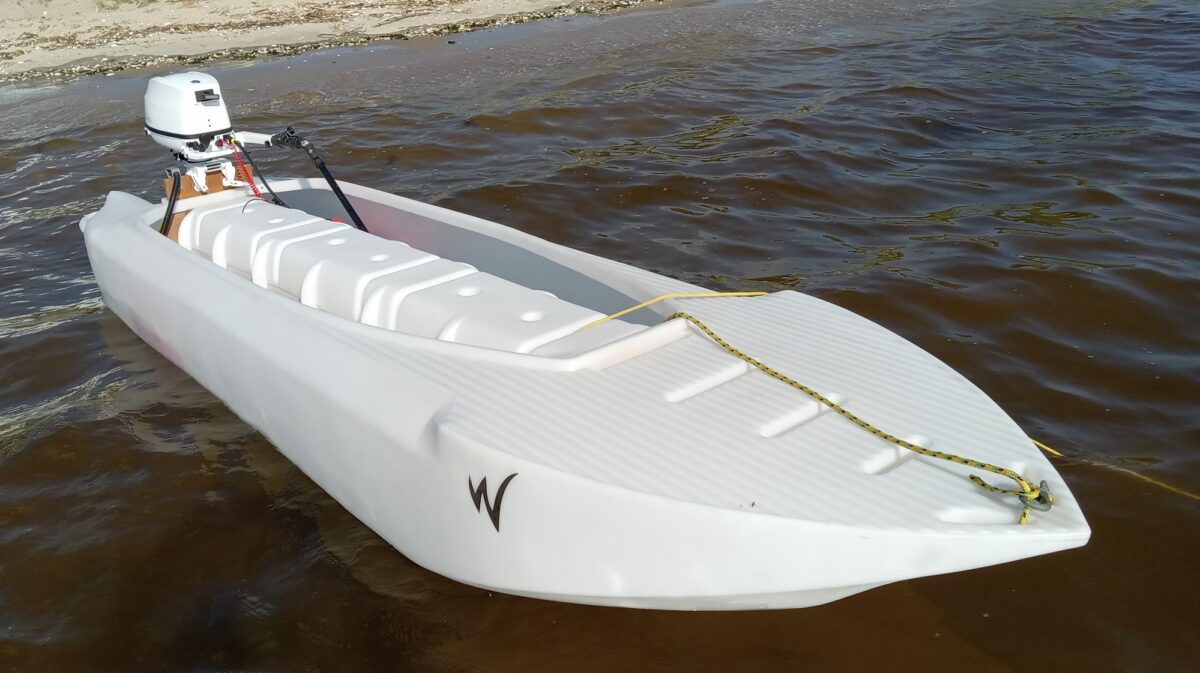
Stability stands as the paramount consideration in fishing kayak design, serving as the primary metric by which anglers evaluate kayaks built specifically for their pursuit compared to vessels designed with minimal attention to stability requirements. The latter category encompasses kayaks engineered for speed, those optimized for whitewater adventures, and racing models focused purely on velocity.
These performance-oriented applications attract relatively few paddlers and rarely transition users toward recreational paddling. As a result, unstable kayak designs represent a limited market segment and fail to demonstrate growth trends in terms of popularity. From an objective standpoint, unstable kayaks serve as specialized equipment or enthusiast vessels that lack broader practical application.
All other kayak categories demand stability for effective paddling, and their primary distinguishing characteristic among alternatives is the degree of stability they provide. This stability factor determines what enables kayak and stand-up paddle craft to prevent their occupants from capsizing during recreational outings.
The kayak market continues to expand for stability-focused recreational, day-touring, and fishing applications. Collectively, these segments constitute the majority of kayak sales in terms of both units and revenue. The movement toward paddle-based kayaks and boards with standing capability, along with hybrid designs, will only accelerate demand for stable kayak configurations as enthusiasm for recreational kayaking and kayak fishing continues to surge, whether for leisure paddling, touring adventures, or angling expeditions.
How to Engineer a Stable Fishing Kayak
Regardless of hull configuration, a kayak remains a compact watercraft that must overcome inherent natural limitations and particular engineering obstacles, including the following considerations.
1. Kayaks Feature Narrower Beams Than Other Small Watercraft
When compared to other compact vessels such as canoes and dinghies, kayaks are inherently narrow by design. This stems from the reality that they are considerably more slender than paddle boards, by necessity given that a dual-blade kayak paddle cannot effectively reach water beyond a specific beam width. Kayaks exceeding this threshold require a seated paddle operator to lean substantially, reducing stroke efficiency and creating physical discomfort, while also functioning poorly as sit-on-top designs since the paddler cannot leverage their paddle effectively in center-positioned arrangements, and they require elongated hulls that reduce speed. Therefore, kayaks maintain compactness and demand highly efficient propulsion systems.
2. Kayaks Are Lightweight Vessels, and This Is Intentional
Marketing a bulky and cumbersome watercraft and labeling it as a kayak or hybrid design may serve as an effective promotional strategy for certain manufacturers targeting consumers who wish to experience kayak fishing activities, but it produces no practical benefit for the recreational kayak market since it remains too substantial and overly complex. This is precisely why such vessels deserve classification as small boats and should relinquish the kayak designation, which is where they ultimately belong in a distinct category of compact watercraft.
3. Kayak Propulsion Systems Are Generally Underpowered
Kayaks predominantly rely on human power, which means they suffer from a significant power limitation. This constrains their hull design to configurations that achieve acceptable efficiency in displacement operation, meaning they rely on flotation and buoyancy principles for everyday paddling, unlike individuals who utilize jet skis for watersport kayak activities or anglers who equip paddle kayaks with motorized systems.
4. Fishing Kayaks Require Superior Stability Compared to Standard Kayaks
Fishing from a kayak involves executing demanding physical movements on the hull sides, such as casting and landing fish. During these activities, the angler cannot rely on their paddle for balance assistance, and they must depend entirely on their kayak's inherent stability characteristics.
Understanding Physical Constraints on Kayak Stability
Being restricted in its beam, overall dimensions, and hull configuration, the kayak provides only limited stability. This proves adequate for kayak anglers since close-range fishing does not require any heavy equipment to maintain balance.
The limits of the kayak's stability are established by its buoyancy, defined as its capacity to float and accommodate additional weight without compromising stability.
The displacement corresponds to the kayak's buoyancy or its ability to float and support additional weight without capsizing. As the kayak reduces in weight, weight shifts more readily from the centerline to either side, and this weight transfer accelerates. If the kayak is loaded to capacity by a substantial amount of buoyancy, it will still shift toward a small deflection, and either the kayak operator must adjust, or the kayak must maintain sufficient secondary buoyancy to restore their balance and prevent capsizing.
As the kayak's side settles deeper into the water, it will position itself too low and too far down, thereby causing the kayaker to lose their balance and capsize their vessel.
How Redistributing the Kayak's Buoyancy Relative to Its Centerline Influences Stability
The greater the distance from the kayak's centerline, the more effective its buoyancy becomes in enhancing stability. A cubic inch of the kayak's buoyant volume positioned along the kayak's centerline translates into stabilizing effect, while an equal cubic inch of buoyant volume situated at the extreme lateral edge of the kayak provides substantially enhanced stabilizing effect.
For instance, for a kayak measuring 34 inches wide and one cubic inch of buoyancy located at 0 (at the centerline), providing 0 stability factor at 0.14 inch distance from centerline, results in a more efficient lateral support than a cubic inch located 1 inch from the centerline. This measures 0.14 or is more effective in terms of stability.
In other terms, if we examine a given buoyant volume in cubic inches as an asset that requires allocation in a manner that maximizes the kayak's stability, we should avoid positioning any amount of buoyancy (for example, cubic inches) along the kayak's centerline line, or close to it, and allocate as much reserve buoyancy as possible towards the sides as far as possible from the kayak's center line, namely along the kayak's outer edges. Practically, this means the kayak's centerline should not be in contact with the water at all.
Position of the Center of Gravity and Its Impact on Kayak Stability
A kayak traveling in open water possesses a total mass, which includes its own weight, and the higher the mass of its operator. This is a classic problem to which traditional naval engineering should be complementary with Micronautical principles. For the purpose of having this center of gravity analysis simpler, we'll ignore mass and weight as the same thing and describe the kayak's center of mass (its center of gravity).
The kayak's CG is located above its center line, and because its layout is linear and sitting or high, the kayak's overall CG is situated quite high above some waterline. When the kayak gets destabilized, it means that its CG shifts to one side away from center line, and its entire center of mass by your CG to that same side.
The higher the kayak is, the bigger the mass it can support, and as it gets destabilized, the more its total weight moves to one side. This means that a kayak sitting or riding from it is less stable than a kayaker seated at water level, such as when paddling a sit-on-top kayak, or when fishing from it.
Twin Hull Fishing Kayak Versus Catamaran Kayak
Going back to our ideal stable kayak form, which is a twin hull design: A traditional catamaran design would imply that we separate the two hulls by a platform, and let the kayaker operate their kayak while seated on top of that platform, as well as fish from it on platforms.
This has been tried in the past and is inferior to the SOT format, as it results in a slower hull due to the broader beam, and also the platform offers no advantage when it comes to reaching forward to lateral forces, whether while paddling or when fishing.
Going back to our ideal stable kayak form, which is a twin hull design: A traditional catamaran design would imply that we separate the two hulls by a platform, and let the kayaker operate their kayak while seated on top of that platform, as well as fish from it on platforms.
The Traditional L Kayaking Position Versus The Riding Position
The combined stability and ergonomic problem described above was solved in the W by designing deep, isolated hulls for the ideal stable kayak and enabling each of the operator's legs to go in its own hull, all the way down, with their feet resting on the bottom, that is below waterline, as low as possible. This took care of the kayaker's weight and redistributed it lower than it would have been if the kayaker was seated at deck position.
In addition, placing the kayaker's legs in the hulls allowed the kayaker better leverage on the kayak by enabling them to use their legs as handy levers for balancing and destabilizing the kayak and doing so by applying their weight on the bottom of the hulls instead of on the top of the deck. This is described as active balancing. It is comparable to the advantage achieved by ATVs as compared to sit-on style, who operate their vehicles from similar riding positions.
Key Fishing Kayak Stability Facts
Fishing kayaks are wider than the average kayak, but although the 34-inch wide W Lio kayak (kid's size) is one of the kayaks outfitted with outriggers.
Thanks to its outriccers, narrow hulls, and improved ergonomics, the W Lio is also faster than most fishing kayaks, including some that are considerably longer and many touring kayaks as well.
Understanding Initial (Primary) Stability and Secondary Stability
This article avoids discussing the difference between Initial (primary) Stability, defined as what the kayaker feels in terms of movement, or the water, and Secondary Stability, which is what they feel once the kayak has been destabilized, and it's tilting to the side. The reason for this approach is that, as we've seen, stability is our only concern in various conditions, and we maintain that under normal conditions, the kayaker should not be required to make any effort to stabilize their kayak, so even pay attention to that feeling in a kayak.
A kayak's stability is key, especially if you want to fish standing in it or prefer the best stability for your kayak. This is why you should always compare across various fishing applications and where kayakers using shots and other S features are more commonly seen in comparison to average anglers in everyday fishing trips. How much stability you need depends on your comfort level and confidence as well as your sense of balance, and be able to focus on what you're doing without constantly thinking about balance.
Experience Superior Stability on the Water
Ready to upgrade your fishing experience with a kayak designed for maximum stability and performance?
Vibe Cubera 120 Hybrid KayakExplore our complete collection of fishing kayaks and outdoor equipment at BACKYARD PROVIDER