

Why Choose a Wine Cellar Cooling System Over a Standard Air Conditioner?
Many wine enthusiasts wonder whether a conventional air conditioning unit might suffice for their cellar. While standard AC systems can lower temperatures, they fall short in several critical areas that wine storage demands.
Residential air conditioners are engineered to cool spaces to around 70°F—far warmer than the ideal 55°F that wine prefers. Additionally, these units actively remove humidity from the air, which can dry out corks and ultimately compromise your wine. Wine cellar cooling systems, by contrast, are purpose-built to maintain lower temperatures while preserving the 50-70% humidity levels that keep corks supple and seals intact.
Standard air conditioners also struggle with continuous operation in cooler environments, often cycling inefficiently or failing prematurely when asked to maintain cellar-appropriate temperatures year-round. A dedicated wine cooling unit is designed precisely for this demanding task.
The Four Categories of Wine Cellar Cooling Units
Wine cellar cooling systems come in four main configurations, each suited to different cellar designs, space requirements, and installation scenarios. Understanding these options helps you select the perfect solution for your collection.
Through-the-Wall Units
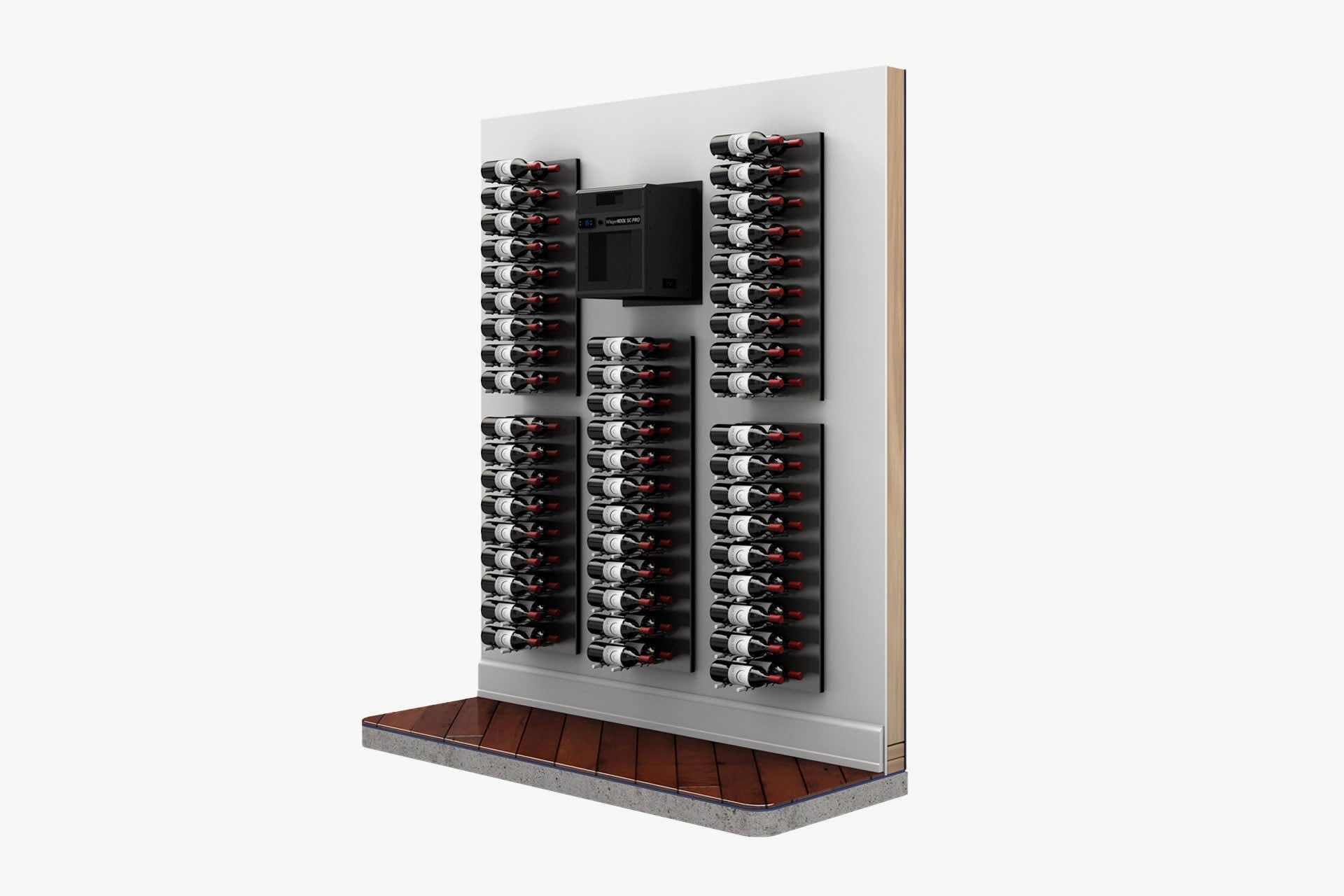
Through-the-wall cooling units represent the most straightforward and budget-friendly approach to cellar climate control. Similar in concept to a window air conditioner, these self-contained units mount directly through an exterior wall, drawing heat from the cellar and expelling it into an adjacent space.
Installation requires minimal construction—just a properly sized wall opening. However, the exhaust side needs access to a well-ventilated area at least twice the cellar's volume, or a space with its own climate control, to handle the expelled heat.
Advantages
- Most economical option available
- Straightforward installation process
- Self-contained design simplifies maintenance
- Ideal for smaller cellars and tight budgets
- Integrated humidity management in some models
Considerations
- Produces more noise than other options
- Requires adjacent ventilated space
- Limited capacity for larger cellars
- Less aesthetic appeal in finished spaces
Ducted Self-Contained Systems
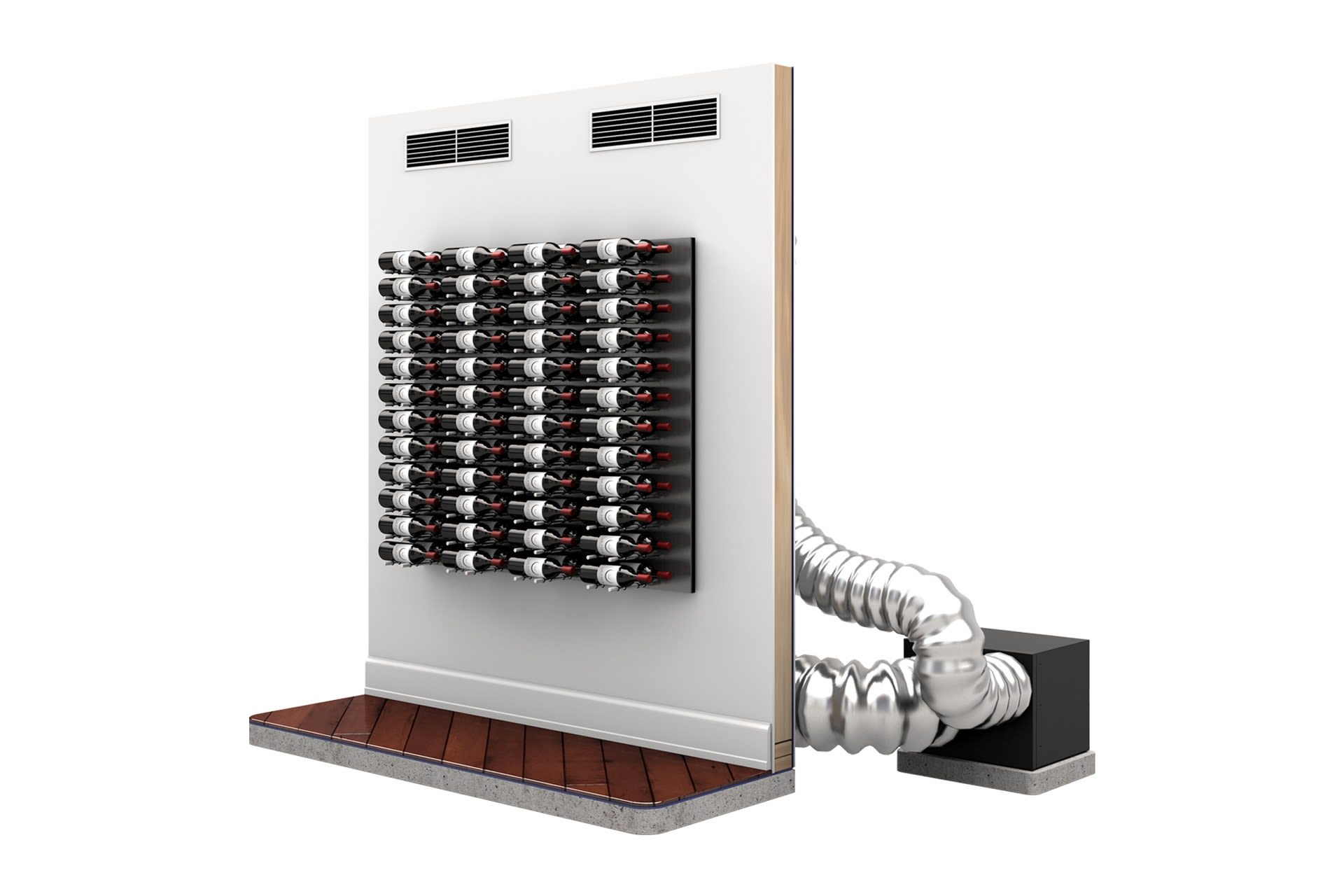
Ducted self-contained systems offer a refined solution that keeps the cooling equipment hidden from view. The entire unit sits in a remote location—such as an adjacent room, closet, or mechanical space—while ductwork channels cooled air into your cellar and returns warm air back to the unit.
This configuration delivers cleaner aesthetics since only discreet air vents appear inside the cellar. The trade-off involves more complex installation requiring proper ductwork routing and adequate space for the equipment.
Advantages
- Equipment remains out of sight
- Significantly quieter cellar environment
- Handles small to medium-sized cellars effectively
- Integrated humidity control available
- Better aesthetics for showcase cellars
Considerations
- Requires nearby installation space
- Ductwork installation adds complexity
- Higher upfront investment
- Professional installation recommended
Ducted Split Systems
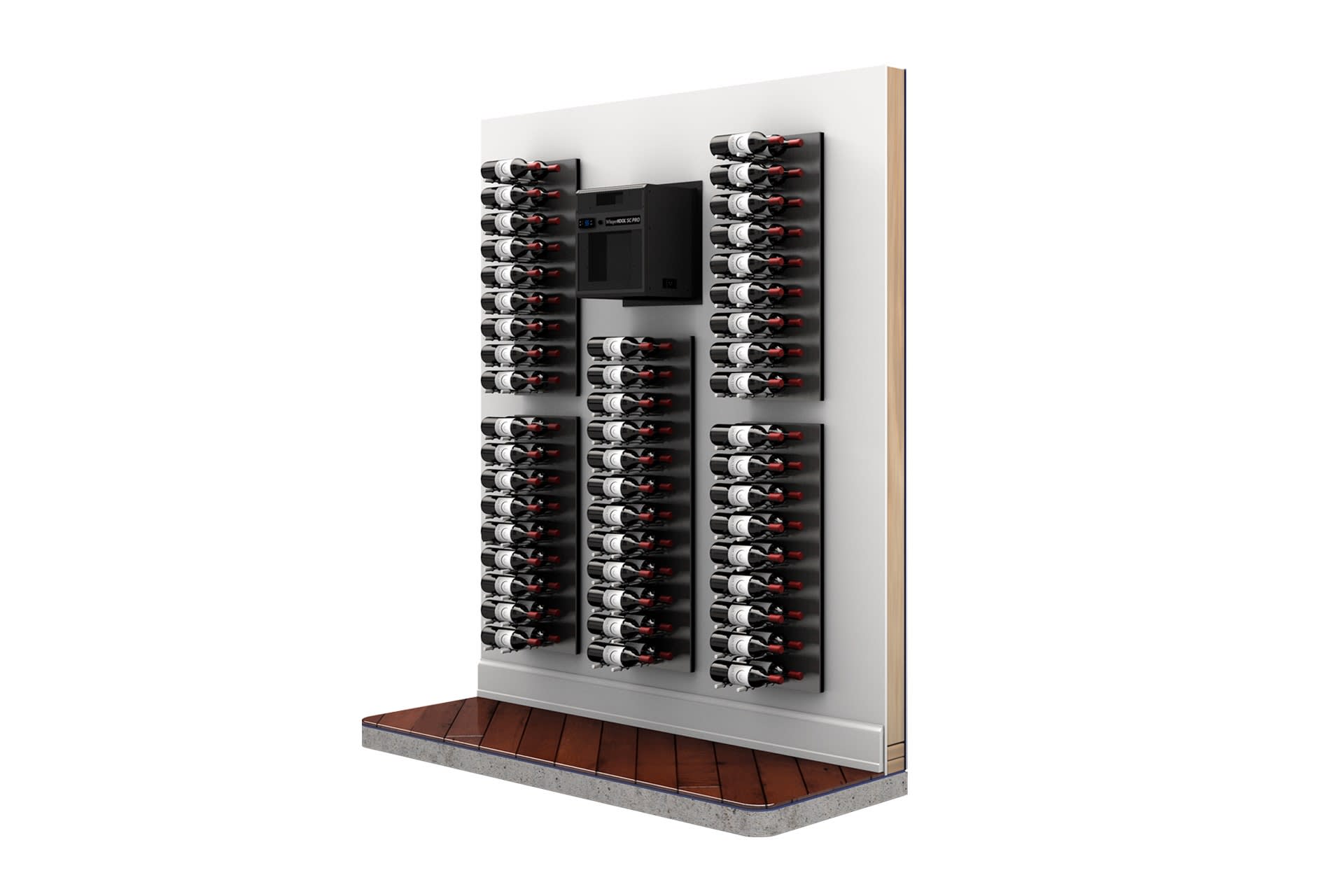
Ducted split systems separate the cooling process between two components: an evaporator unit near the cellar and a condenser placed remotely—often outdoors or in a utility area up to 50 feet away. This separation enables powerful cooling capacity while maintaining a quiet, unobtrusive cellar environment.
These systems excel in larger cellars and challenging installations where other options fall short. The ducted air distribution ensures even cooling throughout the space, preventing hot spots that can occur with single-point cooling.
Advantages
- Superior cooling capacity for large cellars
- Exceptionally quiet operation inside cellar
- Remote condenser placement flexibility
- Comprehensive humidity management
- Even temperature distribution throughout
Considerations
- Highest initial investment
- Complex installation requirements
- Professional installation essential
- Requires outdoor or utility space for condenser
Ductless Split Systems
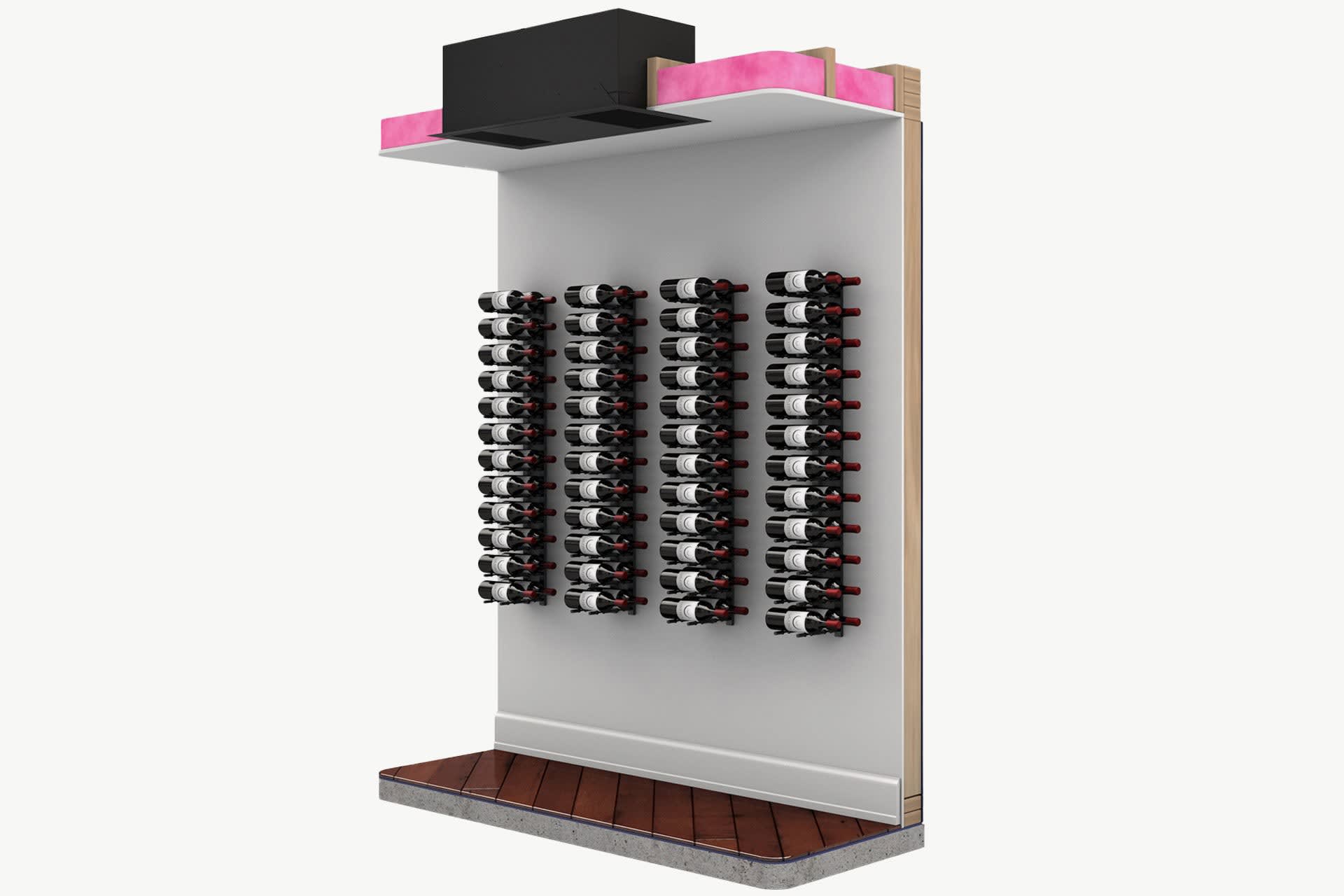
Ductless split systems, also known as mini-splits, provide an elegant middle ground between simplicity and performance. Like ducted splits, they feature separate evaporator and condenser units, but eliminate ductwork by mounting the evaporator directly inside the cellar.
This configuration suits medium-sized cellars where through-the-wall units lack capacity but full ducted systems seem excessive. The evaporator's compact profile and quiet operation make it relatively unobtrusive in finished cellar spaces.
Advantages
- No ductwork required—simpler installation
- Compact evaporator footprint
- Quiet performance compared to through-wall units
- Good capacity for medium-sized spaces
- Energy-efficient operation
Considerations
- Evaporator visible inside cellar
- May create uneven cooling in irregular spaces
- Requires professional installation
- Condenser requires outdoor placement
Comparing Wine Cellar Cooling Options
| System Type | Best For | Noise Level | Installation | Cost Range |
|---|---|---|---|---|
| Through-the-Wall | Small cellars, budget projects | Moderate to High | Simple | $ |
| Ducted Self-Contained | Small to medium cellars, aesthetic priority | Low | Moderate | $$ |
| Ducted Split | Large cellars, demanding conditions | Very Low | Complex | $$$ |
| Ductless Split | Medium cellars, balanced approach | Low | Moderate | $$ |
Selecting the Right Wine Cooling Unit
Choosing the optimal cooling system requires evaluating several factors specific to your cellar project. Taking time to assess these considerations ensures your investment delivers reliable performance for years to come.
Cellar Size
Calculate your cellar's cubic footage accurately. Cooling units are rated for specific volumes—undersizing leads to inadequate cooling while oversizing wastes energy and money.
Insulation Quality
Proper insulation dramatically affects cooling requirements. Well-insulated cellars need smaller units; poor insulation demands more powerful systems.
Climate Conditions
Your local climate influences cooling demands. Hot, humid regions require more robust systems than temperate areas with naturally cool basements.
Installation Space
Evaluate available space for equipment placement. Through-wall units need adjacent ventilated areas; split systems require condenser locations.
Noise Tolerance
Consider how sensitive you are to mechanical noise. Living spaces adjacent to the cellar may benefit from quieter split system configurations.
Budget Parameters
Balance initial costs against long-term performance. Premium systems often deliver better efficiency and longevity despite higher upfront investment.
Final Considerations
Investing in a quality wine cellar cooling unit protects your collection and ensures every bottle reaches its full potential. Whether you choose a simple through-wall system for a modest cellar or a sophisticated ducted split for an extensive collection, the key lies in matching the system's capabilities to your specific needs.
Consider consulting with a wine cellar specialist who can assess your space, evaluate insulation, and recommend appropriate cooling capacity. Proper sizing and installation make the difference between a system that struggles and one that effortlessly maintains perfect conditions year after year.