

Creating a wine cellar or transforming a space into a haven for your favorite bottles is a passion project for any wine lover. However, the true heart of any cellar goes beyond elegant racking or ambient lighting—it all comes down to the cooling system. For those seeking a straightforward and reliable solution, a self-contained cooling unit consistently rises to the top as a leading choice. But what exactly makes it tick, and is it the ideal match for your collection?
Let's explore everything you need to know.
What Is a Self-Contained Cooling Unit?
Picture a refrigerator crafted specifically for the dimensions and requirements of a wine cellar. That's essentially what a self-contained cooling unit delivers. Often referred to as a "through-the-wall" or "ductless" system, this type of unit houses every critical component—compressor, evaporator, condenser, and fans—within one streamlined, compact enclosure.
Installation involves mounting the unit through an exterior wall or fitting it into an existing window opening. The front side (the cold side) faces your cellar while the back (the hot side) vents into an adjacent room, garage, closet, or the outdoors. It's a genuine all-in-one, stand-alone cooling solution.
How Does a Self-Contained Unit Work?
The brilliance of a self-contained cooling unit lies in its autonomous design. It functions using a standard refrigeration cycle, much like your everyday household refrigerator:
Heat Absorption
Within the cellar, a fan circulates warm air across cold evaporator coils. A refrigerant inside these coils captures and absorbs the heat from the surrounding air.
Cool Air Discharge
The freshly chilled and dehumidified air is then blown back into the cellar, reducing the ambient temperature to your preferred set point (generally between 55-58°F).
Heat Expulsion
The refrigerant, now laden with absorbed heat, travels to the compressor where it becomes pressurized and even hotter.
Heat Dissipation
The hot refrigerant then flows to the condenser coils on the exterior side of the unit. A secondary fan expels this heat into the adjacent room or outdoors.
The Cycle Repeats
The refrigerant cools down and circulates back to the evaporator coils to begin the process anew, preserving a consistent and stable environment for your wine.
The Pros of a Self-Contained Cooling System
This plug-and-play approach delivers several noteworthy advantages, particularly for specific cellar configurations:
✓ Ease of Installation
Self-contained cooling systems offer the greatest convenience. Without the need for elaborate ductwork or a separate remote condenser, setup is typically faster and more budget-friendly. Often, all that's required is a properly sized wall opening and a standard electrical outlet.
✓ Cost-Effective
Both the upfront price tag and installation expenses are generally lower compared to split or ducted systems, making this an accessible entry point for many collectors.
✓ Perfect for Small to Medium Spaces
These self-contained cooling units are well-suited for cellars up to approximately 500 cubic feet, including closets, under-stair spaces, or compact dedicated rooms.
✓ Self-Contained Simplicity
When it's time for maintenance or replacement, everything is conveniently accessible from one location.
The Cons of a Self-Contained Cooling System
No system is flawless, and it's essential to weigh the trade-offs:
✗ Heat and Noise in Your Home
The unit releases heat and produces noise (from the compressor and fan) into the room where it vents. This can be problematic if that space is a living area or bedroom.
✗ Limited Capacity
They aren't engineered for large or heavily insulated cellars. Pushing a unit beyond its capacity will lead to continuous operation and potential premature failure.
✗ Aesthetics
The unit remains visible inside your cellar, which may detract from the high-end, custom aesthetic you're striving to achieve.
✗ Potential for Reduced Efficiency
Since the unit expels heat into your home, it can marginally increase the cooling load on your primary HVAC system during warmer months.
Is a Self-Contained Unit Right for Your Cellar?
A self-contained cooling unit is an outstanding choice if:
Your cellar is small to medium-sized (under 500 cubic feet).
You're working with a limited budget.
The vented side can be positioned in an unconditioned area like a garage, attic, or exterior wall where noise and heat aren't concerns.
You prioritize simplicity and straightforward installation.
However, for a larger, professionally constructed cellar or one where whisper-quiet operation and seamless aesthetics are priorities, a ductless split system (featuring a quiet, remote condenser) or a ducted system often proves to be the superior—though more expensive—option.
At the end of the day, a self-contained cooling unit serves as the dependable workhorse of the wine cellar world. By grasping how it operates and carefully evaluating its strengths and limitations, you can make an informed choice to ensure your treasured bottles age gracefully in their ideal climate.
Don't Waste Your Wine!
Invest in Wine Cooling Units!
Featured Wine Cooling Solution
Vinotemp Wine-Mate 1500-HTD
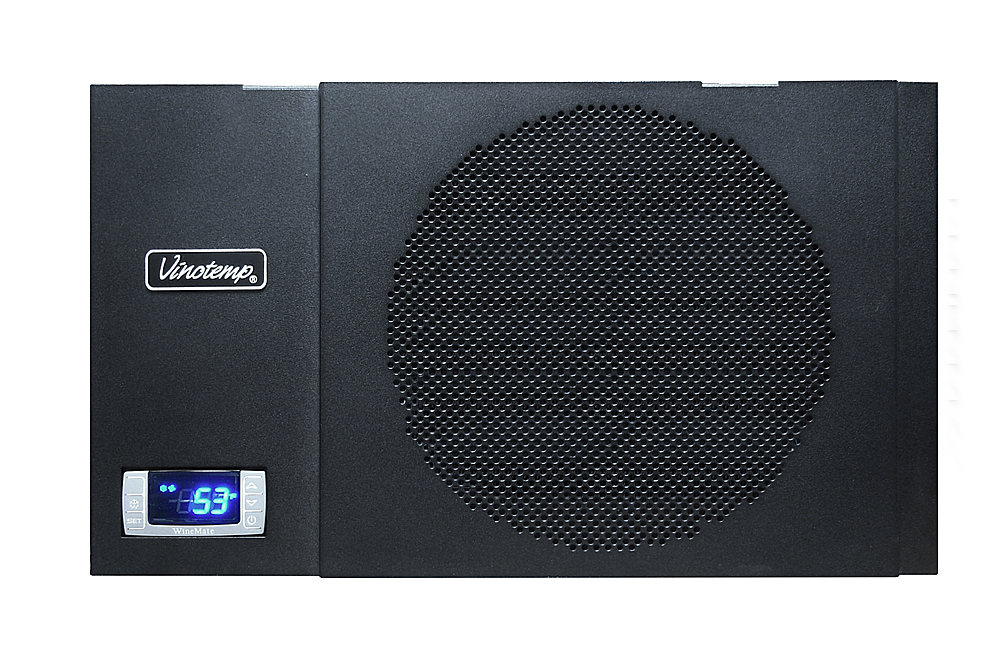
Wine-Mate 1500-HTD
Trusted Wine Cooling Brands
WINEZONE
WINEGUARDIAN
WHISPERKOOL
CELLARPRO
WINE COOLERS