

Dumbbell racks are one of those gym essentials that often get overlooked until your weights are scattered all over the floor. Whether you're building a home gym in your garage or outfitting a commercial training facility, the right rack keeps your dumbbells organized, easy to access, and off the ground where they can cause damage or trip someone up.
With so many options available — from compact vertical stands to heavy-duty multi-tier systems — choosing the right one comes down to understanding how much space you have, how many dumbbells you own, and what kind of setup works best for your routine.
In this guide, we'll walk through the most popular types of dumbbell racks, what features matter most, and how to find the one that fits your space and training goals.
Why You Actually Need a Dumbbell Rack
It might seem like a simple storage solution, but a quality dumbbell rack does a lot more than just hold your weights. First and foremost, it keeps your gym space tidy and organized. When dumbbells are left lying around, they create a safety hazard and make your workout area look chaotic. A rack gives every pair its own designated spot, making it easy to grab the right weight without searching through a pile.
Beyond organization, a rack also protects your floor and the dumbbells themselves. Leaving heavy weights on hard surfaces can cause scratches, dents, and even structural damage over time. Rubber-coated dumbbells can deteriorate faster when they're constantly banging into each other on the ground.
And then there's the time factor. If your dumbbells are neatly arranged from lightest to heaviest, you can move through supersets and drop sets quickly without breaking your rhythm. It's a small thing, but it makes a big difference in workout flow.
Types of Dumbbell Racks and What Sets Them Apart
Not all dumbbell racks are created equal. There are several distinct designs, and each one suits different environments and needs. Here's a closer look at the most common types you'll come across.
Vertical A-Frame Racks
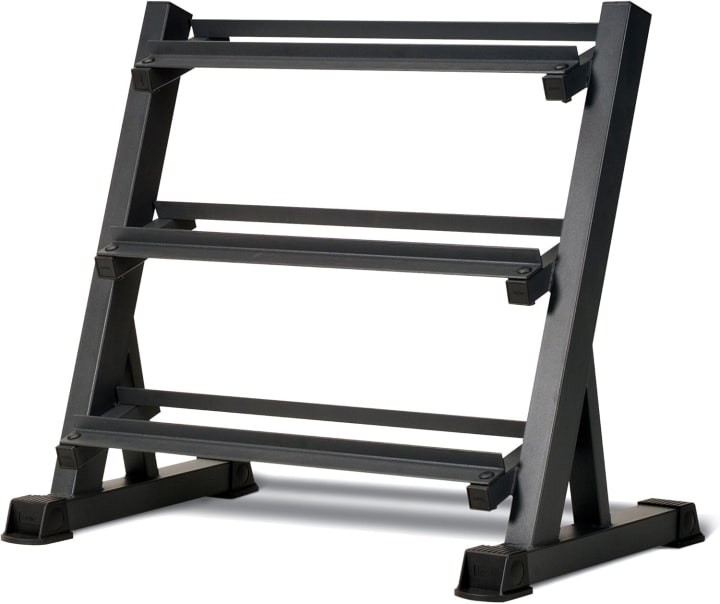
These are the most popular choice for home gyms and smaller workout areas. Shaped like the letter "A" when viewed from the side, these racks store dumbbells on tiered shelves that angle inward. They're compact, stable, and usually hold anywhere from 5 to 10 pairs of dumbbells depending on the model.
Best for: Home gyms, apartment setups, and anyone working with lighter to mid-range dumbbells.
Key advantage: Small footprint — perfect for tight spaces.
Horizontal Multi-Tier Racks
If you've got a serious dumbbell collection, horizontal racks are the way to go. These feature two or three flat shelves stacked on top of each other, holding dumbbells on their sides. They can handle heavier weights and more pairs than vertical models, making them a staple in commercial gyms and well-equipped home setups.
Best for: Larger collections, heavier dumbbells, and gym environments where quick access to a full range of weights matters.
Key advantage: Higher total weight capacity with easy visibility of all your dumbbells.
Single-Pair and Saddle Racks
These minimalist racks hold just one or two pairs of dumbbells, typically adjustable ones. They're compact, affordable, and do exactly what they need to do without taking up unnecessary floor space. Some also come with built-in trays for other accessories.
Best for: People who use adjustable dumbbells or only keep a couple of pairs on hand.
Key advantage: Ultra-compact and budget-friendly.
Weight Trees and Multi-Purpose Organizers
Weight trees and multi-purpose organizers go beyond dumbbells. These versatile stands can accommodate a mix of dumbbells, kettlebells, and weight plates on a single unit. They're ideal if you've got various types of free weights and want one centralized storage solution.
Best for: Mixed free-weight collections in home or studio gyms.
Key advantage: Consolidates multiple storage needs into one piece of equipment.

Key Features to Consider Before You Buy
Weight Capacity
This is the most critical spec. Make sure the rack can handle not just your current dumbbells but any future additions. Check both per-shelf limits and the total weight capacity. A rack that maxes out too quickly becomes a liability.
Build Quality
Heavy-gauge steel frames with powder-coated or chrome finishes hold up best over time. Avoid racks that feel wobbly or are made from thin metal. A good rack should feel rock-solid even when fully loaded.
Storage Layout
Consider how the dumbbells sit on the rack. Angled cradles, flat shelves, and saddle-style holders each work differently. Angled cradles prevent rolling, while flat shelves offer more flexibility in how you arrange your weights.
Footprint and Size
Measure your space before committing. Vertical racks are great for narrow corners, while horizontal racks need more wall space. Factor in room to access the dumbbells without bumping into walls or other equipment.
Floor Protection
Rubber feet or padded base pads are a must, especially on hardwood, tile, or concrete floors. They prevent scratching, reduce vibration, and keep the rack from sliding around during use.
Assembly
Some racks arrive fully assembled while others require tools and time. If you're not handy with an Allen wrench, look for models with straightforward instructions and pre-drilled holes. A frustrating assembly experience can sour the whole purchase.
Weighing the Pros and Cons
Advantages
Keeps your space organized and prevents tripping hazards caused by loose weights on the floor.
Protects both your flooring and the dumbbells from unnecessary wear and damage over time.
Speeds up transitions between exercises, keeping your workouts efficient and focused.
Gives your gym a clean, professional look whether it's at home or in a commercial space.
Considerations
Quality racks can be a significant investment, especially commercial-grade models built for heavier loads.
Larger horizontal racks require dedicated floor space that may not be available in smaller home gyms.
Some models may not accommodate all dumbbell shapes or sizes, particularly hexagonal or oversized grips.
Assembly can be time-consuming on certain multi-tier models with many bolts and hardware pieces.
How to Choose the Right Rack for Your Setup
The best dumbbell rack for you depends entirely on your situation. Start by taking stock of what you have and what you plan to add. If you only own a few pairs of lighter dumbbells and your workout space is a corner of the living room, a compact A-frame or saddle rack is all you need. It gets the job done without eating up square footage.
On the other hand, if you've been building your dumbbell collection over time and you've got everything from 10-pound pairs up to 80 or 90 pounds, you'll want a sturdy multi-tier horizontal rack that can handle the volume and the weight. These racks make it easy to see and access every pair at a glance, which saves time during workouts.
Budget is always a factor, but try to avoid going too cheap. A flimsy rack that buckles under weight or tips over is worse than no rack at all. Look for something in the middle ground — solidly built with a steel frame, rubber feet, and enough capacity to grow with you as your fitness journey progresses.
Finally, think about the aesthetics. Your gym space — whether it's a full garage setup or a bedroom corner — should feel inviting. A well-designed rack with a clean finish adds to the overall atmosphere and can actually motivate you to keep your space organized.
Our Pick
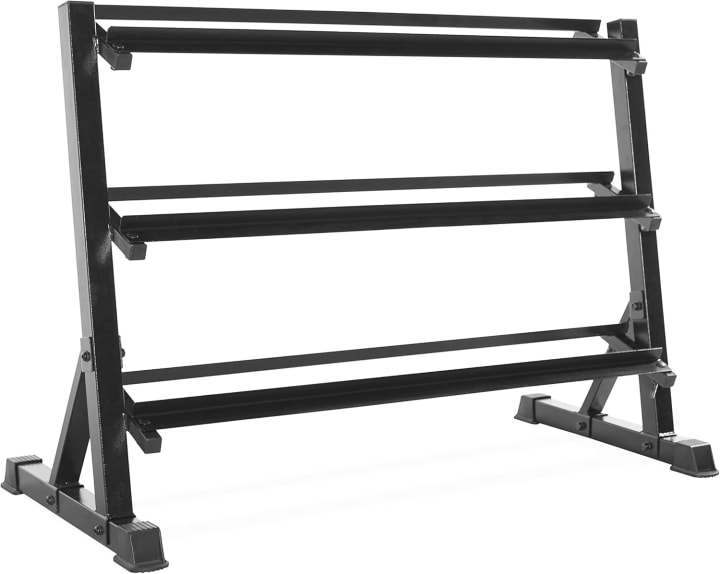
VTX 3-Tier Horizontal Dumbbell Rack
Built with commercial-grade steel and a three-tier horizontal design, this rack offers generous capacity for a wide range of dumbbell sizes. It's sturdy, well-proportioned, and built to last through years of heavy use in any training environment.
Keeping Your Dumbbell Rack in Great Shape
Once you've invested in a solid dumbbell rack, a little maintenance goes a long way. Wipe down the shelves regularly to remove sweat, chalk, and dust that can build up over time. If your rack has a powder-coated finish, a damp cloth is all you need — avoid harsh chemicals that could strip the coating.
Check the bolts and joints every few months, especially if the rack gets heavy daily use. Vibrations from repeatedly placing and lifting dumbbells can gradually loosen hardware. A quick tightening takes five minutes and prevents wobble from developing.
If you notice any rubber feet wearing out or missing, replace them promptly. They're cheap and easy to find, and they protect your floor far better than bare metal legs.
Final Thoughts
A dumbbell rack might not be the flashiest addition to your gym, but it's one of the most practical. The right rack keeps your weights safe, your floor protected, and your workout space looking sharp. It's the kind of upgrade that pays for itself in convenience and longevity.
Take the time to assess your needs, measure your space, and invest in something that matches the size of your collection and the intensity of your training. A well-chosen dumbbell rack isn't just storage — it's the foundation of an organized, efficient, and enjoyable gym.
Backyard Provider — Equipping Your Space, Inside and Out.