
A Complete Guide to Designing and Installing a Custom Fire Feature for Your Outdoor Space
Building a natural gas fire pit transforms your backyard into an inviting retreat where memories are made. Whether you're drawn to the satisfaction of completing a hands-on project or simply want to design a unique centerpiece that reflects your style, constructing your own fire feature offers endless possibilities. This comprehensive guide walks you through every essential step, ensuring your outdoor space becomes the gathering place you've always envisioned.
Designing Your Installation Strategy

Placement, dimensions, and heat output are fundamental elements of the considerations that will influence how your fire pit integrates into your outdoor environment. Consider how your DIY natural gas fire pit will function within your space—will it serve as an intimate gathering spot or anchor a larger entertainment area? Think about traffic patterns, seating arrangements, and the overall layout of your backyard.
Understanding local regulations is paramount to ensuring your installation meets required standards. Securing a permit to confirm that a fire pit installation is authorized in your region is an important step that should not be skipped. Guidelines often dictate setback distances from structures and property boundaries, as well as requirements governing underground gas lines. Taking the time to understand and comply with local regulations will help you steer clear of potential problems later.
Think carefully about your gas connection strategy—is there an existing natural gas line available, or will this unit require you and your licensed professional to extend your fuel line? Having this clarity at the outset is a tremendously important part of confirming that the project proceeds smoothly and remains within budget expectations.
Essential Planning Tip: Once you've verified what your local building code mandates and have secured a certified professional who will run the gas line to the installation location, you'll be ready to select the ideal components for your outdoor sanctuary. Understanding how regulations may affect your project setup helps you avoid costly mistakes and ensures long-term safety.
Streamlining Your Build Process with Fire Pit Enclosures

Prefabricated fire pit enclosures, such as the square unfinished fire pit enclosure pictured here and the alternative round enclosure offered by the modular fire pit system by Freedom Flex, are excellent options when seeking a solution that simplifies the construction phase. These enclosures are precision-engineered shells that provide a baseline framework. The flexibility to customize these foundations through various finishing materials is a major advantage, allowing you to create a unique aesthetic that complements your outdoor design scheme.
To reduce wasted time invested into your project, we recommend adhering to an enclosure system. While fully assembled or partially unfinished fire pit enclosures are all phenomenal selections, options that provide a basic framework for your DIY natural gas fire pit without excess ornamentation are particularly appealing. These enclosures are constructed from durable galvanized steel panels and require minimal assembly. The recommended dimensions for most compact residential applications range between 6 and 8 feet in length and width, with heights typically falling between 45 and 60 inches, creating an ideal size footprint for most spaces while maintaining comfortable access and proportions.
Although the classic fire pit can be constructed from diverse types of materials such as copper, steel, aluminum, and ceramic, most DIY enthusiasts appreciate the design adaptability that unfinished enclosures offer. These flexible foundations provide a neutral canvas where you can apply the traditional brick appearance or opt to go for a more modern style. Unfinished enclosures make a great choice when you want total creative freedom over your final construction finish.
If you find that unfinished fire pit enclosures just aren't for you and you want to stick to the tried-and-true traditional method of construction, remember that building your fire pit will still require significant time allotment. The investment in time will deliver a one-of-a-kind result that showcases your personal design sensibility.
Selecting the Right Gas Burner and Pan Configuration

Investing in a high-quality gas burner and pan is essential for your DIY fire pit project. Burner sizes and configurations range from basic 30-inch models to elaborate shapes and designs that perfectly suit your aesthetic preferences. Pans come in diverse styles, from simple circular options to more complex geometric forms designed to complement the outdoor elements.
Determine the best burner and pan option by focusing on a balance between flame coverage and effective heat distribution. Going with too small a burner results in a lackluster fire that will not radiate sufficient warmth and will not create visual appeal when displayed in the natural outdoor setting. Conversely, an oversized unit reflects impractical sizing within smaller courtyards. In these circumstances, Onfire Designs burners with their 12-inch raised side openings are ideal choices for efficient heat distribution and attractive flame patterns.
Alternatively, Crossfire Octagonal burners are purposefully designed with strategically positioned openings to help direct heat outward. These selections are excellent options when you're aiming for maximum warmth in an environment of family and friends gathered around your fire feature.
Professional Installation Recommendation: Coordinate with a certified gas fitter system expert. Rather than attempting unfamiliar components, especially where fuel line work is involved, it's wisest to partner with experienced professionals who can confidently route the natural gas supply line correctly to help simplify the installation process.
Keep in mind that burner size often determines the burner dimensions. Burners under 30 inches in size have a 1/2-inch gas inlet—it's what we call standard capacity in the industry. Burners over 30 inches are fitted with 3/4-inch gas inlet ports or larger still with 1-inch connections. However, inlet sizes can fluctuate based on the specific model design. If there's a comprehensive breakdown of what a British Thermal Unit (BTU) figure means in practical use for your fire pit, and how it translates to gas consumption, understanding these details will help you make more informed decisions.
If you don't have access to a gas hookup in your area but still want the satisfaction of building something you can be proud of, a propane conversion fire pit kit may prove to be a practical alternative that achieves similar results with greater installation flexibility.
Minimizing Expenses with Form Fitting Ledges
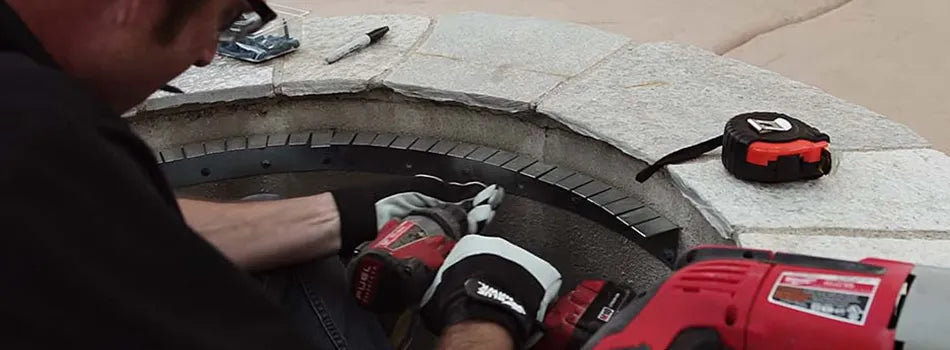
Minimize the cost of materials with form-fitting leg enclosure systems. These brackets, which help support your gas burner and pan, purposefully have empty space inside the enclosure to be filled in. They're a practical choice for managing construction budgets effectively.
When it comes to short-cutting projects, form-fitting ledges are the only exception we recommend. Form fitting ledges eliminate the need for excessive material purchases. These specialized supports are designed to integrate into the top of your burner enclosure and create a secure mounting point for the pan, resulting in significant material savings. These ledges enable precise work in conjunction with vents, helping create much needed air flow space underneath where your burner installation will sit. This design innovation reduces both the overall material quantities required and the labor time needed to complete your fire feature, offering savings without sacrificing quality or safety. The result is a more budget-conscious assembly approach while delivering the enduring, captivating fire pit display you desire.
Cost-Saving Strategy: While initial installation costs can be shaped by the material selections you make—including concrete, canvas, and lower-interior walls—using a modular fire pit system configuration for unfinished enclosures can reduce both material and labor expenses. The form-fitting ledges work exceptionally well for builders constructing compact installations. When creating a fire pit over 30 inches, we recommend this system for optimized material use. Whether you plan on building a fire pit over 30 inches or something more intimate for a cozy patio atmosphere, form-fitting ledges offer an economical solution that doesn't compromise on the quality or durability you expect from your outdoor fire feature.
Begin Your Fire Pit Journey Today
Creating a natural gas fire pit is an investment in your outdoor living space that delivers years of enjoyment. From initial planning and permit acquisition to selecting the perfect burner system and finishing touches, each step brings you closer to transforming your backyard into a destination for relaxation and connection. With proper preparation, quality components, and attention to local regulations, your custom fire feature will become the centerpiece of countless gatherings and cherished memories for years to come.