
Introduction: Why Wine Cellar Planning Matters
A well-planned wine cellar is more than a storage space — it's a long-term investment in the quality, preservation, and enjoyment of your collection. Getting the dimensions right from the start saves you time, money, and the heartbreak of a cellar that doesn't grow with you.
Whether you're just beginning to build your collection or you're an experienced enthusiast looking to expand, the size of your wine cellar has a direct impact on how well your bottles age, how efficiently you can manage inventory, and how the space fits within your home. Poor planning leads to overcrowded racks, fluctuating temperatures, and costly renovations down the road.
This guide walks you through every dimension consideration — from minimum viable cellars to large custom builds — so you can plan with confidence.
The Basics
Why Wine Cellar Dimensions Matter
Dimensions aren't just about how many bottles fit. The size of your cellar directly affects airflow, humidity stability, cooling efficiency, and the structural integrity of the racking system. A cellar that's too small restricts circulation; one that's too large can be expensive and inefficient to climate-control.
The right dimensions ensure that your wine is stored at the ideal temperature and humidity — conditions that are essential for long-term aging. When the space is properly planned, your cooling system can do its job without strain, and your racking layout can accommodate both current and future bottles.
Sizing Basics
Standard and Minimum Wine Cellar Dimensions
Not every wine cellar needs to be a grand underground vault. Understanding the minimum requirements helps you plan even in limited spaces without sacrificing proper wine storage conditions.
Recommended Standard Sizing
| Cellar Type | Dimensions | Capacity |
|---|---|---|
| Small / Starter | 5 ft × 5 ft (25 sq ft) | Up to 500 bottles |
| Standard Home | 8 ft × 10 ft (80 sq ft) | 750–1,500 bottles |
| Large Collection | 10 ft × 12 ft (120 sq ft) | 1,500–3,000 bottles |
| Premium / Estate | 12 ft × 16 ft+ | 3,000+ bottles |
Ceiling height is equally important. A standard 8-foot ceiling allows for stacked racking configurations that maximize vertical capacity. Going taller opens the door to floor-to-ceiling custom displays that are as beautiful as they are functional.
Space Planning
How Much Space Do You Actually Need?
The answer depends on several personal and practical factors. Before committing to a footprint, ask yourself:
- Current Bottle Count: How many bottles do you own right now, and how quickly does your collection grow each year?
- Future Growth: Are you building for today's collection or planning ahead for the next decade?
- Bottle Variety: Do you collect standard 750ml bottles exclusively, or do you also store magnums, half-bottles, or large formats?
- Access & Circulation: You'll need comfortable aisle space — at minimum 36 inches — to retrieve bottles without disrupting adjacent storage.
- Location: Basement cellars benefit from natural insulation and stable temperatures; above-ground spaces require more robust climate control.
A practical rule of thumb: plan for at least 20–30% more space than you think you need today. Collections grow faster than expected, and future-proofing your cellar is far more economical than expanding it later.
Budget Planning
How Your Budget Shapes Wine Cellar Size & Materials
Budget is often the single biggest factor in determining cellar size, racking material, and the quality of your climate control system. Understanding how costs break down helps you allocate wisely.
Construction Costs
Framing, insulation, vapor barriers, and flooring form the foundation of your cellar build. These structural costs are largely fixed regardless of size, making larger cellars relatively more cost-efficient per bottle than smaller ones.
Climate Control Costs
Your cooling and humidity system is often the most significant ongoing investment. Properly sizing your unit to the cellar volume is critical — an undersized unit will work constantly and fail early; an oversized unit cycles too rapidly to maintain stability.
Where to Splurge vs. Where to Save
Premium redwood and mahogany racking is beautiful but costly. High-quality pine or metal racking systems offer excellent durability at a lower price point. However, never cut corners on insulation or climate control — these are the true protectors of your collection's value.
Budget-conscious builders should also consider modular racking systems, which can be expanded incrementally as your collection grows, avoiding a large upfront investment.
Layout Design
Wine Cellar Layout Planning and Racking Considerations
A thoughtful layout transforms a storage room into a functional showcase. Your racking configuration should reflect both the practicality of daily use and the aesthetic vision you have for the space.
Standard Bottle Rows
Horizontal single-bottle racking is the most space-efficient format, ideal for long-term aging and maximizing wall coverage.
Case Storage
Reserve a section for case storage to hold bulk purchases without unpacking. This is especially practical for wines you won't open for several years.
Display Rows
Label-forward display sections add visual drama and make it easy to identify bottles at a glance — a must for collectors who entertain.
Aisle Spacing
Allow at least 36 inches between facing racks for comfortable access. Wider aisles (42–48 inches) are worth the reduction in capacity for larger cellars.
When planning your layout, also account for lighting placement, electrical access for your cooling unit, and the location of your door — all of which affect where racks can be positioned.
Climate Control
Wine Room Dimensions for Optimal Cooling Efficiency
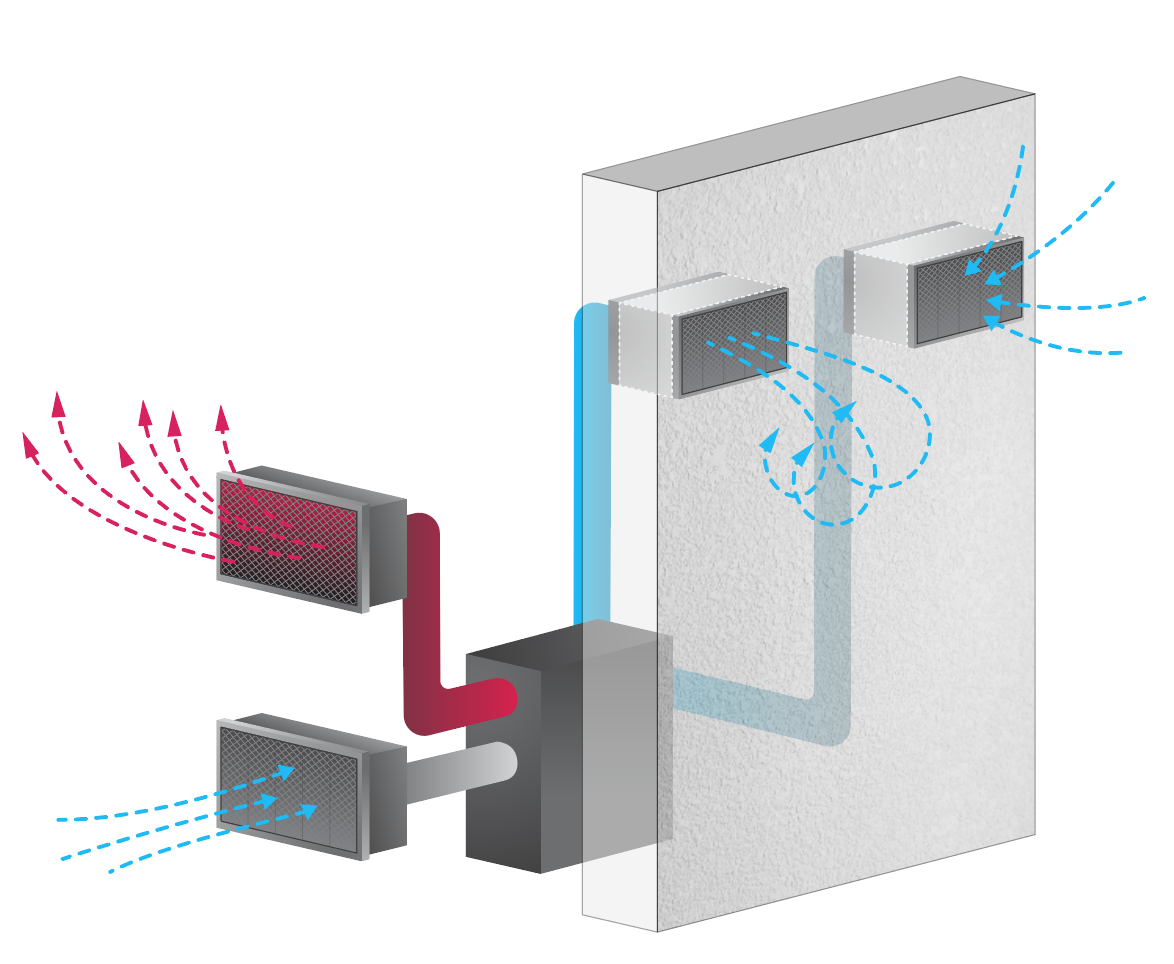
The relationship between room dimensions and cooling performance is critical. A well-insulated cellar with the right BTU-rated cooling unit maintains a steady 55°F year-round — the sweet spot for aging both red and white wines.
When sizing your cooling unit, calculate the total cubic footage of the space (length × width × ceiling height) and factor in the insulation R-value of your walls and ceiling. Standard wine cellar insulation calls for a minimum of R-19 in walls and R-30 in ceilings to prevent thermal exchange.
Humidity Matters as Much as Temperature
Low humidity dries out corks, allowing air into your bottles and ruining your wine. Target 60–70% relative humidity at all times. A dedicated humidification system gives you precise control in any climate — and protects every bottle in your collection.
Structural Integrity
Structural Considerations & Weight: Protecting Your Home
A fully stocked wine cellar is remarkably heavy. A standard 750ml bottle weighs approximately 2.75 pounds, meaning a 1,000-bottle cellar carries close to 1.4 tons of wine alone — before accounting for racks, flooring, and shelving materials.
Before building, consult a structural engineer to confirm that your floor can handle the load. This is especially important for above-ground installations or cellars built on upper floors. The last thing you want is a structural problem undermining a collection built over years.
Quick Weight Reference
- 500 bottles ≈ 700–800 lbs total (wine + bottles)
- 1,000 bottles ≈ 1,400–1,600 lbs total
- 2,000 bottles ≈ 2,800–3,200 lbs total
- Always add 15–20% for racking and infrastructure weight
Real-World Scenarios
Practical Examples: Sizing Your Wine Cellar
Sometimes the best way to understand sizing is through real-world scenarios. Here are three common situations and how to approach each:
The Growing Collector — 200 to 500 Bottles
A 5×8 ft space (40 square feet) with 8-foot ceilings is a solid starting point. Wall racking on three sides can accommodate 400–500 bottles, with room for a small case storage area. A single-zone through-wall cooling unit handles climate control efficiently at this scale.
The Serious Enthusiast — 500 to 1,500 Bottles
An 8×10 ft or 8×12 ft footprint opens the door to a proper layout with display rows, a center island rack, and dedicated sections by varietal or region. This size range also supports more sophisticated climate systems and premium racking materials.
The Dedicated Collector — 1,500+ Bottles
At this scale, custom design is almost always the right choice. A 10×14 ft or larger footprint allows for dedicated tasting areas, hospitality features, and the kind of organizational sophistication that makes managing a large collection enjoyable. Structural engineering review is strongly recommended.
Small Space Ideas
Creative Solutions for Small Spaces
Not every home has a basement or spare room available for a dedicated wine cellar. The good news: creative builders have found excellent wine storage solutions in surprisingly compact spaces.
Under-Stair Cellars
The dead space beneath a staircase is an ideal wine storage zone — naturally cool, away from light, and often in a central home location.
Closet Conversions
A well-insulated closet with a dedicated cooling unit can store several hundred bottles effectively. Often the most cost-efficient entry into true wine cellaring.
Garage Cellars
Garages offer the square footage and structural capacity for larger builds, with the added benefit of easier HVAC access and drainage.
Regardless of available space, the key principles remain the same: prioritize insulation, invest in reliable climate control, and plan for future growth from day one.
Aesthetics
Wine Cellar Design Considerations
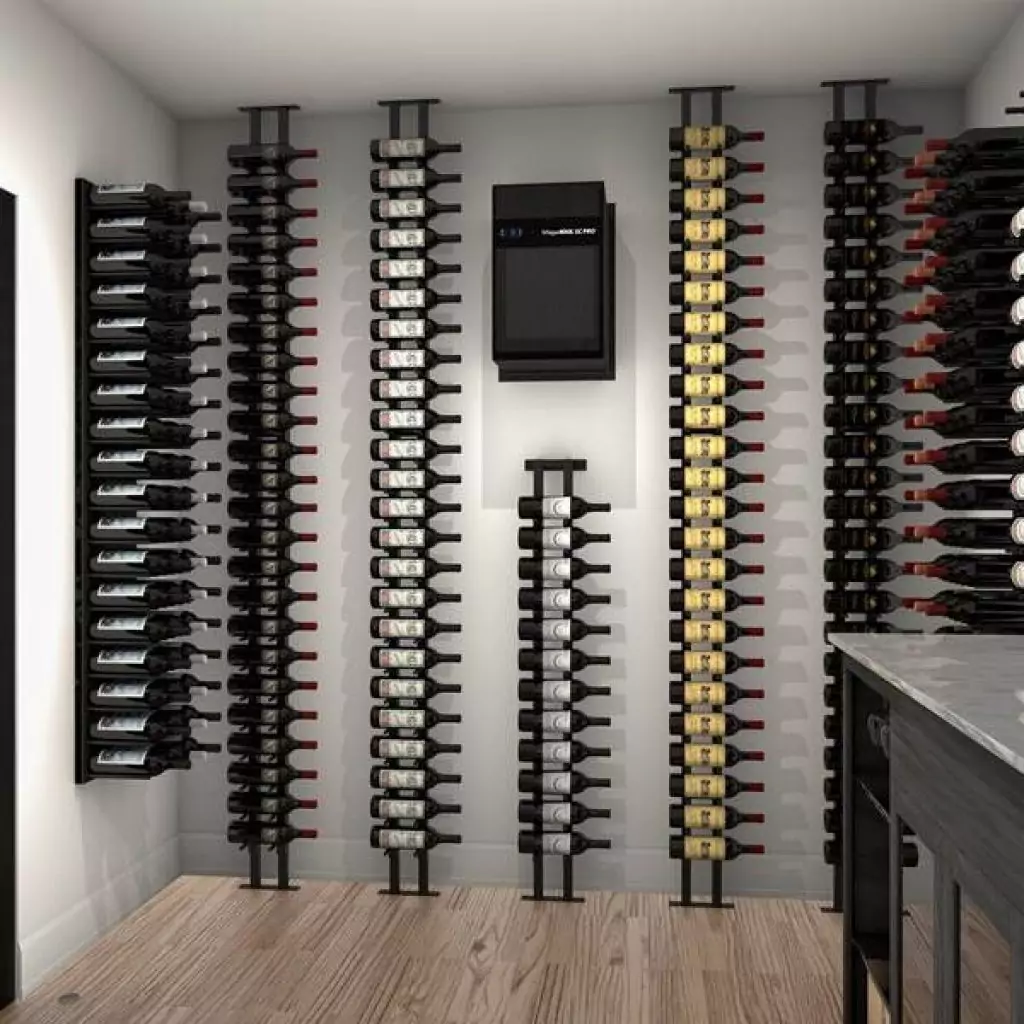
A wine cellar doesn't have to sacrifice beauty for function. Some of the most stunning cellars in the world are also the most practical — because thoughtful design considers both simultaneously.
Lighting plays a transformative role. LED lighting under racking reveals the color of each bottle while generating minimal heat. Accent lighting on display rows creates drama and visual depth. Consider dimmable fixtures to set the mood when entertaining.
Flooring materials like slate, travertine, or sealed concrete complement the earthy aesthetic of a wine cellar while holding up to the humidity levels required for proper aging. Avoid wood flooring in the cellar interior — humidity fluctuation causes warping and deterioration over time.
Plan Your Wine Cellar Dimensions for Long-Term Enjoyment
The most important step in building a wine cellar is the planning stage. Get the dimensions right, invest in quality climate control, and design for the collection you aspire to — not just the one you have today. A properly sized and conditioned cellar is one of the most rewarding home investments a wine enthusiast can make.